Engaging toddlers in household tasks offers profound developmental advantages, from fostering independence to enhancing cognitive growth. Starting young cultivates habits that lead to confident, capable children.
Why Involve Toddlers in Household Tasks?
Household responsibilities for young children go beyond mere tidying; they lay foundational skills for life. Research from Harvard indicates that early chore involvement correlates with future professional success and happiness, spanning an 85-year study. Similarly, a 2024 Journal of Developmental & Behavioral Pediatrics report links preschool chores to elevated self-confidence and self-worth.
These activities teach children their contributions matter, instilling responsibility. Toddlers learn perseverance by completing undesirable tasks, building a strong work ethic. They gain independence, knowing how to maintain a home, which boosts readiness for later independence.
Core Developmental Gains from Early Tasks
- Boosted Self-Esteem: Accomplishing tasks reinforces competence, helping toddlers feel capable and valued within the family unit.
- Executive Function Growth: Sorting items or sequencing steps hones planning, organization, and self-regulation skills vital for school and beyond.
- Impulse Control Mastery: Delaying play to finish a job teaches delayed gratification, key for emotional health.
- Language Expansion: New vocabulary like “wipe,” “sort,” or “sweep” emerges naturally, alongside following directions and combining words.
- Family Teamwork: Shared duties promote collaboration, reducing entitlement and enhancing bonds.
These benefits compound over time. Michigan State University Extension notes chores improve confidence and life skills, promoting productivity. NAPA Center highlights how physical chores provide sensory input, regulating behavior and mood.
Age-Appropriate Task Ideas for Toddlers
Tailor chores to developmental stages. Focus on one-step actions for 1-2-year-olds, progressing to multi-step for 3-4-year-olds. Always demonstrate first.
| Age Group | Suggested Tasks | Skills Developed |
|---|---|---|
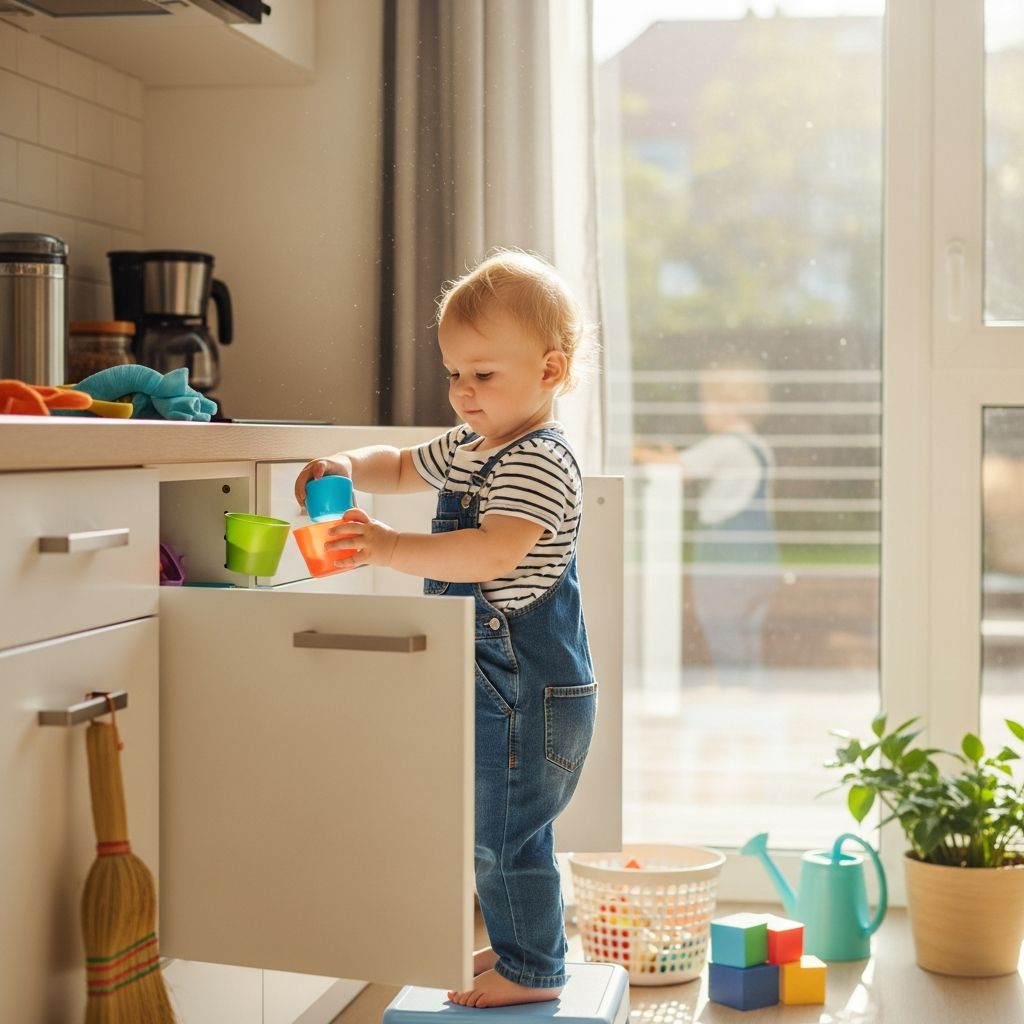
| 1-2 Years (Toddlers) | Put toys in bin; place cup in sink; wipe spills with cloth; sort laundry colors | Motor skills, following simple directions, routine building |
| 3-4 Years (Preschoolers) | Dust low surfaces; water plants; feed pet with supervision; make bed; pack lunch items | Decision-making, time management, sequencing |
These tasks are fun and achievable, turning routines into play. Toddlers relish putting laundry in baskets or retrieving mail, building pride.
Practical Strategies for Success
Introduce tasks gradually. Model by narrating: “Watch me spray and wipe the table clean.” Guide hands-on, then step back for independence.
- Offer choices: “Red or blue cloth for wiping?” to foster ownership.
- Use visual charts: Chore calendars track progress with stickers, easing accountability.
- Set routines: Link tasks to daily flows, like tidying post-playtime.
- Praise effort: Celebrate process over perfection to sustain motivation.
- Family meetings: Discuss challenges weekly, brainstorming solutions collaboratively.
Avoid over-reliance on rewards; phase them out as intrinsic value grows. Heavy work elements like pushing laundry baskets meet sensory needs, improving focus.
Overcoming Common Hurdles
Resistance is normal. If a toddler refuses, persist gently without battles. Short sessions prevent overwhelm.
Pro Tip: Integrate music or timers for engagement. For messier tasks, prepare with smocks.
Perfection isn’t the goal—your child’s growth is. AACAP affirms chores from age 3 enhance self-esteem.
Long-Term Impact on Growth
Consistent involvement equips toddlers for adulthood. La Trobe University (2022) found chores boost problem-solving and academics. Families report saner homes and kinder kids via shared loads.
Chores bridge to self-reliance: confident, ethical individuals thrive.
Frequently Asked Questions
Can 18-month-olds really handle chores?
Yes, simple ones like toy pickup or sink stacking build motor skills and routines effectively.
How do chores help with language?
They introduce action words, directions, and sequencing, accelerating vocabulary and comprehension.
What if my toddler resists tasks?
Demonstrate fun, use choices, and praise efforts. Consistency pays off without pressure.
Should I use rewards for chores?
Incentives start routines but fade them; aim for internal motivation.
Do chores impact future success?
Harvard’s longitudinal study links early chores to career happiness and achievement.
References
- The Benefits of Chores for Toddlers and Preschoolers — The Mentor Mom Blog. 2023-05-15. https://www.thementormomblog.com/blog/chores
- The Benefits of Chores for Kids — Bright Horizons. 2024-08-20. https://www.brighthorizons.com/article/parenting/benefits-of-chores
- The Benefits of Chores for Young Children — Children’s Lighthouse. 2024-03-10. https://childrenslighthouse.com/childcare-keller-woodland-springs/growing-together/the-benefits-of-chores-for-young-children?page=4
- How Chores Can Build Your Toddler’s Independence, Confidence and Language — My Toddler Talks. 2020-08-03. https://www.mytoddlertalks.com/kims-blog/2020/8/3/how-chores-can-build-your-toddlers-independence-confidence-and-language
- 5 Surprising Developmental Benefits of Chores for Kids — NAPA Center. 2023-11-12. https://napacenter.org/chores-for-kids/
- The Benefits of Kids Doing Chores — MSU Extension (canr.msu.edu). 2022-07-18. https://www.canr.msu.edu/news/the_benefits_of_kids_doing_chores
- Chores and Children — American Academy of Child and Adolescent Psychiatry (aacap.org). 2023-02-14. https://www.aacap.org/AACAP/Families_and_Youth/Facts_for_Families/FFF-Guide/Chores_and_Children-125.aspx
- Harvard: Key to Happy, Successful Kids? Chores — University View Women’s & Children’s Services (uvws.org). 2024-04-05. https://www.uvws.org/news/s94a63z7yun3fczjm80xh8fzivafkb