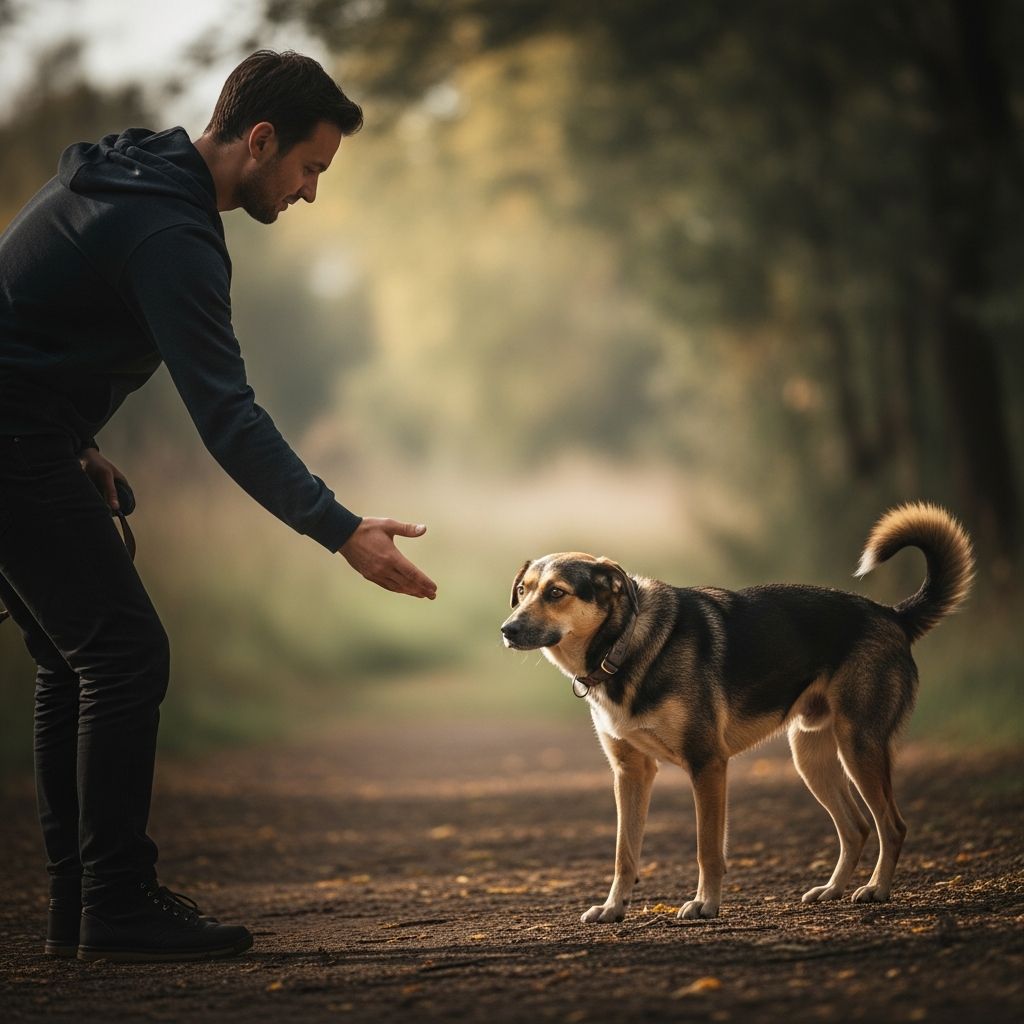
Dogs often display heightened fear or anxiety specifically toward men, a pattern observed across various breeds and backgrounds. This phenomenon stems from a combination of sensory perceptions, biological differences, early life experiences, and behavioral cues that make men appear more threatening to canine senses.
Understanding Canine Fear Responses
Fear in dogs manifests through body language such as cowering, trembling, avoidance, growling, or snapping. When directed at men, this response can disrupt family dynamics, limit social outings, and even pose safety risks. Recognizing these signs early allows owners to intervene effectively, preventing escalation into aggression.
Research indicates that fearful dogs prioritize certain stimuli over others. For instance, even when men and women perform identical actions, dogs remain more wary of men, suggesting innate perceptual biases rather than learned behaviors alone.
Biological Factors: Scents and Hormones
Dogs possess an extraordinary sense of smell, detecting human hormones and pheromones at trace levels. Men produce higher levels of **testosterone** and androsterone, compounds linked to aggression in the animal kingdom. These odors can signal potential threat, triggering a dog’s survival instincts.
Studies show dogs react more strongly to male genital odors and stress chemosignals, which are more potent in men. A stressed man’s scent becomes even more alarming, amplifying fear responses. Female scents, often associated with oxytocin—the ‘bonding hormone’—may evoke comfort, reminiscent of maternal figures.
- Testosterone’s role: Elevates perceived aggression risk.
- Stress signals: Men’s sweat carries stronger fear/aggression cues.
- Oxytocin bias: Promotes quicker bonding with women.
Visual and Auditory Cues That Intimidate
Men’s typically larger stature, broader shoulders, and muscular builds loom larger in a dog’s field of vision, activating primal fear circuits. Deeper voices resonate at lower frequencies, which dogs interpret as more dominant or menacing compared to higher-pitched female voices.
Movement patterns exacerbate this. Research using point-light displays reveals that male gait appears more direct and intrusive, mimicking an approach even when stationary or receding. Fearful dogs, evolutionarily wired to overestimate threats, perceive men as advancing threats.
| Factor | Male Traits | Why Dogs Fear It |
|---|---|---|
| Size | Larger, broader | Appears imposing |
| Voice | Deeper pitch | Signals dominance |
| Movement | Direct, assertive | Perceived as approaching |
The Critical Role of Early Socialization
The puppy socialization window (3-16 weeks) is pivotal. Dogs exposed to diverse men during this period—varying in appearance, size, voice, and demeanor—develop resilience. Lack thereof leads to generalization: one unfamiliar man becomes ‘all men.’
Even well-socialized dogs from female-only homes may falter with strangers. Ongoing exposure throughout life reinforces positive associations, but critical early experiences lay the foundation.
Impact of Past Trauma and Environment
While not universal, negative encounters with men—like rough handling by male vets, dogcatchers, or abusers—can imprint lasting fear. Dogs learn associations rapidly but unlearn them slowly, generalizing to all similar stimuli.
Caged environments, common in shelters, heighten wariness of direct approaches, especially from intimidating figures. Combined with men’s traits, this amplifies defensive reactions.
Men’s Behavioral Patterns and Energy
Men often exhibit louder tones, abrupt gestures, direct eye contact, and physical play styles that unsettle sensitive dogs. These ‘masculine’ behaviors—leaning over, fast reaches, or towering stances—mimic predatory actions.
Dogs sense subtle tension; men’s higher testosterone may convey assertiveness, perceived as hostility. Relaxed, happy humans elicit bonding, but stress amplifies negative cues.
Strategies to Help Your Dog Overcome Fear
Desensitization and counter-conditioning form the core of rehabilitation. Gradually expose your dog to men at a distance where fear is minimal, pairing with high-value treats.
- Start slow: Have men sit quietly at a distance, tossing treats without eye contact.
- Build proximity: Advance only as comfort grows, rewarding calm behavior.
- Involve play: Use toys and praise to create positive links.
- Seek pros: Consult certified trainers for severe cases.
Consistency across household men is key. Avoid punishment, which worsens anxiety.
Breed and Individual Variations
Not all dogs fear men equally. Herding or guarding breeds may react protectively, while rescues from tough backgrounds show higher incidence. Genetics influence anxiety thresholds, but environment modulates expression.
Long-Term Management and Prevention
Prevent fear by prioritizing broad socialization. For adults, integrate men into routines neutrally—walks parallel to male strangers, calm visits. Monitor body language to preempt triggers.
Health checks rule out pain amplifying fear. Patience yields results; many dogs form strong bonds with patient men over time.
Frequently Asked Questions (FAQs)
Is it always abuse that causes dogs to fear men?
No, most cases stem from biological perceptions and poor socialization, not trauma.
Can older dogs be helped?
Yes, systematic desensitization works at any age, though puppies respond fastest.
Why do some dogs fear women instead?
Rare, but possible from specific experiences or inverted socialization gaps.
How long does retraining take?
Weeks to months, depending on severity and consistency.
Should I force interactions?
Never; it reinforces fear. Use positive, gradual methods.
References
- Thesis: An Investigation Into Gender-Specific Fear Of People In Canines — International School of Canine Psychology. 2023. https://www.theiscp.com/post/thesis-an-investigation-into-gender-specific-fear-of-people-in-canines
- Why Some Dogs Are Afraid of Men — Dog Psychology 101. 2023. https://dogpsychology101.com/dogs-afraid-men/
- Why Is My Dog Afraid of Men? — Rover.com. 2023. https://www.rover.com/blog/why-is-my-dog-afraid-of-men/
- Why Dogs are More Afraid of Men, Revisited — Patricia McConnell. 2023. https://www.patriciamcconnell.com/theotherendoftheleash/why-dogs-are-more-afraid-of-men-revisited/
- Scott Answers a Reader’s Dog Behavior Question — USA Dog Behavior. 2022-02-22. https://www.usadogbehavior.com/blog/2022-2-22-scott-answers-a-readers-dog-behavior-question-why-are-so-many-dogs-afraid-of-men
- My Dog Is Scared of Men: What Should I Do? — Hill’s Pet Nutrition. 2023. https://www.hillspet.com/dog-care/behavior-appearance/dog-scared-of-men