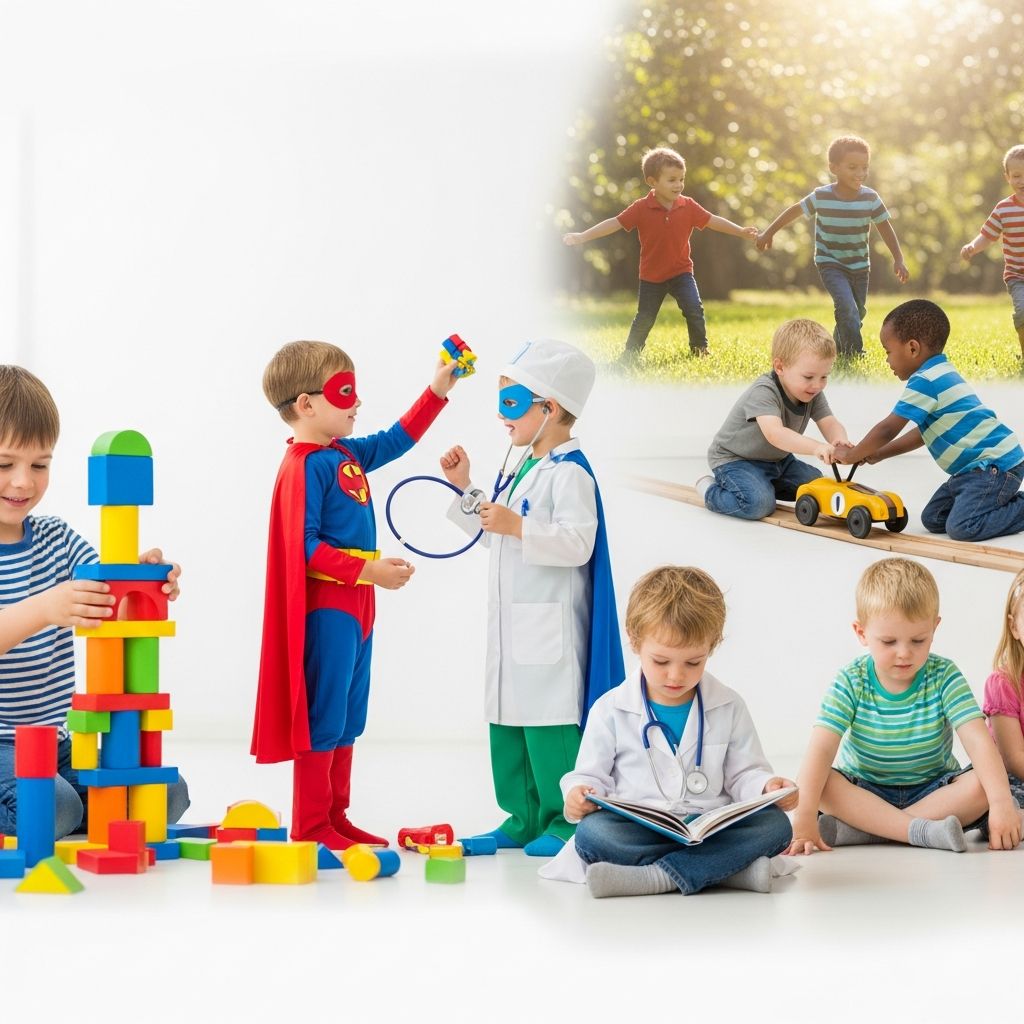
Play forms the cornerstone of childhood development, enabling children to explore, learn, and thrive across physical, cognitive, social, and emotional domains. Research from leading child development experts underscores that engaging in diverse play activities daily supports brain growth, motor skills, creativity, and interpersonal abilities, preparing kids for future challenges.
Why Play Matters in Early Years
From infancy through school age, play is the primary vehicle for learning. It stimulates brain development by engaging senses, fostering curiosity, and promoting creative thinking through problem-solving and cause-effect understanding. Children who play regularly build resilience, manage emotions, and enhance memory while strengthening large and small muscle groups via activities like running or manipulating objects. Socially, play teaches cooperation, turn-taking, and conflict resolution, crucial for building confidence and empathy.
Experts emphasize balancing structured play, like guided games, with unstructured free play where kids self-direct. This mix burns energy, reduces stress, and instills flexibility and motivation. Without sufficient playtime, children may struggle with impulse control, task-switching, and social navigation.
Physical Activity Play: Building Strong Bodies
Physical play encompasses any movement-based activity, from running and jumping to climbing and roughhousing. It develops gross motor skills, coordination, balance, and strength while releasing boundless childhood energy. Such play also cultivates body awareness, boundaries, and impulse control, forming neural pathways for precise motor and cognitive regulation.
- Running, chasing, or tag to boost reflexes and endurance.
- Jumping rope, hopping, or obstacle courses for agility.
- Biking, swinging, or dancing for coordination and fun.
These activities not only promote fitness but also enhance cognitive benefits, like strategic thinking during games. Parents can encourage this by setting up outdoor spaces or indoor movement zones.
Social Interaction Play: Forging Connections
Social play involves group interactions like tag, hide-and-seek, or board games, honing communication, cooperation, negotiation, and empathy. Children practice roles, follow rules, compromise, and express needs, building essential life skills. It fosters friendships, emotional regulation, and resilience by navigating frustrations and feedback in real-time.
| Age Group | Suitable Activities | Key Skills Gained |
|---|---|---|
| Infants/Toddlers | Peek-a-boo, passing toys | Turn-taking, eye contact |
| Preschoolers | Group games like tag | Cooperation, sharing |
| School Age | Team sports, role-playing | Negotiation, leadership |
Encourage playdates or park visits to maximize these benefits, observing how kids naturally resolve disputes.
Imaginative and Pretend Play: Sparking Creativity
Pretend play lets children transform into firefighters, doctors, or explorers, using objects symbolically. This fuels creativity, storytelling, emotional exploration, and abstract thinking. It helps process feelings, build empathy by role-playing scenarios, and defuse stress through fantasy. Imaginative play enhances language as kids narrate adventures and vocabulary expands.
- Dress-up with costumes for role immersion.
- Puppet shows or toy kitchens for scenario enactment.
- Storytelling circles to invent tales together.
Provide props like boxes or scarves; minimal guidance allows self-led narratives that teach decision-making and flexibility.
Constructive and Exploratory Play: Hands-On Learning
Constructive play involves creating structures with blocks, clay, or recyclables, blending creativity with engineering basics. It refines fine motor skills, hand-eye coordination, spatial awareness, and problem-solving. Exploratory play extends this by investigating materials, textures, and environments, satisfying curiosity and sensory development.
Children experiment with shapes, sizes, and stability, practicing trial-and-error. This play boosts cognitive growth and often merges with imaginative elements, like building a castle for pretend royals.
- Block towers or LEGO builds for design skills.
- Playdough sculpting for dexterity.
- Sensory bins with sand, water, or rice for discovery.
Balancing Play Types for Optimal Development
A well-rounded play routine integrates all types. Infants benefit from sensory exploration, toddlers from physical and simple social games, preschoolers from pretend and constructive pursuits, and school-agers from team-based and rule-following activities. Daily unstructured time is vital—aim for at least one hour outdoors.
Parents play a key role: provide safe spaces, diverse materials, and join occasionally without over-directing. Limit screens to prioritize active engagement. Challenges like limited space? Use household items for indoor adaptations.
Age-Specific Play Milestones
| Age | Play Focus | Examples | Developmental Gains |
|---|---|---|---|
| 0-12 Months | Exploratory/Sensory | Grasping toys, tummy time | Sensory processing, motor basics |
| 1-3 Years | Physical/Imaginative | Running, simple pretend | Balance, creativity onset |
| 3-5 Years | Social/Constructive | Group builds, dress-up | Cooperation, fine motors |
| 5+ Years | All Types/Complex | Board games, sports teams | Strategy, advanced social skills |
Practical Tips for Parents
- Rotate toys to spark interest.
- Follow child’s lead in free play.
- Incorporate nature for sensory richness.
- Model positive interactions.
- Track progress via play milestones.
Frequently Asked Questions
How much playtime do children need daily?
Children require at least 60 minutes of unstructured play daily, plus structured activities, varying by age. Infants need frequent short bursts; school-agers benefit from extended sessions.
Can play help with emotional challenges?
Yes, pretend play aids emotional regulation, empathy, and stress relief by allowing safe expression of feelings.
What if my child prefers solo play?
Solo play builds independence and creativity; gradually introduce social opportunities to balance skills.
Does structured play replace free play?
No—both are essential. Structured builds specific skills; free play fosters initiative and adaptability.
How to encourage reluctant players?
Offer open-ended toys, join briefly, and create inviting environments without pressure.
References
- The Importance of Play in Childhood — Child Guidance Center. Accessed 2026. https://cgcjax.org/the-importance-of-play-in-childhood/
- Supporting Children’s Learning Through Play — ChildCare.gov. Accessed 2026. https://childcare.gov/consumer-education/support-my-childs-health-development/supporting-childrens-learning-through-play
- It’s a Kid’s Job — NIH News in Health. 2018-07. https://newsinhealth.nih.gov/2018/07/it-s-kid-s-job
- The power of play – Part 3: Types of play — MSU Extension. Accessed 2026. https://www.canr.msu.edu/news/the_power_of_play_part_3_types_of_play
- How Kids Learn to Play: 6 Stages of Play Development — Pathways.org. Accessed 2026. https://pathways.org/kids-learn-play-6-stages-play-development
- 10 Ways Play Impacts Child Development — Kid Care Pediatrics. Accessed 2026. https://kidcarepediatrics.com/the-importance-of-play-for-children/