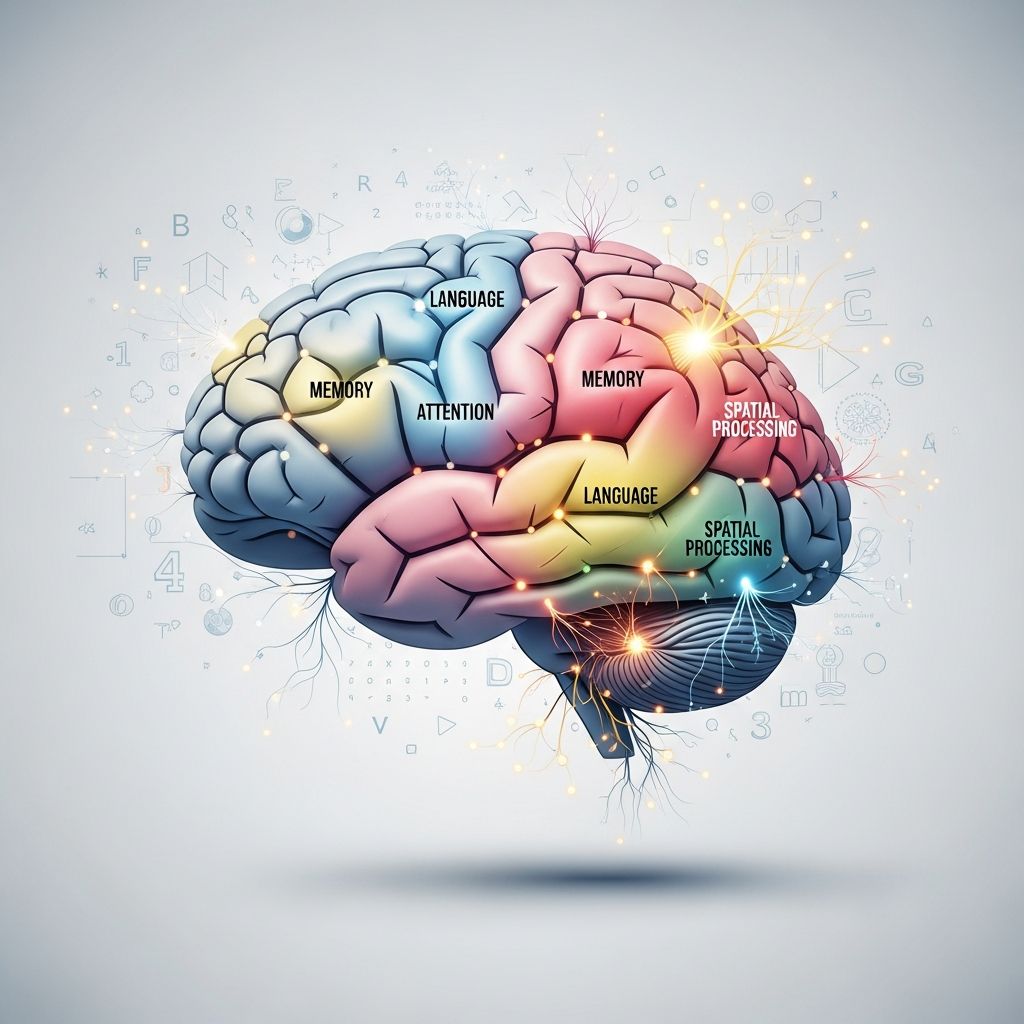
Learning disabilities (LDs) represent neurodevelopmental challenges that disrupt academic progress despite adequate instruction and intelligence. Central to understanding LDs is the concept of **cognitive profiles**—distinct patterns of strengths and weaknesses in cognitive processing that underpin academic struggles. These profiles move beyond global IQ measures, focusing instead on intraindividual discrepancies that reveal why a child excels in some areas but falters in others.
Defining Cognitive Profiles and Their Role in LD Identification
Cognitive profiles refer to the unique configuration of abilities across domains like working memory, processing speed, verbal reasoning, visual-spatial skills, and executive functions. Research shows that LDs are not uniform deficits but involve specific mismatches between cognitive strengths and academic demands.
Traditional IQ-achievement discrepancy models have been largely abandoned because IQ does not predict LD status effectively. Instead, **patterns of strengths and weaknesses (PSW)** approaches have gained traction. These methods analyze how cognitive processes align (or fail to align) with academic weaknesses.
Key PSW Identification Methods
- Concordance/Discordance Method (C/DM): Identifies LD when an academic weakness matches a cognitive weakness (concordance), but contrasts with cognitive strengths (discordance).
- Cross-Battery Assessment (XBA): Draws from multiple test batteries to map cognitive abilities against CHC theory (Cattell-Horn-Carroll), highlighting broad and narrow abilities.
- Discrepancy/Consistency Method (D/CM): Looks for consistency between cognitive weaknesses and academic deficits, emphasizing theoretical links.
These methods, grounded in empirical studies, improve identification accuracy by capturing individualized profiles rather than relying on cutoff scores.
Common Cognitive Profiles Across LD Subtypes
Studies using latent profile analysis and multivariate assessments reveal recurring patterns in children with LDs. Three prominent profiles emerge: zigzag (alternating highs and lows), wavy (gradual fluctuations), and waterfall (consistent decline).
| Profile Type | Key Characteristics | Associated LDs |
|---|---|---|
| Zigzag | Sharp peaks and valleys across cognitive domains | Reading comprehension, mixed deficits |
| Wavy | Moderate undulations, weaker in memory tasks | Math calculation, working memory issues |
| Waterfall | Steep drop in visual-sequential processing | Word-level reading, dyscalculia |
All profiles share weaknesses in **visual sequential processing memory**, a critical factor in learning disabilities, alongside deficits in verbal short-term memory and vocabulary.
Profiles in Reading Disabilities
In word reading LD, children often show low working memory and oral language relative to other abilities, even as nonverbal skills remain average. Reading comprehension LD involves dorsal-ventral pathway disruptions, with reduced connectivity in meaning-related brain areas.
Profiles in Mathematics LD (Dyscalculia)
Math LD profiles feature increased intraparietal sulcus (IPS) activity and hyper-connectivity, indicating inefficient processing rather than underactivation. Working memory and processing speed deficits are common, shared with other LDs and ADHD.
Longitudinal data from grades 3-5 confirm specificity: calculation LD shows flat cognitive profiles, while applied problems LD links to concept formation weaknesses.
Neuropsychological Foundations of Cognitive Profiles
Brain imaging reveals domain-specific networks. Reading relies on left-hemisphere circuits for phonology and semantics; math engages IPS for quantity representation and frontal areas for integration.
Working memory and processing speed act as transdiagnostic factors, explaining comorbidities. Children with LD expend more neural effort, showing hyperactivation in frontal and parietal regions during tasks.
Genetics and early brain development contribute, with atypical white matter tracts correlating to profile variations.
Implications for Assessment and Intervention
PSW-guided assessments use comprehensive batteries targeting CHC factors: fluid reasoning, comprehension-knowledge, visual processing, auditory processing, processing speed, and working memory.
Interventions should leverage strengths. For zigzag profiles, build on peaks (e.g., visual-spatial) to scaffold weaknesses. Evidence supports targeted training in phonological awareness for reading and numerical fluency for math.
- Train visual-sequential memory with pattern games and sequencing tasks.
- Boost working memory via dual-task exercises like n-back games.
- Incorporate processing speed drills, such as rapid naming.
Challenges and Future Directions
While PSW models enhance specificity, empirical validation varies. Classification studies show IQ irrelevance, but not all profiles predict intervention response equally.
Future research must integrate neuroimaging with behavioral profiles for precision medicine. Longitudinal tracking from early grades will refine profiles and outcomes.
Frequently Asked Questions (FAQs)
What is a cognitive profile in learning disabilities?
A cognitive profile maps an individual’s strengths and weaknesses across processing domains, revealing why academic deficits occur despite normal intelligence.
How do PSW methods differ from IQ testing?
PSW focuses on intraindividual patterns and theoretical links to academics, unlike IQ’s global score which poorly predicts LD.
Can cognitive profiles predict intervention success?
Yes, profiles like visual-sequential weaknesses guide targeted therapies, improving outcomes in reading and math.
Are cognitive profiles unique to each child?
While individualized, common patterns (zigzag, wavy, waterfall) emerge across LD subtypes.
What role does working memory play?
It underlies many LDs, correlating with academic skills and explaining comorbidities like ADHD.
References
- Patterns of Cognitive Strengths and Weaknesses: Identification of Learning Disability/Other High Ability Subtypes — Hale JB et al. National Center for Biotechnology Information. 2014-07-23. https://pmc.ncbi.nlm.nih.gov/articles/PMC4111129/
- ASIS Cognitive Profiles of Children with Learning Disabilities — SciELO. 2021-01-01. https://scielo.isciii.es/pdf/ap/v39n1/1695-2294-ap-39-01-72.pdf
- Neuropsychology of Learning Disabilities: The Past and the Future — Fletcher JM et al. National Center for Biotechnology Information. 2018-10-26. https://pmc.ncbi.nlm.nih.gov/articles/PMC6249682/
- The Cognitive and Academic Profiles of Reading and Mathematics Disabilities — Cirino PT et al. National Center for Biotechnology Information. 2012-05-10. https://pmc.ncbi.nlm.nih.gov/articles/PMC3366486/
- Cognitive Neuroscience of Dyscalculia and Math Learning Disabilities — Menon V et al. Stanford Medicine. 2017-01-01. https://med.stanford.edu/content/dam/sm/scsnl/documents/Menon_Padmanabhan_Schwartz_Cognitive-neuroscience-of-dyscalculia-and-math-learning-disabilities.pdf
- The Three Methods of Learning Disability Identification — Learning Disabilities Association of America. 2023-01-01. https://ldaamerica.org/the-three-methods-of-learning-disability-identification/