Engaging in strength training during pregnancy offers numerous benefits, including improved cardiovascular health, better posture, reduced back pain, and enhanced preparation for labor. Medical organizations like the American College of Obstetricians and Gynecologists (ACOG) affirm that regular physical activity, including resistance exercises, is safe for most women with uncomplicated pregnancies and does not elevate risks of miscarriage, preterm birth, or low birth weight. However, adaptations are essential to accommodate physiological changes such as increased abdominal girth, joint laxity, and shifting center of gravity.
Key Benefits of Prenatal Strength Work
Strength training supports maternal well-being by bolstering muscle tone, particularly in the core, back, and pelvic floor, which aids in labor endurance. Active pregnant women experience fewer complications in late pregnancy and delivery, as noted by the UK’s National Health Service (NHS). It also helps manage gestational weight gain and promotes faster postpartum recovery.
- Enhanced stamina: Builds endurance for labor’s physical demands.
- Posture improvement: Counteracts pregnancy-related spinal curvature.
- Pelvic floor strength: Reduces incontinence risks.
- Mental health boost: Releases endorphins to combat mood swings.
General Safety Principles for Lifting Weights
Before starting or continuing a routine, consult your healthcare provider to rule out contraindications like placenta previa or severe anemia. Core rules include avoiding exhaustion—stop if breathless, as this limits oxygen to the fetus. Stay hydrated, wear supportive shoes, and skip hot environments to prevent overheating.
Focus on moderate intensity: Reduce loads to 60-70% of pre-pregnancy maximums to manage intra-abdominal pressure and protect the pelvic floor. Breathe steadily; eschew the Valsalva maneuver (holding breath while straining), which spikes pressure.
Trimester-Specific Strength Training Recommendations
Pregnancy divides into three trimesters, each demanding unique adjustments. Pre-pregnancy lifters can often maintain routines with tweaks, while novices should prioritize lighter resistance like bands.
First Trimester: Maintaining Momentum
Early pregnancy allows near-normal training since visible changes are minimal. Continue familiar lifts but monitor fatigue from nausea or hormonal shifts. Ideal focus: full-body circuits with compound moves like goblet squats and rows.
- Warm up 5-10 minutes with light cardio.
- 3 sets of 10-12 reps per exercise.
- Emphasize form over heavy loads.
Avoid high-impact or trauma-risk activities.
Second Trimester: Adapting for the Bump
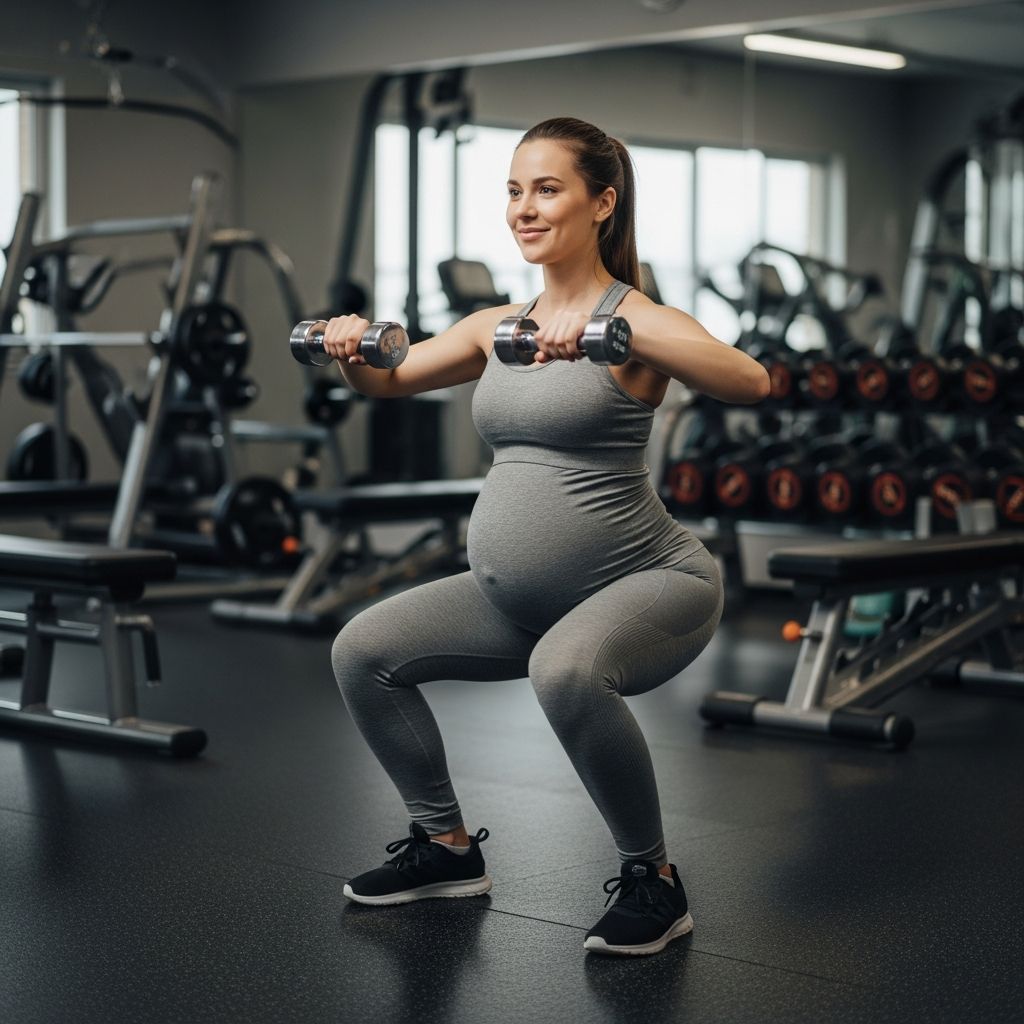
As the uterus expands, joint laxity increases, heightening injury risk—opt for stable surfaces. Widening stance in squats/deadlifts accommodates the belly. Limit supine positions after 16 weeks to avoid vena cava compression.
| Exercise | Modification | Reps/Sets |
|---|---|---|
| Squats | Wide stance, box squat to support | 10-15 reps, 3 sets |
| Deadlifts | Reduced range, hold stable object | 8-12 reps, 3 sets |
| Rows | Seated cable or band pulls | 12 reps, 3 sets |
Third Trimester: Prioritizing Stability and Support
Late pregnancy demands supported movements. NIOSH-derived guidelines cap repetitive lifts at 23 kg (51 lbs) up to week 20, 11 kg (24 lbs) after week 24, avoiding floor or overhead lifts. Elevate benches for presses, use seated positions for upper body work.
Pelvic floor awareness is crucial—exhale on exertion to minimize strain.
Safe Exercises and Modifications
Select low-risk moves targeting posture and functionality. Use dumbbells, kettlebells, or bodyweight over barbells for control.
- Glute bridges: Elevate bar to clear belly; strengthens posterior chain.
- Supported lunges: Hold TRX or wall for balance.
- Seated shoulder presses: Avoid overhead free weights post-first trimester.
- Resistance band pull-aparts: For upper back and posture.
- Pelvic tilts and bird-dogs: Core stability without crunching.
Exercises and Activities to Strictly Avoid
Certain movements pose undue risks due to trauma potential, pressure, or positioning.
- Overhead lifts after trimester 1: Strains back amid postural changes.
- Supine exercises post-16 weeks: Impairs uterine blood flow.
- Contact/high-impact sports: Risk of abdominal blows.
- Heavy floor lifts: Especially after 20 weeks due to reach limitations.
- Scuba or high-altitude activities: Decompression/altitude sickness hazards.
Monitoring Your Body: Warning Signs to Stop
Listen to signals: Cease and seek medical advice if experiencing dizziness, calf pain/swelling, blurred vision, chest pain, muscle weakness, amniotic fluid leakage, difficult breathing, or severe abdominal pain. Regular check-ins ensure safety.
Sample Weekly Strength Routine by Trimester
Tailor this 3-4 day plan; rest or walk on off days. 45-60 minutes per session.
| Day | First Trimester Focus | Second/Third Trimester Focus |
|---|---|---|
| Monday | Lower body: Squats, lunges, calf raises | Supported squats, glute bridges, seated leg press |
| Wednesday | Upper body: Rows, presses, flies | Band rows, seated presses, wall pushes |
| Friday | Core/full body: Deadlifts, planks, twists | Bird-dogs, side planks, pelvic tilts |
| Sunday | Active recovery: Yoga or swim | Prenatal yoga or walk |
Progress slowly; prioritize recovery with 48-hour gaps between sessions.
Frequently Asked Questions (FAQs)
How much weight can I lift while pregnant?
Provisional limits: Up to 23 kg repetitive early on, dropping to 11 kg late pregnancy; individualize with provider input.
Can beginners start strength training during pregnancy?
Yes, under guidance, using light weights or bands; consult doctor first.
Does lifting cause preterm labor?
No evidence; appropriate activity is protective.
What if I feel pelvic pain during lifts?
Reduce intensity, add support, or pause; see a pelvic floor specialist.
Is it safe through all trimesters?
With modifications, yes for experienced lifters; always get clearance.
This comprehensive guide empowers expectant mothers to train confidently. Consistency fosters strength for motherhood’s demands.
References
- Pregnancy Exercise Guidelines — American Pregnancy Association. Accessed 2026. https://americanpregnancy.org/healthy-pregnancy/pregnancy-health-wellness/exercise-guidelines/
- Safe Lifting During Pregnancy: Top 3 Tips from a Perinatal Fitness Expert — MamasteFit. Accessed 2026. https://mamastefit.com/safe-lifting-during-pregnancy-top-3-tips-from-a-perinatal-fitness-expert/
- Weight Lifting While Pregnant: How to Do It Safely — Healthline. Accessed 2026. https://www.healthline.com/health/pregnancy/weight-lifting-while-pregnant
- Provisional Recommended Weight Limits for Manual Lifting During Pregnancy — National Library of Medicine (PMC). 2015-10-16. https://pmc.ncbi.nlm.nih.gov/articles/PMC4606868/
- Exercise in Pregnancy — NHS. Accessed 2026. https://www.nhs.uk/pregnancy/keeping-well/exercise/
- Exercise During Pregnancy — ACOG. Accessed 2026. https://www.acog.org/womens-health/faqs/exercise-during-pregnancy