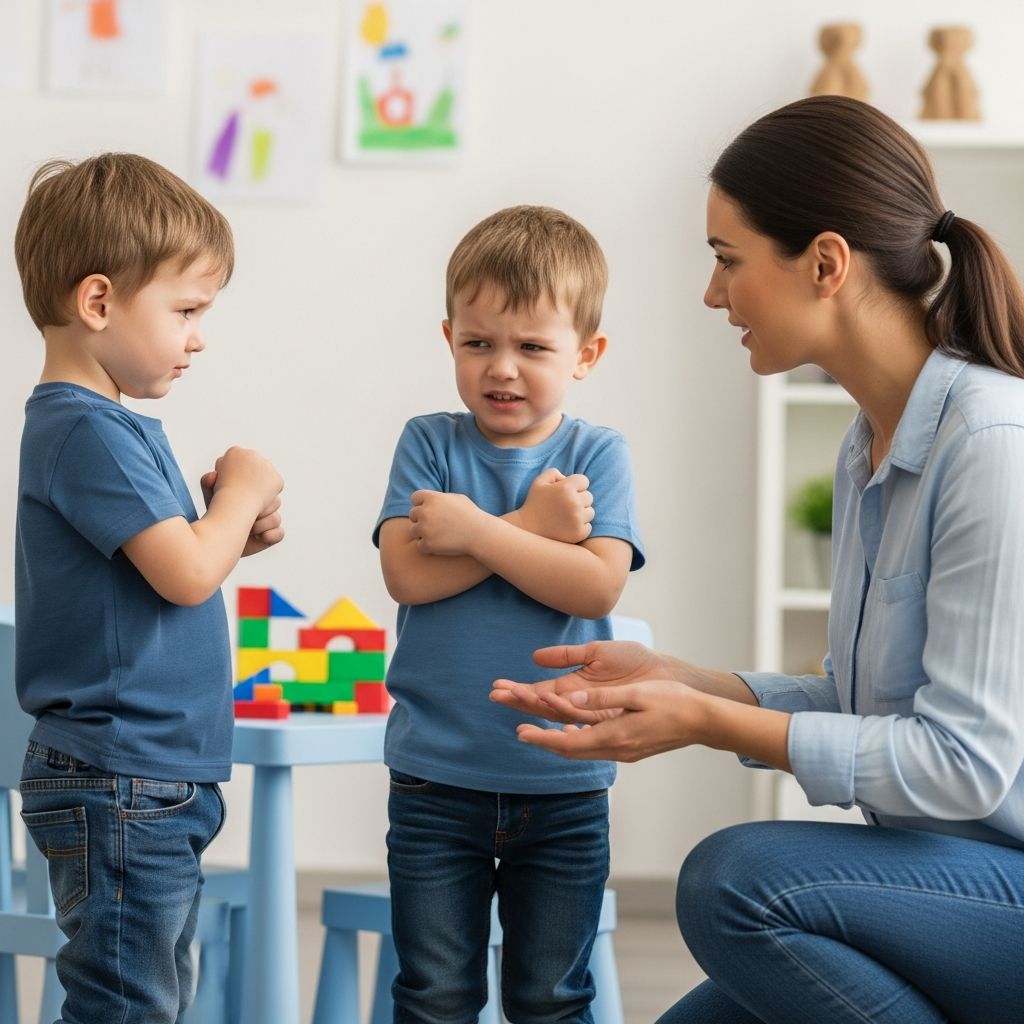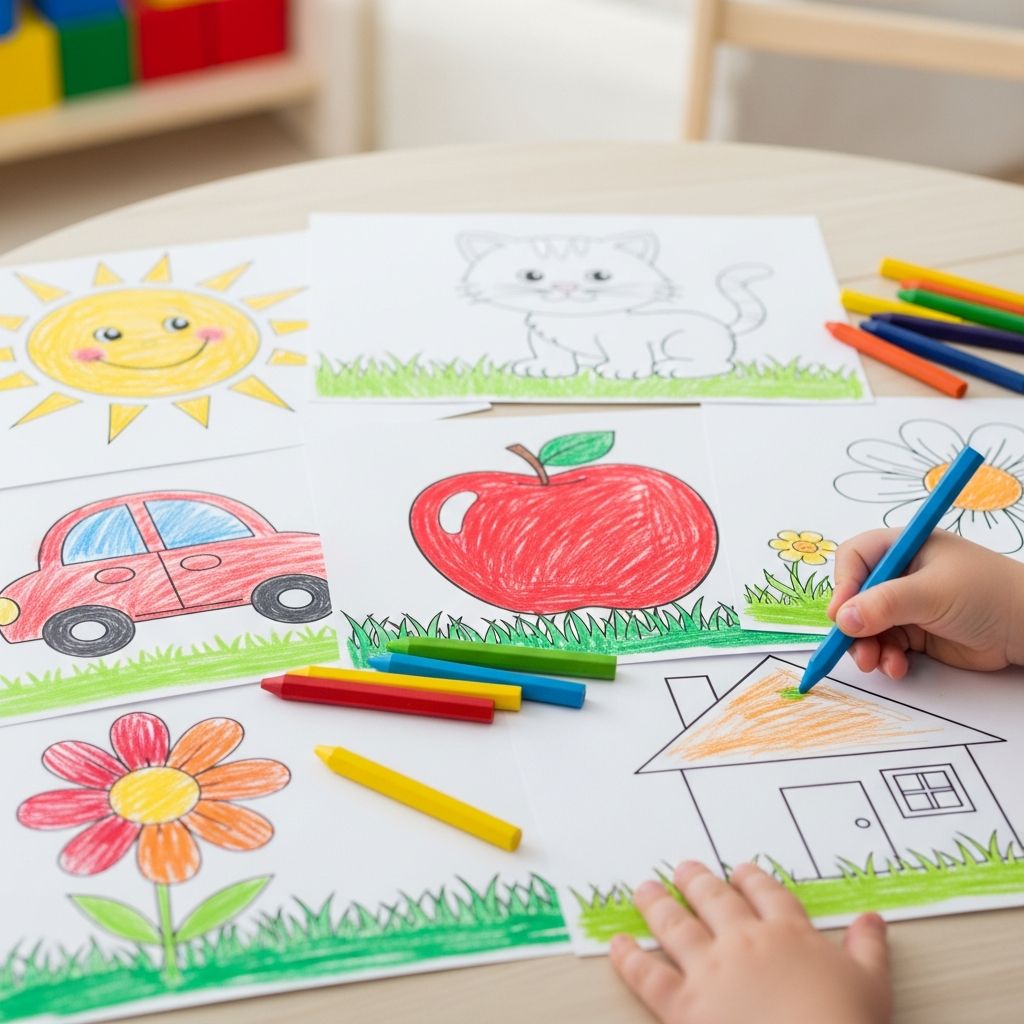
Preschool coloring pages are more than quick printables to keep kids busy. Used thoughtfully, they become powerful tools to build fine motor skills, early literacy and numeracy, focus, and emotional regulation while children simply think they are having fun.
This guide explains how to choose and use coloring pages with preschoolers so every scribble supports healthy development at home or in the classroom.
Why Coloring Matters in Early Childhood
Research and educational organizations highlight several core benefits of coloring and drawing for young children, especially in the preschool years.
- Fine motor development: Holding crayons and controlling small strokes strengthens the hand and finger muscles needed for writing.
- Hand–eye coordination: Watching where the crayon goes and adjusting movements helps children coordinate what they see with what they do.
- Pre-writing skills: Lines, curves, and shapes on coloring pages mirror the basic strokes of letters and numbers.
- Attention and persistence: Coloring encourages children to stick with a task, slowly building concentration and patience.
- Creativity and self-expression: Choice of colors, patterns, and details allows children to communicate feelings and ideas visually.
Because coloring is low-pressure and enjoyable, it offers a gentle way to practice these abilities every day.
Key Skills Preschoolers Build With Coloring Pages
Thoughtfully selected preschool coloring pages can support multiple domains of development at once.
Fine Motor Strength and Control
Coloring naturally trains the same small muscles used for writing, cutting, and buttoning clothes. Educational organizations note that manipulating crayons improves dexterity and hand–eye coordination and helps children experiment with pressure and control.
- Large, simple shapes help beginners practice broad strokes.
- Smaller spaces and details challenge older preschoolers.
- Different tools (fat crayons, thin crayons, colored pencils) build varied grips and control.
Pre-Reading and Pre-Writing Foundations
Before children can read and write words, they must learn to interpret and produce basic marks on a page. Libraries and literacy experts emphasize that early scribbles and coloring help children realize that lines on paper can stand for objects, shapes, and eventually letters.
- Tracing paths or simple shapes introduces controlled movement.
- Coloring pictures that include letters, name labels, or environmental print links images with text.
- Talking about what children are coloring builds vocabulary and narrative skills.
Early Math and Concept Learning
Coloring pages can quietly introduce early math concepts while kids focus on filling in spaces.
| Concept | How Coloring Supports It | Example Activity |
|---|---|---|
| Counting | Children count objects as they color them. | “Color five apples red and two apples green.” |
| Shapes | Repeated exposure to circles, squares, and triangles builds recognition. | “Find all the circles and color them blue.” |
| Patterns | Alternating colors introduces AB, AAB, and other simple patterns. | “Make a red–yellow–red–yellow pattern on the balloons.” |
| Comparison | Kids notice big/small, many/few, long/short. | “Color the biggest fish green and the smallest fish orange.” |
Color-by-number or color-by-shape pages, used in moderation, can also help connect symbols (numerals, shapes) with actions.
Emotional Regulation and Relaxation
Many early childhood programs use coloring as a calming transition activity. The repetitive motion of coloring can help reduce stress and support emotional self-regulation, especially when accompanied by a quiet environment.
- Soft background music and gentle lighting amplify the soothing effect.
- Simple, uncluttered images are better for stressed or tired children.
- Choice of topic (favorite characters, animals, nature) increases comfort and motivation.
Social Skills and Cooperation
When coloring becomes a shared experience, it also supports social development.
- Children practice sharing crayons and taking turns.
- Group murals encourage collaboration on a common goal.
- Talking about pictures gives practice in conversation and listening.
Choosing Developmentally Appropriate Coloring Pages
Not every printable is ideal for preschoolers. Matching the page to a child’s age and stage keeps coloring enjoyable and beneficial.
What to Look For by Age
| Age | Recommended Page Features |
|---|---|
| 2–3 years |
|
| 3–4 years |
|
| 4–5 years |
|
Balancing Structure and Creative Freedom
Some educators caution that overly rigid coloring pages can limit creativity if children feel pressured to stay perfectly inside the lines or match exact colors. To keep the focus on learning and expression:
- Invite children to choose their own colors, even if they seem “unrealistic.”
- Allow scribbles, color mixing, and extra drawings around the printed image.
- Offer blank paper and open-ended art in addition to coloring pages.
This balanced approach preserves the benefits of coloring while supporting genuine creativity.
Creative Ways to Use Preschool Coloring Pages
Coloring pages can be far more than a sit-and-fill activity. With a little imagination, they can fuel storytelling, games, and cross-curricular learning.
1. Story Starters and Language Builders
Turn any picture into a mini story session:
- Ask open-ended questions: “Who lives here?”, “Where are they going?”, “What happens next?”
- Encourage children to name characters and invent simple adventures.
- Invite them to draw extra elements that expand the story (a pet, a tree, a rainbow).
This naturally builds vocabulary, narrative structure, and expressive language while they color.
2. Themed Learning Units
Connect coloring pages to your current theme—seasons, community helpers, animals, or transportation—to reinforce what children are learning elsewhere.
- During a farm unit, color different farm animals and talk about sounds, habitats, and food.
- In a weather unit, color suns, clouds, and rainbows while discussing clothing choices for each day.
- For a community helpers week, color firefighters, nurses, and mail carriers, then role-play their jobs.
3. Movement and Sensory Extensions
Some children learn best by moving their bodies or engaging multiple senses. Combine coloring with movement and sensory play:
- After coloring animals, move like each one (hop like a frog, stomp like an elephant).
- Use textured tools (crayons over sandpaper under the paper, chunky crayons, or crayons frozen in ice) for a sensory twist.
- Pair coloring with themed music (ocean sounds, jungle noises) to create an immersive experience.
4. Simple Social-Emotional Lessons
Coloring is a gentle way to explore feelings and social situations.
- Choose pictures of faces and ask children to color and then name the feelings.
- Color scenes of sharing or helping and talk about kindness and friendship.
- Invite children to draw or color something that makes them feel safe or happy.
5. Home–School Connection
Coloring pages travel easily between the classroom and home, strengthening communication with families.
- Send home a small packet tied to the week’s topic with a brief note explaining the learning goal.
- Invite families to write a short caption about what their child said while coloring and return it.
- Display completed pages in a classroom gallery to celebrate effort and persistence.
Practical Tips for Parents and Educators
A few simple strategies can help you get the most developmental value from preschool coloring pages.
Set Up a Child-Friendly Coloring Space
- Provide a low table or clear floor space with firm backing for the paper.
- Offer a small selection of crayons in a reachable container (too many choices can overwhelm young children).
- Use washable, non-toxic materials appropriate for preschool ages.
Focus on Process, Not Perfection
Experts in early childhood emphasize that the process of drawing and coloring is more important than the finished product.
- Describe what you see instead of judging it: “I see lots of blue circles” rather than “That’s beautiful.”
- Avoid correcting mistakes like coloring outside the lines.
- Celebrate effort: “You worked on this for a long time.”
Use Short, Enjoyable Sessions
Young children tire quickly. Keeping coloring times short and positive encourages them to return to the activity willingly.
- Start with 5–10 minute sessions for younger preschoolers.
- Let children stop when they’re done, even if the page is unfinished.
- Offer movement breaks between seated activities.
Frequently Asked Questions (FAQs)
Q: Are coloring pages good or bad for preschool development?
A: Coloring pages can be very helpful for building fine motor skills, focus, and early learning when they are used as one option among many creative activities. Concerns usually arise only when children are asked to color perfectly inside the lines or are given no chance for open-ended art and self-expression.
Q: How often should preschoolers use coloring pages?
A: You can offer coloring pages several times per week, or even daily, as long as they are voluntary and balanced with other play such as building, pretend play, outdoor movement, and free drawing. Short, engaging sessions are better than long, forced ones.
Q: At what age can my child start using coloring pages?
A: Toddlers can begin exploring with chunky crayons around 18–24 months, though their marks will be mostly large scribbles. By 3–5 years, most children enjoy simple coloring pages with big shapes and can gradually handle more detailed images as their coordination improves.
Q: How can I keep coloring from limiting my child’s creativity?
A: Offer blank paper and open-ended art materials alongside coloring pages, encourage children to add their own drawings to the printed image, and avoid strict rules about colors or staying inside the lines. Invite them to tell stories about their pictures to expand imagination beyond the outline.
Q: What if my preschooler is not interested in coloring?
A: Not every child is drawn to coloring, and that is okay. You can try different tools (markers, gel crayons, paint sticks), adjust the time of day, or choose topics that match their interests. If they still resist, focus on other fine motor activities like building with blocks, playdough, or lacing cards, which build similar skills.
References
- The Benefits of Coloring and Drawing — Scholastic Parents. 2019-08-19. https://www.scholastic.com/parents/school-success/learning-toolkit-blog/benefits-coloring-and-drawing.html
- Coloring is More Than Just Fun, Coloring is a Learning Experience — Topeka & Shawnee County Public Library. 2017-03-07. https://tscpl.org/articles/coloring-is-more-than-just-fun-coloring-is-a-learning-experience
- Benefits of Coloring for Preschool Age Kids — All Saints Preschool & Play. 2022-04-15. https://www.allsaintsplay.com/blog/benefits-of-coloring-for-kids
- Are Coloring Sheets Bad for Early Development? — Famly. 2021-09-23. https://www.famly.co/us/blog/coloring-sheets-early-childhood
- How Coloring Sheets Can Enhance Children’s Creativity and Learning — POSPaper Blog. 2020-02-12. https://www.pospaper.com/blogs/news/how-coloring-sheets-can-enhance-childrens-creativity-and-learning
- How Coloring Helps Child Development — GrowFit Camp. 2020-06-05. https://growfit.camp/how-coloring-helps-child-development/
- 5 Ways to Use Coloring Pages in Your Early Childhood Classroom — Experience Early Learning. 2020-01-15. https://blog.experienceearlylearning.com/5-ways-to-use-coloring-pages/