Cabinet pulls in a child’s room do far more than open drawers. They can protect little fingers, soften hard edges in tight spaces, and add personality to storage that kids touch dozens of times a day. Thoughtful hardware choices help you create a space that is safe, practical, and fun to use.
Why Kids’ Cabinet Hardware Matters
Children interact differently with furniture than adults do: they climb, lean, pull and sometimes swing on handles, which means cabinet hardware in kids’ rooms must tolerate more stress and rough handling than typical bedroom or office hardware. Choosing the right pulls reduces everyday risks such as pinched fingers, head bumps on sharp corners, and access to off-limits items like craft blades or medicine.
Beyond safety, pulls help kids develop independence. When handles are sized, shaped, and positioned for smaller hands, it becomes easier for children to put toys away, grab art supplies, and choose their own clothes, which in turn encourages tidiness and responsibility.
Key Factors to Consider
Before diving into colors and cute shapes, it helps to think through a few practical criteria. The best cabinet pulls for kids’ rooms balance safety, durability, ease of use, and style, while staying within your budget.
- Safety first: Smooth edges, rounded profiles, and sturdy mounting hardware reduce the risk of cuts, bumps, and broken parts.
- Durability: Materials and finishes should handle fingerprints, crayons, and frequent cleaning without chipping or rusting.
- Comfort and grip: Pulls should be easy for small hands to grasp without slipping or requiring too much strength.
- Design and theme: Hardware is a simple way to echo the room’s theme and make storage areas more inviting.
- Budget and longevity: Pick options that look good today but will not feel too babyish a few years down the line, or can be swapped easily as tastes change.
Safe Shapes and Profiles
Shape has a huge impact on safety, especially in tight spaces where kids move quickly and may not notice protruding handles. Rounded, low-profile options are usually more forgiving than long, angular pulls or oversized novelty pieces.
Use the following list as a quick reference when evaluating shapes:
- Rounded knobs: Compact and simple, good for small drawers and doors where protruding bars might catch clothing.
- Curved bar pulls: Comfortable for older kids’ hands, especially on wide drawers full of toys or clothes.
- Recessed pulls: Built into the drawer or door face, they minimize snagging and bumping in narrow rooms or bunk-bed layouts.
- Oversized novelty pulls: Best limited to low-risk areas (for example, toy chests) where extra protrusion is less likely to cause bumps.
Impact of Projection Depth
Projection depth is how far a handle sticks out from the cabinet surface. The deeper that measurement, the more likely a child is to bump into the hardware or use it as a climbing rung. In compact kids’ rooms, shallower pulls reduce bruises and also lessen the temptation to hang body weight on the hardware.
Best Materials for Kids’ Cabinet Pulls
The material you choose affects everything from safety and durability to how easy it is to clean off marker stains or food smears. Some materials feel warmer and more inviting to touch, while others offer industrial-strength toughness for high-traffic family homes.
| Material | Pros | Cons | Best Use |
|---|---|---|---|
| Wood | Warm feel, paintable, easy to coordinate with furniture. | Can dent or chip; needs a good protective finish. | Nurseries, themed rooms, DIY repaint projects. |
| Metal (aluminum, stainless) | Very durable, resists bending, easy to wipe clean. | Cooler to the touch; look can feel more grown-up. | Shared spaces, older kids’ rooms, built-ins. |
| Plastic / Acrylic | Lightweight, often colorful, won’t chip like ceramic. | Cheaper versions may scratch or cloud over time. | Playrooms, low cabinets with bright playful designs. |
| Ceramic | Decorative, wide variety of patterns and shapes. | Can crack if slammed or yanked; harder to repair. | Gently used dressers and upper drawers. |
| Soft-touch silicone covers | Add cushioning, reduce impact, improve grip. | Usually used as an accessory, not as the main pull. | Babyproofing existing metal or wood pulls. |
Finishes, Colors, and Fun Details
Once you have narrowed down safe shapes and durable materials, finishes and colors make the hardware feel custom to your child’s personality. Neutral metals like brushed nickel or soft brass blend into a room and grow well with kids, while primary colors and playful motifs can make toy storage more appealing to younger children.
- Neutral finishes: Brushed metals and matte paints hide fingerprints better than high-gloss chrome or very dark tones.
- Color pops: Bright knobs on a white dresser can become a focal point without repainting the entire piece.
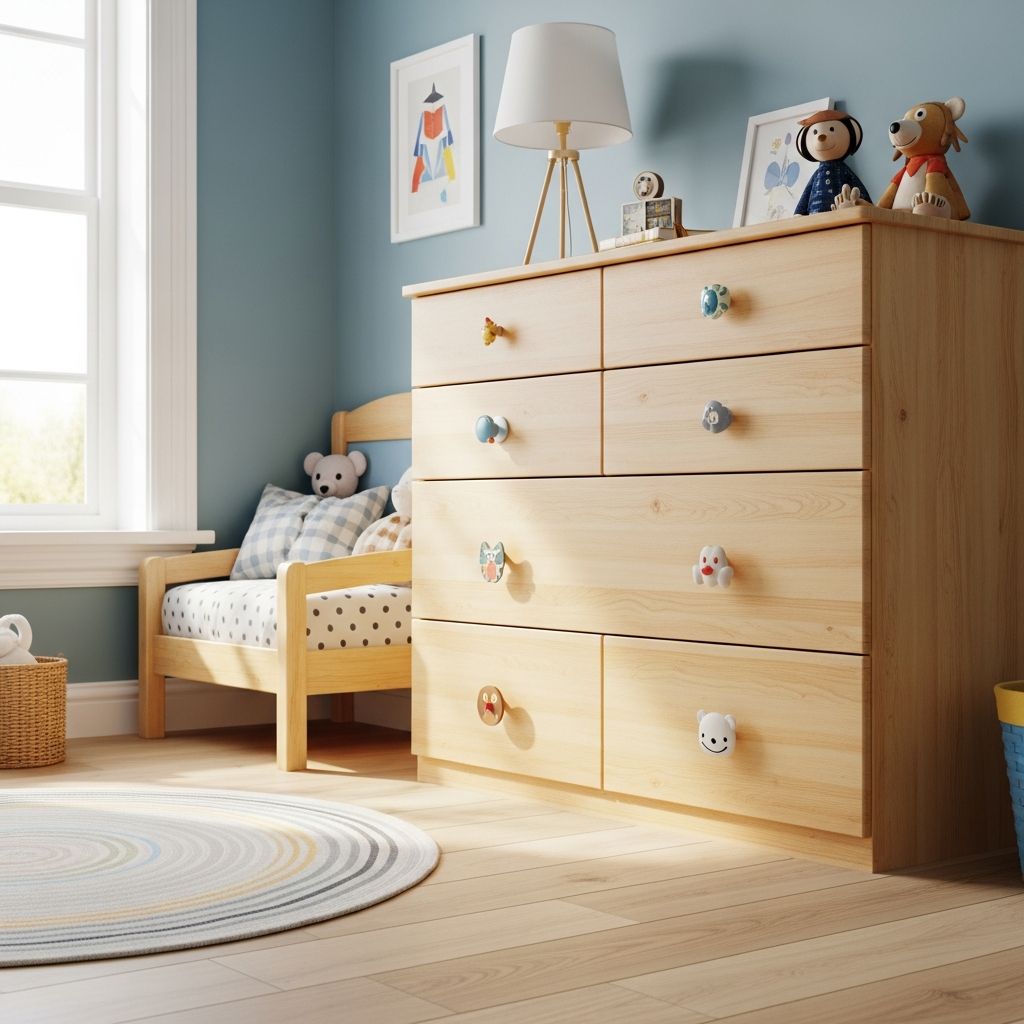
- Themed pulls: Stars, animals, letters, and simple shapes are a fun way to tie hardware into bedding or wall art.
- Mix-and-match sets: Using a different color on each drawer can help young kids learn sorting and where items go.
Different Pull Types and Where to Use Them
Not every cabinet or drawer in a kids’ space needs the same style of pull. By mixing hardware styles strategically, you can create subtle visual cues for what is safe to open and what is just for adults.
Knobs vs. Handles vs. Recessed Pulls
- Single knobs: Great for smaller drawers and cabinet doors; look tidy on narrow furniture pieces.
- Bar or arch handles: Work well on wide drawers full of heavier items, where two-handed pulling makes opening easier.
- Cup pulls: Their open underside can be easy for little fingers; choose softly rounded versions to avoid hard edges.
- Recessed pulls: Ideal for sliding doors, built-in bunk storage, or hallways where people walk close to the furniture.
Child Safety and Hardware Placement
Even the safest handle can pose a risk if it gives easy access to dangerous contents. Think about what is stored behind each cabinet or drawer front before choosing hardware and deciding where to install it.
- Use simple, easy-to-grip pulls on toy bins, book cabinets, and clothing drawers kids use independently.
- Pair cabinet pulls with child safety latches on doors that hide medicines, cords, small craft supplies, or heavy tools.
- Avoid very long horizontal bars on tall furniture that could function like ladder rungs for climbers.
- Install hardware at a comfortable height for your child so they do not need to tug upward or downward at awkward angles.
Installation Tips for Busy Families
Proper installation is essential: even the most carefully chosen pull becomes a hazard if it wobbles, loosens, or pulls free under stress. Basic tools are usually all that is required, but taking your time during installation pays off in daily use.
- Measure twice: Check hole spacing on replacement pulls and confirm it matches existing hardware, especially on wide drawers.
- Use the right screws: Screws that are too short may strip; those that are too long can poke through and scratch hands or clothing.
- Test every handle: Once installed, pull firmly as a child might to make sure it does not shift or wiggle.
- Maintain yearly: Do a quick inspection for loose hardware, chipped finishes, or sharp edges that have developed over time.
Style Ideas for Different Age Groups
Kids’ tastes change quickly. When possible, choose an underlying hardware style that can adapt as children grow by updating color or adding small accessories rather than replacing everything.
- Nursery: Soft pastels, smooth wooden or plastic knobs, and low-profile pulls that are hard to bump in the dark.
- Preschool: Bright, recognizable shapes and simple pictures that turn storage into an invitation to play and tidy up.
- Elementary ages: Bolder colors, metal handles with rounded corners, or themed pulls tied to favorite hobbies or animals.
- Pre-teens and teens: Sleek metal bars, neutral knobs, or minimal recessed pulls that help their room feel more grown-up.
Budget Planning and Smart Shopping
Cabinet pulls are a small detail that can add up quickly across dressers, toy storage, and built-ins. A simple plan helps avoid overspending while still achieving a polished, cohesive look in your child’s room.
- Count the total number of pulls needed before shopping and add two extras to cover future replacements.
- Decide which furniture pieces deserve the most decorative hardware and where simpler, cheaper pulls will work just as well.
- Look for packs or sets of knobs for long rows of drawers to keep the per-piece cost low.
- Consider repainting sturdy wooden knobs you already own instead of replacing them entirely.
Frequently Asked Questions
What makes a cabinet pull “kid-safe”?
A kid-safe cabinet pull has a rounded shape without sharp edges, a sturdy connection to the door or drawer, and a size that is easy for small hands to grip. It should not protrude so far that children frequently bump into it, and it should not easily become a step or handle for climbing.
Are ceramic knobs a good idea for children’s rooms?
Ceramic knobs can work well on light-use furniture like upper dresser drawers, but they are more likely to chip or crack if slammed or hit with toys. For heavy-use toy storage and low cabinets, wood, plastic, or metal options are generally more forgiving and longer-lasting.
How can I update old hardware without replacing it all?
If your existing hardware is smooth and securely attached, you can transform it with a fresh coat of paint, removable decals, or silicone covers that add color and grip. This approach keeps costs down and reduces waste while still giving your child’s room a new look.
Do I really need childproof locks if I pick safe pulls?
Safe pulls reduce physical hazards like bumps and cuts, but they do not stop a curious child from opening a cabinet. Any storage hiding cleaning supplies, medicine, tiny parts, or heavy items should still have reliable childproof locks in addition to thoughtful hardware choices.
How often should I check cabinet pulls in kids’ spaces?
A quick inspection every few months is enough for most families, with a closer look anytime you rearrange furniture or notice wobbling handles. Tightening screws and touching up rough spots as soon as they appear helps keep the room safe and comfortable for daily use.
By treating cabinet hardware as part of your overall child-friendly design plan, you can create a room that feels playful and welcoming while quietly supporting safety and independence. A few smart choices in pulls and knobs turn everyday storage into something kids enjoy using and parents trust.