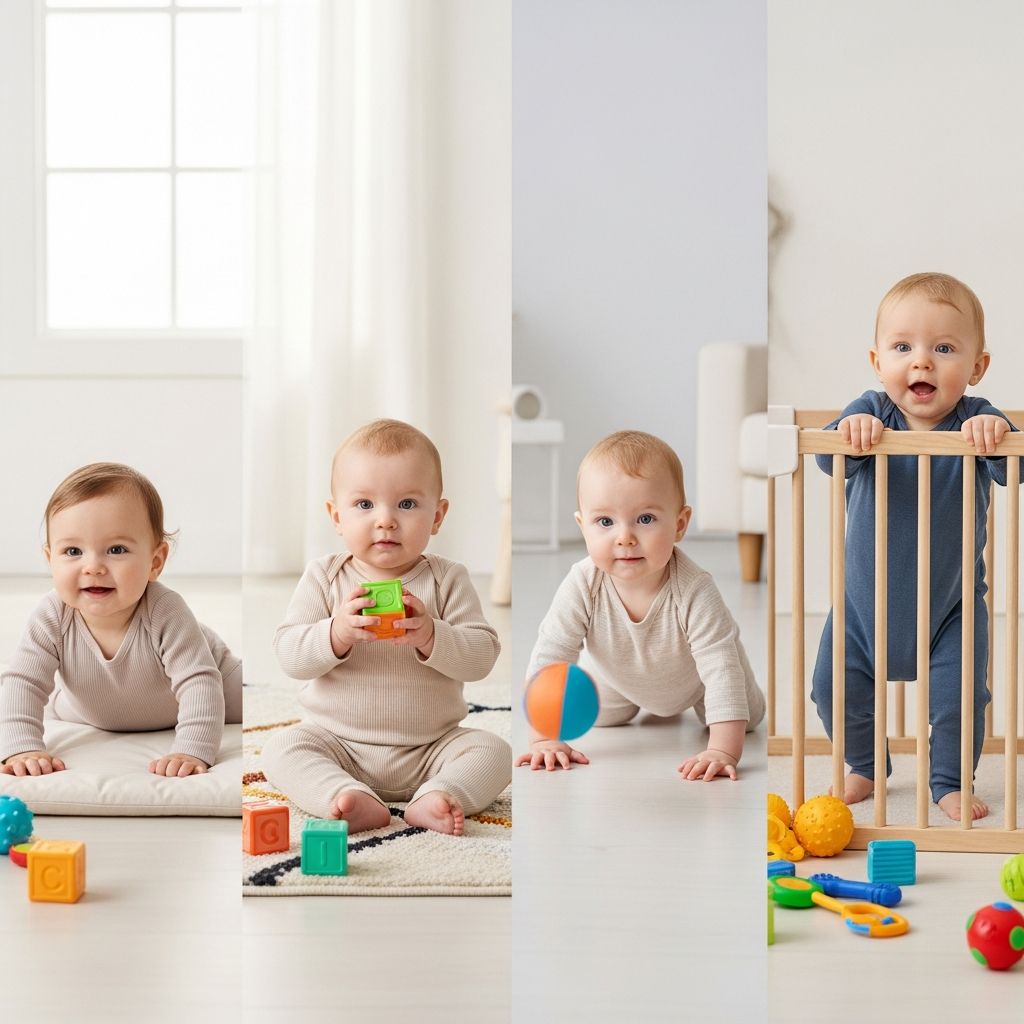
Understanding how children develop mobility skills is crucial for parents aiming to support their little ones’ physical growth. From the first head lifts to confident running and jumping, these gross motor achievements build strength, coordination, and independence. This guide outlines typical timelines, practical ways to nurture progress, and indicators that may warrant professional input, drawing from established pediatric benchmarks.
Foundational Movements in the First Months
In the earliest stages, babies focus on basic control over their heads and upper bodies, laying the groundwork for more complex actions. Newborns typically turn their heads side to side when lying on their backs and begin brief head lifts during tummy time. By 2 months, they hold their heads steadier, lifting chests slightly off the surface while prone and kicking legs symmetrically.
These initial efforts strengthen neck and shoulder muscles essential for later rolling and sitting. Parents can promote this by providing daily tummy time sessions, starting with short durations on a firm, safe surface. Place colorful toys just out of reach to motivate lifting and turning, enhancing muscle tone without frustration.
- Key early signs: Equal arm and leg movements, reduced head lag when pulled to sit.
- Daily practice: 3-5 minutes of tummy time, increasing as tolerated.
- Environment tip: Use mirrors or hanging mobiles to draw attention upward.
Mastering Rolls and Early Sitting
Around 3 to 5 months, infants advance to pushing up on forearms, rolling from belly to back, and eventually back to belly. At 4 months, many sit propped on hands, bringing feet to mouth in playful exploration. By 5-6 months, independent sitting emerges, with babies shifting weight to reach toys.
This phase marks a shift toward greater mobility. Encourage side-lying play to build core stability, transitioning naturally to sitting. Rocking side-to-side during tummy time prepares for rolling, while supported sitting in laps fosters balance awareness.
| Age Range | Gross Motor Achievements | Support Strategies |
|---|---|---|
| 3-4 months | Head aligned with trunk when pulled; forearm push-ups | Extended tummy time; toy reaches |
| 5 months | Back-to-belly rolls; hands-extended push-ups | Side-lying with toys; pivot encouragement |
| 6 months | Independent sitting; belly-to-back rolls | Pillows for support; reaching games |
Crawling, Standing, and First Steps
Between 6 and 12 months, mobility explodes. Babies rock on hands and knees, crawl on bellies or all fours, pull to stand using furniture, and cruise sideways. By 9-11 months, independent standing for seconds occurs, followed by hesitant first steps around 12 months.
Pulling toys while walking and squatting to pick up objects refine balance and leg strength. To support this, clear floor spaces for safe crawling, offer stable furniture for pulling up, and use push toys for cruising practice. Avoid walkers, as they can delay natural progression.
- 9 months: Quadruped rocking; furniture cruising.
- 10-11 months: Standing alone briefly; step attempts.
- 12 months: Independent walking; stair creeping.
Variations exist—some babies bottom-shuffle instead of crawling—but most achieve walking by 18 months. Consistent floor play builds confidence.
Toddler Advancements: Running, Jumping, and Balance
From 15-18 months, toddlers walk backward, climb stairs with help, run (though clumsily), and kick balls. At 2 years, jumping in place and stair navigation without support solidify. By 3 years, one-foot balance for seconds, forward jumps, and tricycle riding emerge.
Preschoolers (4-5 years) hop, skip, catch balls reliably, and master hopscotch or bike riding. These skills enhance coordination and spatial awareness, vital for school activities.
| Age | Milestones | Activity Ideas |
|---|---|---|
| 15-18 months | Stair walking with aid; backward steps; running | Ball kicking; low climbs |
| 2 years | Jumping both feet; solo stairs | Park play; dance moves |
| 3 years | One-leg balance; tricycle | Obstacle courses; throwing |
| 4-5 years | Hopping; skipping; bike riding | Sports intro; balance beams |
Strategies to Foster Healthy Mobility
Active encouragement accelerates development. Limit screen time; prioritize unstructured play. Outdoor time boosts vitamin D and muscle use. Tummy time from day one prevents flat head spots and builds strength.
Nutritious diets with iron-rich foods support muscle growth. Consult pediatricians for personalized advice, especially if family history includes delays.
- Unstructured play: 60+ minutes daily for toddlers.
- Safety first: Soft surfaces for falls; supervision near stairs.
- Indoor options: Pillows for tunnels; scarves for tossing.
Recognizing Variations and When to Act
Children develop uniquely—some walk at 9 months, others at 15. Premature babies may hit milestones later, adjusted for gestational age. Monitor for asymmetries, like favoring one side, or persistent stiffness.
Red flags include no rolling by 6 months, not sitting by 9 months, or no walking by 18 months. Speech or social delays alongside motor issues merit evaluation. Early intervention via therapies can bridge gaps effectively.
Track progress with apps or charts from reliable sources like CDC milestones. Regular check-ups catch issues promptly.
Frequently Asked Questions
Is it normal if my baby skips crawling?
Yes, some bottom-shuffle or go straight to walking; as long as they walk by 18 months, it’s typically fine.
How much tummy time is enough for newborns?
Start with 2-3 minutes several times daily, building to 20-30 minutes by 3 months.
What if my 15-month-old isn’t walking?
Consult a doctor; most walk by then, but assessments check for underlying causes.
Can too much baby gear delay milestones?
Jumpers or walkers may; prioritize floor time for natural strength building.
Does prematurity affect timelines?
Adjust for corrected age; track relative progress with healthcare providers.
Long-Term Benefits of Early Mobility
Strong gross motor foundations correlate with better cognition, confidence, and reduced obesity risks. Active kids excel in sports, academics, and social play. Invest time now for lifelong health.
By preschool, skilled movers climb playgrounds effortlessly, fostering resilience. Parental involvement—modeling movements, cheering efforts—amplifies gains.
References
- Children’s Developmental Milestones: Gross and Fine Motor Skills — Brown Health. Accessed 2026. https://www.brownhealth.org/be-well/childrens-developmental-milestones-gross-and-fine-motor-skills
- Infant Mobility Milestones: Transitional Movements — Sunny Days Sunshine Center. Accessed 2026. https://www.sunnydayssunshinecenter.com/blog/baby-mobility-floor-transitions
- Gross motor skills: birth to 5 years — Children’s Hospital of Richmond. Accessed 2026. https://www.chrichmond.org/services/therapy-services/developmental-milestones/gross-motor-skills-birth-to-5-years/
- Occupational Milestones for Children — Synaptic Pediatric Therapies. Accessed 2026. https://synapticpediatrictherapies.com/occupational-milestones/
- Physical Developmental Milestones — Virtual Lab School (.edu). Accessed 2026. https://www.virtuallabschool.org/infant-toddler/physical-development/lesson-2
- CDC’s Developmental Milestones — Centers for Disease Control and Prevention (CDC.gov). Accessed 2026. https://www.cdc.gov/act-early/milestones/index.html
- Developmental Milestones — Children’s Hospital of Philadelphia (.edu). Accessed 2026. https://www.chop.edu/primary-care/developmental-milestones