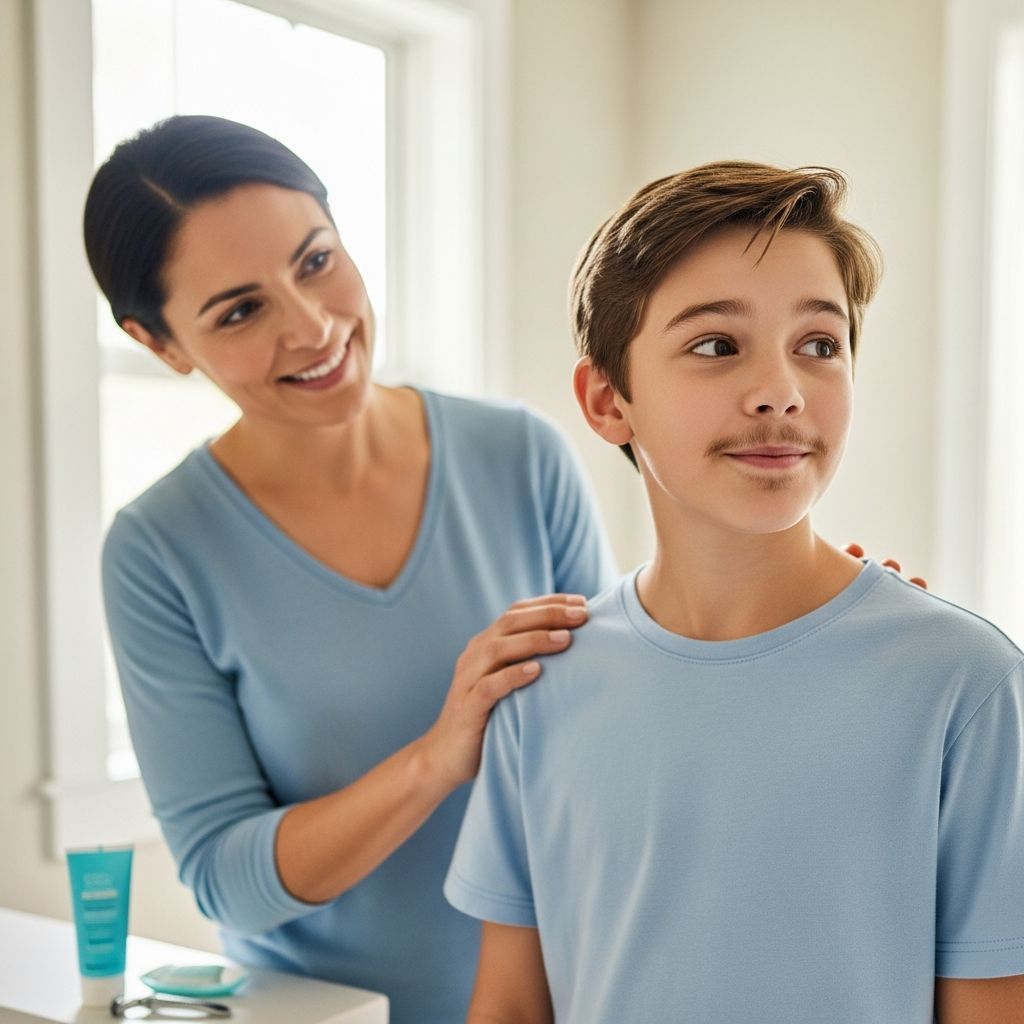
Facial hair can be one of the first very visible signs of puberty, and for tweens, it often arrives before they feel ready. As a parent or caregiver, the way you respond can either turn this moment into quiet confidence or lingering embarrassment.
Why Facial Hair Feels Like a Big Deal
To adults, a few new hairs on the upper lip or chin may seem trivial, but for a tween who already feels watched and judged, every change can feel magnified. Tweens are in a stage where they care deeply about fitting in, but they are still learning what their own preferences and boundaries are.
Facial hair becomes emotional because it is public, difficult to hide, and tied to complicated ideas about gender, attractiveness, and growing up. When parents respond with calm and respect, tweens learn that body changes are manageable and not something to be ashamed of.
Understanding Early Facial Hair Growth
Not all facial hair is the same. Some tweens notice only a faint “shadow” or soft down, while others see darker or thicker hairs appear on the upper lip, chin, or sideburn area. What shows up first is influenced by genetics, hormones, and overall timing of puberty.
Because each body runs on its own schedule, some children see noticeable facial hair before friends, and others much later. Explaining this variability helps your tween understand that their experience is normal, even if it feels different from what they see around them.
| Type of hair | What it looks like | Common locations | What tweens often feel |
|---|---|---|---|
| Fine, light fuzz | Soft, pale, often only visible in certain light | Upper lip, sides of face, around jawline | Usually notice it only in close-up mirrors; may feel mildly self-conscious |
| Scattered darker hairs | A few darker, thicker strands among lighter fuzz | Upper lip, chin, near sideburns | May feel embarrassed or wonder if others can see them |
| Clearly visible dark patch | Small but noticeable area of darker hair | Centered on upper lip or under chin | Often more worried about teasing; may actively ask for help |
Reading Your Tween’s Feelings Before You Speak
Before mentioning facial hair at all, pay attention to your tween’s behavior and emotional cues. The goal is to understand whether they are already aware and bothered, or if they have not yet focused on it.
- Notice if they avoid bright light or close mirrors when brushing their teeth.
- Watch for comments about photos, such as “My face looks weird” or “I hate my nose/lip.”
- Listen carefully if they mention teasing at school, especially about looking “hairy” or “older.”
- Observe whether they constantly touch or cover their upper lip with a sleeve or hand.
These small signs can give you a sense of whether they need reassurance, practical help, or simply time to adjust.
Choosing the Right Moment to Start the Conversation
Facial hair is a personal topic, so timing matters. Bringing it up in front of siblings, friends, or extended family can feel humiliating. A better approach is to choose a quiet, calm setting when you are already talking about body changes or self-care.
You might weave the subject into a broader conversation about puberty, skincare, or hygiene instead of singling out facial hair. This keeps the focus on normal development rather than on something being “wrong” with their appearance.
How to Talk About Facial Hair Without Shaming
The words you choose can stick with your tween for years, so aim for language that is factual, kind, and neutral. Avoid jokes, nicknames, or “teasing” comments, even if your intention is to lighten the mood.
- Start by asking what they notice about their body and how they feel about it.
- Reassure them that everyone’s body changes in its own time, and facial hair is one normal part of that process.
- Make it clear that any grooming decisions are about their comfort, not about meeting someone else’s standard.
- Invite questions and let them know there is no such thing as a “weird” or “gross” question about their body.
When tweens feel safe asking questions, they are more likely to share worries before they grow into bigger insecurities.
Respecting Choice: Normalize Both Removing and Keeping Hair
Some tweens will feel strongly about getting rid of visible hair right away, while others may be curious but not ready to change anything yet. Your role is to normalize both options and avoid implying that one is the “correct” choice.
Emphasize that bodies are not problems to be fixed. Explain that grooming is a personal preference, like choosing a haircut or clothing style, and that it is okay for preferences to change over time.
Age-Appropriate Grooming Options for Tweens
If your tween decides they do want to address facial hair, walk them through the available options slowly. The goals at this age are gentleness, safety, and simplicity rather than long-lasting or dramatic results.
Shaving
Shaving is often the first method considered because it is familiar and inexpensive. For many tweens, it can work well, but it does require some instruction and supervision at the beginning.
- Use a clean, good-quality razor designed for sensitive skin.
- Teach them to soften hair with warm water and a gentle shaving cream or gel.
- Show slow, light strokes in the direction of hair growth rather than against it.
- Remind them to rinse the blade frequently and never share razors with others.
Depilatory creams
Hair removal creams dissolve hair at the skin’s surface, but they can be irritating, especially on younger skin. If you consider this method, proceed with caution.
- Choose a product clearly labeled for facial use and follow the age guidance on the packaging.
- Always perform a patch test on a small, less visible area at least 24 hours before full use.
- Set a timer so the cream is not left on longer than instructed.
- Help them gently remove the product and rinse thoroughly afterward.
Waxing and threading
Waxing and threading remove hair from the root, so the results can last longer but the process is more uncomfortable. Many tweens find the pain surprising, and the skin can be red or tender afterward.
- If you choose this route, consider going to an experienced professional who regularly works with young clients.
- Start with a very small area (for example, the center of the upper lip) to gauge sensitivity.
- Use a soothing, fragrance-free product after the service to calm the skin.
- Discuss that temporary redness is normal but should not turn into blistering or severe irritation.
Bleaching
Bleaching does not remove hair; it lightens it so it is less noticeable. This can feel like a middle-ground option, but it still involves chemicals that may bother sensitive skin.
- Select a facial hair bleach made for delicate skin and carefully follow instructions.
- Do a patch test to rule out allergic reactions or burning sensations.
- Explain that hair will still be there, just less visible, so expectations stay realistic.
Laser and electrolysis
Laser hair removal and electrolysis are more permanent or long-lasting options, but they are generally not first-line choices for tweens. They can be expensive, uncomfortable, and require evaluation for suitability based on skin and hair type.
For most families, these methods are best considered later, if facial hair remains a significant source of distress and after discussing options with a qualified medical professional.
Safety, Skin Care, and Setting Expectations
Whatever method your tween chooses, helping them protect their skin is essential. Puberty already brings an increased chance of breakouts and sensitivity, and harsh methods can make things worse.
- Use gentle, fragrance-free cleansers before and after hair removal.
- Introduce a simple, non-comedogenic moisturizer to prevent dryness and irritation.
- Discourage picking at ingrown hairs or bumps, which can lead to scarring.
- Remind them that slight stubble or regrowth is normal and not a sign that hair is “growing back thicker.”
Clarifying myths early helps prevent anxiety. Hair may feel rougher after shaving simply because the ends are blunt, not because there is more of it.
When Facial Hair Touches on Gender and Identity
For some tweens, facial hair feels like it clashes with how they see themselves or how they want others to see them. This can be especially true for kids who do not identify with traditional gender expectations or who feel distressed by any sign of puberty.
Your openness here matters as much as your practical advice. Instead of assuming what they should feel, ask gentle questions about what bothers them most and what would help them feel more like themselves. If distress remains intense or affects daily functioning, talking with a pediatrician or mental health professional with experience in gender and puberty can be very helpful.
Handling Teasing, Comments, and Social Pressure
Even when a tween feels mostly okay about their facial hair, unkind comments can change that quickly. Part of supporting them includes equipping them with ways to respond if peers make jokes or observations about their appearance.
- Role-play short, neutral responses such as changing the subject or saying, “That’s not something I want to talk about.”
- Remind them that they have the right to set boundaries about comments on their body.
- Let them know you are available to contact the school if teasing escalates into ongoing bullying.
- Balance problem-solving with reassurance that their worth does not depend on having a perfectly smooth or hairless face.
When you take their social worries seriously, they learn that asking for help is a strength, not a weakness.
Staying Involved Without Taking Over
As children move through late childhood into the tween years, they crave more privacy but still need guidance. With facial hair, this means being present enough to ensure safety, but not so controlling that they feel powerless over their own body.
- Offer to demonstrate techniques once, then step back and remain nearby if they need help.
- Check in occasionally about how they feel about their routine rather than inspecting their face.
- Give them space to decide whether they want to continue, change, or stop removing hair.
- Respect their wish to keep grooming choices private from siblings, grandparents, or friends.
This balance teaches responsibility and reinforces that their face is their own to care for, within reasonable safety boundaries.
Frequently Asked Questions About Tween Facial Hair
Does shaving make facial hair grow back thicker?
No. Shaving cuts hair at the surface, giving it a blunt edge that can feel stiffer as it grows out, but it does not change how many hairs grow or how thick they are at the root.
Is there a “right” age to start removing facial hair?
There is no universal age. The better question is whether your tween is bothered by the hair, understands the basics of the method, and is mature enough to follow safety steps. Some are ready around 10–12, others prefer to wait or never remove facial hair at all.
Should parents bring it up first, or wait for the tween to ask?
If facial hair is barely noticeable and your tween seems unconcerned, there is no rush. However, if it is clearly visible and you suspect it might become a target for teasing, you can gently open the door to conversation without insisting on action.
What if caregivers disagree about whether facial hair should be removed?
Try to center the discussion on the tween’s comfort and wellbeing rather than adult preferences. Present a calm, united message that they have options, and that the decision should be made thoughtfully, not in reaction to momentary comments or pressure.
When is it important to talk to a doctor?
Most facial hair during puberty is normal. However, if hair growth appears very sudden, unusually thick, or accompanied by other concerning symptoms (such as missed periods, rapid weight gain, or severe acne in those who menstruate), a medical evaluation can rule out underlying conditions.
Supporting Confidence Through Every Stage
Facial hair is just one of many body changes that will show up during the tween and teen years, but how you respond to this early change can set the tone for all the conversations to come. When you approach the topic with empathy, accurate information, and respect for your child’s preferences, you send the message that their body is not a problem to hide, but a part of them to care for.
By offering options instead of orders and listening more than you speak, you help your tween build the skills to navigate appearance-related pressures far beyond the bathroom mirror. That steady support is more powerful than any razor, cream, or appointment.