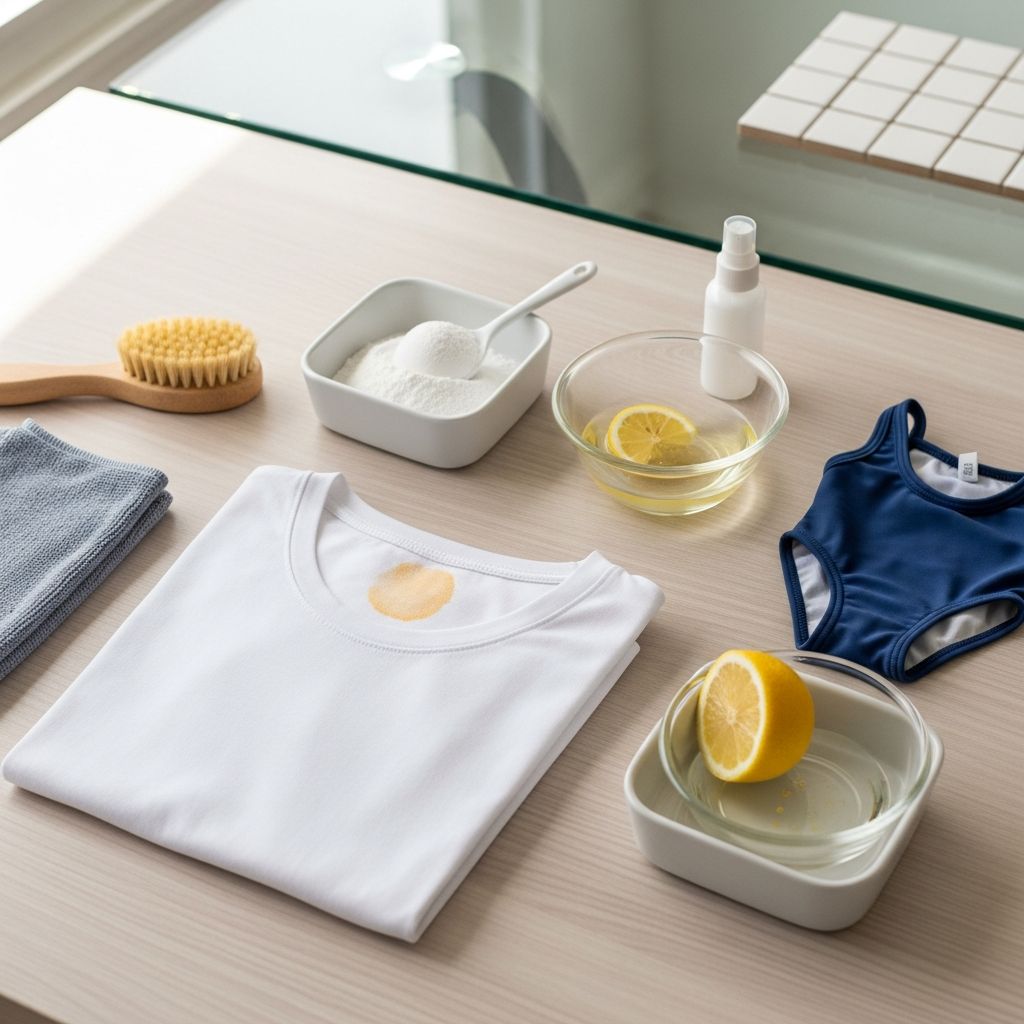
Sunscreen is essential for protecting skin, but it can be surprisingly harsh on fabrics and household surfaces. From yellow marks on white T-shirts to rusty patches on sheets or streaks on car seats, sun protection products can leave stubborn traces if they are not handled correctly.
This guide explains why these stains happen, how to stop them before they start, and what to do when they show up on clothing, swimwear, linens, and hard surfaces. The focus is on practical routines, clear steps, and fabric-friendly care so both your skin and your stuff stay protected.
Why Sunscreen Stains Happen
Most sunscreens combine several elements that make them tough to wash away: oils or emollients to spread easily, UV filters for protection, and often water-resistant ingredients that cling to skin. When these sit on fabric or react with minerals in water, visible marks can develop over time rather than immediately.
Chemical sunscreens sometimes contain UV filters that can darken or take on an orange or yellow cast when they meet iron or other minerals in hard water. Physical blockers that rely on mineral particles may leave pale residue that builds up and dulls colors or leaves white film on darker items.
Common Sunscreen Stain Types
Not all sunscreen marks look the same. Understanding what you are dealing with makes it easier to pick the right treatment and avoid making the stain worse.
- Oily smears: Greasy patches where lotion transferred directly from skin or hands onto fabric.
- Yellow or orange patches: Areas that look aged or rust-like, especially on light fabrics, often after multiple washes.
- Chalky or white residue: Film from mineral or zinc-based products that sit on top of darker fabrics.
- All-over dinginess: A general loss of brightness in towels, bedding, and swimwear that meet sunscreen regularly without thorough rinsing.
Smart Habits to Prevent Sunscreen Stains
Prevention is easier than rescue. A few small changes in how sunscreen is applied and how clothes are handled after sun exposure can dramatically cut down on laundry problems.
- Apply sunscreen at least 15–20 minutes before getting dressed to allow it to soak in and feel dry to the touch.
- Use a mirror and clean hands when possible to avoid random smears on clothing, straps, and collars.
- Choose older or darker clothing for heavy application days when a child or partner needs extra help.
- Rinse swimwear and light-colored garments in cool water as soon as possible after wearing them around sunscreen.
- Avoid spraying sunscreen directly near fabric, car interiors, and patio cushions; spray onto hands first, then apply to skin.
Quick Response Checklist After a Spill
Fast, gentle action keeps sunscreen from sinking deep into fibers. Use this simple checklist whenever a fresh smear or drip appears on clothing or linens.
- Blot, do not rub, any pools of lotion or spray with a clean, dry cloth or paper towel.
- Rinse the area from the back of the fabric with cool running water to push product out, not further in.
- Apply a small amount of liquid laundry detergent or a dedicated stain remover to the spot and lightly work it in with fingers or a soft brush.
- Let it rest for several minutes before laundering according to the care label.
- Check the stain before using a dryer; heat can set remaining marks permanently.
Fabric-Safe Routine for Regular Clothing
Everyday tops, dresses, shorts, and activewear often suffer most from sunscreen contact, especially around necklines, shoulders, and hems. A consistent pretreatment routine greatly improves results and extends fabric life.
Step-by-Step Method
- Identify stained zones. Turn garments inside out and look closely at underarms, collars, and any area that touched skin coated in sunscreen.
- Rinse in cool water. Run water through the back of the stain for 30–60 seconds to flush out surface residue.
- Apply liquid detergent. Dab a small amount directly on the area and gently massage the fabric together or use a soft brush.
- Allow contact time. Let the detergent sit for 10–15 minutes so it can break down oils and residue.
- Wash properly. Launder with similar colors on the warmest temperature the garment’s label allows, using a good-quality detergent.
- Inspect before drying. If the stain is still visible, repeat treatment; avoid machine-drying until you are satisfied with the result.
Special Care for Whites and Light Colors
Light fabrics show every trace of sunscreen, especially yellow or rusty tones that seem to appear out of nowhere after several washes. Gentle but targeted routines help keep whites bright without damaging delicate fibers.
- Separate heavily sunscreen-exposed items from other whites to avoid spreading residue.
- Use a detergent or booster designed for brightening, following label directions for dosage.
- Avoid chlorine bleach on sunscreen-affected areas, as it can sometimes deepen discoloration rather than remove it.
- Dry in indirect sun or indoors to prevent fabric yellowing and preserve elasticity in blends.
Protecting and Cleaning Swimwear
Swimsuits get a double hit: sunscreen on the outside and pool or sea water on all sides. Their elastic fibers are sensitive to both strong cleaners and high heat, so a gentle but thorough routine matters.
Daily Swimwear Routine
- Rinse immediately. As soon as possible, rinse suits in cool, clean water to flush away salt, chlorine, and sunscreen.
- Hand wash. Fill a clean sink or basin with cool water and a small amount of mild detergent meant for delicates.
- Swish, do not scrub. Gently move the suit through the water without twisting or wringing, which can break elastic fibers.
- Rinse thoroughly. Drain soapy water and rinse until no suds remain.
- Blot and air-dry. Lay the suit flat on a towel, roll to remove excess water, then reshape and dry flat away from direct heat or strong sunlight.
For stubborn discoloration around straps or waistbands, a brief pretreatment with diluted liquid detergent can help, but avoid long soaks in strong solutions that may weaken spandex over time.
Handling Linens, Towels, and Bedding
Sunscreen often transfers to sheets, pillowcases, and towels, especially after late-day application or naps in beachwear. Over time, this can leave pillow halos, dull patches, or stiff areas where product has built up.
- Encourage showers or at least a quick rinse before bedtime if sunscreen was used heavily during the day.
- Rotate beach and pool towels frequently so the same fabric is not repeatedly saturated with oils.
- Pretreat visible marks on pillowcases and sheets with liquid detergent before loading the washer.
- Use a warm wash cycle and a full rinse to remove both product and detergent residue.
Removing Sunscreen from Hard Surfaces
Sunblock can also make its way onto car interiors, patio furniture, floors, and bathroom surfaces. The goal is to remove the greasy film without stripping finishes, discoloring materials, or leaving slippery patches behind.
| Surface Type | Initial Action | Cleaning Method | What to Avoid |
|---|---|---|---|
| Sealed tile or vinyl floors | Wipe up any visible lotion or spray quickly with a dry cloth. | Wash with warm water, a small amount of mild detergent, and a mop or cloth; rinse to remove soap. | Strong abrasives that can scratch the finish. |
| Upholstery and car seats | Blot gently with a dry, light-colored cloth to lift as much product as possible. | Use a fabric-safe upholstery cleaner or mild soap solution, testing in a hidden area first. | Over-wetting foam cushions, which can cause water marks or odors. |
| Leather furniture or car interiors | Blot, do not rub, to remove surface residue. | Clean with a leather-approved cleaner or a mild, sudsy solution wiped off quickly; follow with conditioner. | Harsh solvents or all-purpose cleaners not meant for leather. |
| Outdoor plastic or metal furniture | Rinse or wipe off visible product. | Wash with warm water and dish soap, then rinse thoroughly. | Steel wool or scouring pads on painted or coated surfaces. |
Common Stain-Removal Mistakes to Avoid
Certain habits can lock sunscreen stains in or damage fabrics while you try to help. Avoiding these missteps will improve your chances of fully restoring your items.
- Do not toss heavily stained items straight into a hot wash or dryer without pretreating.
- Avoid scrubbing delicate fabrics with stiff brushes, which can roughen fibers and create fuzzy patches.
- Be cautious with strong bleaches or oxidizers on sunscreen-affected areas, as results can be unpredictable.
- Do not ignore faint yellowing; mild stains are easier to fix than deep discoloration that has been heated and washed many times.
Choosing Products That Play Nicely with Laundry
While skin needs always come first, there is some flexibility in choosing sun care items that are less likely to wreak havoc on fabrics and surfaces. Small label checks and product tests can make a noticeable difference in long-term fabric appearance.
- Consider testing a new sunscreen on an old white cloth before using it regularly with favorite clothes.
- Look for formulas that feel less greasy or heavy if most of your wardrobe is light colored or fitted.
- Use separate beach towels and pillowcases for heavy sunscreen days, keeping your best linens for lower-exposure times.
Routine Maintenance for a Stain-Resistant Wardrobe
Instead of waiting for serious staining, treat sunscreen exposure as a regular care concern during sunny seasons. Consistency pays off in preserved colors, smoother fabrics, and fewer laundry surprises.
- Adopt a seasonal habit of checking high-risk items like white T-shirts, shoulder-baring dresses, and favorite swimsuits every few wears.
- Rinse clothing worn directly over freshly applied sunscreen, even if you do not see obvious marks.
- Keep a small kit with a travel-size detergent or stain-removal pen for vacations and beach trips.
- Air out and wash beach bags, hat bands, and cover-ups regularly to prevent slow buildup.
FAQs: Sunscreen Stains and Everyday Life
Can I completely remove old sunscreen stains?
Older stains are more challenging because they have been washed, possibly dried with heat, and sometimes oxidized over time. Gentle repetition often works best: pretreat with liquid detergent, wash on an appropriate temperature, and repeat several times rather than using one harsh treatment that could damage fabric.
Is it safe to use hot water on sunscreen stains?
Hot water can help remove oily components but may also set certain types of stains if they were not pretreated first. A safer approach is to rinse with cool water, apply detergent directly to the affected area, then choose the warmest wash temperature allowed by the care label after pretreatment.
Why do some clothes turn yellow even when I can’t see a fresh stain?
Discoloration sometimes develops slowly as sunscreen residue reacts with minerals in water or heat from the dryer. Areas like necklines, shoulders, and chest panels often show this first because they receive repeated exposure combined with body oils and sweat.
Do mineral sunscreens stain less than chemical ones?
Mineral sunscreens may be less likely to create deep yellow or orange patches in some situations, but they can leave visible white or chalky residue on darker fabrics. The trade-off is often between bright fabric appearance and how noticeable light film is on deep colors.
Should I stop using a sunscreen if it keeps staining my clothes?
Skin protection is more important than any single garment, so it is rarely necessary to abandon an effective product solely for laundry reasons. However, for items that matter most—like expensive swimwear or cherished white pieces—it may make sense to reserve those for days when you use a different formula or take extra precautions with application and drying time.
Are spray sunscreens worse for fabrics than lotions?
Sprays are more likely to drift onto clothing, car interiors, and outdoor furniture because they produce a fine mist. The ingredients themselves may be similar to lotions, but accidental overspray and poor aim often increase the amount reaching fabrics and hard surfaces.
Bringing It All Together
With thoughtful application habits, quick rinsing, and consistent pretreatment, sunscreen no longer needs to be the enemy of white T-shirts, favorite swimsuits, or well-loved linens. Treat sun care as part of your overall fabric-care routine and you can enjoy long days outdoors without sacrificing the life and look of your wardrobe or home textiles.