Hosting a sleepover for children creates lasting memories filled with laughter, games, and friendship. This guide provides parents with practical steps to ensure the event runs smoothly, keeping kids entertained while prioritizing safety and comfort.
Selecting the Right Group Size and Guests
Begin by deciding on the number of attendees to match your home’s capacity and your child’s social dynamics. For beginners, limit to 3-5 kids aged 6-10 to prevent overwhelm and allow personalized attention. Involve your child in choosing friends who get along well and respect house rules.
- Send digital or creative invitations specifying drop-off and pick-up times, such as 6 PM arrival and 10 AM departure.
- Collect parent contact info and note any allergies, bedtime preferences, or special needs.
- Confirm attendance early to prepare supplies adequately.
Smaller groups foster deeper interactions and easier management, reducing chaos during high-energy moments.
Choosing an Exciting Theme
A unifying theme simplifies decorations, activities, and food, amplifying excitement. Popular options include glow-in-the-dark parties, movie marathons, spa nights, or indoor camping adventures.
| Theme | Decor Ideas | Activity Suggestions |
|---|---|---|
| Glow Party | Neon lights, glow sticks, blacklights | Dance-offs, face painting |
| Movie Night | Popcorn stations, red carpet entry | Film screenings, trivia games |
| Spa Day | Candlelight (battery-operated), robes | Mani-pedi stations, masks |
| Camping | Tents, fairy lights, lanterns | Storytelling, s’mores making |
Tailor the theme to your child’s interests for maximum engagement. Source affordable decor from local stores or online for budget-friendly setups.
Creating a Comfortable Sleeping Area
Designate a central sleeping zone like a living room or basement with ample floor space. Use air mattresses, sleeping bags, or foam pads covered in fresh sheets.
- Arrange individual ‘tents’ or forts using sheets draped over chairs for privacy and fun.
- Add ambient lighting with string lights or projectors for a magical atmosphere.
- Provide extra pillows, blankets, and fans or heaters for temperature control.
Ensure the area is safe: clear sharp objects, secure furniture, and keep pathways open. Test setups beforehand to confirm comfort.
Planning Engaging Evening Activities
Structure the night with a mix of high-energy and calming pursuits to maintain flow and prevent boredom. Start energetic, then wind down.
High-Energy Games
- Water Balloon Wars: Fill balloons and set up teams in the yard with bunkers from chairs and tarps. Supervise closely for safety.
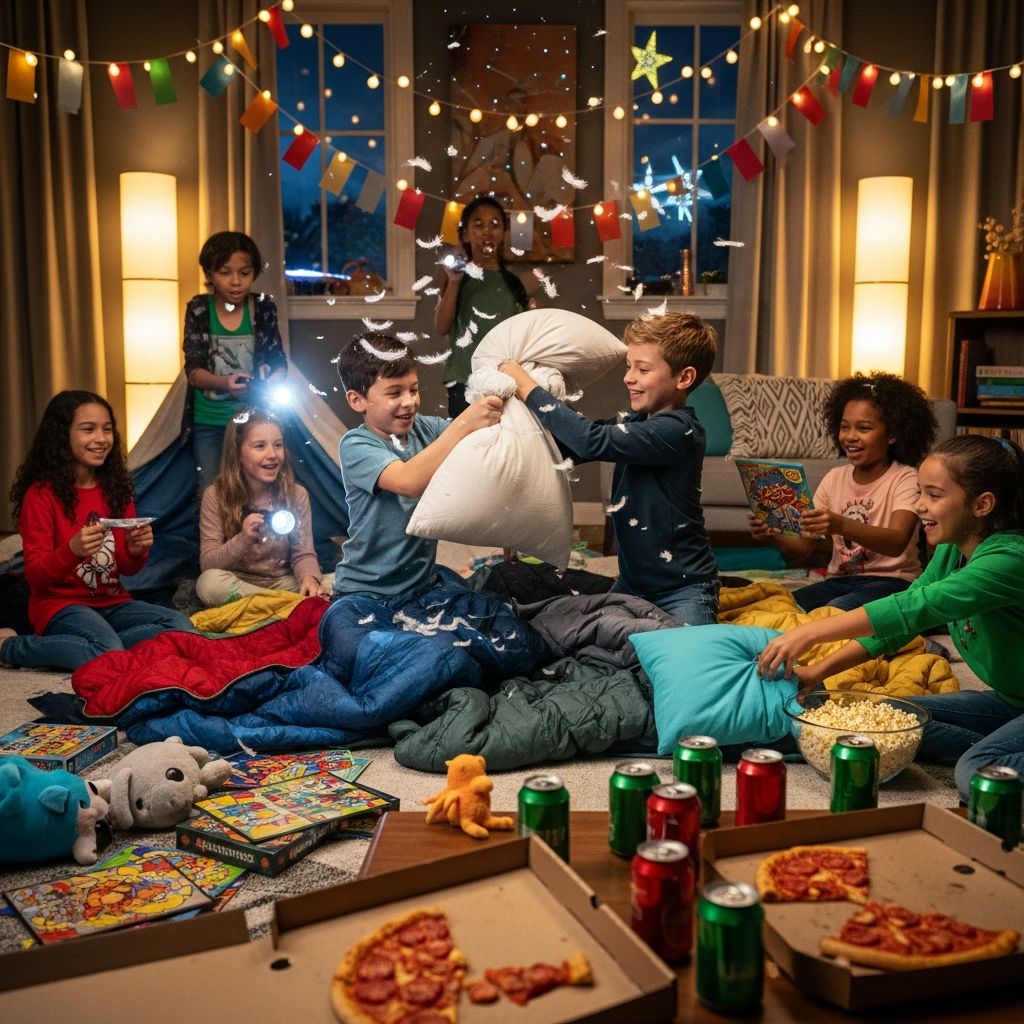
- Pillow Fort Challenges: Build epic forts and host pillow fights within designated soft zones.
- Dance Party: Play upbeat music with glow sticks; judge silly dances for prizes.
Creative Crafts
- Decorate pillowcases or T-shirts with fabric markers and gems.
- Make friendship bracelets or beaded keychains as take-home souvenirs.
- Host a DIY photo booth with props like hats, masks, and backdrops.
Scavenger Hunts and Mysteries
Organize indoor flashlight hunts with riddles leading to candy treasures. Limit to safe house areas and pair kids in teams. For older groups, add a mystery-solving element with printed clues.
Prepare backups like board games or card sets for downtime. Film ‘YouTube-style’ challenges, such as cooking shows or talent skits, for replay fun.
Menu Ideas for Meals and Snacks
Fuel the fun with kid-friendly, easy-prep foods. Serve dinner early to curb hunger delays at bedtime.
- Dinner: Build-your-own pizzas, tacos, or pasta bars encourage participation.
- Snacks: Popcorn, fruit skewers, veggie sticks with dips, and themed treats like glow gummies.
- Drinks: Juice boxes, flavored water; avoid caffeine or excess sugar late.
- Bedtime: Warm milk or hot cocoa to soothe.
Account for dietary restrictions by checking with parents. Use disposable plates for easy cleanup.
Morning After Breakfast and Wrap-Up
Kick off the day with a self-serve breakfast station to recharge sleepy guests.
- Pancake stacks, cereal varieties, yogurt parfaits, fresh fruit, and smoothies.
- Quick game or story share before pick-up.
- Send kids home with craft goodies or photos as mementos.
Stick to the pick-up time to allow parent recovery. Clean-up tip: Enlist older kids for a 10-minute tidy-up game.
Safety Rules and House Guidelines
Prevent mishaps by setting clear expectations upfront. Discuss rules during arrivals.
- No running in sleeping areas; stay indoors after dark.
- Respect privacy: no entering bathrooms without knocking.
- Quiet time after 11 PM; lights out by midnight.
- Buddy system for any outdoor play; adult supervision always.
Keep a first-aid kit handy and monitor for homesickness. Have a parent contact list for quick communication.
Common Challenges and Solutions
Sleepovers can bring surprises; be prepared.
| Challenge | Solution |
|---|---|
| Homesickness | Comfort with calls home or extra cuddles; have a pick-up option. |
| Too Much Energy | Build in calm activities like reading or puzzles. |
| Messy Cleanup | Use tarps under crafts; disposable everything. |
| Sleeplessness | Wind-down routine: dim lights, soft music, no screens 30 mins prior. |
Flexibility is key—adjust based on the group’s vibe.
Frequently Asked Questions (FAQs)
What age is best for first sleepovers?
Ages 6-8 for small groups; build confidence gradually with overnights at relatives first.
How do I handle food allergies?
Ask parents in advance; label snacks and prepare safe alternatives like fruit or allergy-free treats.
What’s the ideal sleepover duration?
Evening to mid-morning (6 PM-10 AM) keeps it manageable for all.
Can I host outdoors?
Yes, for warmer weather; use screened tents and bug spray, with indoor backup for rain.
How to make it birthday-special?
Add present-opening time, a cake-cutting ceremony, and themed goodie bags.
With thoughtful planning, sleepovers strengthen friendships and create cherished childhood tales. Parents report higher satisfaction when themes and schedules align with kids’ energy levels.
References
- American Academy of Pediatrics: Healthy Sleep Habits — American Academy of Pediatrics. 2023-01-15. https://www.aap.org/en/patient-care/healthy-sleep/
- Child Safety During Overnight Events — Centers for Disease Control and Prevention (CDC). 2024-05-20. https://www.cdc.gov/children-mental-health/about/index.html
- Guidelines for Children’s Group Activities — World Health Organization (WHO). 2022-11-10. https://www.who.int/health-topics/children