When audiences think of classic 1980s teen movies, Pretty in Pink almost always comes to mind, and much of that lasting impact comes from Andrew McCarthy’s quiet, vulnerable performance as Blane, the rich boy who falls for a girl from the wrong side of town.
Setting the Stage: What Is ‘Pretty in Pink’?
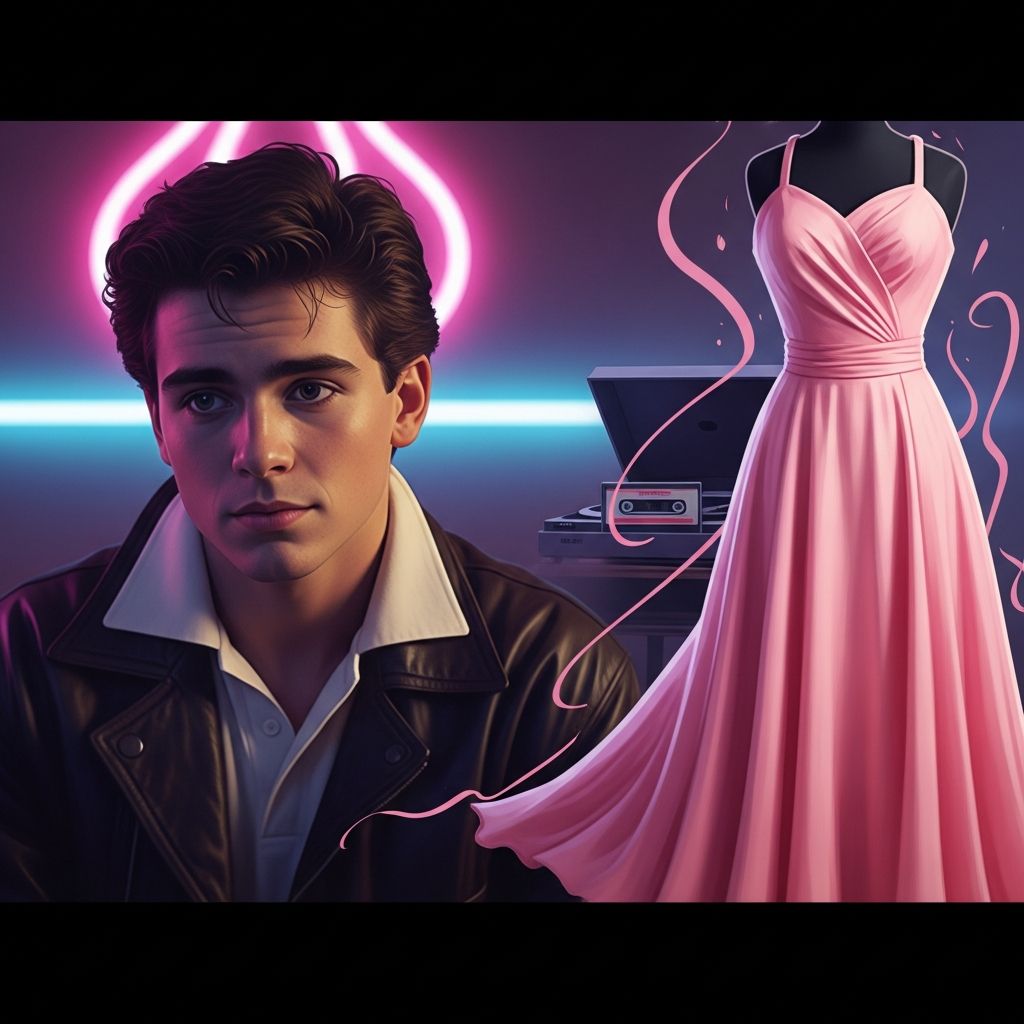
Pretty in Pink is a 1986 teen romantic dramedy about class differences, high school social hierarchies, and first love, set against a backdrop of big hair, synth-heavy music, and iconic ’80s fashion.
The story centers on Andie Walsh, a smart, independent girl from a working-class background, whose life takes a turn when she catches the attention of Blane McDonough, a soft-spoken rich kid from the privileged crowd.
- Release year: 1986.
- Genre: Teen romantic comedy-drama.
- Key themes: Class divide, identity, friendship, and romantic choice.
Andrew McCarthy as Blane: The Surprisingly Shy Heartthrob
Andrew McCarthy’s Blane became the template for the sensitive ’80s leading man: wealthy on paper but emotionally uncertain and quietly insecure around the girl he genuinely likes.
Instead of playing Blane as a cocky popular kid, McCarthy leans into a gentle awkwardness that makes his character’s interest in Andie feel sincere, messy, and a little bit scared.
- Blane is popular, but not a typical arrogant jock.
- His hesitations and missteps make him feel more real than a polished teen dreamboat.
- McCarthy’s understated acting contrasts with the louder, more flamboyant personalities around him.
Molly Ringwald, Jon Cryer, and the Emotional Triangle
At the heart of the film is the emotional triangle between Andie, her eccentric best friend Duckie, and Blane, the boy from the “other” world who upends their careful balance.
Duckie’s unrequited love and Andie’s conflicted feelings give McCarthy’s Blane a delicate tightrope to walk: he has to win Andie’s trust without turning into the villain of the underdog story.
- Andie and Duckie share a deep, long-standing bond based on friendship and survival.
- Blane represents possibility and escape, but also risk and judgment from others.
- The film asks whether emotional loyalty or romantic desire should come first in a teen’s life.
Class, Cliques, and the Pressure of Being a ‘Richie’
The tension between Blane and Andie is never just about chemistry; it is about money, status, and how cruel teenagers can be when someone crosses social lines.
Blane’s wealthy friends see Andie as beneath them, forcing him to choose between comfort with his own clique and the uncomfortable vulnerability of standing up for a girl who does not fit their world.
- Andie is a working-class girl juggling school, a struggling home life, and part-time work.
- Blane’s friends mock and dismiss her, treating their wealth as a weapon.
- The movie uses their relationship to question how much courage it takes to break from your group.
Behind the Scenes: The Alternate Ending Fans Never Got
One of the most talked-about aspects of Pretty in Pink is that the ending audiences know today was not the original plan.
Originally, the story was meant to resolve with Andie ending up with Duckie, but test screenings reportedly pushed the creative team toward an ending where she reunites with Blane at the prom instead.
| Aspect | Original Concept | Final Film Ending |
|---|---|---|
| Andie’s Partner | Duckie, the loyal best friend | Blane, the reformed rich boy |
| Message Emphasis | Rewarding friendship and underdog loyalty | Fulfilling the “Cinderella” romance fantasy |
| Audience Response | Test viewers reportedly felt unsatisfied romantically | Prom kiss became an iconic ’80s movie moment |
The change helped cement Andrew McCarthy’s Blane as a definitive romantic lead, transforming him from a conflicted bystander into a boy willing to apologize, grow, and show up for Andie when it counts.
Why Blane’s Imperfections Matter
Blane is not written or played as a flawless dream guy; he falters, caves to peer pressure, and even hurts Andie by backing away when things get difficult.
Those failures actually deepen the film’s emotional punch, because his eventual step toward Andie at the prom feels earned rather than automatic.
- He lies and avoids Andie rather than facing his fear of social judgment.
- His apology requires him to separate himself from toxic friends.
- By the end, Blane is less an ideal and more a teenager trying to be better.
The Brat Pack Legacy and McCarthy’s Place in It
Andrew McCarthy is often grouped with the so-called “Brat Pack,” a label used for a generation of young ’80s actors who appeared in several coming-of-age films.
His portrayal of Blane adds a softer counterpoint to the era’s louder, party-driven characters, anchoring the film in a quieter, more introspective energy.
- McCarthy brought a thoughtful, almost bookish presence to his teen roles.
- Pretty in Pink sits alongside his other notable ’80s performances, enhancing his association with emotionally charged youth movies.
- The film helped shape audience expectations for sensitive male leads in teen romances.
Fashion, Music, and the Iconic Prom Night
Beyond the love story, Pretty in Pink is remembered for its distinctive visual and musical style, with Andie’s thrift-store creativity and the film’s New Wave soundtrack defining its entire mood.
The prom sequence, where Andie walks in wearing her handmade dress and finally locks eyes with Blane, has become shorthand for every risky, hopeful teenage moment of walking into a room not knowing how the night will end.
- The soundtrack leans heavily on alternative and New Wave tracks, reflecting teen alienation and hope.
- Andie’s pink, reconstructed prom dress symbolizes self-determination and personal style.
- The prom scene ties fashion, music, and emotion into one concentrated story payoff.
Friendship vs. Romance: What the Film Is Really Asking
At its core, the movie asks a difficult question that many teens still recognize: Should someone follow the safe path of friendship or take a risk on a romance that could fall apart?
Andie’s choice to pursue Blane does not erase her bond with Duckie; instead, it acknowledges that romantic chemistry and platonic loyalty can coexist, even if they do not always line up neatly.
- The story validates the pain of unrequited love without framing Duckie as entitled to Andie’s affection.
- Blane’s sincerity forces Duckie to confront his own assumptions about rich kids.
- The ending suggests that growing up means accepting that people are more complicated than their social labels.
How ‘Pretty in Pink’ Still Resonates Today
Decades later, modern audiences still find something relatable in Blane’s fear of disappointing his peers and Andie’s frustration at being judged for things she cannot control.
Even as fashions change and high school looks different, the feeling of standing alone at a figurative or literal prom, wondering whether someone will cross the room toward you, remains universal.
- Contemporary teen media continues to borrow its “outsider meets popular kid” formula.
- The film’s honest depiction of class tension keeps it from feeling like a purely fluffy romance.
- Andrew McCarthy’s performance helps anchor the film emotionally for new generations just discovering it.
Key Takeaways About Andrew McCarthy’s Role
Blane could easily have been a flat stereotype, but McCarthy’s performance introduces small hesitations, glances, and emotional shifts that make him feel like an actual teenager grappling with privilege and conscience.
His work in Pretty in Pink does not just support the story; it reshapes the film into a gentler, more emotionally complex teen romance than audiences might expect from its premise.
- He gives Blane a quiet vulnerability that stands apart from louder teen-movie archetypes.
- His chemistry with Molly Ringwald sells the film’s final romantic choice.
- The role helped secure his place as one of the defining faces of ’80s teen cinema.
FAQs About Andrew McCarthy and ‘Pretty in Pink’
Was Blane always supposed to end up with Andie?
No, early versions reportedly planned for Andie to choose Duckie instead, but audience reactions favored a more conventionally romantic ending with Blane, leading to the version fans know now.
Why did Andrew McCarthy’s Blane stand out among other ’80s movie love interests?
Blane stands out because he is not hyper-confident; he is timid, introspective, and visibly torn between his upbringing and his feelings, making him feel less like a fantasy and more like a flawed person trying to do the right thing.
Is ‘Pretty in Pink’ only about romance?
While romance is central, the film also explores friendship, economic anxiety, family strain, and the cost of social conformity, giving its love story more weight than a simple high school crush narrative.
How did the movie affect Andrew McCarthy’s career?
The success of Pretty in Pink reinforced his association with emotional, character-driven teen and young-adult movies, strengthening his status as a prominent face of that cinematic era.
Why does the film still matter to new viewers?
New viewers connect with the film because its themes of being judged for class, appearance, or social circle remain current, and the performances—particularly McCarthy’s conflicted Blane—still feel emotionally honest.