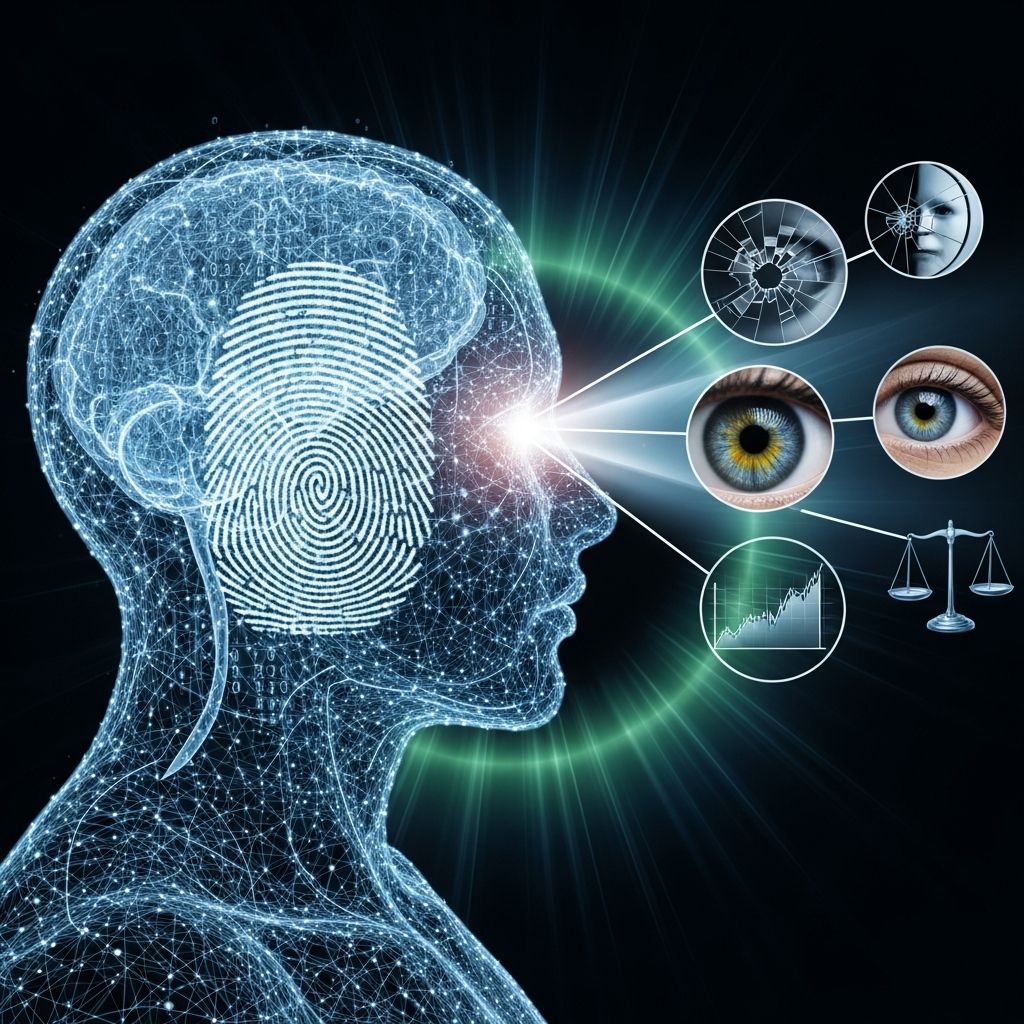
Deception is a universal human behavior, occurring in daily interactions, relationships, workplaces, and legal proceedings. Accurately identifying lies remains challenging, with humans typically achieving only 54% accuracy—barely better than chance. However, scientific research offers reliable strategies that surpass intuition, focusing on verbal cues, nonverbal signals, cognitive demands, and technological aids. This article explores these methods, drawing from peer-reviewed studies and expert analyses to equip you with practical tools for discerning truth from falsehood.
Understanding the Foundations of Lie Detection
Lie detection involves assessing cognitive processes, emotional leakage, and behavioral inconsistencies. Pioneering work by psychologist Paul Ekman highlights micro-expressions—fleeting facial movements lasting under 0.2 seconds—that betray concealed emotions like fear or guilt. These are universal across cultures but require training to spot reliably. Similarly, linguistic analysis tools like James Pennebaker’s Linguistic Inquiry and Word Count (LIWC) examine word choice in writing or speech, achieving 67% accuracy compared to 52% for trained humans.
Research emphasizes that no single cue guarantees deception; context matters. Lies demand more cognitive effort, leading to detectable strains in memory recall and narrative coherence. High-stakes lies, where personal relevance is high, amplify these signals before rehearsal dulls them.
Nonverbal Signals: Reading Body Language Critically
Popular myths suggest liars avoid eye contact or fidget excessively, but evidence debunks these as unreliable. A meta-analysis shows eye contact myths persist despite weak correlations with deceit. Instead, focus on baseline deviations: compare current behavior to the person’s normal demeanor.
- Illustrators and Gestures: Truth-tellers use hand gestures to illustrate points naturally; liars may underuse them or display self-directed touches like lip rubbing, signaling internal discomfort.
- Posture Shifts: Subtle leaning away or foot pointing toward exits can indicate evasion, though stress alone causes similar reactions in innocents.
- Micro-Expressions: Train with tools like Ekman’s FACS to catch anger flashes amid feigned calm, reaching up to 90% accuracy when combined with voice analysis—though unverified claims warrant caution.
Thermal imaging detects blushing or temperature changes in face regions, bridging nonverbal and physiological detection, but remains experimental.
Verbal and Linguistic Markers of Deceit
Verbal cues outperform nonverbal ones in controlled studies. Criterion-Based Content Analysis (CBCA), used in forensic settings, scores statements on 19 criteria like logical structure and sensory details. Meta-analyses confirm medium-to-large effects in distinguishing truths (rich in detail) from lies (vague, structured narratives).
| CBCA Criterion | Truth Indicators | Lie Indicators |
|---|---|---|
| Logical Structure | Coherent timeline | Contradictions, gaps |
| Quantity of Details | Abundant specifics | Sparse, general |
| Unusual Details | Unexpected elements | Absent or fabricated |
| Contextual Embeddings | Rich interactions | Superficial |
Liars use fewer unique words and shorter responses in cognitive interviews, per CA Morgan III’s analysis, outperforming human judges. Machine learning on EEG data decodes belief vs. disbelief at ~90% accuracy, revealing brains initially accept statements before rejecting falsehoods.
Cognitive Interviewing: Forcing Cognitive Overload
Cognitive lie detection shifts from passive observation to active interviewing. Methods like the Cognitive Interview (CI) and Reality Interview impose mental loads—recounting events backward or from unusual perspectives—that overload liars’ working memory more than truth-tellers’.
Asking unexpected questions elicits fewer details from fabricators. Vrij et al.’s paradigm encourages ‘cunning’ tactics: reveal evidence gradually (SUE technique) to catch inconsistencies without early confrontation. Truth-tellers handle complexity fluidly; liars falter, producing inconsistent or evasive replies.
- Report event in reverse chronological order.
- Describe from perpetrator’s viewpoint.
- Focus on peripheral details first.
These approaches yield higher detection rates, especially with independent corroboration.
Technological Frontiers in Deception Analysis
Polygraphs and Voice Stress Analysis
Polygraphs measure autonomic responses (heart rate, skin conductance) but face criticism for 70-90% accuracy claims, influenced by countermeasures and anxiety in innocents. The National Academies deem them inadmissible in most courts due to false positives.
Voice stress analyzers detect microtremors, but lack empirical validation beyond marketing.
Neuroimaging and Brain-Based Detection
fMRI scans reveal prefrontal cortex activation during lies, as in Langleben’s guilty knowledge tests detecting deception-linked activity. However, ethical concerns and low ecological validity limit real-world use; patterns vary by individual.
Emerging EEG machine learning classifies statements with high precision, prioritizing belief chronometry.
Practical Applications Across Life Contexts
Parenting and Family Dynamics
In homes, probe children’s stories with open-ended questions: ‘Tell me everything that happened, starting from the end.’ Watch for detail richness. Avoid accusatory tones that provoke defensive lies.
Workplace and Negotiations
During interviews, baseline speech patterns then introduce complexities. Inconsistencies with documents signal deceit. Train teams on CBCA for HR investigations.
Relationships and Social Ties
Trust erosion from lies damages bonds. Use ‘reality monitoring’: truths embed sensory/perceptual details; lies rely on cognitive operations. Discuss calmly: ‘Walk me through it step-by-step.’
Common Pitfalls and Ethical Considerations
Overreliance on stereotypes (e.g., nervous = lying) leads to errors. Individual baselines vary by culture, neurodiversity, and personality. Confirmation bias amplifies flimsy cues.
Ethically, invasive tech like fMRI raises privacy issues; consent is paramount. Focus on verifiable inconsistencies over judgments.
Integrate multiple cues: a lie is evident if statements contradict self, others, or evidence—the gold standard from psychological literature.
Frequently Asked Questions (FAQs)
What is the most reliable way to detect lies?
The best method combines cognitive interviewing with verbal analysis like CBCA, achieving superior accuracy by exploiting liars’ cognitive limits.
Can you spot lies from body language alone?
No—nonverbal cues are weak predictors; integrate with speech for better results. Myths like eye avoidance mislead.
Do polygraphs work?
They detect arousal but not lies specifically, with high false positives. Courts largely reject them.
How accurate is AI in lie detection?
Promising: LIWC at 67%, EEG-ML at 90% in labs, but field validation needed.
Should I confront suspected liars directly?
Avoid early accusations; use strategic questioning to reveal inconsistencies naturally.
Enhancing Your Detection Skills
Practice with Ekman’s micro-expression training or LIWC demos. Simulate interviews recording responses for CBCA scoring. Stay updated on AI advancements, but ground in evidence. With diligence, detection rates climb from chance to proficient.
References
- Lie detection – Wikipedia — Wikipedia contributors. 2023-10-01. https://en.wikipedia.org/wiki/Lie_detection
- The Science of Lie Detection by Verbal Cues — National Center for Biotechnology Information (NCBI). 2022-04-20. https://pmc.ncbi.nlm.nih.gov/articles/PMC9037296/
- The Polygraph and Lie Detection — National Academies Press. 2003-01-01 (authoritative review). https://www.nationalacademies.org/read/10420/chapter/8
- Deception Detection | How to Tell If Someone is Lying — Paul Ekman Group. 2023-05-15. https://www.paulekman.com/deception/deception-detection/
- Deception detection — American Psychological Association. 2016-03-01. https://www.apa.org/monitor/2016/03/deception