A stiff neck in children is a frequent concern for parents, often arising suddenly and causing discomfort that limits head movement. This condition, medically termed torticollis when persistent, typically stems from benign muscle irritation but requires careful evaluation to rule out severe issues like infections.
Recognizing the Signs in Your Child
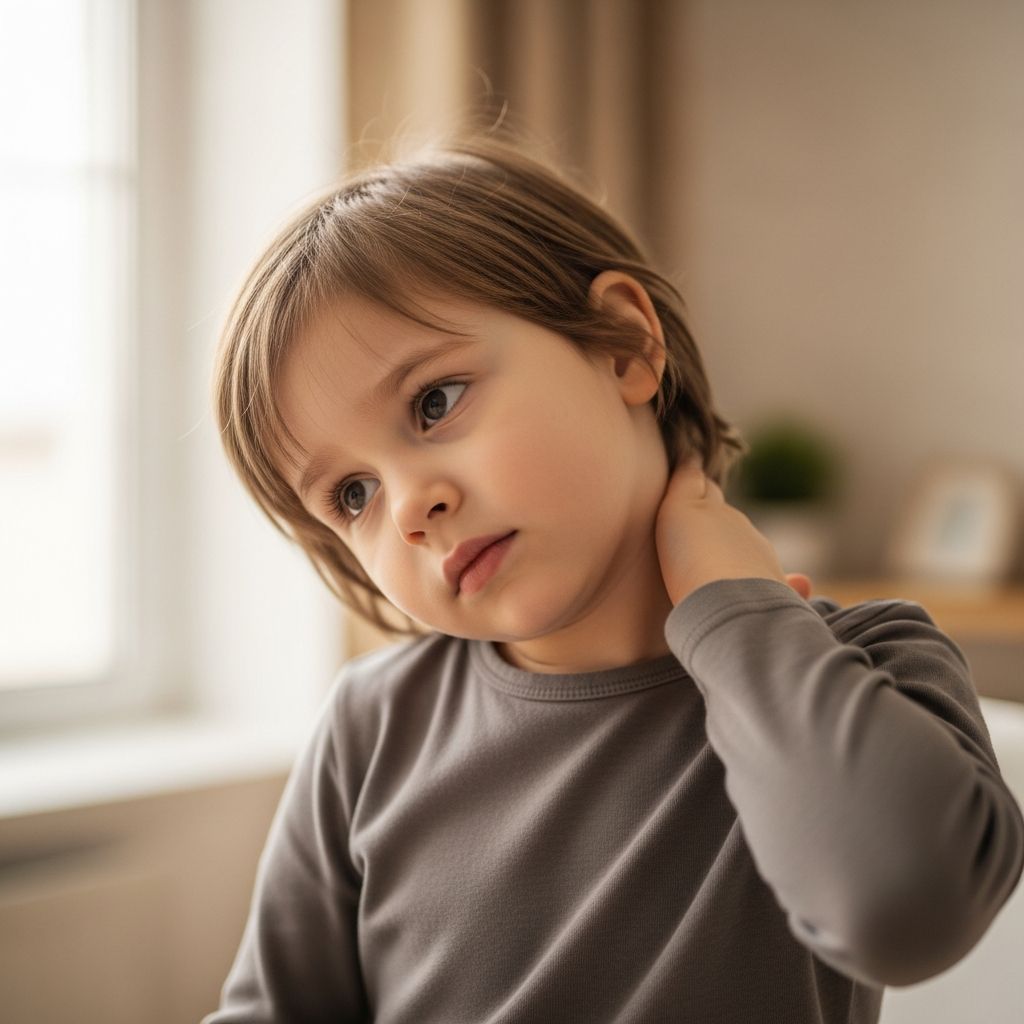
Children with a stiff neck often hold their head tilted to one side, with the chin pointing away from the painful area. They may resist turning the head fully or bending it forward to touch the chest. Associated symptoms include localized soreness when pressing on neck muscles, headaches, or mild discomfort during movement. Unlike adults, kids might express this through fussiness, reluctance to play, or favoring one side while sleeping.
In mild cases, the stiffness resolves within days, but monitor for persistence beyond 48 hours or worsening pain. Infants may show irritability during feeding or unusual crying patterns if neck tension affects swallowing.
Primary Causes of Neck Discomfort
Most episodes trace back to everyday factors rather than grave pathology. Understanding these helps parents respond appropriately without undue alarm.
- Muscle Overuse and Strain: Prolonged screen time, dubbed ‘text neck,’ forces the head forward, straining posterior neck muscles. The average child’s head weighs about 5 kg, amplifying stress in flexed positions. Sports, sudden turns, or carrying heavy backpacks exacerbate this.
- Awkward Sleeping Positions: Falling asleep with the neck twisted, often during deep sleep or on an unsuitable pillow, leads to temporary muscle spasms. Research identifies fluid buildup in cervical uncovertebral joints (C2-C3 or C3-C4) as a key mechanism, confirmed via early MRI in affected children.
- Lymph Node Swelling: Common colds, strep throat, or viral infections cause tender nodes under the jaw or ears, mimicking stiffness.
When Stiffness Signals Something Serious
While 90% of cases are self-limiting, certain red flags demand immediate attention. Distinguish routine strain from threats like meningitis, where neck rigidity prevents chin-to-chest contact alongside systemic signs.
| Benign Strain Indicators | Serious Warning Signs |
|---|---|
| Head cocked to one side, pain on touch | Fever >38.5°C, lethargy, vomiting |
| Improves with rest/heat, no fever | Photophobia, rash, confusion |
| History of poor posture/sleep | Recent injury, tick exposure |
| Can touch chin to chest partially | Inability to flex neck forward |
Meningitis, an inflammation of brain-spinal cord membranes, presents with fever, severe headache, and rigid posture. Retropharyngeal abscesses or Lyme disease (in endemic areas) also feature. Post-trauma stiffness warrants imaging to exclude fractures.
Effective Home Management Strategies
For uncomplicated cases, conservative measures suffice, promoting recovery in 1-3 days. Start with rest: limit activities straining the neck, like gaming or reading in bed.
- Apply Heat Therapy: Warm compresses (cloth-wrapped heating pad, 15-20 mins, 3-4x daily) relax spasms and boost circulation. Avoid ice initially unless swelling evident.
- Gentle Stretches: Encourage slow chin-to-shoulder turns and forward tilts, holding 10-15 seconds, 5 reps per side. Never force movement.
- Over-the-Counter Relief: Age-appropriate ibuprofen or acetaminophen reduces inflammation/pain. Dose by weight: e.g., ibuprofen 10mg/kg every 6-8 hours.
- Posture Correction: Elevate screens to eye level; use supportive pillows.
Massage tender areas lightly with lotion, but stop if pain increases. Hydration and light neck rolls aid too.
Prevention Tips for Active Families
Proactive habits minimize recurrence. Educate kids on ergonomics: hold devices at eye height, take 5-min breaks hourly during study.
- Choose contoured pillows supporting natural neck curve.
- Strengthen neck via age-appropriate exercises like shoulder shrugs or yoga poses (cat-cow).
- Limit backpack weight to 10-15% body mass; use both straps.
- Promote sports with proper warm-ups to avert strains.
Annual wellness checks catch posture issues early. For infants, tummy time builds neck strength against congenital torticollis.
Navigating Medical Evaluation
Consult a pediatrician if symptoms linger >72 hours, intensify, or accompany red flags. Expect physical exam, possibly bloodwork or imaging. MRI reveals joint edema in strain cases, resolving spontaneously. Bacterial meningitis requires lumbar puncture; viral forms self-resolve with supportive care.
In Lyme-prone regions, test for Borrelia via ELISA/PCR if rash or joint pains present. Most GPs manage strains outpatient; ER for fever+stiffness.
Long-Term Outlook and Myths Debunked
Chronic stiffness is rare in kids, unlike adults with degenerative changes. Untreated strains rarely scar but can foster poor habits leading to adult pain. Myth: Cracking necks helps—no, it risks injury. Myth: All stiffness is meningitis—false; context clues differentiate.
With prompt care, full mobility returns swiftly, supporting active childhoods.
Frequently Asked Questions (FAQs)
Q: How long does a child’s stiff neck last?
A: Typically 1-3 days with home care; seek help if >72 hours.
Q: Is stiff neck always from sleeping wrong?
A: Common but not exclusive; screens, infections contribute too.
Q: Can I give my 4-year-old pain meds?
A: Yes, weight-dosed ibuprofen/acetaminophen; consult pharmacist.
Q: When is ER needed for neck stiffness?
A: With fever, vomiting, lethargy, or post-injury immediately.
Q: Does text neck cause permanent damage?
A: Chronic yes, but reversible in kids with posture fixes.
Q: How to differentiate strain from meningitis?
A: Strain allows partial flexion, no fever; meningitis rigid+systemic.
Expand on exercises: Supervised shoulder rolls (10x daily), neck tilts. Track symptoms in a journal for doctor visits. Nutrition matters—vitamin D aids muscle health per pediatric guidelines.
For teens, ergonomic desks prevent recurrence. Babies: Repositioning cures 95% congenital cases. Global stats: 1-2% kids/year seek care for this.
References
- Etiology of child acute stiff neck — PubMed. 2009-08-01. https://pubmed.ncbi.nlm.nih.gov/19680099/
- Neck Pain or Stiffness — Seattle Children’s Hospital. Accessed 2026. https://www.seattlechildrens.org/conditions/a-z/neck-pain-or-stiffness/
- Neck pain — About Kids Health. Accessed 2026. https://www.aboutkidshealth.ca/neck-pain
- Torticollis — Nemours KidsHealth. Accessed 2026. https://kidshealth.org/en/parents/torticollis-kids.html
- What to do if your child has a stiff neck — CHOC Children’s. Accessed 2026. https://health.choc.org/what-to-do-if-your-child-has-a-stiff-neck/
- Neck pain in children: Treatment and when to see a doctor — Medical News Today. 2023-01-17. https://www.medicalnewstoday.com/articles/322944
- Stiff Neck: Relief and Remedies — WebMD. Accessed 2026. http://www.webmd.com/a-to-z-guides/remedies-for-stiff-neck