Finding a small lump on your child’s wrist, hand, or foot can be alarming, but many of these bumps turn out to be harmless ganglion cysts. This guide explains what they are, how they are treated, and what parents can realistically expect.
What Is a Ganglion Cyst?
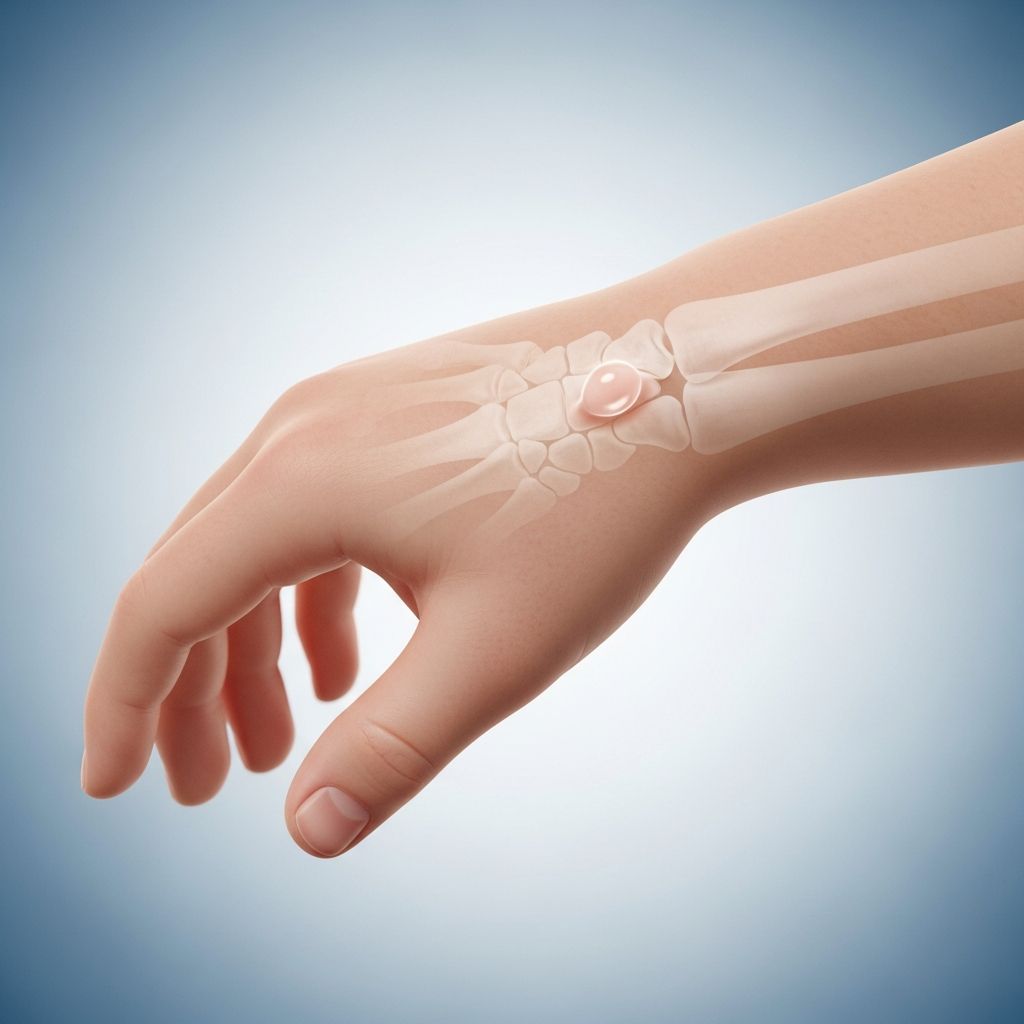
A ganglion cyst is a noncancerous, fluid-filled lump that usually forms next to a joint or along a tendon. It is made up of a thick, jelly-like fluid trapped inside a small sac of tissue. The cyst often feels smooth and can be soft, firm, or slightly rubbery when pressed.
In children and teens, ganglion cysts most often appear on the back of the wrist, the palm side of the wrist, or near the base of the fingers. Less commonly, they may arise on the top of the foot, around the ankle, or near the knee.
Why Ganglion Cysts Form
Doctors still do not fully understand why some children develop ganglion cysts and others do not. A common theory is that there is a small weakness or tiny tear in the capsule that surrounds a joint or tendon sheath. Joint fluid then seeps out through that weak spot and collects into a pocket, forming the cyst.
Although repetitive use or a minor injury may play a role in some children, many ganglion cysts appear without any clear cause. They are not caused by infection, are not contagious, and do not turn into cancer.
Common Locations in Children
Ganglion cysts can technically form near any joint, but some locations are much more common in kids and teens. Knowing these typical sites can help parents recognize what they are seeing.
| Location | Typical Appearance | Possible Symptoms |
|---|---|---|
| Back of the wrist | Round or oval bump above the wrist joint, often pea- to grape-sized | Mild aching with wrist motion, concern about appearance |
| Palm side of wrist | Small lump near major blood vessels and nerves on the front of the wrist | Discomfort when pushing or weight-bearing, possible tenderness |
| Base of finger (palm side) | Tiny, firm nodule where the finger meets the palm | Pain when gripping or holding objects tightly |
| Top of foot or ankle | Bump that may rub against shoes or straps | Irritation from footwear, soreness with walking or sports |
What Parents Typically Notice
Most families discover a ganglion cyst when they see or feel a lump on their child’s hand or foot. Sometimes it appears suddenly, while in other cases it grows so slowly that no one is sure when it started.
- A small, round or oval bump next to a joint or along a tendon
- A lump that may change size over days or weeks, or even seem to disappear and return
- Skin over the bump that looks normal and is not red, warm, or bruised
- A curious child who pokes at the lump because it feels different
Symptoms: When a Cyst Causes Problems
Many ganglion cysts cause no pain at all and are only a cosmetic concern. However, some do lead to symptoms, especially if the cyst presses on a nearby nerve or limits how the joint can move.
- Achy or dull pain around the joint, especially after heavy use or sports
- Tenderness when the bump is pressed or bumped accidentally
- A feeling of tightness or stiffness with bending or straightening the joint
- Tingling, numbness, or weakness if the cyst squeezes a nerve
- Difficulty gripping, writing, or using small objects in the case of wrist or finger cysts
If a cyst is very small or buried deeper under the skin, a child may feel pain or tingling without a clearly visible lump. In these cases, a doctor’s evaluation is particularly important to clarify what is going on.
When to Call the Doctor
Any new lump on a child should be brought to a health professional’s attention, even though most turn out to be harmless. Early evaluation allows a doctor to rule out more serious causes and to guide you on whether the cyst needs treatment or simply monitoring.
- The bump is growing quickly or becoming more noticeable over a short period of time
- Your child has persistent pain, weakness, or trouble using the affected hand or foot
- The skin over the lump becomes red, hot, or looks infected
- Your child has a fever or feels generally unwell along with the lump
- There is a history of significant trauma to that area, such as a fall or sports injury
How Ganglion Cysts Are Diagnosed
Diagnosis usually starts with a careful medical history and physical examination. The doctor will ask when you first noticed the lump, whether it changes size, and if your child has any pain, tingling, or loss of function. Prior injuries or repetitive activities, such as gymnastics or racket sports, may also be discussed.
During the exam, the doctor gently presses on the bump and moves the nearby joints to see where the cyst is connected. Many ganglion cysts are easy to recognize by their typical feel and location. Because they are filled with clear fluid, a bright light shone through the lump often shows a translucent glow, which supports the diagnosis.
Imaging Tests
Imaging is not always required but can be helpful when the diagnosis is uncertain or the cyst is deep. An ultrasound uses sound waves to show whether the lump is solid or fluid-filled, and to outline its relationship to nearby structures. This test is painless and does not expose the child to radiation.
Occasionally, a magnetic resonance imaging (MRI) scan may be recommended to evaluate more complex or hidden cysts or to rule out other conditions. X-rays are not able to show the cyst itself, but they may be used to check the bones and joints for other problems.
Are Ganglion Cysts Dangerous?
Ganglion cysts are considered benign, meaning they are noncancerous and do not spread to other parts of the body. They cannot turn into cancer and are not a sign of a serious disease by themselves. For this reason, watchful waiting is often a safe option, especially for cysts that are painless.
The main concerns for children are discomfort, limitation of activity, and anxiety about the appearance of the lump. Some families are also worried about the possibility of the cyst growing larger or affecting nearby nerves and tendons.
Watchful Waiting and Home Care
Many pediatric ganglion cysts go away without any medical procedure. Doctors frequently recommend a period of observation, particularly if the cyst is small and not causing problems with daily life or sports. During this time, parents can monitor the cyst and provide simple comfort measures.
- Encourage your child to mention any new pain, tingling, or weakness.
- Take photos every few weeks to track whether the cyst is growing or shrinking.
- Use a soft bandage or padded wristband if the lump tends to get bumped.
- Ask your doctor about over-the-counter pain relief for occasional discomfort.
It is important not to attempt home “treatments” such as hitting the cyst with a heavy object, puncturing it with needles, or tying bands around it. These methods can cause significant injury, infection, and scarring, and they do not reliably prevent the cyst from coming back.
Medical Treatment Options
If the cyst is painful, interferes with your child’s activities, or causes emotional distress, more active treatment may be discussed. The choice depends on the size and location of the cyst, your child’s symptoms, and the doctor’s experience and judgment.
Splinting and Activity Changes
Sometimes, limiting motion of the affected joint can reduce irritation and pressure around the cyst. A short period of splinting or bracing may allow symptoms to settle. Children are often advised to avoid or cut back on specific activities that seem to worsen pain, such as tumbling, heavy lifting, or certain sports exercises.
Splinting is usually a temporary strategy and is often combined with observation. Overly long periods of immobilization are typically avoided, because children need to maintain normal strength and flexibility.
Needle Aspiration
One minimally invasive option for some ganglion cysts is aspiration, which means drawing out the fluid with a needle. After numbing the area, the doctor inserts a sterile needle into the cyst and withdraws the jelly-like fluid. The lump often shrinks immediately after the procedure.
Although aspiration can quickly relieve pressure and pain, it does not remove the cyst wall, so the fluid may slowly collect again over time. For this reason, recurrence is not unusual, and the procedure might need to be repeated or followed by other treatments if the cyst returns.
Surgical Removal
Surgery may be considered when a cyst is very bothersome, recurs after aspiration, or presses on important nerves or blood vessels. During the operation, the surgeon removes the cyst as well as the small stalk of tissue that connects it to the joint or tendon. This is usually done as an outpatient procedure, meaning your child can go home the same day.
Depending on the location and the child’s age, surgery can involve local anesthesia with sedation or general anesthesia. Risks include infection, stiffness, scarring, and the possibility that the cyst could eventually come back even after careful removal. However, recurrence rates are generally lower with surgery compared to aspiration alone.
Recovery and Life After Treatment
Recovery from a simple aspiration is usually quick. Children can typically move the joint soon afterward and return to regular activities as guided by the doctor. Some mild soreness or bruising may be present for a few days.
After surgery, the joint is often wrapped or placed in a small splint for a short period. Hand or physical therapy may be recommended to regain full motion and strength, especially for wrist and finger cysts. Most children return to school within a few days and gradually resume sports and hobbies over several weeks, depending on healing and comfort.
Helping Your Child Cope
Even when the cyst is medically harmless, children may feel self-conscious or worried about the way it looks or feels. Open communication and reassurance from parents can make a big difference in how they experience the condition.
- Explain in simple terms that the lump is a small fluid pocket, not a “tumor” or something spreading.
- Let your child ask questions at medical visits and involve them in decisions where appropriate.
- Reassure them that many kids and adults have similar cysts and continue normal activities.
- Work with coaches or teachers to adjust activities if the cyst causes discomfort.
Prevention and Risk Factors
There is no guaranteed way to prevent a ganglion cyst, because the exact cause is not fully understood. Some children may have joint or tendon structures that are more prone to forming small fluid leaks. A history of repetitive motion or minor injuries may also increase the chance in certain active kids, though not all children with those risk factors develop cysts.
General measures such as proper sports technique, adequate warm-up, and use of protective gear can reduce strain on joints and tendons. However, even with these precautions, some cysts still appear, and parents should not feel that they caused the problem.
Key Points for Busy Parents
- Ganglion cysts are benign, fluid-filled lumps that often appear around the wrists, hands, ankles, or feet in children.
- Many cysts cause no pain and may disappear on their own with simple observation.
- Treatment is usually guided by symptoms such as pain, limited motion, or nerve pressure, not just by how the cyst looks.
- Options range from watchful waiting to aspiration and, if needed, surgical removal.
- Most children recover fully and return to their usual activities without long-term problems.
Frequently Asked Questions (FAQ)
Is a ganglion cyst a type of cancer?
No. A ganglion cyst is a benign (noncancerous) collection of joint or tendon fluid in a small sac of tissue. It does not spread to other parts of the body or transform into cancer.
Will my child’s cyst go away on its own?
Many pediatric ganglion cysts shrink or disappear over time without any procedure. This may take months or even longer, and the cyst might fluctuate in size during this period. Doctors often recommend watchful waiting if the cyst is not painful and does not interfere with daily activities.
Can my child keep playing sports?
In most cases, yes. If the cyst is not causing pain or weakness, children can continue their usual sports and play. When specific movements make the area sore, a doctor may suggest modifications, short breaks, or protective padding to reduce irritation.
Is draining the cyst with a needle safe for kids?
Needle aspiration can be a safe option when done by an experienced clinician using sterile technique. It may quickly reduce the size of the lump and relieve pressure. However, there is a chance that the cyst can refill with fluid, so families should understand that the procedure is not always a permanent cure.
What are the risks of surgery?
Surgical removal of a ganglion cyst is usually a straightforward outpatient procedure, but all surgery carries some risks. Possible complications include infection, stiffness, scarring, temporary nerve irritation, and recurrence of the cyst. Discussing these issues in advance with the surgeon helps parents make an informed decision.
Should we try to burst the cyst at home?
No. Hitting, squeezing, or puncturing a cyst at home can lead to infection, tissue damage, and scarring. These methods do not reliably prevent the cyst from returning and can create more serious problems than the cyst itself. Any treatment should be performed and supervised by medical professionals.
Will my child always have a bump there?
Not necessarily. Some cysts resolve naturally and never come back. Others may recur after treatment or remain stable and harmless for years. Regular follow-up allows the doctor to monitor any long-term changes and helps parents decide if future treatment is needed.