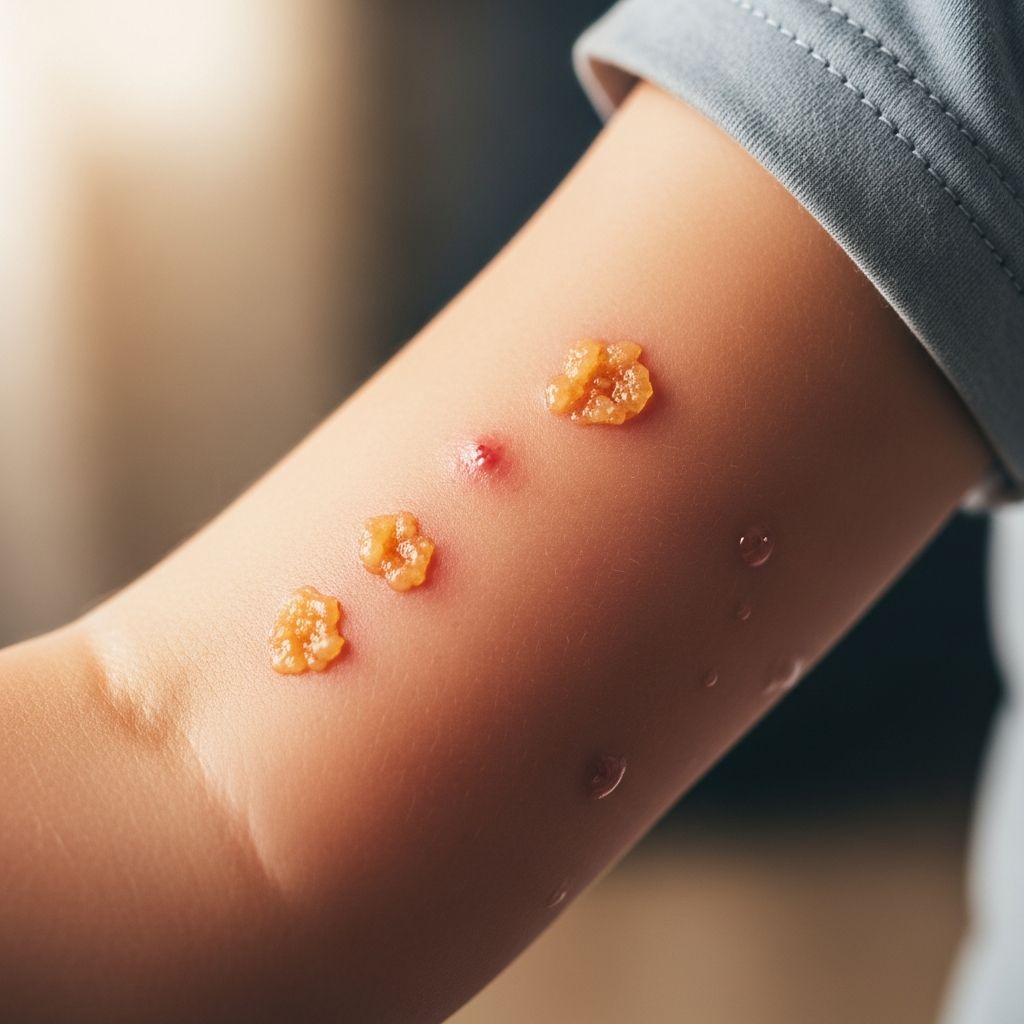
Impetigo represents one of the most frequent bacterial skin infections among young children, characterized by distinctive reddish lesions that evolve into characteristic honey-colored crusts. Primarily affecting infants and school-aged kids, this highly contagious condition spreads easily in group settings like daycare or playgrounds.
Understanding the Nature of Impetigo
This superficial skin infection targets the outer layers of the epidermis, making it particularly prevalent in warm, humid environments where children play closely together. Unlike deeper infections, impetigo rarely leads to scarring if managed promptly, but its rapid spread demands quick parental vigilance.
Children under 6 years old are most susceptible due to frequent minor skin breaks from scrapes, bug bites, or eczema flare-ups that serve as entry points for bacteria. In crowded settings, such as classrooms or sports teams, the infection can proliferate swiftly through direct contact or shared items.
Recognizing the Signs: What to Look For
The hallmark of impetigo is the appearance of red sores, typically clustering around the nose, mouth, hands, or feet. These lesions, about the size of a pea initially, feel itchy or mildly sore and can emerge 1 to 10 days post-exposure.
Within hours to days, the sores rupture, releasing a thin, sticky fluid that hardens into yellowish-brown scabs resembling crusted honey – a key diagnostic clue. Itching prompts scratching, which autoinoculates nearby skin, expanding the rash.
Common Presentation Stages
- Early phase: Small red spots or tiny blisters on exposed skin.
- Progression: Blisters burst, ooze clear or pus-like fluid.
- Crusting: Fluid dries into thick, golden crusts that may flake like cornflakes.
- Spread: New spots form via touch, towels, or clothing.
Sores generally heal in 7-10 days without intervention, but treatment accelerates recovery and curbs transmission.
Variations of Impetigo in Young Patients
While non-bullous impetigo dominates, accounting for most cases with its classic crusts, two other forms warrant attention.
Blistering or Bullous Type
Bullous impetigo features larger, flaccid blisters filled with clear yellow fluid, often on the trunk, arms, or legs of babies under 2. These stem from a toxin produced by certain staphylococcal strains, causing epidermal splitting without much surrounding redness. Blisters burst easily, forming a shiny, varnish-like crust.
Deeper Form: Ecthyma
Ecthyma penetrates further, creating painful, pus-filled ulcers with thick grayish crusts, mainly on legs or feet. This rarer variant risks scarring and signals possible underlying issues like poor hygiene or immune compromise. Slow to heal, it may require oral medications.
| Type | Appearance | Common Sites | Severity |
|---|---|---|---|
| Non-bullous | Honey crusts on red sores | Face, hands, feet | Mild |
| Bullous | Large fluid blisters | Trunk, limbs | Moderate |
| Ecthyma | Ulcers under gray crusts | Lower legs | Serious |
Bacterial Culprits Behind the Infection
Staphylococcus aureus drives most cases, either alone or with group A Streptococcus (GAS). These gram-positive bacteria colonize noses and skin harmlessly until breaching via cuts or rashes.
Primary impetigo invades intact skin, while secondary overlays existing dermatitis. Risk amplifiers include eczema, diabetes, or immunosuppression. Hot climates and overcrowding boost incidence.
How Impetigo Spreads Among Kids
Transmission occurs via direct touch of sores, or indirectly through contaminated toys, bedding, or towels. Scratching disseminates bacteria, creating satellite lesions. Communal areas like schools amplify outbreaks; one infected child can spark clusters.
Infected kids remain contagious until crusts dry or 24-48 hours post-antibiotics. Unlike viral illnesses, impetigo thrives on skin-to-skin proximity rather than airborne spread.
Diagnosis: Simple Yet Essential
Physicians diagnose via visual inspection – the honey crust is pathognomonic. Swabs confirm bacteria if widespread or atypical, guiding antibiotic choice amid rising resistance.
Rule out lookalikes: herpes (clustered vesicles), ringworm (scaly rings), or cellulitis (deep swelling).
Treatment Strategies for Fast Relief
Mild cases respond to topical antibiotics like mupirocin, applied 3x daily for 5-7 days. Soak crusts in soap-water to soften before application.
Extensive involvement (>5 lesions) or ecthyma demands oral agents: cephalexin or dicloxacillin for staph; add penicillin if strep suspected. Complete the course to prevent recurrence.
- Gently wash sores with antibacterial soap.
- Apply prescribed ointment thinly.
- Cover with loose bandage if needed.
- Trim nails to deter scratching.
Symptoms wane in 2-3 days with therapy; full healing follows in a week.
Everyday Prevention Tactics for Families
Hygiene is paramount: frequent handwashing, not sharing towels, and daily baths reduce risk by 50% in high-exposure settings.
Treat predisposing conditions like eczema promptly. Isolate infected kids from school until non-contagious (24h antibiotics or dry crusts). Clean toys and surfaces with disinfectant.
Potential Complications and When to Worry
Rarely, untreated impetigo leads to cellulitis, guttate psoriasis (post-strep), or scarlet fever. Ecthyma signals deeper issues; fever, swelling, or lymph node pain merits urgent care.
Monitor for post-strep glomerulonephritis (dark urine, swelling) weeks later, though uncommon.
Impetigo in Diverse Skin Tones
On brown or black skin, redness may appear purple-gray, with crusts still prominent. Awareness prevents misdiagnosis.
Frequently Asked Questions About Impetigo
Can impetigo scar my child?
Typically no for superficial types; ecthyma may leave marks if deep.
Is impetigo only in kids?
Predominantly, but adults in close quarters or with weakened immunity can get it.
How long is my child contagious?
Until sores dry or 24 hours after antibiotics start.
Does impetigo cause fever?
Usually not; systemic symptoms suggest complication.
Can I pop the blisters?
No – it spreads bacteria. Soak gently instead.
Long-Term Management and Outlook
With prompt care, impetigo resolves fully without sequelae. Recurrent cases may need nasal mupirocin to decolonize staph carriers. Educate families on hygiene to break transmission cycles.
In endemic areas, community programs emphasizing soap access curb epidemics.
References
- Impetigo – Symptoms & causes — Mayo Clinic. 2023-10-15. https://www.mayoclinic.org/diseases-conditions/impetigo/symptoms-causes/syc-20352352
- Impetigo — Texas Department of State Health Services (DSHS). 2024-02-12. https://www.dshs.texas.gov/impetigo
- About Impetigo | Group A Strep — Centers for Disease Control and Prevention (CDC). 2024-08-01. https://www.cdc.gov/group-a-strep/about/impetigo.html
- Impetigo — National Health Service (NHS). 2023-11-20. https://www.nhs.uk/conditions/impetigo/
- Impetigo — StatPearls, NCBI Bookshelf, National Library of Medicine (NIH). 2024-07-05. https://www.ncbi.nlm.nih.gov/books/NBK430974/
- Impetigo – treatments, symptoms and causes — Healthdirect Australia. 2024-01-10. https://www.healthdirect.gov.au/impetigo
- Impetigo: symptoms, causes, prevention and treatments — Health Service Executive (HSE) Ireland. 2023-12-18. https://www2.hse.ie/conditions/impetigo/