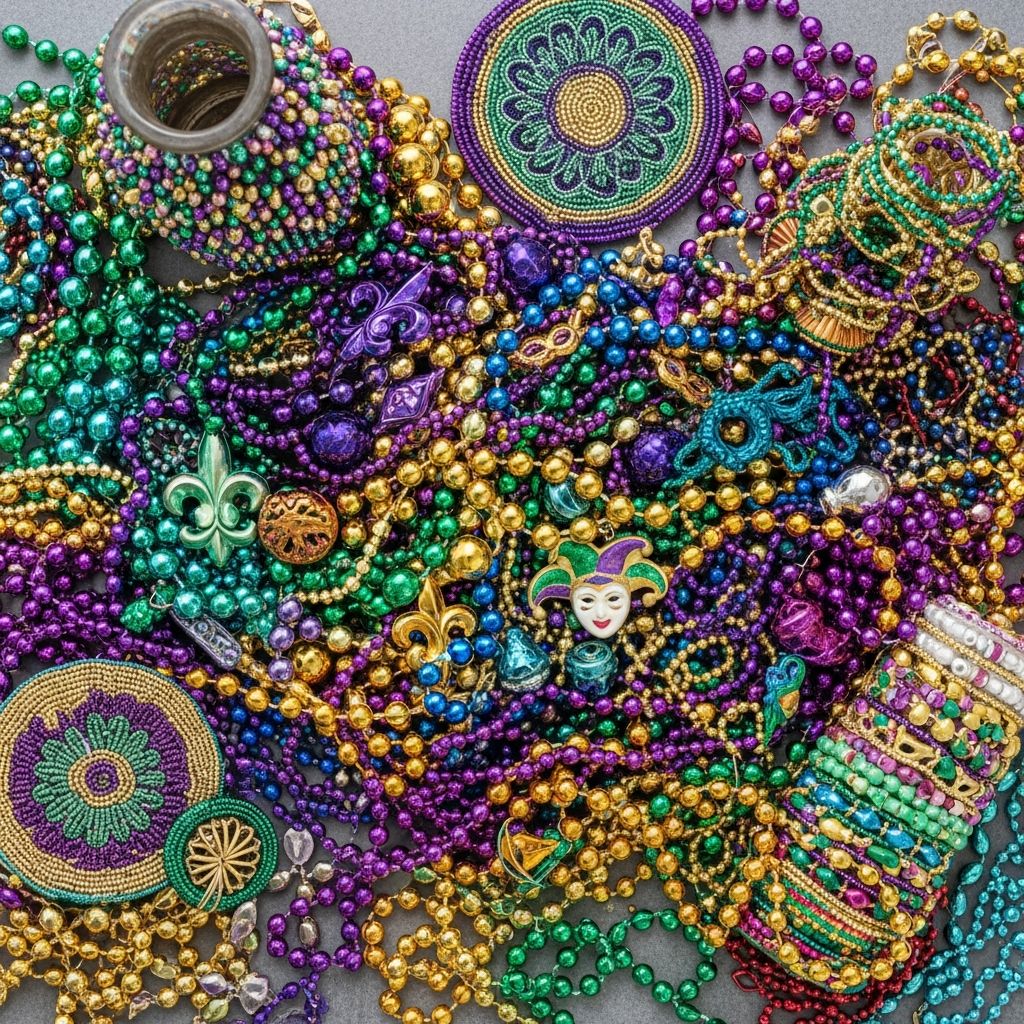
Mardi Gras beads may look like simple plastic necklaces, but they carry stories about history, community, celebration, and even our responsibility to the environment. Every strand thrown from a float tells a small part of a much bigger cultural tradition. For many families, those sparkling chains become keepsakes, dress-up treasures, and craft supplies long after the parade is over.
This guide explores where Mardi Gras beads came from, what their colors symbolize, how they shape parade culture, and how to store, share, and creatively reuse them at home. It is designed for parents, crafters, and anyone who loves Carnival season but wants to enjoy it in a more thoughtful, sustainable way.
The Story Behind Mardi Gras Beads
Mardi Gras, often called Carnival, is the festive season leading up to Lent, celebrated with parades, costumes, music, and plenty of colorful “throws” tossed from floats. Beads are among the most iconic of these throws, draped around necks, balconies, trees, and just about anything that will hold them.
The modern bead tradition evolved over time as parades became more organized, Krewes (social clubs) developed, and the idea of showering the crowd with small treasures caught on. What began with modest trinkets and glass strands has grown into a full-blown spectacle of color and abundance.
Why Beads Became a Carnival Icon
Beads blend spectacle, symbolism, and accessibility. They are cheap enough to toss by the thousands, but vivid enough to feel special when caught. Because they are visible from far away, they turn crowds into rolling seas of color.
Beads also solve a practical problem for parades: they are easy to throw safely, unlikely to spoil (unlike food), and can be themed to match Krewes, sponsors, or particular years. Over time, catching beads became part game, part souvenir hunt, adding a playful rhythm to each float’s appearance.
Color Meanings and Symbolism
Not all Mardi Gras beads are the same. Beyond their shapes and sizes, their colors carry meaning tied to long-standing Carnival traditions. Families can use color meanings as a playful way to talk about values and history while sorting or crafting.
- Purple: Often linked with justice, fairness, and doing what is right.
- Green: Commonly associated with faith, hope, and growth.
- Gold: Typically connected with power, success, and generosity.
Many parades feature beads that mix or highlight these hues, turning the crowd into a moving blend of symbolic colors. Specialty beads may introduce other themes as well: team colors, school pride, or particular causes such as environmental awareness or health campaigns.
From Glass Treasures to Plastic Piles
Early Mardi Gras beads were often made from glass, sometimes imported and hand-strung, making them relatively precious compared with today’s mass-produced plastic necklaces. Those older strands were more fragile and costly, so they were handled with greater care and tended to be saved as genuine keepsakes.
Over the decades, plastic manufacturing made it possible to produce beads cheaply and in huge quantities. That shift turned beads into plentiful party favors rather than rare souvenirs. It also introduced a new problem: what to do with mountains of plastic after the last float rolls by.
Table: Then vs. Now – How Mardi Gras Beads Changed
| Aspect | Earlier Beads | Modern Mass Beads |
|---|---|---|
| Common material | Glass, sometimes hand-strung | Plastic, machine-produced |
| Cost per strand | Relatively high, treated as a keepsake | Very low, intended for bulk throwing |
| Durability | Fragile, prone to breaking | Flexible and hard to break |
| Environmental impact | Fewer pieces, break but do not linger as long in bulk | Large volumes of plastic that often end up in landfills or storm drains |
| Perceived value | Special, collected and stored | Fun but often treated as disposable |
Family-Friendly Bead Etiquette at Parades
Mardi Gras parades can be thrilling for children, but the rush to grab beads can become chaotic. Establishing simple family rules helps everyone have a safer, more positive experience. It also models respect for others even in the middle of a loud, crowded street.
- Choose a safe spot away from the curb where children are not tempted to run into the street.
- Use ladders safely if they are part of your local tradition, and never allow kids to climb unattended.
- Teach children to wave, smile, and make eye contact with riders instead of shoving for beads.
- Encourage trading or sharing beads with nearby kids to keep the mood friendly and cooperative.
These small habits can make the difference between a stressful scramble and a joyful memory. They also help younger family members understand that the celebration is about community, not competition.
How Many Beads Are Enough?
In the excitement of a parade, it is easy to keep reaching for “just one more” strand. By the time the last float passes, most families discover they have far more beads than they can wear, store, or reasonably use. Setting expectations in advance can keep the bead mountain manageable.
- Set a playful limit, such as “as many as you can comfortably wear” or “one small bag each.”
- Designate certain beads as “special” (unique colors, shapes, or themes) and let go of the generic extras.
- Plan a crafting or donation project before the parade so children see beads as future materials, not just instant trophies.
These strategies allow the fun of catching beads to continue without creating clutter that will feel overwhelming later.
Storing Your Favorite Beads
Once everyone has chosen their favorite strands, storage becomes the next question. Thoughtful storage protects beads from tangling, breaking, and becoming a dusty heap in the back of a closet. It also makes future decorating and crafting much easier.
- Sort by color or type into clear, labeled containers or zip-top bags.
- Loop necklaces together in small bundles before placing them in a box.
- Use over-the-door shoe organizers with clear pockets to store beads where kids can see and reach them.
Visible storage keeps the magic of Mardi Gras alive year-round, inviting kids to use beads in imaginative play, costumes, and décor rather than forgetting them.
Eco-Conscious Choices: Reuse, Donate, Recycle
The environmental impact of millions of plastic beads is real, from clogged street drains to added landfill waste. Families cannot solve the problem alone, but small, consistent choices help. Thinking about beads as resources rather than disposable trinkets is a useful starting point.
- Reuse: Turn beads into decorations, costume pieces, or learning tools instead of throwing them away.
- Donate: Many schools, community theaters, and craft groups welcome clean, sorted beads for art projects.
- Recycle creatively: Some communities or local organizations organize bead drives to wash, sort, and resell strands to Krewes for future seasons.
Teaching children to participate in these efforts connects celebration with care for their city and environment, reinforcing that fun and responsibility can go hand in hand.
Simple Decorating Ideas With Beads
Mardi Gras beads are ready-made décor. Their colors, sparkle, and flexibility make them perfect for quick, inexpensive holiday transformations around the house. With a bit of imagination, those strands can replace store-bought decorations.
- Door frames and mantels: Drape beads along doorways, shelves, and mantels in layered swags.
- Table accents: Coil strands into small nests to hold candles (in glass holders), vases, or bowls.
- Mini chandeliers: Hang beads around a light fixture or hoop to create a festive faux chandelier.
- Balcony and porch railings: Wrap beads around railings for an instant Carnival makeover.
Because beads are lightweight and easy to remove, kids can help decorate without worry about damage to walls or furniture. After the season ends, everything can be packed away for next year.
Kid-Friendly Craft Projects Using Beads
Crafting with Mardi Gras beads keeps children entertained, develops fine motor skills, and breathes new life into leftover strands. Many projects require only basic supplies like cardboard, glue, and scissors, making them accessible for most families.
- Bead-framed mirrors and picture frames: Glue beads around the edges of inexpensive frames or mirrors for a glittery border.
- Masks and crowns: Cut masks or crown shapes from cardstock and decorate with short sections of beads, sequins, and feathers.
- Wind chimes and mobiles: Hang bead strands from embroidery hoops or sticks to create colorful mobiles for a playroom or patio.
- Holiday ornaments: Coil beads into circles, hearts, or stars and secure them with thin wire or string for year-round ornaments.
Encourage older kids to design their own projects, such as beaded bookmarks, keychains, or room décor. The more ownership they feel over the process, the more likely they are to see beads as creative building blocks rather than throwaways.
Using Beads as Learning Tools
Beyond crafts, Mardi Gras beads can quietly support learning at home. Their colors and shapes lend themselves to simple educational games that feel more like play than homework. Parents can adapt activities to suit a wide range of ages.
- Counting and sorting: Ask young children to sort strands by color, length, or bead size, then count how many are in each group.
- Patterns and sequences: Use beads to teach repeating patterns (for example, purple–green–gold–purple–green–gold).
- Measurement: Compare the lengths of different strands and talk about longer, shorter, and equal.
- Story prompts: Invite kids to choose three different beads and invent a story that connects them.
These activities turn post-parade organization into a playful learning session that can be revisited long after Carnival season ends.
Hosting a Bead Swap or Craft Party
When beads start to pile up, consider gathering friends and neighbors for a bead swap or craft party. This approach shares materials, sparks creativity, and reduces waste. It can become its own small tradition layered on top of the main holiday.
- Invite families to bring their clean, extra beads and any simple crafting supplies they have on hand.
- Set up stations: one for making décor, one for kid crafts, and one for sorting or bundling beads for donation.
- Provide snacks and music to keep the mood festive while everyone crafts and chats.
- End the event by packing a box of surplus beads to donate to a local school, art program, or charity.
Children see firsthand how shared effort can transform clutter into creative projects and contributions for others to enjoy.
Frequently Asked Questions About Mardi Gras Beads
Are Mardi Gras beads safe for young children?
Beads are generally safe when used with supervision, but they can pose choking or strangulation risks for very young children. Keep beads out of reach of toddlers and babies, and never let children sleep wearing bead necklaces.
Can Mardi Gras beads be recycled?
Traditional curbside recycling programs seldom accept loose beads, but some cities and local groups collect them for cleaning and reuse. When in doubt, contact community organizations, schools, or art centers to see whether they accept bead donations.
How should beads be cleaned before donating or crafting?
After outdoor parades, beads may be dusty or sticky. A quick rinse in warm, soapy water followed by thorough drying on towels usually works well. Always make sure beads are completely dry before storing them to prevent mildew or rust on any metal components.
What can I do if my city’s parades generate huge amounts of bead litter?
Individual families can help by collecting beads from sidewalks after parades, supporting cleanup efforts, and participating in local bead drives. Contact neighborhood associations or city offices to learn about volunteer opportunities or to suggest new reuse and collection programs.
Is it okay to leave beads on trees and fences as decorations?
While hanging beads outdoors can look festive for a short time, long-term displays may damage plants and contribute to plastic pollution. If you decorate outside, plan a clear end date to take beads down and either store or repurpose them.
Bringing Meaning Back to the Beads
Mardi Gras beads do not have to be mindless clutter. With a bit of planning and creativity, they can become reminders of shared joy, building blocks for kids’ imaginations, and raw material for community generosity. Families can teach children that celebration and care for the world are not opposites but partners.
The next time beads rain down from a float, imagine the second life they might live—as a craft project, a classroom supply, or a treasured frame around a favorite family photo. That simple shift in perspective turns each strand from just another trinket into part of an ongoing story your family helps write year after year.