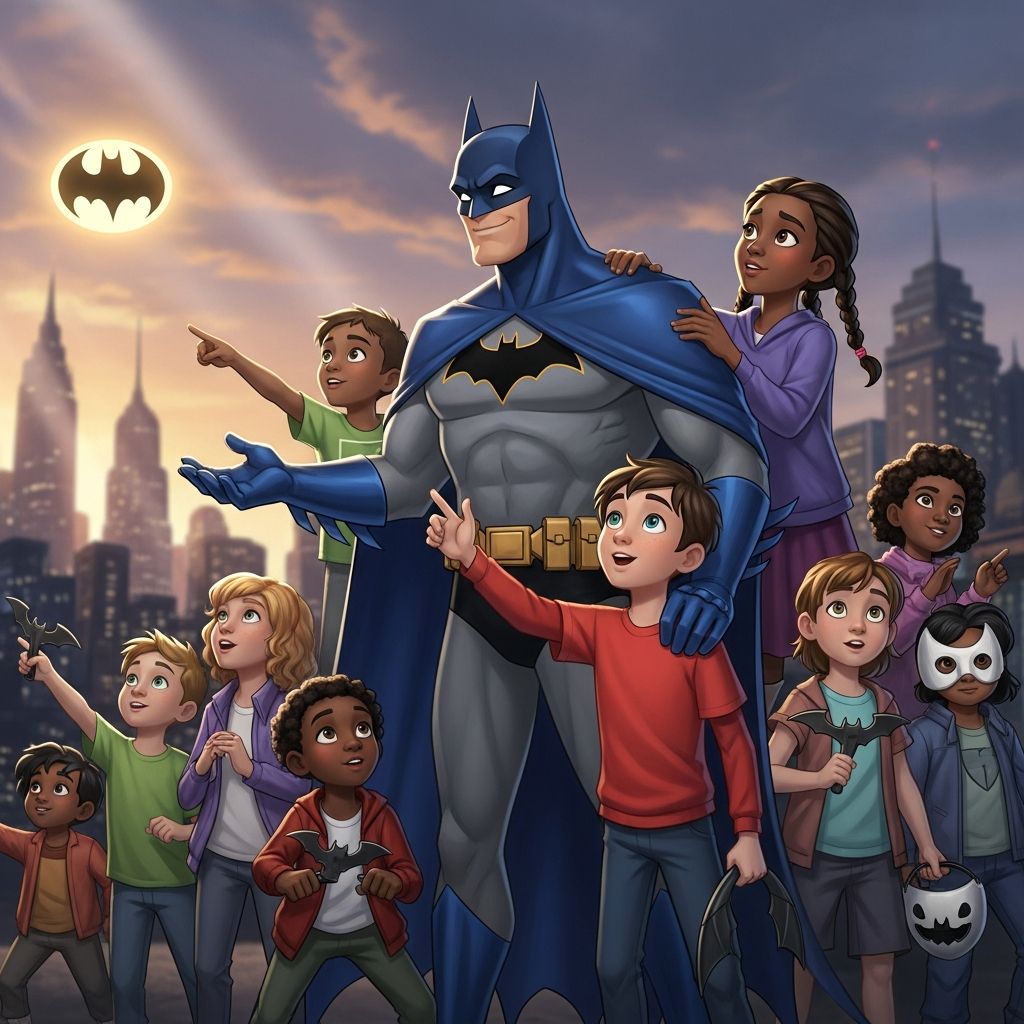
Batman is everywhere — in comics, big-budget movies, video games, and an ever-growing list of animated series. For many parents, the real challenge is not finding Batman content, but figuring out which versions are gentle, bright, and fun enough for young kids without overwhelming them with dark themes.
This guide walks you through some of the most kid-appropriate Batman shows and films, offers age-range suggestions, and explains the basic content you can expect. It is designed to help you make informed choices, especially since research shows that media with graphic or intense violence can influence children’s emotions and behavior if not matched to their developmental stage.
Why Batman Can Be Tricky for Young Viewers
Unlike many superheroes, Batman’s stories often lean into crime, fear, and psychological conflict. That tone can be thrilling for teens and adults but overwhelming for preschoolers or early grade-schoolers. Studies from pediatric and psychology organizations caution that frequent exposure to violent or frightening media can increase anxiety, desensitization, or aggressive behavior in children who are not ready for it.
When deciding whether a Batman title is a good fit, consider these elements:
- Visual style: Bright, colorful, and cartoony looks are usually easier for young kids than realistic, shadowy cinematography.
- Violence level: Slapstick fights and clearly unreal comic-book punches are less disturbing than realistic injuries or weapons used in a serious way.
- Emotional tone: Light, humorous stories with clear happy endings are better for little kids than grim tales about trauma or moral ambiguity.
- Complexity of plot: Very dense, political, or psychological plots may simply be confusing for younger viewers, even if they’re technically allowed by age rating.
Age ratings from professional boards are a helpful starting point, but they are not the whole story. Context, your child’s temperament, and whether you watch together are just as important.
Bright, Gentle Introductions for Little Bat-Fans (Approx. Ages 3–6)
For preschoolers and kindergarteners, focus on simple plots, soft edges, and lots of humor. At this age, Batman should feel more like a playful hero than a brooding vigilante.
Batwheels (Animated TV Series)
Best for: kids who love vehicles, ages 3–6
This modern animated show turns the Batmobile and other Gotham vehicles into talking, kid-like characters. Batman is present, but he stays mostly in the background while the cars learn about teamwork, friendship, and responsibility.
- Why it works for young kids: The focus is on colorful cars and simple moral lessons, with threats kept very mild.
- What to watch for: Occasional chase scenes and cartoon peril, but the stakes are low and quickly resolved.
- Parent tip: Use the stories to talk about helping friends, fixing mistakes, and following safety rules.
Classic Campy Batman (1960s Live-Action & Movie)
Best for: ages 5–8 who enjoy silliness and superheroes
The bright, campy Batman from the 1960s leans heavily into jokes, word balloons like “POW!” and “ZAP!”, and exaggerated villains. Instead of psychological drama, you get goofy schemes and choreographed fistfights that look more like dances.
- Why it works for young kids: Violence is stylized and cartoonish rather than realistic. The stakes never feel truly scary.
- What to watch for: Some physical fighting and comic peril, but with very little sense of real danger.
- Parent tip: Many kids enjoy imitating the “Batusi”–style dance moves and catchphrases; it’s a fun way to turn viewing into active play.
Super Friends (Classic Animated Series)
Best for: ages 5–9 who love team adventures
In this retro cartoon, Batman is just one member of a larger team that includes Superman, Wonder Woman, Aquaman, and others. The tone is gentle, simple, and often a bit cheesy by modern standards, which is exactly why it works so well for younger kids.
- Why it works for young kids: Stories are straightforward good-versus-evil adventures with minimal intensity.
- What to watch for: Very basic cartoon fights, but little to no realistic injury or long-lasting fear.
- Parent tip: This show can be a springboard to talk about cooperation, sharing leadership, and why heroes work together.
Fun, Action-Packed Batman for Early Grade School (Approx. Ages 6–10)
Once kids reach elementary school, they can usually handle faster action and more complex plots, as long as the tone stays mostly upbeat and the visuals aren’t too intense. Here are some options that balance excitement with approachability.
Justice League (Animated TV Series)
Best for: ages 7–10 who like big superhero teams
This early-2000s animated series brings Batman together with Superman, Wonder Woman, The Flash, and more. The art style has a clean, streamlined look and the storytelling is adventurous but not excessively dark.
- Why it works for kids: Batman is serious but not grim, and he often plays the clever strategist rather than a brutal fighter.
- What to watch for: Sci-fi battles, laser weapons, and occasional implied peril, but gore and graphic detail are avoided.
- Parent tip: Use Batman’s reliance on planning and gadgets to highlight problem-solving and preparation over brute force.
The Lego Batman Movie (Animated Feature)
Best for: ages 7–11, especially kids who love Lego humor
This fast-paced comedy turns Batman into a self-aware, jokey version of himself. The movie is filled with slapstick action, visual gags, and crossover references that parents may enjoy as much as kids.
- Why it works for kids: The world is clearly made of Lego bricks, which keeps battles from feeling realistic or scary.
- What to watch for: Rapid-fire jokes and very busy visuals; highly sensitive kids might find the pace overwhelming.
- Parent tip: The story’s emotional core is about building a “found family.” You can use it to spark conversations about adoption, blended families, or learning to work together at home.
Batman: The Brave and the Bold (Animated TV Series)
Best for: ages 7–11 who want classic superhero adventures
This animated series blends retro comic-book style with bright colors and big, imaginative villains. Batman often teams up with lesser-known heroes, giving kids a broad taste of the DC universe.
- Why it works for kids: The show brings back a sense of fun to Batman, with tongue-in-cheek humor and heroic optimism.
- What to watch for: Lots of cartoon explosions, stylized fights, and frequent appearances of guns and weapons, though consequences are softened.
- Parent tip: If your child is sensitive to weapons, you may want to pre-watch a few episodes to see how they handle it.
Scooby-Doo! & Batman: The Brave and the Bold (Animated Movie)
Best for: ages 6–10, especially fans of Scooby-Doo
This crossover special pairs Batman with Scooby and the Mystery Inc. gang. The result is a lighthearted mystery with spooky touches, but the Scooby-Doo tone ensures it never gets too intense.
- Why it works for kids: Familiar Scooby tropes (masked villains, unmasking scenes, silly chases) help keep the tension low.
- What to watch for: Mild scares and dark settings in places, similar to a typical Scooby-Doo episode.
- Parent tip: For kids who are afraid of monsters, it can be reassuring to remind them that, in Scooby stories, the villain is almost always “a regular person in a costume.”
Comparing Kid-Friendly Batman Options
The table below offers a quick at-a-glance comparison of some of the most approachable Batman titles for children.
| Title | Format | Suggested Age Range* | Violence & Scares | Overall Tone |
|---|---|---|---|---|
| Batwheels | Animated TV series | 3–6 | Very mild, cartoony peril | Sweet, playful, vehicle-focused |
| 1960s Batman | Live-action TV & movie | 5–8 | Comic fistfights, no realistic injury | Goofy, campy, lighthearted |
| Super Friends | Animated TV series | 5–9 | Mild superhero battles | Simple, optimistic, team-focused |
| Justice League (animated) | Animated TV series | 7–10 | Frequent action, limited intensity | Heroic, adventurous, sometimes serious |
| The Lego Batman Movie | Animated feature film | 7–11 | Slapstick action, no realistic injury | Very comedic, energetic, emotional core |
| Batman: The Brave and the Bold | Animated TV series | 7–11 | Cartoon violence with weapons | Colorful, adventurous, tongue-in-cheek |
| Scooby-Doo! & Batman: Brave and the Bold | Animated movie | 6–10 | Mild spooky elements, comic chases | Playful mystery, reassuring resolution |
*Age ranges are approximate and should be adjusted based on your child’s sensitivity, maturity, and previous media exposure.
Practical Tips for Watching Batman With Kids
A growing body of research suggests that co-viewing and active discussion with a parent can help kids process what they see on screen, especially when shows include conflict or fantasy violence. Here are a few ways to make Batman viewing safer and more meaningful:
- Preview new titles: Watch an episode or trailer on your own before introducing it to your child, particularly if they are sensitive to scares.
- Stay present for first viewings: Sit with your child, so you can pause and talk if something confuses or worries them.
- Talk about feelings: Ask questions like, “Did anything in that episode feel scary?” or “How do you think Batman felt in that scene?”
- Highlight nonviolent problem-solving: Point out moments when Batman uses detective skills, technology, or teamwork instead of force.
- Set boundaries for darker content: Many live-action Batman films aimed at adults feature intense violence or heavy themes. Save those for later years, even if your child insists they are “ready.”
Frequently Asked Questions (FAQs)
What is the best first Batman show for a preschooler?
For most preschoolers, a gentle, vehicle-focused series like Batwheels or a similar soft-edged animated show is an ideal first step. The characters are simple, the lessons are clear, and threats stay firmly in the realm of cartoon fantasy rather than real-world crime.
Are any of the big live-action Batman movies OK for young kids?
Most modern live-action Batman films are produced with teens and adults in mind, featuring realistic violence, intense suspense, or heavy themes. If you want live-action for a younger child, the colorful 1960s Batman TV series or its associated movie is usually a much better choice than recent cinematic releases.
My child loves Batman toys. Does that mean they’re ready for all Batman movies?
Not necessarily. Toys often present a softened, simplified version of a character, while movies and TV can explore much darker material. It is better to base your decision on the specific show or film’s tone and rating, plus your knowledge of your child’s temperament, rather than on their interest in the character alone.
How can I tell if Batman content is too scary for my child?
Signs of overload can include nightmares, new fears (like being afraid of the dark), reenacting frightening scenes in a distressed way, or sudden avoidance of the show. If you see these, scale back to lighter, more playful versions of Batman, or take a break from superhero media for a while.
Is it better to avoid violence entirely in kids’ media?
Major pediatric organizations note that reducing exposure to intense or realistic violence is beneficial, especially for younger children. That said, many children can handle mild, clearly pretend action when it is balanced with positive messages, supportive adults, and opportunities to talk about what they’ve seen. The key is not zero violence, but age-appropriate, well-framed stories and active parental involvement.
References
- Virtual Violence — American Academy of Pediatrics. 2016-07-18. https://publications.aap.org/pediatrics/article/138/1/e20161298/52501/Virtual-Violence
- Media and Young Minds — Council on Communications and Media, American Academy of Pediatrics. 2016-11-01. https://publications.aap.org/pediatrics/article/138/5/e20162591/60512/Media-and-Young-Minds
- Policy Statement on Media Violence — American Academy of Child and Adolescent Psychiatry. 2016-03-01. https://www.aacap.org/AACAP/Policy_Statements/2016/Policy_Statement_on_Media_Violence.aspx
- Basics About Ratings — Motion Picture Association (MPA). 2023-01-01. https://www.motionpictures.org/film-ratings/basics/
- Children and Media Tips — American Academy of Child and Adolescent Psychiatry. 2020-02-01. https://www.aacap.org/AACAP/Families_and_Youth/Facts_for_Families/FFF-Guide/Children-and-Watching-TV-054.aspx