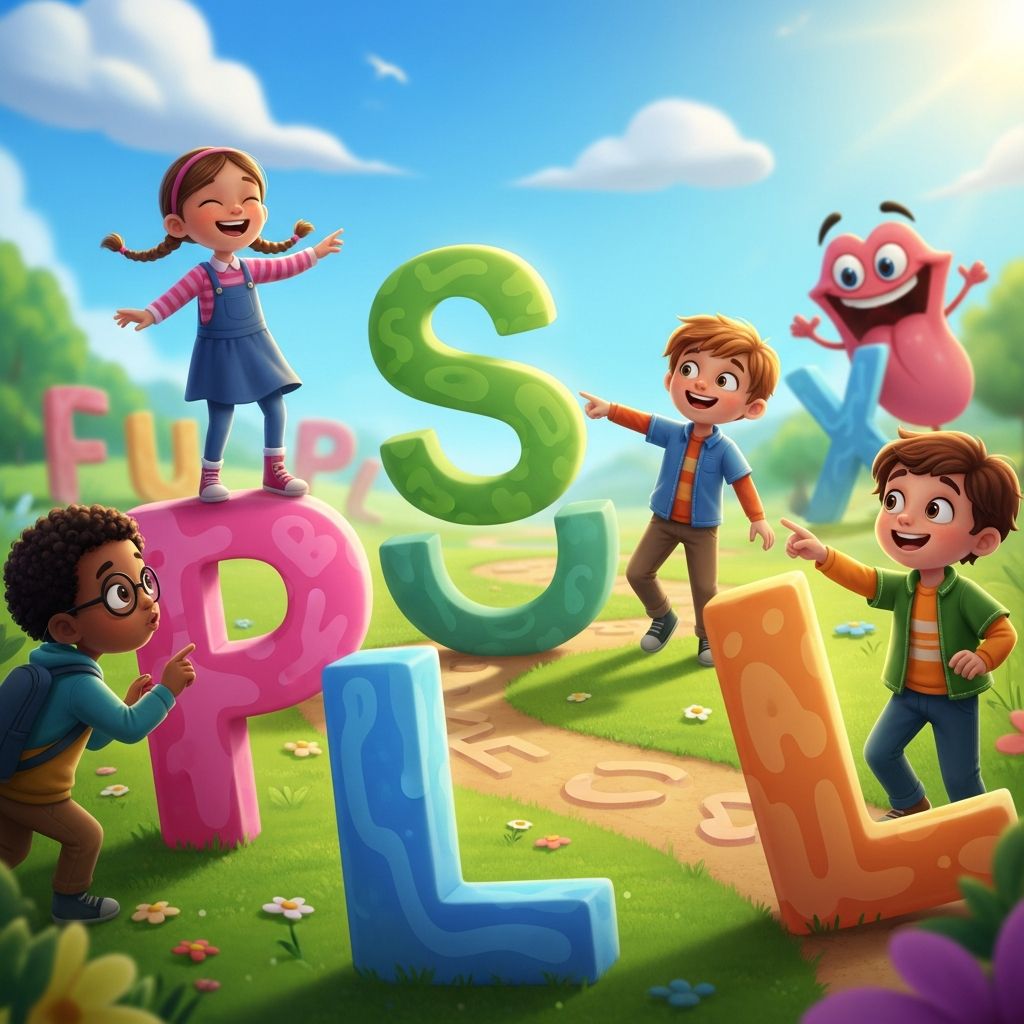
Tongue twisters feel like pure silliness, but for kids they are also a powerful way to sharpen speech, practice reading, and build confidence. When children repeat tricky phrases that twist their tongues, they are secretly training their mouths, ears, and brains all at once.
This guide shows caregivers and educators how to use tongue twisters as joyful learning tools: what they are, why they matter, and simple games you can start using today.
What Makes a Tongue Twister a Tongue Twister?
A tongue twister is a short phrase or sentence that is hard to say quickly and correctly because it uses:
- Repeated consonant sounds (like s, sh, p, b)
- Similar words with small sound changes
- Rhythms that speed up as kids get more confident
When children try to say these phrases, their tongues and lips must move precisely, and their brains must track tiny sound differences from word to word.
Why Tongue Twisters Are So Good for Kids
Researchers and educators use tongue twisters because they support several key parts of language development.
| Skill Area | How Tongue Twisters Help |
|---|---|
| Pronunciation & articulation | Kids practice saying difficult sound combinations clearly and accurately. |
| Phonemic awareness | They notice tiny differences between sounds, which supports reading and spelling. |
| Fluency | Repeating phrases helps children speak smoothly with fewer pauses or hesitations. |
| Vocabulary | Unusual, playful words expand children’s word banks in a fun way. |
| Concentration | Kids must focus carefully to avoid mixing up similar-sounding words. |
| Speech muscle strength | Fast, repeated speech acts like exercise for the lips, tongue, and jaw. |
Benefits Backed by Education and Therapy
- In classrooms teachers use tongue twisters to improve pronunciation, phonics, and fluency during reading lessons.
- In speech therapy they help target sounds a child finds difficult, such as specific consonants or blends.
- For language learners they support clear speech and confidence in a new language.
Age-by-Age Guide: Introducing Tongue Twisters
Children of different ages get different things out of tongue twisters. Here are simple ideas for each stage.
Early Talkers (Around Ages 3–4)
- Use very short phrases with repeating sounds.
- Say them slowly together and exaggerate the sounds.
- Keep it playful: let kids make silly faces or gestures to match the words.
At this age the goal is enjoyment and gentle practice with sounds, not speed.
Early Readers (Around Ages 5–7)
- Introduce printed versions of tongue twisters so kids can follow along.
- Practice one line at a time before trying the whole phrase.
- Ask kids to underline letters that repeat, linking speech to spelling.
This supports phonics, reading fluency, and sound–letter connections that are important for early literacy.
Confident Readers (Around Ages 8 and Up)
- Invite children to time themselves and try to beat their own records.
- Challenge them to write their own tongue twisters using chosen sounds.
- Use longer, more complex lines to push their fluency and focus.
Older kids can turn tongue twisters into creative writing challenges or drama warm-ups.
How Tongue Twisters Support Language & Reading
Tongue twisters are not a replacement for reading instruction, but they can strengthen the underlying skills children need to become confident readers and speakers.
Pronunciation and Articulation
Many children struggle with certain sounds or sound combinations. When they repeat a tongue twister that uses those sounds over and over, they practice moving their speech muscles in a new way.
- The tongue must hit the right place in the mouth.
- The lips must open and close at the correct moments.
- The jaw must control how wide the mouth opens.
This repeated practice is similar to physical exercise: small muscles grow stronger and more coordinated with use.
Phonemic Awareness and Phonics
Phonemic awareness is the ability to hear and work with the individual sounds in spoken words. It is a strong predictor of later reading success.
- Tongue twisters highlight how a tiny sound change turns one word into another.
- Pairing them with letters on a page connects spoken sounds to written symbols.
- Kids begin to notice patterns like initial consonants, blends, and rhymes.
Speech Fluency and Confidence
Fluent speech is smooth, not rushed, and has natural pauses. By repeating tongue twisters from slow to fast, kids learn to control pace and clarity at the same time.
- They hear how their voice sounds when they slow down.
- They learn how fast they can speak while staying clear.
- Success with tricky lines boosts their overall speaking confidence.
Attention, Memory, and Focus
Tongue twisters demand careful listening and concentration. Children must remember the order of words and stay alert to each sound, which gives their working memory a workout.
- Remembering a whole phrase supports short-term memory.
- Repeating the phrase accurately builds focus and self-monitoring.
- Group games also practice turn-taking and listening to others.
Simple Tongue Twister Games for Home and Classroom
Here are flexible activity ideas you can adapt for any age or ability. Fill them with your own favorite tongue twister lines.
1. Slow-Motion to Turbo-Speed
Use this to build clear pronunciation before increasing speed.
- Say the line as slowly as possible together.
- Repeat a bit faster each time.
- Stop when the words start to blur, then go one step slower for success.
This keeps the focus on clarity first, then speed.
2. Echo and Chorus
This is ideal for younger kids or shy speakers.
- Adult or teacher says one line clearly.
- Kids echo the same line together.
- Shift to smaller groups, then individuals, as comfort grows.
Echoing reduces pressure and gives lots of listening practice.
3. Tongue Twister Relay
Turn practice into a cooperative game.
- Line children up in small teams.
- First person says the twister once, then taps the next teammate.
- The phrase travels down the line; the last child says it to the whole group.
Focus on teamwork and laughter, not competition.
4. Create-Your-Own Challenge
Let older kids become word inventors.
- Pick a starting sound (for example, b or sh).
- Ask kids to brainstorm words with that sound.
- Help arrange them into a funny, tricky sentence.
Writing tongue twisters builds vocabulary, creativity, and ownership of the learning process.
5. Drama Warm-Up Circle
Tongue twisters are often used before acting or public speaking to warm up the voice.
- Stand in a circle so everyone can see each other.
- Start with deep breaths and gentle stretching.
- Say two or three tongue twisters together before a presentation, play, or class talk.
This routine helps children associate speaking in front of others with fun preparation, not fear.
Practical Tips for Adults Using Tongue Twisters
A few simple habits can make tongue twister time enjoyable and supportive for every child.
- Model first. Say the phrase slowly and clearly before asking kids to try.
- Start small. Use short lines, then add more words as confidence grows.
- Celebrate effort. Laugh off mistakes and praise persistence, not perfection.
- Adjust speed. If children get frustrated, slow down and reduce the challenge.
- Be sensitive. For kids with speech or language difficulties, follow guidance from a speech-language professional when choosing sounds to practice.
When Tongue Twisters Support Therapy Goals
For some children, tongue twisters are more than a game; they can reinforce professional speech and language therapy.
Speech-language pathologists (SLPs) sometimes use carefully chosen phrases to help children practice specific sounds, improve clarity, or build smoother speech patterns.
- Children with difficulty on particular sounds can practice them in a playful context.
- Kids who are working on fluency may use slow, controlled tongue twisters alongside other techniques.
- Structured practice can support social communication by giving kids fun phrases to share with peers.
If a child is already in therapy, caregivers should check with the SLP about which types of tongue twisters fit their goals and which to avoid.
Frequently Asked Questions (FAQs)
Are tongue twisters safe for kids with speech delays?
Tongue twisters can be helpful, but they should be chosen and used carefully. For children with speech delays or disorders, it is best to follow a speech-language pathologist’s guidance so that practice supports therapy goals without causing frustration.
How often should kids practice tongue twisters?
Short, frequent sessions work best. A few minutes several times a week is enough to build skills while keeping the activity enjoyable and light.
Do tongue twisters really improve reading skills?
By strengthening phonemic awareness, pronunciation, and fluency, tongue twisters support some of the same skills children use when they learn to read and spell words.
What if my child gets frustrated or embarrassed?
Lower the difficulty by choosing shorter phrases, slowing down, or practicing together as a group. Emphasize that everyone gets mixed up—mistakes are part of the fun.
Can tongue twisters help children learning English as a second language?
Yes. Teachers often use tongue twisters to help language learners practice new sounds, increase confidence, and hear rhythm and stress patterns in English.
References
- Tongue Twisters for Kids That You’ll All Love! — We Are Teachers. 2023-05-01. https://www.weareteachers.com/tongue-twisters-for-kids/
- 125 Terrific Tongue Twisters for Kids — College Transitions. 2022-08-15. https://www.collegetransitions.com/blog/tongue-twisters-for-kids/
- 6 Reasons Why Tongue Twisters Boost English Skills for Primary 1-2 Students — AGrader Learning Centre. 2022-03-10. https://www.agrader.sg/post/6-reasons-why-tongue-twisters-boost-english-skills-for-primary-1-2-students
- Empowering Lives with Tongue Twisters Therapy Technique for Children with Autism — Pinnacle Blooms Network. 2023-04-05. https://www.pinnacleblooms.org/t/tongue-twisters-therapy
- Tongue Twisters for Kids – Types and Benefits — Global Indian International School, Dubai. 2021-11-20. https://globalindianschool.org/dubai/blog-details/tongue-twisters-for-kids
- Tongue Twisters For Improving Concentration! — Flourishing Kids. 2021-09-15. https://www.flourishingkids.in/post/tongue-twisters-for-improving-concentration
- The Benefits of Tongue Twisters — Teach Them Diligently. 2020-06-01. https://teachthemdiligently.net/blog/tongue-twisters/