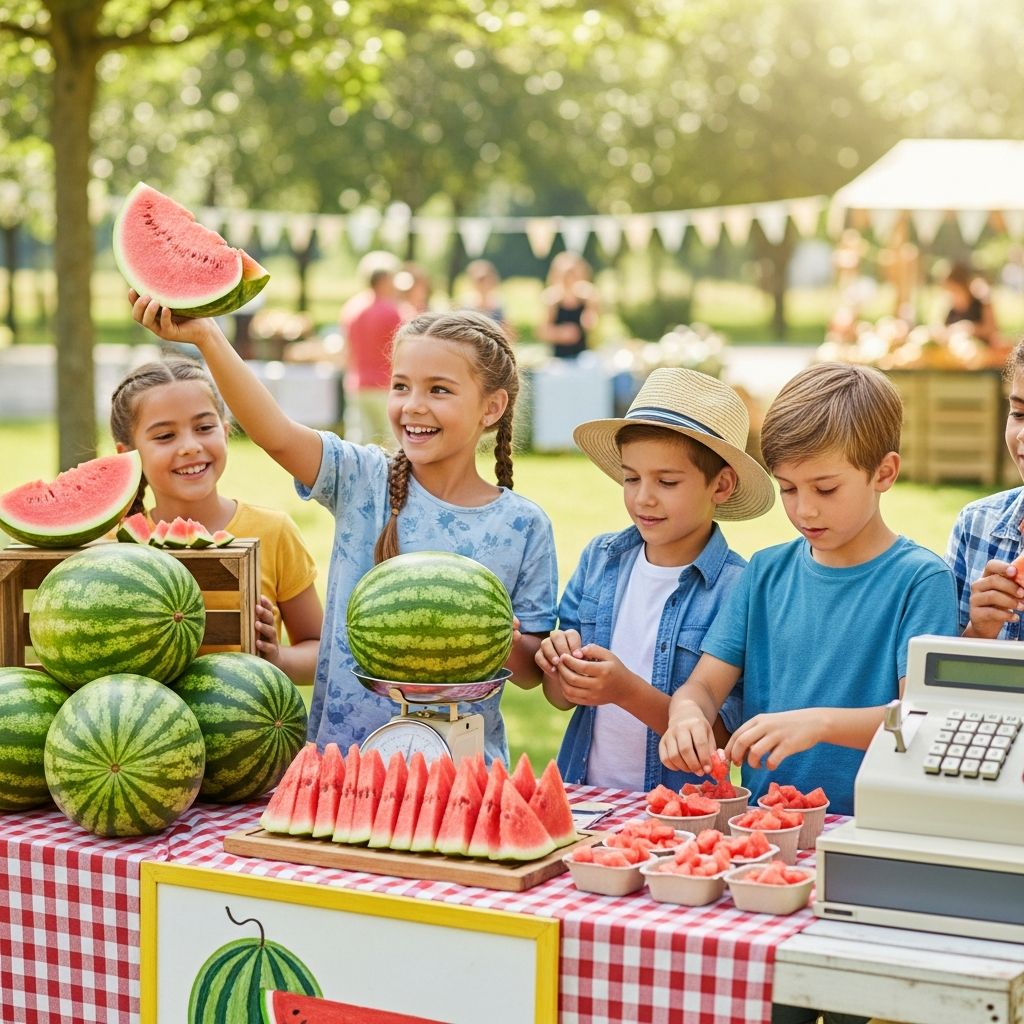
A kids2019 watermelon stand can be much more than a cute summer activity. It can become a hands-on way to teach generosity, money skills, teamwork, and confidence2020while everyone enjoys a slice of something delicious.
Why a Watermelon Stand Beats a Lemonade Stand
Watermelon is colorful, refreshing, and naturally eye-catching. That makes it perfect for drawing attention to your child2019s stand and any cause they want to support.
- Less mess than mixing large batches of drinks.
- Built-in visual appeal with bright red and green colors.
- Easy to portion and offer in multiple formats (slices, cups, skewers).
- Simple to keep relatively healthy and allergy-friendly.
Choosing a Cause Kids Can Understand
One of the most powerful parts of a kids2019 stand is the opportunity to raise money or awareness for something meaningful. Help your child pick a cause that connects to their life and feels real to them.
- Local animal shelter or rescue group.
- School library, classroom project, or playground fund.
- Community garden, park clean-up, or tree-planting program.
- Health-related charities that have touched your family or friends.
Keep the explanation simple: who is helped, how the money might be used, and why your child wants to be involved. Encourage them to describe this in their own words to customers.
Planning the Stand Together
Planning is where kids begin to see their idea turn into something real. Treat this process like a fun family brainstorming session rather than a rigid business meeting.
Set Simple Goals
- How much money would your child like to raise for their cause?
- How many hours per day will the stand be open?
- Will the stand run for one day, a weekend, or several short sessions?
Write these goals down on a simple poster or in a notebook. Encourage kids to check back afterward and see how close they came.
Talk About Safety and Boundaries
- Decide which adult will be present at all times.
- Choose a safe, visible location away from moving traffic.
- Set rules about talking to strangers (friendly but never leaving the stand).
- Agree on how money will be handled and stored securely.
Budgeting Basics for Kids
A simple budget turns the watermelon stand into a gentle introduction to financial literacy. You don2019t need complicated spreadsheets2020just a few clear numbers on paper.
| Item | Example Cost | Notes for Kids |
|---|---|---|
| Watermelons | $102D$20 total (depending on quantity) | Primary product; compare prices at different stores. |
| Plates, cups or napkins | $52D$10 | Essential for serving; look for bulk or eco-friendly options. |
| Signs and decorations | $02D$10 | Use materials from home to save money. |
| Ice or cooler | $32D$8 | Optional but helpful on very hot days. |
Explain that money spent on supplies is called 22costs22 and that money earned is 22revenue.22 From revenue, some money goes to pay back costs and the rest becomes the donation and any savings or allowance.
Deciding What to Serve
Keep the menu simple and easy for kids to manage. Two or three options are usually enough to keep things fun instead of stressful.
Kid-Friendly Watermelon Ideas
- Classic wedges: Large slices served on small plates or napkins.
- Watermelon sticks: Long, easy-to-hold pieces for younger children.
- Fruit cups: Watermelon cubes in small cups, with optional mixed fruit.
- Mini skewers: Small cubes of watermelon on kid-safe sticks.
Always keep food safety in mind. Use clean cutting boards, wash the outside of the melon before slicing, and keep cut fruit chilled as much as possible.
Pricing That Makes Sense
Pricing is a chance to do some quick, meaningful math together. Start by estimating how many servings one watermelon can provide and divide the cost accordingly.
- Keep prices in simple amounts kids can add quickly (like $0.50, $1.00, or $2.00).
- Use a small sign that clearly shows prices for each serving type.
- Consider a 22pay what you wish22 jar if the goal is mainly fundraising and less about breaking even.
Explain that prices should cover the cost of supplies and still allow plenty of money for the chosen cause.
Designing a Stand That Stands Out
The look of the stand helps attract customers and gives kids a sense of ownership. Encourage creativity instead of perfection.
Stand Setup Basics
- Use a small folding table or sturdy crate covered with a bright cloth.
- Place a visible sign at eye level showing what is being sold and why.
- Have a shaded spot for kids to sit and rest between waves of customers.
- Keep serving supplies organized in bins or baskets.
Simple Decoration Ideas
- Hand-drawn watermelon slices and seeds on poster board.
- Green and red paper chains or bunting.
- Reusable chalkboard with the stand2019s name and cause.
- Optional costumes: watermelon-colored hats, shirts, or aprons.
Creating Clear, Kid-Voiced Messaging
Messaging should sound like it truly comes from your child. Let them describe their cause and their stand in their own words, then help tidy the grammar if needed.
- Short sentence about what is being sold (for example, 22Fresh watermelon slices22).
- One simple phrase about the cause (for example, 22Helping our local shelter22).
- Optional tagline that feels playful or hopeful.
Display a brief explanation card on the table. Kids can also practice saying a one-line description to everyone who stops by.
Healthy and Eco-Friendly Touches
With a few small choices, your child2019s stand can be kinder to both bodies and the planet. This adds another learning layer without making things too complicated.
- Use compostable plates, napkins, or cups when possible.
- Offer seed-filled paper or a small note about food waste and composting.
- Encourage customers to recycle or toss waste into designated bins.
Talk with kids about where watermelon comes from, ways to reduce waste from leftover rinds, and how to respect the environment while having fun.
Teaching Customer Skills
Running a stand is a real-world lesson in communication. Many children feel nervous at first, so break it down into simple, repeatable steps.
Practice Simple Scripts
- Greeting: 22Hi! Would you like some watermelon today?22
- Explaining the cause: 22We27re raising money for…22
- Thanking: 22Thank you so much for coming by!22
Role-play at home so kids can rehearse making eye contact, speaking clearly, and handling different responses from customers.
Handling Money the Kid-Friendly Way
Money handling can feel intimidating, but it becomes manageable with a bit of structure. Assign roles based on each child2019s age and comfort level.
- Use a labeled container or small cash box with separate areas for bills and coins.
- Give older kids the job of making change with a simple cheat sheet.
- Have younger kids hand out napkins or say thank you instead of counting money.
At the end of each shift, count the money together. Divide it into three piles: costs, donation, and any optional savings or pocket money if that27s part of the plan.
Tracking Progress and Impact
Kids are more engaged when they can see progress. Visuals make abstract numbers feel real and exciting.
- Create a simple thermometer chart coloring up to the donation goal.
- Write the total raised at the end of each day or shift.
- Mark down how many people stopped by, even if they didn27t buy anything.
Once the stand is over, help your child deliver the donation2020whether online or in person2020and explain what their contribution might help make possible.
Making It a Repeat Tradition
After the first watermelon stand, your family can decide whether to make it a yearly or seasonal activity. Even small traditions build lasting memories and habits of generosity.
- Save reusable decorations and signs in a labeled box.
- Keep notes on which days and times had the most visitors.
- Ask your child what they want to do differently next time.
This reflection step turns the project into a cycle of improvement and confidence-building, instead of a one-time event.
Frequently Asked Questions
How old should kids be to run a watermelon stand?
Even preschoolers can help in simple ways, such as decorating signs and handing out napkins, while older children can handle talking to customers and counting money. The key is to match responsibilities to each child2019s age and maturity, with consistent adult supervision.
Do we need any permits or permission?
Rules vary widely by location, so it is wise to check local guidelines if you plan to operate in a public space or for more than a casual neighborhood gathering. Many families operate stands on private property for short periods without issue, but a quick check reduces the chance of surprises.
What if my child feels shy talking to customers?
Shyness is very common. Start with short practice sessions at home, encourage your child to work alongside a sibling or friend, and allow them to take breaks. Over time, many children grow more confident when they realize customers are friendly and supportive.
How can we handle leftover watermelon?
Plan servings conservatively for the first day, then adjust based on actual demand. Leftover fruit can be turned into smoothies, frozen pops, or shared with neighbors rather than wasted.
Should kids keep any of the money they earn?
That depends on your family values and the goals of the project. Some families donate 100% of the profits, while others encourage kids to keep a small percentage as a reward and learning tool for saving, spending, and giving.
Turning a Slice of Summer into Something Bigger
A kids2019 watermelon stand is a simple idea with surprising depth. It blends generosity, creativity, real-world math, and family time into one bright, juicy project that kids will remember long after the last slice is gone.