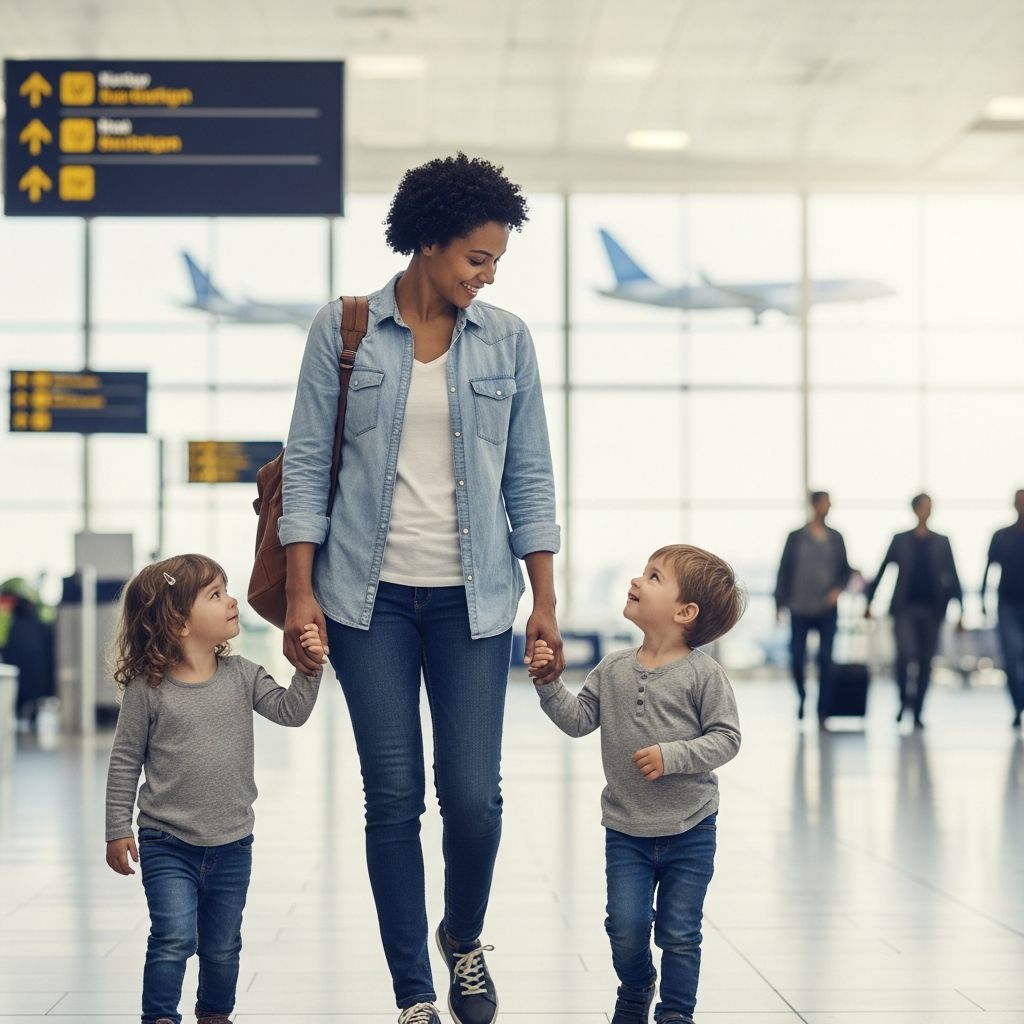
Taking one baby on an airplane can feel intense; taking two or three young children can feel impossible. With realistic expectations, smart planning, and a few small tricks, air travel with multiple little ones can become challenging but manageable instead of chaotic.
Know Your Real Goal: Manageable, Not Perfect
The goal of flying with multiple young children is not a picture-perfect flight; it is getting everyone from point A to point B safely with the fewest meltdowns and surprises. When parents accept that flights will be noisy, messy, and unpredictable, the pressure drops, and it becomes easier to respond calmly when problems arise.
Perfectionism creates frustration because children do not behave like adults in loud, crowded, unfamiliar spaces. A mindset focused on flexibility, humor, and survival-level comfort helps parents make better decisions in the moment—such as allowing extra screen time, bending some routines, or dividing and conquering with another adult.
Plan Backwards From Landing Time
Good flight days start with thoughtful scheduling. Parents traveling with multiple young children benefit from planning backward from the time they need to arrive at their destination, taking into account naps, meals, and kids’ usual behavior patterns.
When possible, choose flight times that either align with natural sleep windows or avoid known “danger zones” like late afternoon overtiredness. If the family needs to change time zones, building in a buffer day at the destination can give everyone space to adjust rather than rushing straight into events or commitments.
Key timing questions
- Which child struggles most with late bedtimes or missed naps, and how can the itinerary minimize that impact?
- How long can each child reasonably go between meals or snacks without becoming very cranky?
- Is it better for the family to arrive earlier in the day and recover, or later when children might sleep more on the plane?
Assign Grown-Up Roles Before You Leave
When more than one adult is traveling, assigning specific roles in advance prevents arguments and confusion at stressful moments. Instead of both adults trying to handle everything, each person can focus on a subset of responsibilities and children.
This division of labor works especially well in crowded security lines, boarding areas, and tight airplane aisles, where hesitation or disagreement can escalate tension. Even a parent flying solo can mentally assign “time blocks” for certain tasks, such as check-in, security, and boarding, to stay organized.
Example role division
| Phase | Adult A Focus | Adult B Focus |
|---|---|---|
| Check-in & baggage drop | Documents, boarding passes, luggage tags | Keeping kids near, bathroom runs, snacks |
| Security line | Bins, electronics, liquid bags | Shoes, jackets, strollers, comforting nervous kids |
| Boarding | Install car seat, arrange bags in overhead | Walk kids down the aisle, buckle them, hand out first activity |
| In-flight | Managing baby or most demanding child | Helping older kids with snacks, entertainment, and bathroom breaks |
Pack by Child, Not Just by Category
Packing for multiple young children often goes wrong when parents pack by category—one big bag for snacks, one for toys, one for diapers—rather than by child. A better system is to give each child a small, clearly labeled set of essentials while still keeping the most important items in an adult’s carry-on.
This approach reduces frantic digging in the overhead bin and simplifies handing off responsibilities to another adult mid-flight. It also helps keep the peace, as each child has their own snacks and activities rather than fighting over a shared pile.
Carry-on essentials for each child
- One change of clothes (plus a shirt for the adult who usually gets spilled on)
- Enough diapers or pull-ups for the total travel time plus a cushion
- A small pack of wipes, diaper disposal bags, and a portable changing pad
- Individual snack packs to avoid arguments and constant requests
- One comfort object (stuffed animal, small blanket) if the child uses one at home
- Compact entertainment: a small book, a coloring pad, or a tablet with headphones
Choose Gear That Frees Your Hands
Airports require a lot of walking, standing in lines, and carrying things. Parents managing more than one young child should choose gear that keeps both hands as free as possible while still safely containing children who love to run or wander.
Strapping babies and toddlers to an adult, using lightweight strollers, and minimizing the number of separate bags lightens the physical and mental load. Remember that every extra item carried is one more thing to track while also watching multiple kids.
Helpful gear choices
- Baby carrier or sling: Ideal for infants and young toddlers, especially at security and boarding.
- Compact stroller: A lightweight stroller (single or double) that folds quickly is easier at the gate and during tight connections.
- One main backpack: A single, well-organized backpack is usually more manageable than several tote bags.
- Car seats: Decide in advance whether car seats will be checked, gate-checked, or used on board to avoid last-minute confusion.
Make Security Less Stressful
Security is often the most stressful part of airport travel with small children because it combines waiting, rules, and time pressure. Preparing kids in simple language and pre-arranging your items can transform this part of the trip from overwhelming to tolerable.
Parents can rehearse the process at home by pretending to go through a “practice checkpoint,” showing children how shoes come off, beloved toys go through the scanner, and everyone walks through a special doorway one at a time.
Security survival tips
- Place electronics and liquids near the top of one bag to pull out quickly.
- Use resealable bags for snacks and liquids to prevent spills and speed inspection.
- Assign one adult to manage bins and another to walk children through the scanner if possible.
- Tell children that their stuffed animals and backpacks will ride on a “mini train” through a tunnel and meet them on the other side.
Boarding: Start Calm, Not Empty-Handed
Boarding sets the tone for the entire flight. Children who enter the plane already hungry, bored, or worried are more likely to have a rough start. Parents benefit from boarding with a clear mini-plan for the first 15 minutes on the plane.
Instead of offering the most exciting toys or treats immediately, start with simple, quiet activities and small sips of water or milk. This buys time while everyone settles, bags get stowed, and the plane taxis and takes off.
Pre-boarding checklist
- Take all kids to the bathroom before boarding, even if they say they do not need to go.
- Pre-open any snacks that are hard to unwrap so they are ready quickly.
- Keep one small pouch or bag at your feet with essentials: wipes, tissues, a few snacks, and two activities.
- Explain to older children that there will be a period of buckling and waiting before they can move or use the bathroom again.
Seat Strategy for Multiple Little Ones
Seat selection can dramatically affect how stressful the flight feels. Parents traveling with several young children should consider both safety rules and family dynamics when picking who sits where.
It often helps to place the most active or needy child next to the most patient adult, while an older, more independent child sits on the aisle or window where they can look outside or access the bathroom more easily. If rules or oxygen mask configurations limit the number of lap infants per row, plan this before arriving at the airport.
Common seating patterns
- Two adults, two or three kids: One adult sits with the baby or toddler; the other sits with the older child or children in the row behind or across the aisle.
- One adult, two kids: Consider placing the younger child by the window and the older child on the aisle so the adult can sit between them if the seat map allows.
- Older child helper: A responsible preschooler can sit next to a younger sibling to hand over pacifiers or toys while the adult sits on the aisle.
Snack and Meal Tactics That Actually Work
Snacks are one of the most powerful tools parents have on flights with little kids. Well-timed, easy-to-eat foods can prevent meltdowns, relieve ear pressure during takeoff and landing, and serve as quiet activities.
It is helpful to think of snacks in “waves” rather than bringing everything out at once. Slow distribution extends interest and gives parents something to offer when boredom or frustration peaks.
Smart snack guidelines
- Choose low-mess options like crackers, dry cereal, cut fruit in sealed containers, cheese sticks, or pouches that kids can handle easily.
- Avoid very sugary or crumbly foods that cause stickiness, hyperactivity, or constant cleanup.
- Offer something to chew or sip during takeoff and landing to help with ear pressure.
- Pack a small trash bag or extra zip-top bag for wrappers, wipes, and used napkins.
Entertainment: Think Simple, Quiet, and Sequential
Parents often overpack toys, only to discover that children are most interested in one or two items. With multiple young kids, it is more effective to prepare a short sequence of low-effort activities rather than a giant bag of distractions.
Electronics can be extremely helpful on flights, and there is no need to feel guilty about more screen time than usual on travel days. Saving favorite shows, movies, or apps for the hardest stretch of the journey extends their impact.
Low-stress activity ideas
- Reusable sticker books or cling stickers that peel on and off without mess.
- Coloring pads with a small set of crayons or a single water-activated coloring book.
- Headphones sized for children, already tested at home so they understand how to use them.
- Simple guessing games, looking for shapes in clouds, or talking about where the family is going and what they will do there.
Managing Naps, Motion, and Meltdowns
Even the best-planned trip will include cranky moments, especially when children are tired or uncomfortable. Parents can prepare for this by deciding ahead of time how to respond to fussing, crying, or sibling arguments without adding too much stress.
Offering movement when allowed—such as brief aisle walks—can help restless kids reset. During turbulence or seatbelt periods, quiet touch, soft singing, or calm breathing together can offer comfort when movement is not an option.
Calm-down strategies by age
| Age group | Helpful comforts |
|---|---|
| Babies | Feeding, pacifier, gentle rocking in arms, white noise from the engine |
| Toddlers | Hugs, simple choices (book or snack), favorite toy, quiet songs |
| Preschoolers | Explaining what is happening, simple breathing games, drawing feelings on paper |
After Landing: The Trip Is Not Over Yet
Many parents feel enormous relief when the plane touches down, but the hardest part for small kids may still be ahead: waiting to deplane, navigating the airport, and collecting luggage. Planning just a little energy for this final stretch can prevent last-minute meltdowns.
Before the seatbelt sign turns off, parents can quietly explain that there will be more waiting and walking and remind children of the reward or routine waiting at the end, such as a snack, a playground, or a familiar bedtime ritual.
Post-flight priorities
- Re-group at the gate area, count bags and kids, and secure everyone before heading to baggage claim.
- Offer water and a light snack, especially if kids were too excited or upset to eat much during the flight.
- Leave extra time in the schedule after landing in case of delays at immigration, baggage claim, or ground transportation.
Frequently Asked Questions About Flying With Multiple Young Children
How early should families arrive at the airport?
For domestic flights, many families with multiple young children prefer to arrive at least two hours before departure, and even earlier if they need to check bags or car seats. For international flights, arriving three hours ahead provides a more comfortable margin for diaper changes, bathroom breaks, and unexpected lines.
Is it better to bring a stroller or rely on baby carriers?
Both options have advantages. A stroller can carry bags as well as children and gives tired kids a place to rest, while a carrier keeps an infant close and frees hands for tickets or older siblings. Many parents choose a combination: a lightweight stroller for older children and a carrier for the baby.
What if a child cries for a long time on the plane?
Crying, especially from babies and toddlers, is a normal part of air travel and does not mean the parent is doing anything wrong. Focusing on comforting the child rather than on the reactions of other passengers usually leads to a faster calm-down, and most people on the plane have either been in a similar situation or understand that young children cannot always be soothed quickly.
How strict should parents be about screen time on travel days?
Many families treat travel days as special circumstances with more relaxed rules about screens and treats. Parents who are usually strict with screen time often find that extra access to shows or games on flights makes the experience more manageable for everyone, and normal limits can resume once the trip is over.
What is the most important thing to remember when traveling with multiple young children?
The most important thing is that everyone arrives safely; everything else is a bonus. If schedules slip, clothes get dirty, or routines fall apart for a day, it does not mean the trip is a failure—it simply means life with small children is unfolding in a new environment.
Air travel with multiple young children will never be effortless, but it can become predictable and survivable with a clear plan. By focusing on timing, roles, packing systems, calm-down strategies, and realistic expectations, families can transform intimidating flight days into manageable adventures.