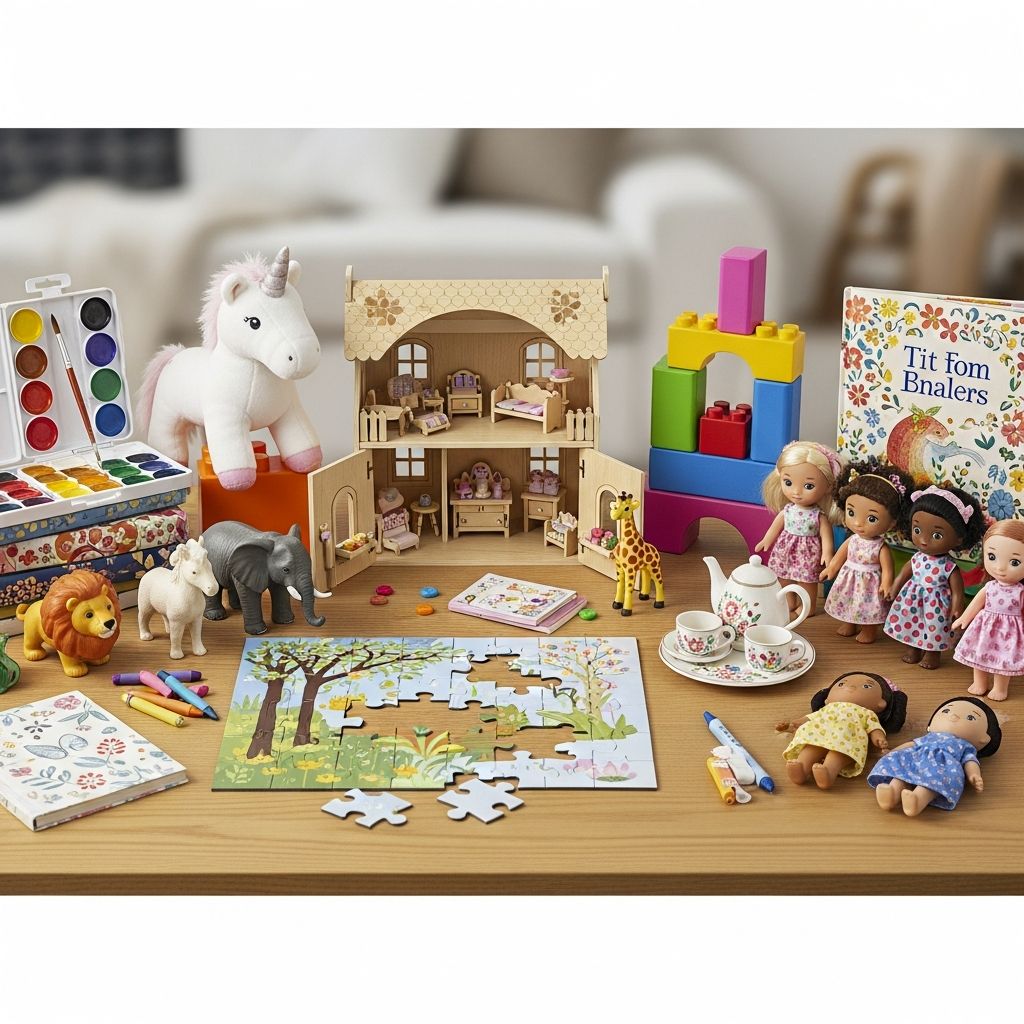
At five years old, children are curious, imaginative, and eager to show what they can do on their own. The right toys for 5-year-old girls are not just entertaining; they also build confidence, social skills, and a love of learning. This guide walks you through the most helpful toy categories and how they support development, with practical examples and tips for parents and gift-givers.
What Matters at Age Five
Five-year-olds are moving from preschool-style play into more structured learning and social experiences. They are ready for simple rules, team play, early academics, and open-ended creativity.
- They enjoy make-believe, storytelling, and role-play with friends and siblings.
- They can follow multi-step directions, making board games and simple projects more appealing.
- Their fine motor skills and attention span are improving, so they can handle more detailed building sets and craft activities.
Key Principles for Picking Toys
Instead of focusing on “girl” labels, focus on what builds skills and joy. Toys at this age should be safe, durable, and flexible enough to grow with the child.
- Open-ended play: Choose toys that can be used in many ways, not just one scripted scenario.
- Challenge without frustration: Look for toys that are slightly above current skill level but still achievable with practice.
- Encouraging independence: Pick toys she can eventually use on her own, boosting confidence and problem-solving.
Major Toy Categories for 5-Year-Old Girls
The best toy collection for a 5-year-old girl usually includes a blend of creative, active, social, and STEM-focused options. The table below offers a quick overview of useful categories and what they support.
| Toy Category | Main Skills Supported | Typical Play Style |
|---|---|---|
| STEM & Building Sets | Problem-solving, spatial awareness, early math | Independent or with adult guidance |
| Creative & Art Supplies | Fine motor skills, imagination, self-expression | Independent, sometimes cooperative |
| Pretend Play & Role-Play | Language skills, empathy, social understanding | Cooperative with friends or caregivers |
| Board Games & Puzzles | Memory, turn-taking, logical thinking | Cooperative or competitive in small groups |
| Outdoor & Active Toys | Gross motor skills, confidence, energy release | Active, often social play |
| Books & Storytelling Tools | Vocabulary, comprehension, imagination | Quiet, bonding-oriented play |
STEM and Building Toys
STEM toys (science, technology, engineering, and math) help build curiosity about how things work. At age five, the best sets are hands-on, colorful, and sturdy enough for small hands.
- Magnetic tiles or blocks: Great for building towers, houses, and imaginary worlds while teaching balance and geometry in a natural way.
- Beginner engineering kits: Simple gears, ramps, or marble-style runs that invite experimentation and trial-and-error thinking.
- Number and pattern games: Activities that weave in counting, sorting, and matching without feeling like a workbook.
When choosing these toys, avoid sets overloaded with tiny, fragile pieces or complicated instructions meant for older kids. Look for large, easy-to-handle components and picture-based guides that a child can follow with minimal adult help.
Creative Materials and Art Stations
Five-year-old girls often love expressing themselves through drawing, coloring, and crafting. An inviting art setup can keep them engaged for long stretches while strengthening important motor skills.
- Washable art supplies: Crayons, markers, child-safe scissors, glue sticks, and watercolors that are easy to clean and safe to use.
- Craft kits designed for young kids: Projects like simple jewelry making, collage, or sticker scenes that come with clear visual steps.
- Reusable surfaces: Dry-erase boards, chalkboards, or drawing tablets to encourage practice without wasting paper.
Art toys should emphasize process over perfection. Offer materials and space, then step back and let her experiment rather than focusing on how the finished project looks.
Pretend Play and Role-Playing Sets
Pretend play is one of the richest types of play for a 5-year-old. Through make-believe, children test out ideas about family, community, and the wider world.
- Dress-up clothes and accessories: Not just princess dresses; include capes, uniforms, hats, and generic costumes that can become anything in her stories.
- Playsets that mimic real life: Items like play kitchens, tool benches, doctor kits, or grocery stands that reflect everyday routines.
- Dolls and figures: Dolls, animal figures, or character sets that encourage storytelling about feelings, friendships, and problem-solving.
Try to include figures and costumes that represent different roles and backgrounds. This helps broaden her sense of what she can become and allows more complex stories to unfold during play.
Board Games and Puzzles
By age five, many children are ready to play simple board games and tackle beginner puzzles. These activities teach structure, patience, and how to win—and lose—gracefully.
- Cooperative games: Games where players work together toward a goal can be especially helpful for kids who struggle with competition.
- Early strategy games: Basic memory games, matching games, or simple path-based board games help develop planning and focus.
- Chunky puzzles: 24–50-piece puzzles with large, sturdy pieces and engaging images hold attention without overwhelming.
Keep rules short and visual. Practice modeling how to take turns and how to cope when the outcome is not in her favor; these moments are powerful social-emotional lessons disguised as playtime.
Outdoor and Active Play Toys
Five-year-olds benefit immensely from daily movement. Outdoor toys channel their energy into coordination, risk assessment, and resilience.
- Ride-on and balance toys: Scooters, balance bikes, or small pedal bikes with proper safety gear build confidence and gross motor strength.
- Sports and movement gear: Child-sized balls, jump ropes, soft frisbees, and cones for obstacle courses encourage whole-body play.
- Exploration tools: Simple binoculars, bug viewers, or garden tools invite observation and care for the natural world.
Whenever possible, involve your child in setting up outdoor challenges: create mini races, pretend adventures, or backyard “missions” that make activity feel exciting rather than forced.
Books and Storytelling Helpers
Toys do not have to be plastic or electronic to be engaging. At five, many girls are on the verge of early reading and love interacting with stories in any form.
- Picture books with rich illustrations: Books that invite questions and predictions, not just passive listening.
- Story dice or cards: Sets with images that children can arrange to invent their own tales.
- Puppets and mini-theatre props: Hand puppets, finger puppets, or simple cardboard stages that turn stories into living shows.
Regular reading time, combined with playful storytelling tools, strengthens language skills and gives children a safe space to explore big emotions and new ideas.
Balancing Screen-Free and Tech-Enabled Toys
Many parents wonder whether to include electronic or app-connected toys. At this age, hands-on toys still offer the most developmental value, especially for focus, social skills, and creativity.
- Favor toys that respond to the child’s actions, not just screens that entertain passively.
- If including tech, choose simple coding or logic-based toys that teach cause-and-effect without overwhelming lights and sounds.
- Set clear time limits so tech toys do not crowd out reading, outdoor play, or imaginative games.
Encouraging Independent and Cooperative Play
A healthy play environment for a 5-year-old girl makes room for both solo and group activities. Different types of toys naturally support one style or the other, and it is helpful to notice how she uses them.
- Independent play toys: Puzzles, art supplies, building sets, and certain STEM kits that allow her to get absorbed in her own world.
- Cooperative play toys: Board games, pretend play sets, and outdoor gear that naturally invite others to join.
If a child tends to cling to adults during play, set up simple independent activities nearby and gradually increase the time she spends playing alone, always offering reassurance when needed.
Budget-Friendly Toy Ideas
High-quality play does not always require expensive toys. Many everyday items can serve as powerful tools for learning and imagination.
- Repurpose household items like cardboard boxes, plastic containers, and safe kitchen tools for building and pretend cooking.
- Create homemade craft kits with paper, stickers, tape, and ribbons stored in labeled containers.
- Set up themed play days—such as a “space mission” or “animal rescue”—using a mix of existing toys and simple props from around the house.
When purchasing, consider investing in a few sturdy, versatile toys instead of many one-purpose items that lose appeal quickly.
Safety and Age Appropriateness
Even as children become more capable, safety remains a top priority. Check packaging and manufacturer guidelines to confirm that toys are suitable for age five.
- Avoid toys with sharp edges, tiny detachable parts, or strings and cords that can tangle.
- Look for non-toxic materials and, when relevant, washable or wipeable surfaces.
- Regularly rotate through toys, checking for broken pieces or loose parts that need repair or replacement.
Teaching children simple safety rules—like wearing a helmet with ride-on toys and putting small parts away—turns them into partners in keeping playtime secure.
Example Play-Set Combinations
Sometimes it helps to think in terms of small “play ecosystems” rather than individual toys. Mixing categories can deepen engagement and keep toys interesting over time.
- Engineer’s Corner: A low shelf with building blocks, a basic engineering kit, and storybooks about bridges, machines, or inventors.
- Art and Story Studio: A table with paper, markers, stickers, and a bin of puppets or story cards to act out finished drawings.
- Outdoor Adventure Zone: A basket by the door with a ball, magnifying glass, jump rope, and a simple nature journal for drawing what she finds outside.
Frequently Asked Questions (FAQs)
How many toys does a 5-year-old girl really need?
There is no perfect number, but fewer, carefully chosen toys often lead to deeper, more creative play than an overflowing room. Aim for a small collection across several categories—building, art, pretend play, games, and outdoor items—then rotate toys in and out of sight to keep them fresh.
Are “girl-labeled” toys necessary?
No. Labels are a marketing tool, not a developmental requirement. Focus on toys that match her interests and encourage a broad range of skills, whether they are pink, blue, or any other color. Many children enjoy items from across the so-called “boy” and “girl” aisles, and that variety should be welcomed.
What if my 5-year-old mostly plays with one type of toy?
Strong preferences are normal at this age. If she loves one category—like dolls or art—use that interest as an entry point, then gently introduce related options. For example, pair dolls with a simple doctor kit or art supplies with a beginner science kit to widen the scope of her play.
How can I tell if a toy is truly educational?
An educational toy encourages active thinking, creativity, or problem-solving, rather than just flashing lights or playing sounds. When evaluating a toy, ask whether it invites your child to make choices, ask questions, or create something new. If the toy only requires pressing a button to be entertained, its learning value is probably limited.
How do I handle toy clutter and storage?
Designate clear homes for toys, such as labeled bins for building sets, art supplies, and pretend play items. Involve your child in putting toys away after playtime so she learns organization skills. Regularly donate or store outgrown items to keep the space manageable and to make room for toys that better match her current stage.
Creating a Rich Play Environment
The best toys for a 5-year-old girl are those that meet her where she is and gently stretch her abilities. By blending open-ended materials, active play gear, and meaningful games, caregivers can create an environment that nurtures curiosity and joy. With a thoughtful approach, each toy becomes more than just an object—it becomes a tool for building confidence, creativity, and lifelong learning.