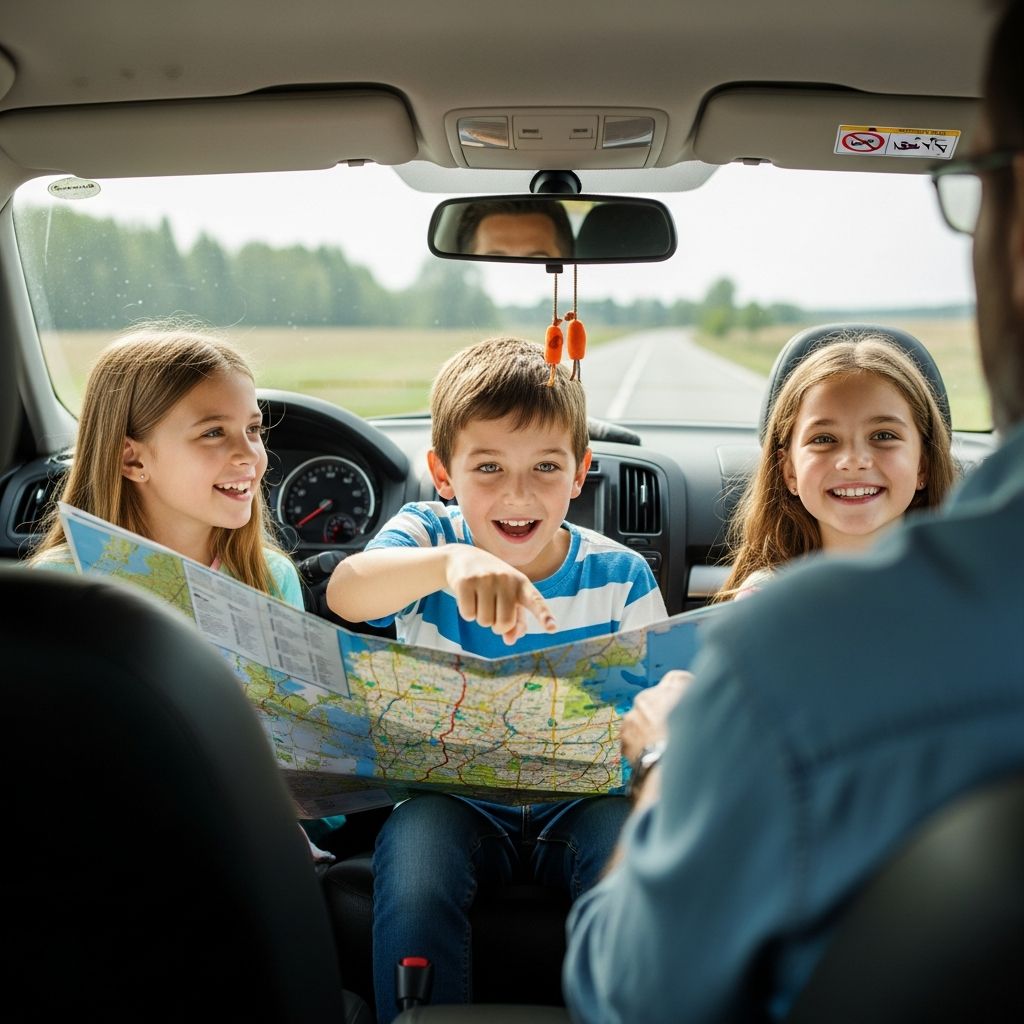
Long drives with children can test any parent’s patience, but with the right activities, they become opportunities for joy, education, and connection. These screen-free games require no gadgets, just imagination and family interaction, making them perfect for keeping kids engaged while promoting skills like observation, vocabulary, and critical thinking.
Why Screen-Free Games Make Road Trips Better
Turning off screens encourages children to interact with their surroundings and family members. Research from child development experts highlights how such play enhances cognitive growth and reduces travel-related stress. Games sharpen focus, build language skills, and create lasting memories without the overstimulation of digital media.
Parents report that interactive games lead to fewer meltdowns and more harmonious trips. They’re adaptable for different ages, from toddlers spotting colors to older kids tackling complex puzzles. Plus, they keep everyone involved, including the driver through verbal participation.
Classic Observation Games to Spark Curiosity
Games that rely on what’s visible outside or inside the car are timeless starters. They teach kids to notice details in their environment, fostering mindfulness and quick thinking.
Color Hunt Challenge
Pick a color and challenge everyone to spot as many items as possible in that hue—from passing cars to roadside signs. Tally scores at milestones like rest stops. For younger kids, stick to bold shades like red or blue; older ones can compete for rare finds like purple trucks. This builds counting skills and visual discrimination.
Alphabet Road Quest
Scan signs, plates, and billboards for letters A through Z in order. First to complete the alphabet wins bragging rights. It’s educational for pre-readers and competitive fun for school-age children. Variations include finding letters on specific objects, like only on vehicles.
I Spy with a Twist
The eternal favorite: “I spy with my little eye something beginning with…” or by color/shape. Make it progressive by requiring rhymes or categories, like “something green and alive.” Everyone guesses until correct, then rotates turns. It hones descriptive language and inference.
Word and Guessing Challenges for Brain Power
Verbal games exercise memory and logic without needing props, ideal for highways where visuals blur.
Twenty Queries Mystery
One player thinks of an object, person, or place. Others ask up to 20 yes/no questions to guess it. Start with familiar themes like animals or foods for little ones, escalating to abstract concepts for teens. It develops questioning strategies and broadens knowledge.
Rhyme Relay
Begin with a word like “cat,” and each player adds a rhyming word: “hat,” “mat,” “bat.” No repeats allowed. When stuck, start a new chain. Great for phonics practice and giggles when words get silly.
Hangman Highway Edition
Use a small whiteboard or paper for the classic guessing game, themed around travel: vehicles, landmarks, or foods. Draw dashes for letters; guess one at a time. Limits wrong guesses to keep it fair. Encourages spelling and vocabulary expansion.
Creative Storytelling Adventures
Harness kids’ imaginations with collaborative tales that unfold mile by mile.
Sentence-by-Sentence Saga
Start a story with one sentence, like “The dragon woke up hungry.” Each person adds one, building wildly. No rules against absurdity—embrace the chaos. Driver can participate safely. Boosts narrative skills and creativity.
Triple Word Tale
Leader picks three random nouns (e.g., “umbrella, robot, pizza”). Players weave them into a cohesive short story, taking turns expanding. Sparks inventive thinking and humor.
Would You Choose?
Pose dilemmas: “Would you rather swim with sharks or climb a volcano?” Justify answers. Age-appropriate options keep it fun—from snack battles to superpower picks. Promotes decision-making and debate.
License Plate and Scavenger Shenanigans
Leverage the road’s natural elements for competitive hunts.
State Spotter Map
Print or draw a U.S. map; color states as license plates appear. Most states at trip’s end wins a prize. Includes geography lessons and excitement for rarities like Hawaii plates.
| Game Variation | Ages | Skills Built | Winning Condition |
|---|---|---|---|
| State Spotter | 5+ | Geography, Observation | Most states colored |
| Plate Word Maker | 7+ | Spelling, Creativity | Longest words/phrases |
| Number Crunch | 4+ | Math, Counting | Highest total numbers |
Scavenger Safari
Create a checklist: cow, yellow car, bridge, etc. First to check all wins. Use pictures for non-readers. Customize by region for relevance, turning scenery into treasure.
Music and Sound-Based Fun
Incorporate tunes for rhythmic engagement.
Melody Guesser
Hum or sing a song snippet; others name it. Themes like kids’ songs or family favorites. Evolves to lyrics chains with a keyword.
Sound Story
Mimic noises from outside—like horns or wind—and build a story around them. Encourages auditory awareness and expression.
Tailoring Games by Age Group
Adapt for maximum engagement.
- Toddlers (2-4): Simple colors, animal sounds, repetitive rhymes.
- Preschoolers (5-6): Basic I Spy, counting cars, short stories.
- School-Age (7-10): License games, 20 questions, word scrambles.
- Tweens (11+): Complex dilemmas, themed hangman, strategy hunts.
Tips for Smooth Game Sessions
- Prep lists or maps beforehand.
- Rotate turns to avoid fatigue.
- Offer small rewards for winners.
- Include quiet options for winding down.
- Safety first: no distractions for driver.
Frequently Asked Questions
What if my kids fight over games?
Assign roles like scorekeeper or use team play to foster cooperation.
Are these games good for learning?
Yes, they enhance observation, language, math, and social skills per child development guidelines.
Can the driver play?
Absolutely—verbal games like storytelling keep eyes on the road.
What about very long trips?
Mix high-energy and calm games; schedule based on attention spans.
Do I need supplies?
Most are prop-free; optional: paper, markers, printed lists.
References
- Child Development and Play Guidelines — American Academy of Pediatrics. 2024-06-15. https://www.aap.org/en/patient-care/developmental-milestones/
- Screen Time and Child Health — Centers for Disease Control and Prevention (CDC). 2025-03-10. https://www.cdc.gov/children-mental-health/about/index.html
- Educational Benefits of Road Games — National Association for the Education of Young Children (NAEYC). 2023-11-20. https://www.naeyc.org/resources/pubs/yc/mar2017/outdoor-play
- Family Bonding Through Play — Harvard Graduate School of Education. 2024-09-05. https://www.gse.harvard.edu/ideas/usable-knowledge/21/10/importance-play-child-development
- Travel Safety and Distractions — National Highway Traffic Safety Administration (NHTSA). 2025-01-12. https://www.nhtsa.gov/road-safety/children