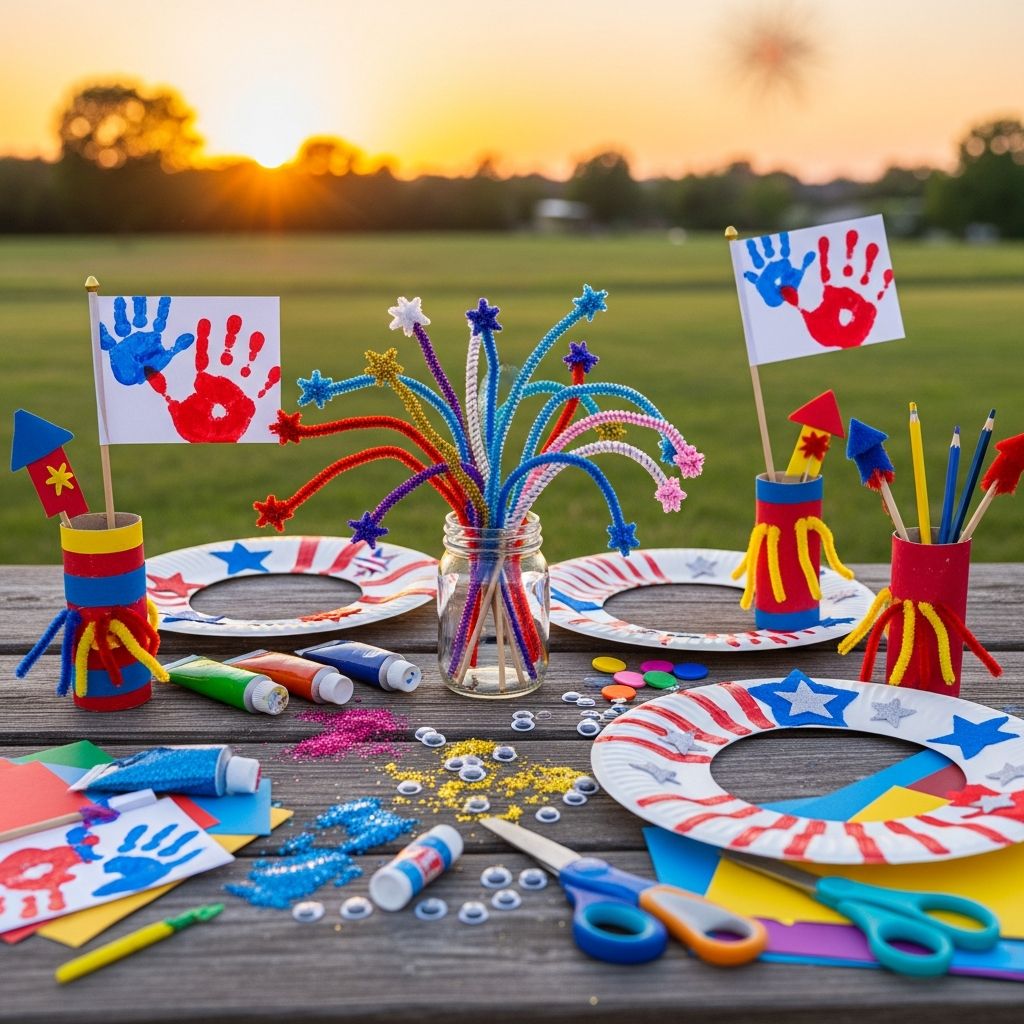
Fourth of July is more than fireworks and late bedtimes; it is a chance to help children connect with history, colors, symbols, and community through hands-on fun. This guide offers a completely fresh set of kid-friendly craft ideas, organized by age and setting, so you can celebrate with creativity instead of chaos.
Why Holiday Crafts Matter for Kids
Holiday crafts are a simple way to slow down during a busy celebration and give kids a sense of ownership over the day. When children create decorations, accessories, and keepsakes, they feel more invested in the traditions and memories your family is building.
Crafting also quietly supports skills kids need every day: cutting, tracing, planning, measuring, and collaborating. Even a quick 15-minute project can strengthen fine motor control, hand–eye coordination, patience, and the ability to follow multi-step directions.
Planning Your Fourth of July Craft Time
Before breaking out the glitter, think through when and where crafting makes the most sense for your family or group. Planning helps you avoid last-minute stress, spilled paint on party clothes, and disappointed kids.
- Decide if you want a calm, pre-party craft session or a short activity to fill downtime between events.
- Choose a workspace that is easy to clean: a kitchen table covered with a plastic cloth, the driveway, or a picnic table outside.
- Pre-cut any tricky shapes for little hands so they can focus on decorating and assembling.
Essential Red, White, and Blue Supply List
Most patriotic crafts can be made from common household items plus a few colorful basics. You do not need a specialty store haul to keep kids busy and proud of what they make.
| Category | Examples | Best For |
|---|---|---|
| Papers & Bases | White cardstock, blue and red construction paper, paper plates, paper cups, cardboard scraps | Flags, banners, wearable crafts |
| Color & Glue | Washable markers, crayons, watercolor paint, glue sticks, child-safe liquid glue | Toddlers and preschoolers |
| Decorative Bits | Star stickers, tissue paper, ribbon, yarn, pom-poms, sequins | Older kids who enjoy details |
| Safe Tools | Child scissors, hole punch, tape, clothespins, popsicle sticks | Supervised cutting and building |
A small basket or bin labeled for patriotic supplies can live in a closet all summer. Reaching for the same container year after year becomes its own mini tradition kids look forward to as the holiday approaches.
Easy Hands-On Crafts for Toddlers
Toddlers need crafts that are quick, sensory-rich, and forgiving of scribbles. Focus on big motions, bold colors, and projects that still look charming even if everything is slightly wonky or upside down.
1. Starry Fingerprint Fireworks
This project turns little fingerprints into a sky full of bursting fireworks and doubles as a sweet keepsake for parents or grandparents.
- Supplies: Dark blue paper, washable paint in red and white, a wet washcloth or wipes, optional gold pen for adults to add the date.
- How-to: Help your toddler dip their fingertip into paint and press in circles outward from a central point to suggest a firework burst. Repeat with different colors, leaving space between bursts for the colors to stand out.
- Tips: Limit the color choices to two or three so the page does not turn into a muddy brown. Keep a damp cloth nearby to quickly clean tiny hands between colors.
2. Crinkly Patriotic Ribbon Shakers
Ribbon shakers are perfect for toddlers who love to move. They are soft, safe, and make any backyard parade feel more festive.
- Supplies: Sturdy paper cups or cardboard rings, red-white-blue ribbon or strips of fabric, tape, stickers.
- How-to: Pre-cut ribbon lengths. Let kids decorate the cups with stickers. Tape the ribbon inside or around the rim, then show toddlers how to swish and swirl their new shaker in the air.
- Safety note: Trim ribbons to a short, supervised length and inspect for loose pieces that could become a hazard.
Creative Projects for Preschool and Early Elementary
Preschoolers and young grade-schoolers are ready for slightly more structure and simple patterns. Offer choices of colors and embellishments so each child can personalize their craft while following a shared basic idea.
3. Design-Your-Own Patriotic Shield
A cardboard shield gives kids a dramatic accessory for pretend play, photo ops, and backyard adventures. It also opens up conversation about protection, service, and community helpers.
- Supplies: Large cardboard circle or oval, white paper, red and blue markers, star shapes to trace, tape, a strip of cardboard for a handle.
- How-to: Cover the cardboard base with white paper. Invite kids to draw simple patterns: stripes radiating from the center, star clusters, or even imaginary animals wearing tiny flags. Attach the handle at the back using tape so it fits their arm.
- Extension: Have kids invent a superhero persona based on values like courage, kindness, or helpfulness and name their shield design after that quality.
4. Red, White, and Blue Story Wands
Story wands combine movement, storytelling, and art. Children decorate a wand and then use it as a cue to tell or act out a Fourth of July scene, real or imagined.
- Supplies: Wooden dowels or popsicle sticks, ribbon or yarn, lightweight paper stars, markers, tape or glue dots.
- How-to: Help kids attach paper stars to the top of the stick. Let them decorate the stars with faces, patterns, or simple words such as “hope” and “freedom.” Tie or tape strands of ribbon below the star so they trail when the wand is waved.
- Story game: Go around in a circle; the person holding the wand adds one line to a group story about a Fourth of July celebration in a town, on a farm, or in space.
Fun and Thoughtful Crafts for Older Kids
Older elementary children and tweens often enjoy projects that look more polished, use planning skills, and give them room to experiment with patterns. Let them take the lead on design decisions and problem-solving.
5. Independence Day Light Jars
These faux-lantern jars bring a glow to picnic tables or porch railings when the sun sets. They are beautiful, reusable, and safer than real candles when made with flameless tea lights.
- Supplies: Clean glass or plastic jars, tissue paper in patriotic colors, watered-down white glue, paintbrushes, star-shaped cutouts, battery-operated tea lights.
- How-to: Brush glue mixture onto the outside of the jar. Layer pieces of torn tissue paper and press gently so they overlap and create a stained-glass effect. Add star shapes last, then let everything dry fully before placing the light inside.
- Design ideas: Create vertical stripes, a galaxy of tiny stars, or a gradient fading from red to white to blue.
6. Patriotic Patterned Bunting
Bunting is one of the easiest ways to transform a room or outdoor space. Older kids can handle measurements and patterns to create a cohesive banner that looks party-ready.
- Supplies: Cardstock triangles or rectangles, string or twine, hole punch, markers or paint, ruler.
- How-to: Ask kids to choose one repeating element for the banner, such as alternating stripe directions or a star motif that appears on every other flag. Punch holes and thread the shapes onto the string once decorated.
- Math connection: Invite kids to create a repeating sequence of colors or shapes and describe the pattern out loud before assembling.
Group-Friendly Crafts for Parties and Classrooms
When crafting with a crowd, choose projects that are easy to explain, use shared supplies, and can be finished in 10–20 minutes. Setting up stations can keep lines short and attention spans intact.
Station Ideas for Larger Groups
- Table 1: Quick Pin-On Badges – Pre-cut circles or stars, safety pins or tape loops on the back, markers and stickers for decoration.
- Table 2: Message Strips – Paper strips where kids write or draw one thing they appreciate about their community, then tape them into paper chains to hang.
- Table 3: Parade Props – Simple flags on sticks, ribbon shakers, or paper hats kids can wear during a neighborhood or classroom parade.
Post a short, kid-friendly instruction card at each table and recruit older children or adults as helpers. This keeps projects flowing while adults can still enjoy the event instead of giving the same explanation repeatedly.
Crafts That Spark Conversation About History
Crafts do not have to be purely decorative; they can also open up gentle conversations about history and civic life. Keeping explanations age-appropriate and focused on values helps children understand why this holiday matters.
7. Values Stars Mobile
Instead of decorating stars with random patterns, invite children to choose words that represent what they want to see in their country. This simple project can be surprisingly meaningful.
- Supplies: Paper stars in several sizes, markers, string, a stick or embroidery hoop.
- How-to: Ask each child to choose one word per star, such as “kindness,” “fairness,” or “teamwork.” Hang the stars at different lengths from the hoop or stick to create a mobile.
- Discussion prompt: Ask, “How can we show this value at home or in our neighborhood?” while you craft together.
8. Timeline Table Runner
This project works especially well for families who enjoy history or for classrooms reviewing key events. The result is a unique table runner that can be reused every year.
- Supplies: A long strip of craft paper, markers, ruler, printed date labels if desired.
- How-to: Draw a line down the center and mark off spaces along the length. Each child can claim a section to illustrate an event or symbol related to independence, voting rights, or community milestones that matter to your family.
- Variation: For very young kids, adults draw simple scenes and kids add color, stickers, or stamps.
Low-Prep Decorations You Can Make Last Minute
Some years, plans come together at the final hour. These projects use just a few supplies and can be squeezed in before guests arrive or while food cooks on the grill.
- Striped Utensil Sleeves: Wrap napkins around utensils and let kids secure them with stripy paper bands decorated with drawn stars or small stickers.
- Window Sparkle Strips: Cut thin strips of tissue paper and let kids tape them vertically along windows or glass doors in color order to mimic stripes.
- Patriotic Snack Toppers: Kids draw tiny flags or starbursts on small paper squares, then tape them to toothpicks to stick into cupcakes, fruit, or sandwiches.
Because these ideas focus on small accents instead of large projects, children feel like they contributed to the party atmosphere without anyone needing hours of setup time.
Tips for Managing Mess and Keeping Crafts Safe
Holiday crafts should leave you with happy kids, not a ruined rug. A few simple routines make it much easier to embrace messy materials like paint and glitter without stress.
- Cover surfaces with recycled paper bags, old newspapers, or an inexpensive shower curtain liner.
- Choose washable markers and paint whenever possible, especially for younger children and large groups.
- Set up a hand-cleaning station with wipes, a damp cloth, or a small basin of soapy water before anyone picks up a brush.
- Keep sharp tools, hot glue, and breakable jars under close adult supervision, reserving them for older kids who can use them responsibly.
Framing cleanup as the final step of the project—complete with a race or a simple song—turns responsibility into part of the fun rather than an unwelcome surprise.
Frequently Asked Questions About Fourth of July Crafts for Kids
How far in advance should we start crafting?
Many projects can be started a week or two before the holiday, especially banners, mobiles, and table decorations that you want to enjoy for more than one day. Shorter activities, like wearable crafts or parade props, can be saved for the day-of to build excitement.
What if my child is not interested in traditional patriotic symbols?
Focus on the themes behind the holiday—community, kindness, gratitude, and togetherness—and invite your child to express those ideas in the colors and shapes they prefer. It is perfectly fine if their art features hearts or abstract designs instead of flags.
How can we include children of different ages in the same project?
Offer one shared base idea with flexible difficulty levels. For example, everyone might decorate a paper star, but toddlers use stickers while older kids draw intricate patterns or write meaningful words.
Are there good craft options for kids who dislike getting messy?
Yes. Choose dry materials like stickers, washi tape, colored pencils, paper folding, or pre-cut shapes to assemble. Crafts such as bunting, badges, and story wands can all be done without paint or glue on fingers.
How do we store finished crafts for next year?
Flat items like banners and table runners can be rolled and slipped into a cardboard tube or mailing envelope labeled with the holiday name. More fragile pieces, like light jars, can be wrapped in tissue and stored with seasonal decorations.
Turning Crafts into Lasting Traditions
The most meaningful Fourth of July crafts are the ones repeated year after year, even if the details change. Children love seeing how their skills and ideas evolve when you pull out last summer’s creations alongside new ones.
Whether you choose a single signature project or rotate through several favorites, the goal is not perfection but connection. A few well-chosen supplies, a little planning, and a willingness to embrace creativity will give your family a holiday that feels both festive and truly your own.