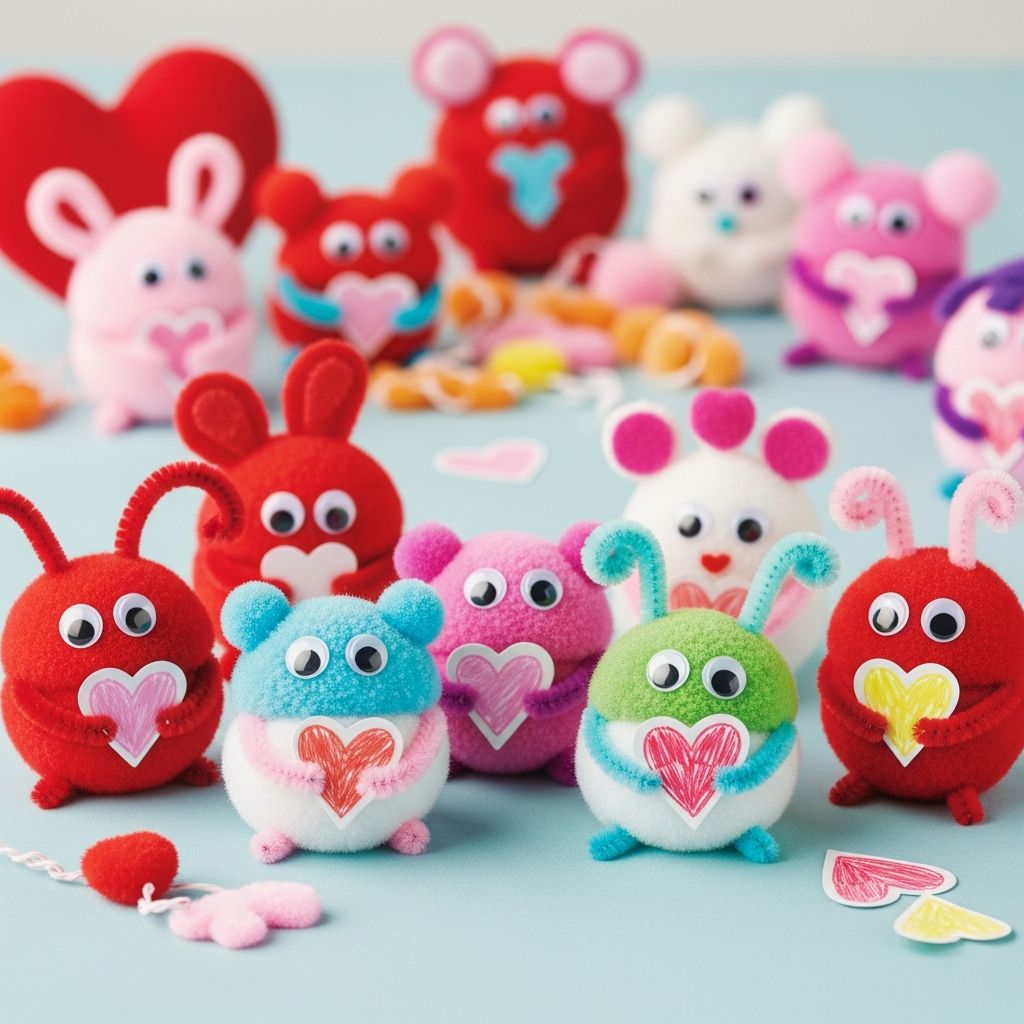
Valentine’s Day is the perfect excuse to slow down, pull out the craft bin, and make something soft, silly, and full of heart with your kids. Instead of traditional cards, this project helps children create tiny “cozy creatures of kindness”—little pom-pom friends that spread compliments, encouragement, and warm feelings wherever they go.
Why Make Cozy Creatures of Kindness?
Children love anything cute, colorful, and tactile, and these creatures check every box: they are soft to hold, simple to build, and endlessly customizable. They also give families an easy way to talk about kindness, empathy, and how small gestures can brighten someone’s day.
Unlike flat paper valentines, these friendly critters feel like tiny companions your child has designed from scratch. Kids can give them to classmates, leave them on a neighbor’s doorstep, or line them up on a bedroom shelf as a reminder that love can be playful and creative.
Supplies You’ll Need
You can adapt this craft to what you already have on hand, but the following list describes a typical setup for a family or classroom table.
- Medium and large pom-poms (assorted colors: pink, red, white, purple, or any favorites)
- Mini pom-poms for noses or antenna tips
- Googly eyes in various sizes
- Pipe cleaners (also called chenille stems) in bright or metallic colors
- Craft foam sheets or sturdy colored cardstock for bases and feet
- Non-toxic craft glue or low-temperature glue gun (for adults or older kids)
- Child-safe scissors
- Fine-tip markers or gel pens
- Small sticky labels or paper strips for kindness messages
- Optional: sequins, felt scraps, stickers, glitter glue, ribbon, or lace for extra flair
Encourage kids to “shop” your recycling bin too. Clean bottle caps, cardboard scraps, and fabric bits can become bases, hats, or tiny accessories for their creatures.
Basic Safety and Setup Tips
A little preparation goes a long way toward a calm and cheerful crafting session. Before you invite children to the table, cover the surface with old newspaper or a washable tablecloth, and place all supplies within easy reach in small bowls or trays.
- For toddlers and preschoolers, use non-toxic white glue and skip very small embellishments that might present a choking hazard.
- If you choose a glue gun, limit its use to adults or older kids, and keep an extra piece of scrap paper nearby to catch drips.
- Show children how much glue is “enough”: a pea-sized dot holds a lot more than they think and keeps drying time reasonable.
- Offer aprons or old t-shirts to protect clothing, especially if you add glitter glue or paint details.
Step-by-Step: Building Your First Kindness Creature
This simple method creates a basic “creature” shape that kids can customize in endless ways. Adults can assemble a sample ahead of time to spark ideas, but leave lots of space for children to interpret the steps freely.
1. Create a Stable Base
Start by cutting small shapes from foam or cardstock to give your creature a sturdy platform. Hearts, circles, and flowers work especially well for Valentine’s Day, but kids can also design stars, clouds, or simple ovals.
- Trace cookie cutters or jar lids to make consistent shapes if you are prepping for a group.
- Label the underside with the crafter’s name and the date so the keepsake has a bit of history attached.
2. Build the Body
Choose one large pom-pom as the main body and glue it firmly to the base. For a taller creature, glue a second pom-pom on top like a snowman, or add a smaller pom-pom as a head.
- Press the pom-pom down gently for several seconds to help the glue grip the fibers.
- Encourage kids to mix colors, such as a red body with a pink head, to express different personalities.
3. Add Eyes, Nose, and Mouth
Next, glue on googly eyes. Children can choose one big eye, two tiny eyes, or a playful cluster for a monster-style creature. A mini pom-pom or a felt scrap makes a perfect nose, while a marker, thin foam strip, or even a curved piece of pipe cleaner works as a smile.
- Ask younger kids how they want their creature to feel—happy, sleepy, surprised—and help them arrange the eyes and mouth to match that expression.
- Older children can experiment with eyebrows, freckles, or rosy cheeks using markers or tiny dots of paint.
4. Shape Arms, Antennae, or Wings
Pipe cleaners are the secret to giving your creature movement and character. They bend easily into arms, antennae, wings, tails, or even tiny heart-shaped “ears.”
- Cut a pipe cleaner in half for arms and twist the ends into small spirals or hearts.
- For antennae, bend a piece into a wide “U” and curl each tip, then glue the center behind the head pom-pom.
- Use felt or foam to cut wing shapes; glue them to the sides or back of the body.
5. Decorate the Base with Love
Once the creature itself is assembled, turn attention to the base. Kids can draw patterns, glue on sequins, or add mini hearts and stars around their new friend’s feet.
- Encourage patterns (dots, stripes, zigzags) for kids who enjoy structure, and free-form collages for kids who like to experiment.
- If the creatures will travel home in backpacks or bags, keep base decorations mostly flat so they are less likely to catch or peel off.
Turning Creatures into Acts of Kindness
The heart of this craft is not just what kids make with their hands, but what they express with their words. Each creature becomes a messenger of kindness through a short message or compliment tucked underneath or attached to the base.
Simple Ways to Add Messages
- Write a short note on a sticker or slip of paper and glue it under the base, like a secret fortune.
- Tie a tiny tag to a pipe cleaner arm with a message such as “You make school more fun” or “Thank you for being my friend.”
- Have beginning writers dictate their messages while an adult or older sibling writes them down.
This step is an opportunity to practice gratitude. Ask questions like, “What is one kind thing this person has done for you?” or “What do you like most about spending time with them?”
Fun Variations for Different Ages
Because the design is so flexible, you can adapt cozy creatures of kindness for toddlers, elementary-age kids, or even tweens looking for a quick, low-stress craft.
| Age Group | Suggested Adjustments | Skills Emphasized |
|---|---|---|
| Toddlers (with help) |
| Finger strength, color recognition, following simple directions |
| Preschoolers |
| Fine motor control, emotional vocabulary, early storytelling |
| Early elementary |
| Writing practice, creativity, measuring and planning |
| Older kids & tweens |
| Leadership, design thinking, patience and attention to detail |
Educational Benefits Hidden in the Craft
Although kids will see this project as pure fun, it naturally promotes a variety of developmental skills. Handling small pieces, squeezing glue bottles, and positioning eyes and arms all strengthen fine motor control.
- Language skills: Writing or dictating kindness messages supports sentence formation, descriptive language, and emotional vocabulary.
- Social-emotional growth: Deciding what compliment to share with a friend or family member encourages empathy and perspective-taking.
- Early planning: Thinking through color choices, creature personalities, and accessory placement helps children practice planning and flexible thinking.
Ideas for Sharing and Displaying the Creatures
Once your table is filled with cozy creatures, it’s time to set them loose to spread joy. There are countless ways to share them beyond standard card exchanges, whether in classrooms, neighborhoods, or extended families.
- Arrange them on a windowsill or mantle as a Valentine’s kindness village, with each creature holding or guarding a message.
- Place one creature on each family member’s pillow on the night before Valentine’s Day, with a note of appreciation.
- Bring a group to a nursing home, community center, or neighbor as a surprise delivery of homemade cheer.
- Set up a “take one, leave one kind word” station at school, where classmates can pick a creature and add a new message to the basket for someone else.
Mess-Management and Cleanup Tricks
Valentine’s crafts can quickly scatter sequins and pom-pom fuzz across the house, but a few simple strategies keep things under control. Offer each child a small tray or baking sheet as a personal work zone so loose pieces stay contained.
- Keep a handheld vacuum or lint roller nearby to quickly capture escaped fibers and glitter.
- Have a labeled bowl for “leftover bits” so children can return unused eyes, pipe cleaners, and sequins instead of leaving them on the table.
- End the activity with a playful challenge: set a one-minute timer and see how much everyone can tidy before it rings.
Frequently Asked Questions
How long does one creature take to make?
Most children can finish a basic creature in about 10–20 minutes, depending on how many details they add and how quickly the glue dries. If you are working with a group, plan for about half an hour so kids have time to add messages and small decorations without feeling rushed.
Can this craft work for a classroom party?
Yes, this project adapts very well to classrooms and group settings. Prepare by pre-cutting bases, portioning materials into small cups, and setting up stations (body building, decorating, message writing) so students can move through the process in small groups.
What if we don’t have pom-poms?
If pom-poms are not available, you can roll up small balls of tissue paper, crumple foil into soft spheres, or use balled-up scrap fabric instead. The key is to have something soft and round that can hold googly eyes and pipe cleaner attachments.
How can I make this craft more eco-friendly?
To reduce waste, try using cardboard bases cut from cereal boxes, fabric scraps instead of foam, and recycled paper for the kindness messages. When a creature eventually falls apart, invite kids to save eyes and pipe cleaners in a reuse jar for future projects.
Are these creatures safe for very young children?
With close supervision and age-appropriate adjustments, even toddlers can enjoy a simplified version of this craft. Avoid very small pieces, rely on adult-applied glue, and focus on larger components that are easy to grab and explore.
These cozy creatures of kindness turn simple materials into meaningful Valentine’s Day memories. Whether you are crafting with one child at the kitchen table or a whole classroom full of eager hands, each little creature becomes a soft, friendly reminder that love can be playful, thoughtful, and handmade.