Parents often feel stuck between two extremes when Halloween rolls around: sugary, repetitive kids’ music that quickly drives adults up the wall, and mainstream spooky songs that can be a bit too suggestive, aggressive, or creepy for young ears. Hidden in the middle of that spectrum is an unexpected hero: a playful, acoustic track by The White Stripes called “Little Ghost.”
This song was never designed as a children’s tune, but it hits a rare sweet spot. It is whimsical without being saccharine, spooky without being disturbing, clever without feeling like a joke for grown-ups only. More importantly, it gives families a way to share genuinely good music while still protecting kids’ emotional comfort and age-appropriate boundaries.
Why Parents Crave Better Kids’ Halloween Music
Before exploring the song itself, it helps to understand why so many parents go searching for alternatives to the usual Halloween fare. Modern kids’ playlists tend to lean on a predictable mix of high-energy, heavily produced tracks that prioritize repetition over nuance. That may work for toddlers, but it can feel grating to adults after the tenth play, and older kids quickly outgrow it.
At the same time, classic Halloween songs written for adults often smuggle in jokes, innuendo, or imagery that children do not fully understand but still absorb. Parents find themselves stuck: either endure mind-numbing kids’ songs or risk content they are not quite comfortable explaining yet. The ideal solution is music that respects a child’s imagination while still respecting an adult’s taste.
Meet “Little Ghost”: Spooky, Sweet, And Surprisingly Gentle
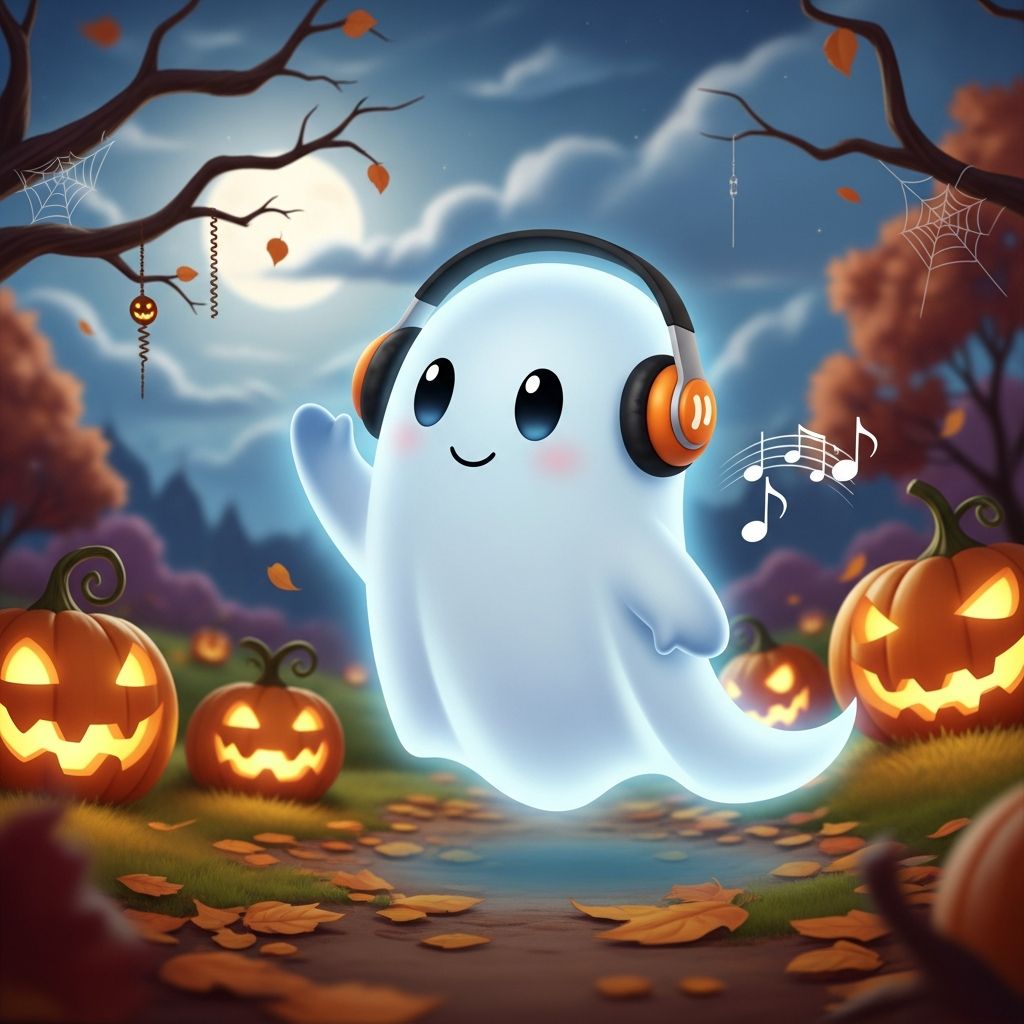
“Little Ghost” sits in a charming gray area between lullaby and campfire song. Instead of treating ghosts as monsters to be feared, it presents a small, almost shy spirit who feels more like a storybook character than a horror villain. The mood is curious and affectionate rather than menacing, which instantly makes the theme feel safer for young listeners.
The track’s pacing and arrangement also matter. Rather than a wall of electric guitars and pounding drums, the song leans on acoustic textures, hand-clap energy, and a bouncy rhythm that invites head-nodding more than head-banging. That light musical touch turns the idea of a ghost into a playful companion, not a nightmare.
Musical Elements That Make It Kid-Friendly
There are a few specific musical traits that help “Little Ghost” fit comfortably into a kids’ Halloween playlist while still sounding like “real” music that adults would choose on their own.
- Acoustic, rootsy sound: The song leans on acoustic instruments and a folk-inspired groove, which naturally softens the impact compared with heavier rock arrangements.
- Simple, singable melody: Children latch onto tunes they can hum back easily; the main line of “Little Ghost” is catchy without being simplistic.
- Call-and-response feel: The rhythmic phrasing and repeated lines invite kids to echo, shout, or sing along, turning the track into a participatory game.
- Short runtime: The song does not overstay its welcome, which helps prevent auditory overload and makes replaying it less tiring for parents.
Lyrics That Turn Fear Into Curiosity
The central magic of the song is what it does with the idea of a ghost. Instead of centering on hauntings, terror, or doom, the lyrics frame the ghost as a figure connected with affection and even love. The ghost becomes a character a child might want to befriend, not a force to run from.
That emotional flip is crucial for young listeners. Children are still learning the difference between pretend and real danger; when spooky imagery is paired with warmth, they can experience the thrill of Halloween without being overwhelmed. The song effectively says: “Yes, ghosts are part of this season, but here they are gentle, silly, and safe.”
How Kids Hear “Little Ghost” (Versus How Adults Do)
Adults might pick up on subtle emotional themes or creative wordplay in the song, but many young kids hear something simpler and more innocent. To them, it is a catchy story about a small ghost who wants attention, love, or companionship. They enjoy repeating fun phrases, imagining the character, and maybe acting out the role while dancing.
For parents, there is a deeper layer: the contrast between the spooky setting and the tender message can feel almost poetic. That makes repeated listening more rewarding. Instead of a disposable novelty tune, the track becomes a tiny narrative that can grow with a child as they age—first as a silly ghost song, later as something with more emotional shading.
Comparing “Little Ghost” To Classic Halloween Songs
Many Halloween standards fall broadly into two categories: outright novelty songs or mainstream pop tracks with ghostly branding. Both can be fun, but not all of them are equally age-appropriate in terms of tone, lyrics, or innuendo.
The table below illustrates how “Little Ghost” stacks up against a few common types of Halloween songs in areas that matter to parents: lyrical content, mood, and replay value.
| Song Type | Typical Themes | Kid Comfort Level | Parent Replay Tolerance |
|---|---|---|---|
| Goofy novelty songs | Outright silliness, cartoonish monsters, catchphrases | Usually safe, but can feel babyish to older kids | Can become irritating with frequent repetition |
| Spooky pop hits for adults | Romantic tension, suggestive lines, mild horror references | Fun beat, but some lyrics are awkward to explain | Entertaining for parties, less ideal for everyday kid listening |
| “Little Ghost” | Gentle haunting, affection, playful fear and longing | Spooky flavor without explicit scares or innuendo | Musically interesting enough to hold adult attention |
Why Nostalgic Parents Gravitate To It
Many parents of young children today grew up on 1990s and early-2000s alternative rock. For them, The White Stripes are not just another band; they represent a specific era of pre-parenthood freedom. Getting to share a deep-cut track like “Little Ghost” with their kids feels like smuggling a piece of their old life into a new, family-friendly context.
Unlike many nostalgic choices, however, this one genuinely aligns with what children tend to enjoy. Parents are not forcing kids to sit through slow, introspective songs; they are offering something bouncy, catchy, and thematically on-season. The result is a rare win-win: a track that triggers adult memories and sparks new family rituals at the same time.
Building A Kid-Safe Halloween Playlist Around “Little Ghost”
Once “Little Ghost” earns a permanent spot in the car stereo or smart-speaker rotation, it is natural to build a themed playlist around it. The key is to keep the same balance: fun over fear, imagination over shock value, groove over noise.
When curating, think about the overall emotional arc of the listening experience. The goal is not nonstop adrenaline. Instead, you want a mix of upbeat tracks, mid-tempo sing-alongs, and a few calmer pieces so kids do not end the night wired and overwhelmed.
Practical Tips For Parents
- Preview every song: Even familiar hits can hide lines that feel off once you imagine your five-year-old repeating them in public.
- Watch for sound effects: Sudden screams, ominous whispers, or realistic horror noises can upset sensitive children more than the lyrics do.
- Limit “jump scare” tracks: A few dramatic moments are fine, but constant surprise crescendos can make kids associate Halloween with anxiety.
- Mix eras and genres: Blend older novelty songs, gentle folk pieces, and newer indie or alternative tracks to keep the playlist fresh.
How To Introduce “Little Ghost” To Young Kids
Presentation matters, especially if a child is easily spooked by ghost stories. Rather than suddenly blasting the song in a dark room, frame it as part of a playful activity. Explain that this is a “silly ghost song” about a little spirit who just wants attention or love, then invite your child to dance or act like a friendly ghost while it plays.
You can also turn the track into a small family ritual. For example, you might agree that you will only play “Little Ghost” when the Halloween decorations are up, or only on the drive to pick out pumpkins. Attaching the song to a positive tradition helps children associate ghost imagery with creativity and togetherness, not fear.
Age-Appropriate Listening Guidelines
Every child is different, but a few general principles can help you decide when and how to use songs like “Little Ghost.” Many preschoolers enjoy music with mild spooky themes as long as the tone is playful and caregivers remain close by to reassure them.
As children get older, they may start asking deeper questions about ghosts, fear, and death. Rather than avoiding those conversations, parents can use songs as gentle prompts. Ask how the music makes them feel, whether the ghost sounds scary or lonely, and what they would say to the character if they met it. This turns listening time into emotional education.
Signs A Halloween Song Might Be Too Intense
- Your child covers their ears or asks for the song to be skipped.
- They mention specific lyrics or sounds that “won’t leave their head” in a negative way.
- Nighttime fears noticeably increase after repeated exposure to a song or playlist.
- They act out violent or disturbing imagery from lyrics during play.
Using “Little Ghost” In Everyday Parenting Moments
Beyond Halloween, a song like “Little Ghost” can become a tool for navigating everyday worries. Because it plays with the line between fear and affection, parents can reference it when a child is nervous about shadows, strange noises, or sleeping alone in a new room.
For example, you might remind your child of the friendly ghost from the song and suggest that the creaks in the house are just the building saying goodnight. In this way, music does not just entertain; it gives kids a language and set of images to reframe fear as something smaller, sillier, and more manageable.
Why This Kind Of Song Matters
On the surface, arguing that a rock duo accidentally made a great kids’ Halloween song might sound like a trivial point. But under that argument lies a deeper idea: children deserve music that treats them as full people with complex emotions and good taste. They do not always need glossy, made-for-TV “kids’ bops” to enjoy sound and story.
When parents choose songs like “Little Ghost,” they signal that family playlists can be shared spaces. No one has to suffer through music they quietly hate, and no one has to grow up too fast to enjoy something spooky. Instead, Halloween becomes a chance to practice how to play with fear safely, together.
FAQ: Kids, Halloween, And “Little Ghost”
Is “Little Ghost” appropriate for very young children?
For most families, yes. The song’s tone is more whimsical than frightening, and it does not rely on graphic or violent imagery. That said, the best way to decide is to listen to it yourself first and imagine how your particular child might feel about a ghost character described in affectionate terms.
How often is too often to play it?
There is no strict limit, but variety helps keep any track from turning into background noise or an obsession. Consider pairing “Little Ghost” with three or four other gentle Halloween songs and rotating through them so your child hears a mix of sounds and stories.
What if my child starts taking ghost stories too seriously?
Use the song as an opening to talk about the difference between make-believe and reality. You can explain that the ghost in the music is like a character in a cartoon or picture book—fun to imagine, but not something that shows up in the real world. Encourage questions and reassure them that adults are there to keep them safe.
Can older kids still enjoy it?
Absolutely. Older children may appreciate the musicianship, wordplay, and offbeat charm even more than little kids do. You can invite them to listen more critically—ask what instruments they hear, how the rhythm makes them feel, or what they think the ghost represents emotionally.
How can I use songs like this to build traditions?
One simple approach is to reserve “Little Ghost” for specific seasonal moments. Maybe it is the soundtrack for decorating the house, carving pumpkins, or the first hot chocolate of October. Over time, those repeated pairings will turn the song into a nostalgic trigger that instantly brings back memories of family time and cozy fall evenings.