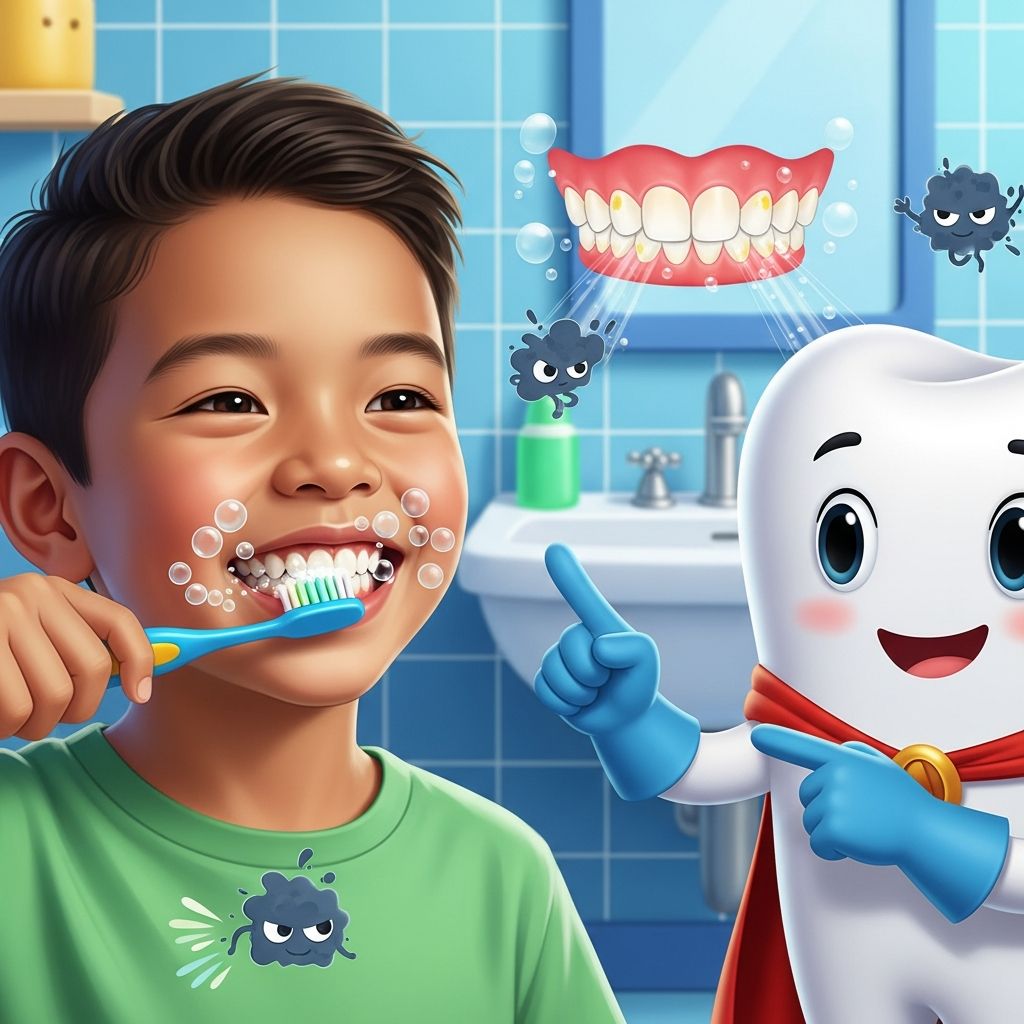
There is a tiny troublemaker living in everyone’s mouth, including yours. It is not a bug you can see crawling around, but a thin, sticky layer called plaque. Learning what plaque is and how to fight it can help you keep a strong, bright, and healthy smile as you grow up.
What Exactly Is Plaque?
Plaque is a soft, sticky film that forms on the surface of your teeth and along the gumline. It is made up mostly of bacteria, bits of food, and saliva all mixed together. When these bacteria feed on the sugars and starches in food, they create acids that can harm your teeth over time.
- Color: Usually colorless or pale yellow, so it can be hard to see.
- Texture: Feels fuzzy or slippery if you run your tongue over teeth that have not been brushed recently.
- Location: Gathers most easily along the gums, between teeth, and in tiny grooves on the chewing surfaces.
Plaque begins forming just a few hours after you brush, which is why dentists recommend cleaning your teeth every day.
How Plaque Forms Step by Step
Your mouth is home to many types of bacteria all the time. Most are harmless, but some cause tooth and gum problems if they are not cleaned away regularly.
- Eating and drinking – After you eat, especially sugary or starchy foods, tiny food particles stick to your teeth.
- Bacteria feast on leftovers – Bacteria use these food bits as fuel and multiply.
- Sticky film forms – Bacteria, food, and saliva mix to create a soft layer that clings to the tooth surface. That is plaque.
- Acids are produced – While bacteria feed, they release acids that can slowly wear away your tooth enamel.
- Plaque hardens if ignored – If plaque stays on teeth for more than a day or two, minerals in your saliva can turn it into a hard crust called tartar (also known as calculus).
Once plaque turns into tartar, a toothbrush at home cannot remove it. Only a dental professional can scrape it away safely during a cleaning.
Why Plaque Is a Problem for Teeth and Gums
Even though plaque is soft and thin, it can do a lot of damage if it stays on your teeth too long.
1. Damage to Tooth Enamel
Enamel is the strong outer layer of your teeth. The acids made by plaque bacteria slowly dissolve this protective coat.
- First, you might get white spots where minerals are starting to wash out of the enamel.
- If this continues, a hole forms in the tooth called a cavity (also known as tooth decay).
- Cavities can make your teeth sensitive or painful and usually need a dentist to fix them.
2. Trouble for Your Gums
Plaque does not just sit on the flat parts of your teeth; it also collects around the gumline where your teeth and gums meet.
- The bacteria in plaque can irritate your gums.
- This irritation can cause gingivitis, the earliest stage of gum disease, which may make gums red, puffy, or more likely to bleed when brushing or flossing.
- If gingivitis is not treated with better brushing, flossing, and professional cleanings, it can lead to more serious gum problems later in life.
3. Bad Breath
When bacteria break down leftover food in your mouth, they produce smelly substances. Plaque buildup is a common cause of bad breath, especially when brushing and flossing are not done regularly.
Spotting Plaque: Signs Kids Can Notice
Because plaque is often colorless, it is not always easy to see in the mirror. But there are clues you can look for.
- Fuzzy feeling on teeth when you wake up or if you have not brushed for several hours.
- Yellowish film near the gums or between teeth.
- Red or swollen gums that bleed when you brush or floss.
- Bad breath that does not go away soon after brushing.
If you notice these signs often, it is a good idea to let a parent or caregiver know and ask about seeing a dentist.
Kids vs. Plaque: Daily Habits That Protect Your Smile
The good news is that you can fight plaque every single day. You do not need fancy tools—just consistency and good technique.
1. Brushing the Right Way
Most dental organizations recommend that kids brush their teeth twice a day with fluoride toothpaste to help prevent decay.
- Morning and night: Brush after breakfast and again before bed.
- Time it: Brush for about two minutes. Many kids like using a timer or a favorite song to keep track.
- Use a pea-sized amount of fluoride toothpaste: Fluoride helps strengthen tooth enamel and makes it more resistant to plaque acids.
- Gentle circles: Place the bristles at an angle toward your gums and move them in small circles to clean the front, back, and chewing surfaces of every tooth.
- Do not forget your tongue: Gently brushing your tongue can also help cut down on bacteria and bad breath.
2. Flossing to Clean Between Teeth
Toothbrush bristles cannot reach all the tight spaces between your teeth where plaque hides. That is where floss comes in.
- Kids usually need an adult’s help with flossing until they have the hand skills to do it well.
- Floss should slide gently between teeth and curve around each tooth in a C shape to wipe plaque away.
- Floss picks can make it easier for some kids to reach back teeth.
3. Eating and Drinking Smart
Plaque bacteria especially love sugary and sticky foods. You do not have to give up treats forever, but choosing wisely can really help your teeth.
- Limit sweets and sugary drinks: Candy, cookies, sodas, and sports drinks give bacteria a lot of sugar to feed on, which means more acid on your teeth.
- Choose tooth-friendly snacks: Cheese, plain yogurt, nuts (if safe for you), crunchy fruits and veggies, and water are kinder to your teeth.
- Rinse with water after snacks: If you cannot brush right away, swishing with water can help wash away some food bits.
4. Regular Visits to the Dentist
Even with the best brushing and flossing, there are still spots that are hard to reach. That is why most experts recommend kids visit a dentist every six months for a checkup and cleaning.
- The dentist or hygienist uses special tools to remove plaque and tartar you cannot see or reach at home.
- They can apply fluoride treatments or sealants to help protect teeth from decay.
- Checkups also help find any problems like cavities or gum issues early, when they are easier to treat.
Plaque vs. Tartar: What’s the Difference?
People often mix up plaque and tartar, but they are not the same thing.
| Feature | Plaque | Tartar (Calculus) |
|---|---|---|
| What it is | Soft, sticky film of bacteria, food particles, and saliva | Hardened form of plaque that has absorbed minerals from saliva |
| Texture | Soft and easy to remove with brushing and flossing | Hard, crusty deposit stuck to teeth |
| Where it forms | All over teeth and along the gumline | Often at the gumline and between teeth; can also form below the gums |
| Removal | Removed at home with daily brushing and flossing | Needs a dental professional and special tools to remove |
| Health effects | Can cause cavities and early gum irritation if not removed | Can lead to more serious gum disease and make cleaning even harder |
The best way to avoid tartar is to prevent plaque from sitting on your teeth for long periods. That means brushing and flossing regularly and following your dentist’s advice.
Fun Ways to Make Plaque-Fighting a Habit
Taking care of your teeth does not have to feel like a chore. With a little creativity, it can become part of your daily routine that you even look forward to.
- Use a chart or sticker calendar: Add a sticker every time you brush and floss. Try to fill the whole week without missing.
- Pick a special toothbrush: Many kids enjoy brushes with favorite characters, lights, or gentle vibrations.
- Make it a family event: Brushing together lets parents help and sets a good example.
- Turn on music: Choose a two-minute song to play every time you brush and dance along in the mirror.
FAQs About Plaque and Kids’ Teeth
Does every kid get plaque?
Yes. Everyone gets plaque, kids and adults alike. The key is not to let it stay on your teeth for too long. Daily brushing and flossing help keep plaque under control so it does not cause cavities or gum problems.
Can baby teeth really get cavities from plaque?
Baby teeth can get cavities just like permanent teeth. Even though baby teeth eventually fall out, they are important for eating, speaking, and guiding adult teeth into the right place, so it is important to protect them from plaque.
What happens if I forget to brush sometimes?
Missing a brushing once in a while usually will not ruin your teeth right away, but plaque starts forming again within hours. If skipping becomes a habit, plaque can harden into tartar, and you are more likely to have cavities and gum trouble.
Is it enough to just use mouthwash?
Mouthwash can freshen your breath and sometimes help reduce bacteria, but it cannot scrub sticky plaque off your teeth. You still need brushing and flossing to physically remove plaque from all surfaces.
Why does the dentist scrape my teeth during a cleaning?
The scraping tool helps remove tartar that has formed from plaque and become too hard to brush away at home. This makes it easier for you to keep teeth clean and helps protect your gums.
Key Takeaways for a Healthy Smile
- Plaque is a soft, sticky layer of bacteria that forms on teeth and can cause cavities and gum irritation if not removed.
- It builds up every day, especially after eating or drinking sugary or starchy foods.
- Brushing twice a day with fluoride toothpaste, flossing once a day, choosing tooth-friendly snacks, and visiting the dentist regularly are the best ways to control plaque.
- Stopping plaque early helps prevent tartar, tooth decay, gum disease, and bad breath.
By making good dental habits part of your regular routine now, you are giving yourself the gift of a strong, healthy smile for years to come.
References
- Oral Health Basics: Dental Caries (Tooth Decay) — Centers for Disease Control and Prevention. 2022-03-28. https://www.cdc.gov/oralhealth/conditions/dental-caries.html
- Oral Health Topics: Dental Plaque and Calculus — American Dental Association. 2021-07-01. https://www.ada.org/resources/research/science-and-research-institute/oral-health-topics/dental-plaque-and-calculus
- Gingivitis in Children — Nationwide Children’s Hospital. 2020-11-10. https://www.nationwidechildrens.org/conditions/gingivitis-in-children
- Children’s Oral Health — Centers for Disease Control and Prevention. 2019-10-21. https://www.cdc.gov/oralhealth/basics/childrens-oral-health/index.html
- Tooth Decay — Nemours Children’s Health. 2021-06-01. https://kidshealth.org/en/parents/tooth-decay.html