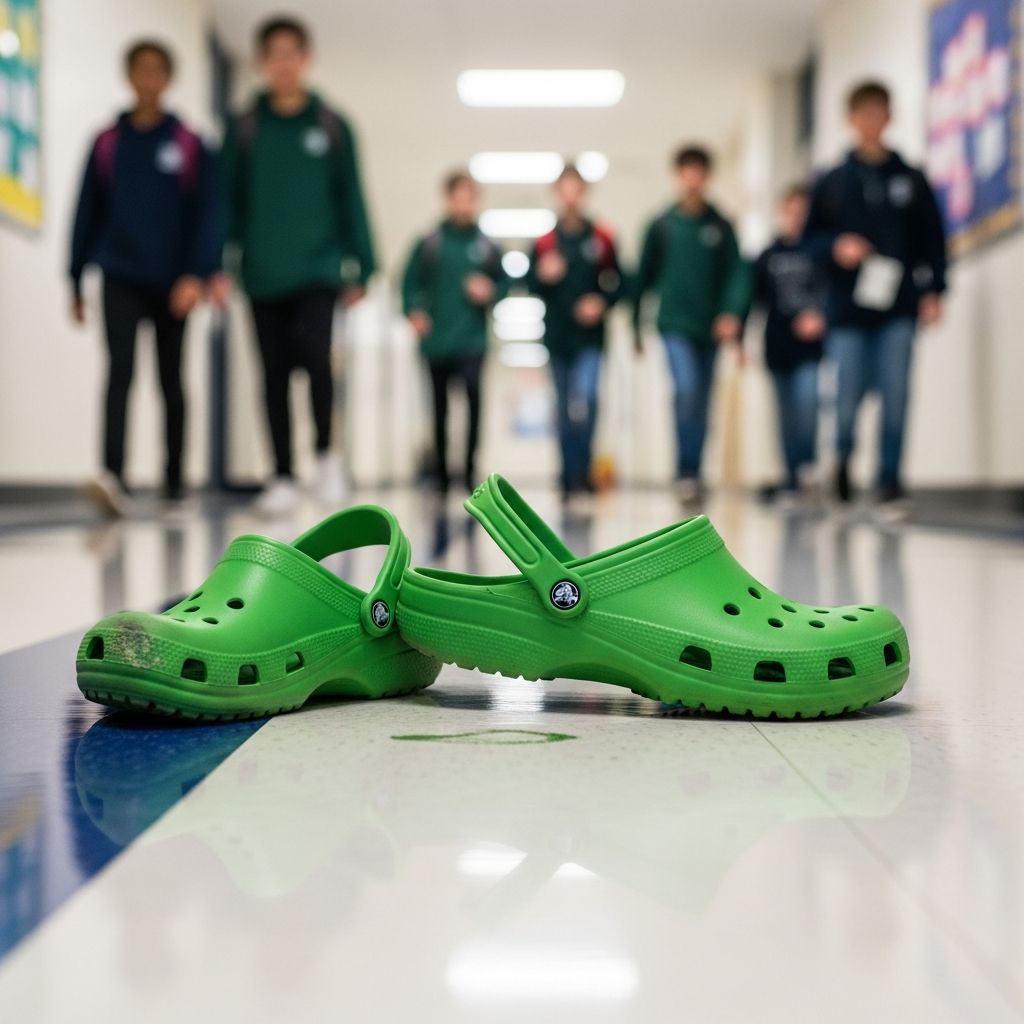
Popular foam clogs known as Crocs have captured the hearts of children and teens nationwide, but a wave of school dress code changes is turning them into contraband. Dozens of educational institutions in at least 20 states have introduced prohibitions, primarily citing heightened risks of accidents in busy hallways and on playgrounds. This shift reflects broader concerns about student well-being amid the shoes’ explosive popularity.
The Surge in Crocs Popularity Among Youth
Crocs have evolved from quirky beachwear to a cultural phenomenon, especially among Gen Z and Gen Alpha. Their lightweight foam construction, breathable holes, and customizable charms called Jibbitz make them irresistible for self-expression. Teens consistently rank them in the top 10 favorite footwear brands in surveys, fueling record sales that tripled from $312.8 million in Q3 2019 to $1.06 billion in Q3 2024.
Despite this boom, schools are pushing back. In fast-paced environments like crowded corridors, the slip-on design lacks the security of traditional sneakers, leading administrators to act decisively.
Primary Safety Hazards Driving the Bans
The core issue revolves around physical safety. Principals report a noticeable uptick in students stumbling or falling while wearing Crocs. At Bessemer City High School in Alabama, Principal Stoney Pritchett enforced a longstanding policy this year, mandating tennis shoes at all times. “It’s actually a safety hazard,” he explained. “They could twist their knees, twist the ankles.” Violators face in-school suspension.
- Tripping Frequency: Observers note middle-schoolers, in particular, are prone to mishaps as they dash between classes, with Crocs easily slipping off mid-stride.
- Hallway Dynamics: High-traffic areas amplify dangers, where a loose shoe can cause chain-reaction falls.
- Playground and PE Risks: During sports or recess, the clogs can snag on equipment, leading to tumbles or toenail injuries reported by podiatrists.
In Georgia, Lake City Elementary and Clayton County School District explicitly barred Crocs, requiring closed-toe options. Florida’s LaBelle Middle School echoes this with rules demanding heel straps: “NO CROCS allowed.”
Podiatrists’ Professional Warnings on Foot Health
Medical experts corroborate school leaders’ concerns, emphasizing Crocs’ limitations for active youth. Dr. Priya Parthasarathy of the American Podiatric Medical Association notes daily overuse leads to heel pain, arch discomfort, and even hammertoes. “You have to grip the shoe to keep them on, so the toes are overworking,” she observed.
Dr. Sidney Weiser from Quality Podiatry Group adds that Crocs fail to stabilize the heel or support the arch adequately, risking tendinitis in growing feet. “Children should wear a more protective shoe since they can easily injure themselves,” he advises.
Dr. Megan Leahy from the Illinois Bone and Joint Institute and Dr. Dan Michaels report higher tripping rates compared to supportive closed-toe shoes. They recommend Crocs for short, casual outings like beach trips but caution against extended wear or running.
| Issue | Crocs Limitation | Expert Recommendation |
|---|---|---|
| Heel Instability | No back support | Sneakers with heel cups |
| Arch Support | Minimal cushioning | Orthotic-friendly shoes |
| Toe Grip Strain | Slip-on design | Closed-toe with secure fit |
| Tripping Risk | Soft foam | Firm-soled athletic wear |
Classroom Distractions from Customizable Features
Beyond physical dangers, Crocs disrupt focus. Jibbitz charms invite trading and fiddling, diverting attention from lessons. Market analyst Jessica Ramírez notes this personalization resonates deeply with kids, but it fosters non-educational play during class.
Some campuses view the vibrant, accessory-laden shoes as visual distractions, pulling peers into social exchanges rather than academic engagement.
School Enforcement Tactics and Student Reactions
Implementation varies but is firm. Students caught in Crocs may receive immediate in-school suspension, requiring a shoe swap or parental pickup. One Alabama teen endured two weeks without phone or computer privileges after defiance.
Parents are divided: some applaud the caution, dubbing Crocs “house shoes,” while others decry it as overreach. A mother shared, “When she got suspended, I’m like, no, those are house shoes now.”
Crocs’ spokesperson deems bans “unfortunate,” clarifying the brand targets casual comfort, not performance athletics. Sales remain robust despite restrictions.
Viable Footwear Alternatives for School Settings
- Athletic Sneakers: Provide superior traction, support, and durability for all-day activity.
- Closed-Toe Sandals with Straps: Balance breathability and security if sneakers feel too warm.
- Supportive Loafers: Offer style with stability for older students.
- Water-Resistant Options: Like Crocs for pools, but switch to structured pairs for school.
Podiatrists advocate moderation: Use Crocs post-workout for recovery or brief errands, but prioritize protective gear during school hours.
Broader Implications for Dress Codes and Youth Fashion
This controversy underscores evolving school policies balancing self-expression with safety. As trends like TikTok tripping parodies highlight Crocs’ pitfalls, educators prioritize injury prevention.
While no large-scale studies quantify Crocs-specific injuries, anecdotal evidence from clinics and campuses suffices for bans. Analysts predict minimal sales impact given the brand’s diversification.
Frequently Asked Questions About Crocs Bans
Why are schools specifically targeting Crocs?
Schools ban Crocs due to their loose fit causing trips, falls, and joint twists in dynamic environments like hallways and gyms.
Do podiatrists agree Crocs are unsafe for kids?
Yes, multiple experts warn of heel pain, toe strain, and higher fall risks from inadequate support during prolonged or active use.
Has this affected Crocs sales?
No significant impact; revenues continue soaring despite bans in 20+ states.
What shoes should children wear to school instead?
Opt for tennis shoes or closed-toe footwear with heel straps and arch support for optimal safety and health.
Are Crocs ever appropriate for school activities?
In emergencies or non-physical settings, but not for PE, recess, or general movement; reserve for casual recovery wear.
Navigating Dress Code Conflicts as a Parent
Stay informed on your school’s policy—many fold Crocs into broader “no open-toe” rules. Discuss alternatives with kids to maintain style without risks. If challenging a ban, highlight moderation and pair with data from health pros.
Ultimately, prioritizing foot development in youth supports long-term mobility. Structured shoes foster healthy gait patterns essential for active lifestyles.
References
- Crocs face school bans over safety concerns — AJC.com. 2024-10-15. https://www.ajc.com/pulse/crocs-face-school-bans-over-safety-concerns/LCATUWXZUZDVPJ66FHT6ZB6T6Y/
- Schools Banning Crocs Over Safety Concerns — Campus Safety Magazine. 2024-10-10. https://www.campussafetymagazine.com/news/schools-banning-crocs-over-safety-concerns/163396/
- Safety Concerns Force Schools to Ban Crocs: MD Podiatrist — RFA Institute. 2024-10-12. https://rfainstitute.com/safety-concerns-force-schools-to-ban-crocs-md-podiatrist/
- Why more schools are trying to ban Crocs — YouTube (Transcript). 2024-10-08. https://www.youtube.com/watch?v=bzNtpCkjChE