Self-esteem forms the foundation of a child’s emotional health, influencing how they approach challenges, interact with others, and perceive their own worth. Parents play a pivotal role in cultivating this vital trait through everyday interactions and intentional practices. By focusing on positive reinforcement, realistic expectations, and supportive guidance, caregivers can help children develop a resilient sense of self that lasts a lifetime.
Understanding the Foundations of Healthy Self-Esteem
Healthy self-esteem in children emerges from a balance of unconditional love, achievement experiences, and the ability to navigate setbacks. It empowers kids to believe in their capabilities while accepting imperfections. Research from child development experts highlights that children with strong self-esteem are more likely to excel academically, form healthy relationships, and handle stress effectively.
At its core, self-esteem develops through repeated positive experiences where children feel valued and competent. This begins in early childhood with simple affirmations and grows through adolescence via more complex social and personal achievements. Neglecting this area can lead to issues like anxiety or low motivation, underscoring the need for proactive parenting strategies.
Lead by Example: The Power of Parental Role Modeling
Children mirror their parents’ attitudes toward themselves and the world. When parents demonstrate self-respect and resilience, kids internalize these behaviors naturally. For instance, openly acknowledging your own mistakes and learning from them teaches children that errors are opportunities for growth, not reflections of inadequacy.
- Speak positively about your abilities and handle criticism constructively in front of your child.
- Practice self-care routines, like balanced eating or relaxation techniques, to show valuing personal well-being.
- Express gratitude daily, modeling appreciation for small wins and efforts.
Consistency in these actions creates a living lesson in self-worth. A study from child psychologists notes that parental self-esteem directly correlates with children’s confidence levels, making your example one of the most potent tools available.
Mastering Positive Reinforcement and Specific Praise
Genuine, targeted praise builds a child’s belief in their potential far more effectively than vague compliments. Instead of saying “You’re so smart,” highlight effort: “You practiced that drawing until it looked just right—great perseverance!” This approach, backed by pediatric insights, encourages a growth mindset where kids attribute success to hard work.
| Type of Praise | Example | Benefit |
|---|---|---|
| Effort-Focused | “I saw how you kept trying the puzzle despite it being tough.” | Promotes resilience and motivation |
| Character-Based | “Your kindness to your sibling shows real caring.” | Reinforces positive traits |
| Achievement-Specific | “You organized your toys neatly all by yourself.” | Builds sense of competence |
Overuse of general praise can create pressure to perform perfectly, so balance it with encouragement during failures. Regular positive feedback penetrates negative self-views, fostering lasting confidence.
Setting Achievable Goals for Lasting Confidence
Guiding children to establish and meet small, realistic goals instills a profound sense of accomplishment. Break larger objectives, like learning to ride a bike, into steps: first balancing, then pedaling short distances. Celebrate each milestone to reinforce progress.
- Discuss the goal together and make it child-led.
- Create a step-by-step plan with deadlines.
- Track progress visually, like with a sticker chart.
- Reflect on achievements and plan the next challenge.
This method not only boosts self-esteem but also teaches planning and persistence. Experts recommend starting with age-appropriate tasks, such as tidying a room for toddlers or homework schedules for older kids, to ensure success.
Active Listening: Validating Emotions and Building Trust
When children voice fears or frustrations, attentive listening without immediate fixes validates their feelings and affirms their importance. Phrases like “That sounds really disappointing—tell me more” help them process emotions healthily.
Through this, kids learn that their inner world matters, reducing self-doubt. Combine listening with gentle guidance: “Everyone feels scared sometimes; what might help next time?” This empowers problem-solving while strengthening emotional bonds.
Equipping Kids with Problem-Solving Abilities
Independence flourishes when children tackle problems themselves. Rather than solving issues for them, prompt questions: “What have you tried? What else could work?” This builds critical thinking and self-reliance.
- Role-play common scenarios, like resolving peer conflicts.
- Encourage weighing options and predicting outcomes.
- Praise their reasoning, not just the solution.
Over time, these skills transform challenges into confidence boosters, as children realize their resourcefulness.
Fostering Social Connections and Empathy
Positive peer interactions are crucial for self-esteem. Arrange playdates, team sports, or clubs where kids practice friendship skills in safe settings. Teach empathy by discussing others’ perspectives: “How do you think your friend felt?”.
Group activities enhance belonging and teamwork, key to feeling valued. For shy children, start small—perhaps a one-on-one play session—gradually building social ease.
The Role of Physical Activity in Self-Image
Regular movement releases endorphins, elevating mood and body confidence. Encourage enjoyable pursuits like dancing, biking, or playground games tailored to their interests.
Beyond physical benefits, sports teach discipline and fair play, contributing to overall self-worth. Aim for 60 minutes daily, mixing structured and free play for optimal gains.
Stimulating Creativity and Responsibility
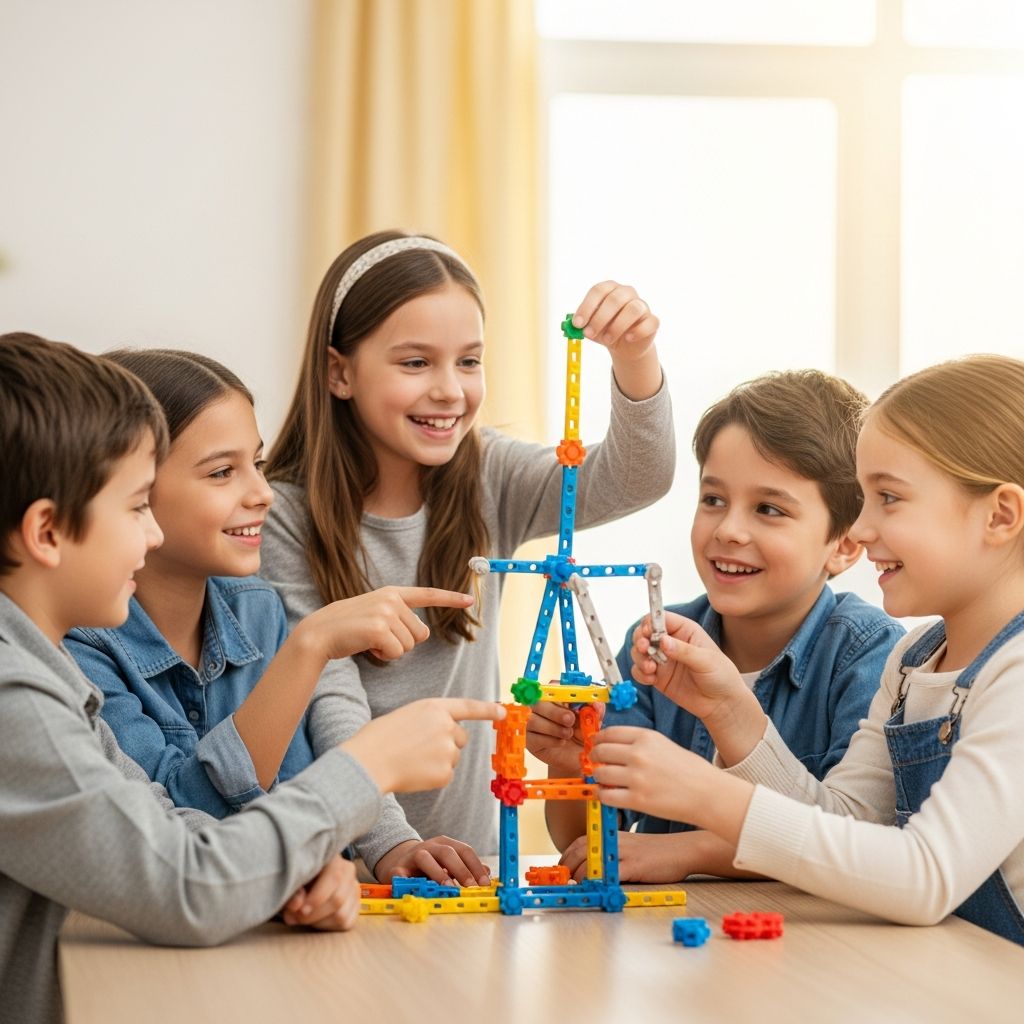
Creative outlets like art, music, or building projects allow self-expression without judgment. Pair this with responsibilities, such as chores, to instill purpose and capability.
- Provide materials for open-ended play.
- Assign tasks matching their age, like sorting laundry.
- Celebrate their unique creations and contributions.
These experiences affirm children’s individuality and reliability, solidifying self-esteem.
Navigating Media Influence and Digital Balance
Social media often promotes unattainable ideals, harming self-perception. Implement screen-time limits and discuss editing tricks in ads or posts. Periodic digital detoxes encourage real-world reflection and strengths focus.
Maintaining Patience and Consistency
Self-esteem building is gradual; consistency trumps perfection. Offer unwavering support through ups and downs, using physical affection and involvement in key events to reinforce love. Patience allows natural growth without pressure.
Frequently Asked Questions (FAQs)
What if my child faces repeated failures?
Reframe failures as learning steps. Help analyze what went wrong and try alternatives, praising resilience to shift focus from defeat to growth.
How much praise is too much?
Keep it specific and effort-based; 3-5 genuine praises daily suffice. Quality over quantity prevents dependency.
Can self-esteem issues signal deeper problems?
Persistent low mood may indicate anxiety; consult a pediatric professional for tailored support.
At what age should I start goal-setting?
From toddlerhood with simple tasks, scaling complexity with maturity.
How does family dynamics affect self-esteem?
Harmonious homes with open communication amplify efforts; address conflicts modeling resolution.
References
- Six (6) Strategies to Build a Child’s Confidence and Self-Esteem — CHS-CA. 2024-04-01. https://chs-ca.org/chs-blog/six-6-strategies-to-build-a-childs-confidence-and-self-esteem/
- 8 Tips to Boost Kids’ Self-Esteem: Parenting Strategies for Confidence — Kidsville Pediatrics. 2023-10-01. https://www.kidsvillepeds.com/blog/1267478-8-parenting-tips-to-boost-kids-self-esteem-effective-strategies-for-building-confidence/
- How to Build Self-Esteem in Children and Teens — Healthcare Network SWFL. 2023-05-15. https://healthcareswfl.org/how-to-build-self-esteem-in-children-and-teens/
- Cultivating Young Children’s Self-Esteem — Crane Center for Early Childhood Research and Policy, Ohio State University. 2022-08-10. https://crane.osu.edu/our-work/cultivating-young-childrens-self-esteem/
- Self-esteem in children 1-8 years — Raising Children Network (Australian Government-funded). 2024-01-01. https://raisingchildren.net.au/toddlers/behaviour/understanding-behaviour/about-self-esteem
- What Parents Can Do to Improve Self-Esteem in Their Children — Penn Foundation. 2023-03-20. https://www.pennfoundation.org/news-events/articles-of-interest/what-parents-can-do-to-improve-self-esteem-in-their-children/