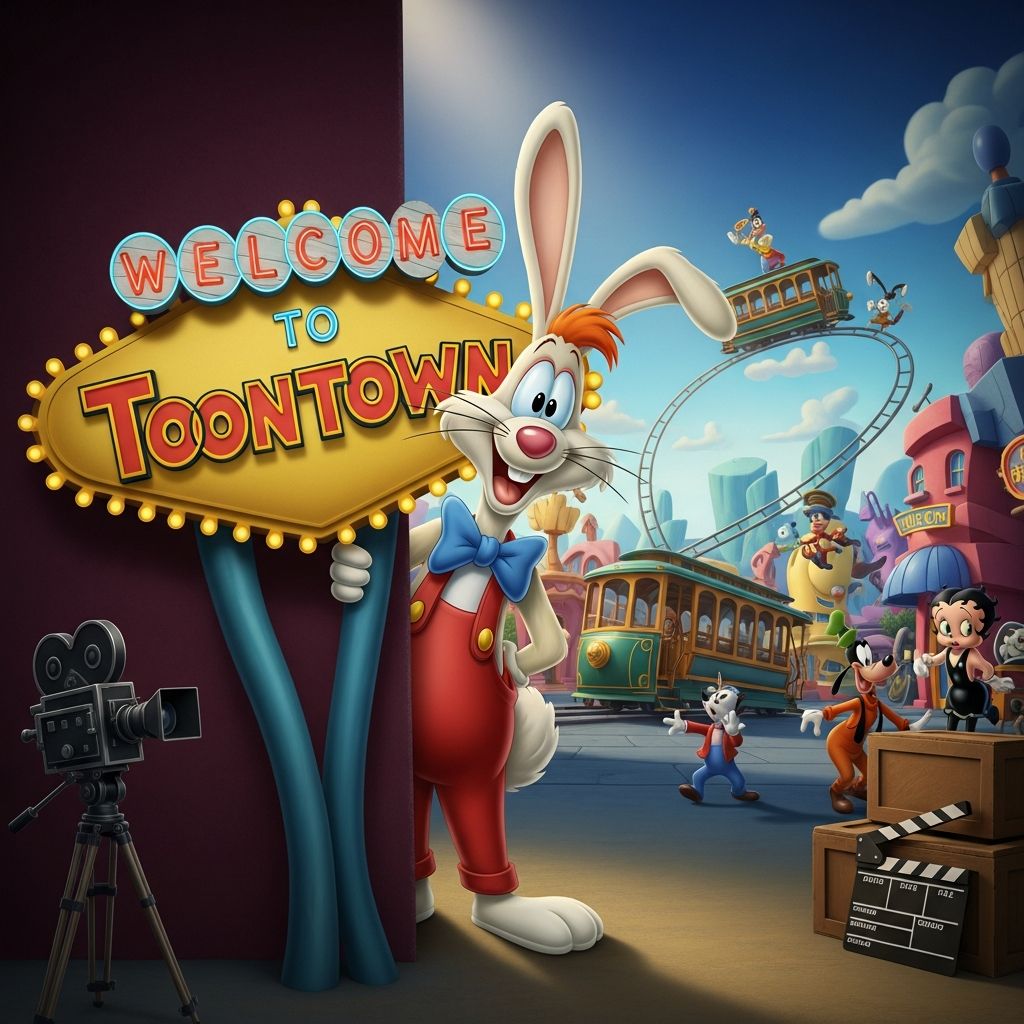
Decades after its release, Who Framed Roger Rabbit remains one of the most daring family films ever made, a wild collision of cartoon chaos, noir mystery, and heartfelt sincerity that continues to captivate parents and kids alike.
As studios revive almost every recognizable brand, one question keeps resurfacing among fans: why hasn’t Roger Rabbit hopped back onto the big screen in a true sequel, and what would it mean if he did?
The Rabbit Who Broke the Rules
When Who Framed Roger Rabbit first appeared, it didn’t just entertain; it rewrote what family movies could do. It blended slapstick humor with a moody detective story, stitching animated characters into a gritty live-action world that felt surprisingly real and lived-in.
For many viewers, especially those who first watched it as kids, the film became a gateway into classic cartoons, noir movies, and a kind of cinematic magic that felt almost impossible to replicate.
- It treated cartoons not as throwaway gags but as full citizens of a shared universe.
- It trusted children to handle darker themes—grief, corruption, prejudice—without talking down to them.
- It gave adults a story rich with references, visual in-jokes, and genre mash-ups.
Why Nostalgia Hits So Hard With Roger Rabbit
Nostalgia around Roger Rabbit isn’t just about remembering a favorite movie; it’s about remembering how it felt to realize that cartoons and the “real world” could exist side by side. For many parents now raising their own children, that first viewing is tied to a specific moment in life: a weekend tape rental, a TV broadcast event, or a slightly too-young cinema trip that felt daring and grown-up.
Rewatching the film today tends to unlock layers that younger audiences might have missed. Adults see the metaphor in Toontown’s segregation, the commentary on urban development, and the way humor acts as a shield for trauma and loss.
Key Emotional Anchors of Nostalgia
- First exposure to genre blending: The movie was, for many, the first time comedy, mystery, and fantasy collided in one place.
- Shared cultural memory: Entire friend groups can recall lines, scenes, or the shock of particular moments.
- Family bonding: It is a film that often passed from older siblings or parents to younger viewers, becoming a quiet family tradition.
Why There Is Still No True Sequel
Given the current era of never-ending franchises, it feels almost strange that Roger Rabbit has not been fully revived in a theatrical sequel. The brand recognition is there, the technical barriers are lower than ever, and audiences have shown a consistent appetite for 80s and 90s nostalgia.
Yet the absence of a sequel hints at how delicate the original formula was. Any new story would have to honor the tone, the characters, and the technical daring that made the first film feel like lightning in a bottle.
Challenges Standing in the Way
- Balancing tones: The film walks a razor’s edge between goofy cartoon hijinks and genuine darkness. Lean too far either way and it stops feeling like Roger Rabbit.
- Rights and partnerships: The original famously brought rival cartoon icons into the same frame. Repeating that today would involve intricate legal and licensing negotiations.
- Replacing irreplaceable performances: Certain human characters, voices, and sensibilities are inseparable from the film’s identity, making recasting a sensitive topic for long-time fans.
- Expectations of spectacle: Modern audiences are used to massive digital spectacles. A sequel would need to impress without losing the hand-crafted charm of traditional animation.
What Fans Actually Want From a Roger Rabbit Return
While some viewers argue that the film should stand alone, many others dream of a thoughtful continuation that builds on rather than erases what came before. The most passionate fans are not simply asking for more jokes; they want a story that justifies coming back to Toontown.
A well-designed sequel—or even a limited series—could explore how the world of cartoons and humans has evolved, especially when viewed through the lenses of modern media, celebrity culture, and technology.
Common Hopes Among Long-Time Viewers
- A return to hand-drawn style, even if supported by digital tools.
- A focus on Roger’s relationship with his friends and family, not just on cameos from other franchises.
- New mysteries that speak to contemporary issues while preserving the noir roots.
- Careful, respectful handling of legacy characters who cannot return exactly as they were.
How A Modern Sequel Could Still Feel Fresh
The danger of any nostalgia-driven sequel is that it becomes a checklist of references rather than a story. To avoid this, a Roger Rabbit follow-up would have to earn its existence by offering a new point of view instead of simply reenacting the original plot beats.
One promising direction would be to use changing media landscapes as the backbone of the plot. The world that once made room for theatrical shorts and hand-drawn cartoons has shifted toward video platforms, franchises, and algorithms.
Possible Story Directions (Hypothetical)
- Toontown in the streaming age: Toons compete for screen time and relevance in a world where anyone can be a creator.
- Cartoons and AI: New digital characters threaten to replace hand-drawn toons, raising questions about identity and authenticity.
- Next-generation detectives: A younger investigator, perhaps related to familiar characters, teams up with Roger to solve a mystery that spans both old Hollywood and the online world.
Parents, Children, and the Shared Language of Toontown
Today’s parents are in a unique position: they can introduce their kids to Roger Rabbit not as a brand-new blockbuster, but as a beloved artifact from an earlier era. That changes the way families watch the film together.
Instead of being swept up by marketing campaigns, children encounter the movie as something that matters to their parents, a piece of personal history offered up as a kind of emotional heirloom.
Ways Families Use Roger Rabbit as a Bridge
- Rewatching the film on a special night and talking openly about which parts scared or thrilled them as kids.
- Using the movie to introduce concepts like film noir, practical effects, and hand-drawn animation.
- Comparing the film’s themes—corruption, loss, prejudice—to kid-friendly examples in current events or other stories.
Roger Rabbit’s Place Among Nostalgia-Fueled Franchises
It is easy to group Roger Rabbit with other 80s and 90s properties that have been rebooted, remade, or endlessly sequeled, but it occupies a slightly different space. Unlike a straightforward superhero or toy-based series, this film already felt like a culmination, a once-in-a-generation experiment in collaboration and technique.
Comparing it to more typical nostalgia-driven revivals helps clarify why fans are cautious about asking for more.
How Roger Rabbit Stacks Up
| Element | Typical Nostalgia Franchise | Who Framed Roger Rabbit |
|---|---|---|
| Core Appeal | Familiar characters and formulas that can be repeated indefinitely. | A unique fusion of noir, comedy, and cross-studio animation that is hard to replicate. |
| Sequel Potential | Designed from the start as an ongoing series. | Feels like a self-contained story, more like a special event than the first chapter. |
| Risk of Dilution | Lower; audiences expect uneven installments. | Higher; a weak sequel could undermine the film’s near-mythic reputation. |
| Technical Signature | Often replaces practical work with fully digital effects over time. | Defined by painstaking integration of live-action and hand-drawn animation. |
Nostalgia Without Blindness
Healthy nostalgia does not require pretending that old movies are flawless. Rewatching Roger Rabbit as an adult reveals jokes that have aged unevenly, portrayals that reflect their time, and pacing choices that might surprise younger viewers raised on quicker editing.
That complexity is part of the film’s value. It offers families a chance to talk about how culture changes, why certain choices were made, and how stories can still be meaningful even if every moment does not match modern standards.
Questions to Discuss With Older Kids
- Which parts feel timeless, and which feel dated?
- How does the story talk about prejudice and difference using cartoons and humans?
- What would need to change if the movie were made for the first time today?
If A Sequel Never Comes
There is a strong argument for letting Roger Rabbit remain a singular achievement. Its rarity is part of its power. The absence of a sequel keeps the original unburdened by continuity tangles, tonal shifts, or retcons that might dull its impact.
For many fans, the ongoing “what if” conversation about a sequel has become its own kind of fandom ritual. Imagining new stories, debating how they might work, and then returning to the original for comfort has turned speculation into a collective creative act.
How to Share Roger Rabbit With a New Generation
Whether or not a sequel ever materializes, there are concrete ways to keep the spirit of Roger Rabbit alive at home. Turning a viewing into a small event can help kids understand why this film matters to the adults in their lives.
Practical Ideas for Families
- Pair the movie night with a short introduction about when and how you first saw it.
- Watch a classic cartoon short before the film to set the mood and show where its inspirations came from.
- Afterward, draw original cartoon characters together and imagine how they would behave if dropped into the film’s world.
- Compare one sequence from the film to a scene from a modern animated feature to talk about changing styles.
FAQs About Roger Rabbit and the Possibility of a Sequel
Is there an official Roger Rabbit sequel?
No full-length theatrical sequel has been released. There have been shorts and discussions over the years, but the original film still stands alone as the only feature-length story centered on Roger Rabbit.
Why do some fans worry about a sequel?
Many viewers fear that a new installment might lean too heavily on fan service, overuse digital effects, or soften the film’s darker edges, changing what made the original so distinct. They worry about losing the careful balance of humor, danger, and emotional depth.
Could a modern sequel still use hand-drawn animation?
Technically, yes. Modern tools can support traditional techniques, making it easier to blend old-school artistry with contemporary workflows. The bigger question is whether a studio would commit to that approach rather than defaulting to fully digital characters.
Is it better to leave the film as a one-off classic?
There is no single right answer. Some fans prefer the purity of a standalone masterpiece, while others believe that, with enough care, a new story could deepen their connection to the world and characters. Both perspectives grow out of the same place: a deep love for the original.
What can parents do if no sequel ever appears?
Parents can keep the film alive through shared viewings, conversations, and creative projects inspired by its world. In doing so, they turn the movie into an ongoing family tradition rather than waiting for a new release to renew interest.
Whether Roger Rabbit ever returns in a new adventure or remains frozen in time, the film’s legacy is secure. It stands as proof that when storytellers take big risks—crossing mediums, tones, and expectations—they can create something that echoes across generations, inviting each new viewer to step once more into Toontown.