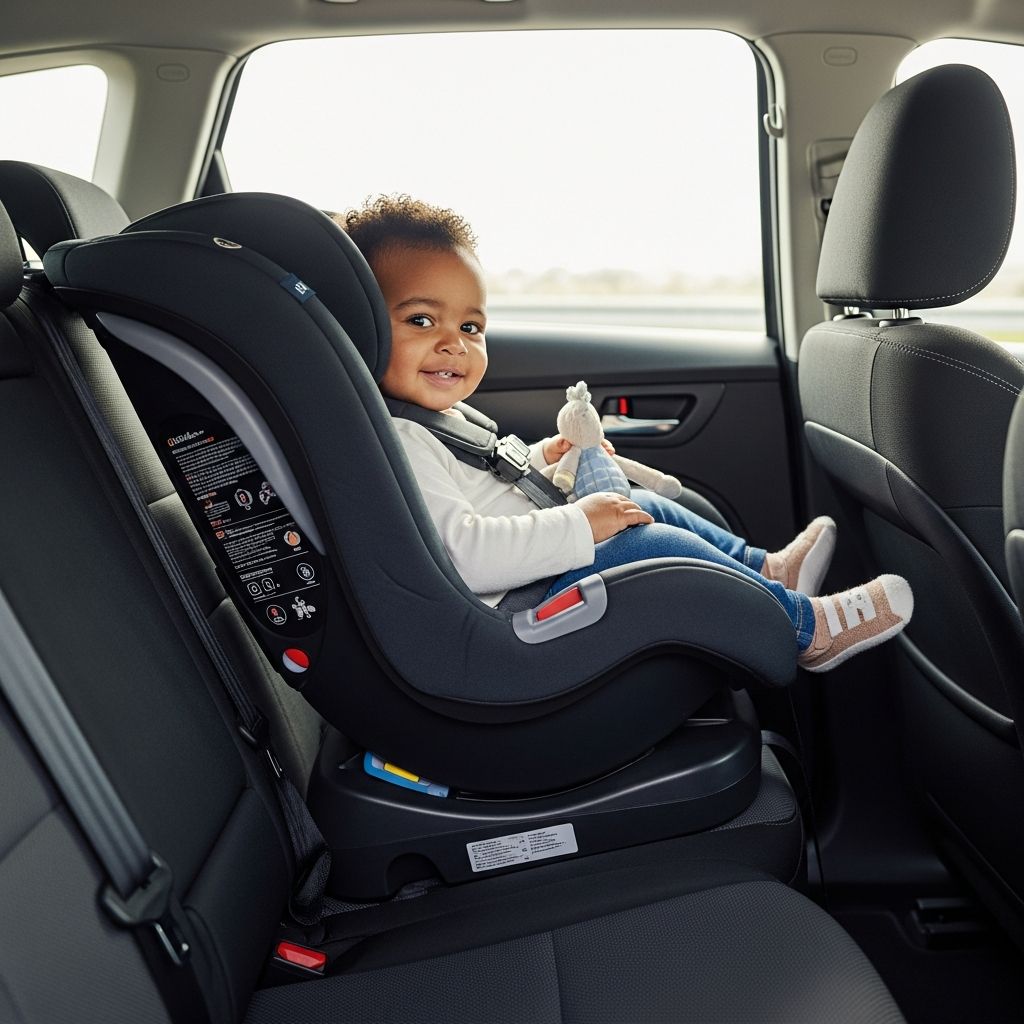
Keeping children safe in vehicles starts with the right car seat orientation. Rear-facing positions provide the highest level of protection by cradling a child’s body during impacts, significantly lowering injury risks to the head, neck, and spine.
The Biomechanical Advantages of Rear-Facing Travel
Young children’s anatomy differs markedly from adults. Their heads are disproportionately large, often comprising up to 25% of body weight, while neck muscles and ligaments remain underdeveloped. In forward-facing seats, sudden deceleration in a crash propels the head forward violently, generating forces up to 300 kg on delicate structures at speeds as low as 50 km/h. Rear-facing seats counteract this by aligning the head, neck, and spine in a natural curve, distributing crash energy across the stronger back and torso.
Crash dynamics involve three collisions: vehicle-to-object, occupant-to-vehicle interior, and internal organ impacts. Rear-facing harnesses and shells absorb these sequentially, preventing ejection and minimizing spinal flexion. Studies confirm this setup reduces severe injury risks by 92% compared to forward-facing alternatives.
Protection in Frontal Impacts: The Most Common Threat
Frontal collisions account for 60-80% of fatal crashes, making them the primary concern for child passengers. Rear-facing seats excel here by positioning the child to ‘fall back’ into the seat shell, which absorbs forces rather than transmitting them through the neck. Head and neck loads drop to 40-60 kg in these scenarios, versus hundreds in forward-facing setups.
- Force Distribution: Impact spreads over the entire posterior body, sparing fragile cervical vertebrae.
- Harness Efficacy: Five-point systems keep the child contained without forward whipping.
- Shell Design: Energy-absorbing materials deform to mitigate G-forces.
Independent tests like the voluntary PLUS standard, exceeding ECE R129 regulations, validate rear-facing superiority in frontal crashes. Seats passing PLUS, such as extended-use models, demonstrate real-world resilience.
Addressing Rear-End Collision Concerns
A common myth suggests rear-facing seats increase risks in rear impacts, but data debunks this. Rear-end crashes comprise only 7% of severe incidents, with injury rates at 3.5% versus 52.8% in frontal crashes per the German In-Depth Accident Study (GIDAS). In these events, the child’s body moves forward with the seat, pressing into padding that compresses gradually, avoiding whiplash or spinal hyperextension.
Dynamic scenarios, like lane changes, still favor rear-facing: the setup maintains alignment, reducing peak forces on the neck. Forward-facing children, conversely, experience unrestrained head motion relative to the torso.
Side Impacts and Multi-Directional Crashes
Side collisions, four times deadlier than frontal for restrained children, benefit from rear-facing geometry. The seat’s bulkier side wings and deeper shell provide a barrier, channeling forces away from the head. Research indicates rear-facing halves side-impact injury risks compared to forward-facing.
| Crash Type | Rear-Facing Risk Reduction | Key Protection Mechanism |
|---|---|---|
| Frontal | 500% safer up to age 2 | Back-loaded force distribution |
| Rear-End | Low injury rate (3.5%) | Forward compression into padding |
| Side | 4x safer | Enhanced side-impact wings |
Official Guidelines and Extended Rear-Facing Recommendations
The American Academy of Pediatrics (AAP) advises rear-facing until the child outgrows convertible seat limits, supported by Swedish data showing minimal injuries up to age 4. NHTSA echoes this, noting convertible seats allow rear-facing to 40-50 pounds, far beyond infant carriers.
Texas law mandates age/weight-based use, but experts urge exceeding minima for optimal safety. Incorrect installation affects 46% of seats, underscoring proper use.
- Choose seats with high rear-facing limits (40+ lbs, 49″ height).
- Verify fit via chest clip at armpit level, knee contact with seatback.
- Extend until legs bent comfortably—no straight-leg myth persists.
Selecting and Installing the Right Rear-Facing Seat
Opt for models with PLUS-tested credentials or high crash ratings. Installation methods:
- LATCH System: Preferred for seats under 65 lbs; rigid anchors minimize movement.
- Seat Belt: Lock base with ‘lock-off’ or manual locking clip.
- Checks: Less than 1-inch tip at grab base; level bubble centered.
Position rear-facing in back seats only—never front due to airbag risks. For siblings, center or behind driver for optimal crumple zone buffering.
Common Myths and Rebuttals
Myth 1: Legs Too Long? Comfortable knee bend is safe; straight legs indicate outgrown harness, not orientation.
Myth 2: Rear-Ends Are Deadlier Rear-Facing? GIDAS proves otherwise—low forces, high survival.
Myth 3: Switch at 1 Year? AAP/NHTSA reject age-based flips; weight/height rule.
Real-World Evidence and Long-Term Benefits
Swedish cohorts rear-facing to 4 years report near-zero fatalities. U.S. data aligns: 8x lower fatality odds rear-facing. Benefits persist beyond infancy, with adults safer rear-facing per biomechanics, though impractical.
Whiplash risks drop as head-to-body ratio normalizes, but early habits yield lifelong safety gains.
Frequently Asked Questions
At what age or weight should my child switch from rear-facing?
Keep rear-facing until maximum height/weight limits, typically 40-50 lbs or 49 inches, per AAP and NHTSA.
Are rear-facing seats safe in rear-end crashes?
Yes, injury rates are minimal (3.5%), with forces absorbed effectively.
Can my tall toddler stay rear-facing comfortably?
Absolutely—knees can bend; focus on harness fit over leg position.
How do I know if the seat is installed correctly?
No more than 1-inch movement at belt path; use level indicator and recline guide.
What’s the difference between infant carriers and convertibles?
Convertibles support extended rear-facing; carriers are portable but lower limits.
Empowering Parents for Safer Journeys
Adopting rear-facing maximizes survival odds across crash vectors. Pair with distraction-free driving for comprehensive protection. Consult certified technicians for fits—resources abound via NHTSA.
References
- Rear-Facing Car Seats: Why They’re Safer for Your Child — Thule. 2023. https://www.thule.com/en-us/articles/guides/rear-facing-car-seats-why-safer
- Why Are Rear-Facing Seats Safer for Passengers? — Daniel Stark Injury Lawyers. 2024. https://www.danielstark.com/blog/why-are-rear-facing-seats-safer-for-passengers/
- Why Rear Facing: the Science Junkie’s Guide — Car Seats for the Littles. 2022. https://csftl.org/why-rear-facing-the-science-junkies-guide/
- Car Seats & Booster Seats — NHTSA (.gov). 2025-02-01. https://www.nhtsa.gov/vehicle-safety/car-seats-and-booster-seats
- Rear Facing: Why It’s Beneficial — Indiana University School of Medicine (.edu). 2024. https://preventinjury.medicine.iu.edu/child-passenger-safety/selecting-the-best-car-seat/rear-facing-why-its-beneficial