Easter is the perfect excuse to pull out the craft box, gather the kids around the table, and fill an afternoon with glue, giggles, and tiny imaginary animals. This guide walks you through creative ways to make little Easter critters using simple materials, with options for all ages and attention spans.
Why Easter Critter Crafts Are Great for Kids
Handmade Easter animals are more than just cute decorations. Craft projects can support key areas of child development:
- Fine motor skills: Cutting, tearing, gluing, and pinching small pieces help strengthen hand and finger muscles, which supports writing and self-care skills.
- Creativity and problem-solving: Children make choices about color, shape, and design, practicing experimentation and flexible thinking.
- Language and storytelling: Finished critters often become characters in pretend play, encouraging storytelling and vocabulary growth.
- Emotional connection: Shared craft time can strengthen bonds between children and caregivers through focused, playful interaction.
Because these projects use mostly reusable or recyclable materials, they can also spark early conversations about caring for the environment and reusing what we have.
Gathering Your Easter Craft Basics
You do not need a fully stocked art studio to create charming Easter animals. Start with what you already have and add just a few extra touches if you like.
Core Craft Supplies
- Paper: colored construction paper, printer paper, or leftover packaging
- Adhesives: child-safe glue sticks, white glue, or double-sided tape
- Cutting tools: blunt-tipped scissors for kids and sharper scissors for adults
- Drawing tools: crayons, colored pencils, washable markers
- Soft textures: cotton balls, felt scraps, tissue paper, yarn
- Recycled pieces: cardboard tubes, small boxes, clean plastic containers
- Detail items: buttons, stickers, pom-poms, pipe cleaners, googly eyes
Optional Spring-Themed Extras
- Fake grass or shredded paper for nests and baskets
- Pastel ribbons or fabric strips
- Eco-friendly glitter or confetti
- Dried leaves or small twigs from the yard (if clean and safe)
Safety and Setup Tips
- Cover the table with newspaper or an old cloth to make cleanup fast.
- Keep small objects (buttons, beads) away from children who still mouth items.
- Use non-toxic, washable supplies labeled for children whenever possible.
- Place a small trash bowl or box on the table for scraps to contain the mess.
Paper-Based Easter Critters for All Ages
Paper is inexpensive, forgiving, and easy to recycle, which makes it perfect for seasonal crafts. These ideas can be scaled up or down in complexity depending on your child’s age and interest.
Bunny Portraits with Big Personalities
Transform simple paper shapes into character-filled Easter bunnies.
- Cut or draw a large oval for the head and two long ears.
- Invite kids to add:
- Textures with cotton balls, tissue paper, or scribbled fur
- Expressions using markers: sleepy, silly, surprised, or grumpy
- Accessories like paper glasses, hats, or bow ties
Hang a row of bunny portraits along a hallway for a cheerful, gallery-style display.
Chicks Hatching from Hidden Eggs
Create peekaboo-style chicks for playful interaction.
- Draw and cut out a large egg shape from cardstock.
- Cut a zigzag line across the egg to form a top and bottom shell.
- Attach the bottom half of the shell to a background page.
- Have children draw or glue a chick behind the shell, then overlap with the top shell using a paper fastener or tape hinge so it can open and close.
This project introduces simple mechanics (hinges, movement) while still staying firmly in the realm of art and play.
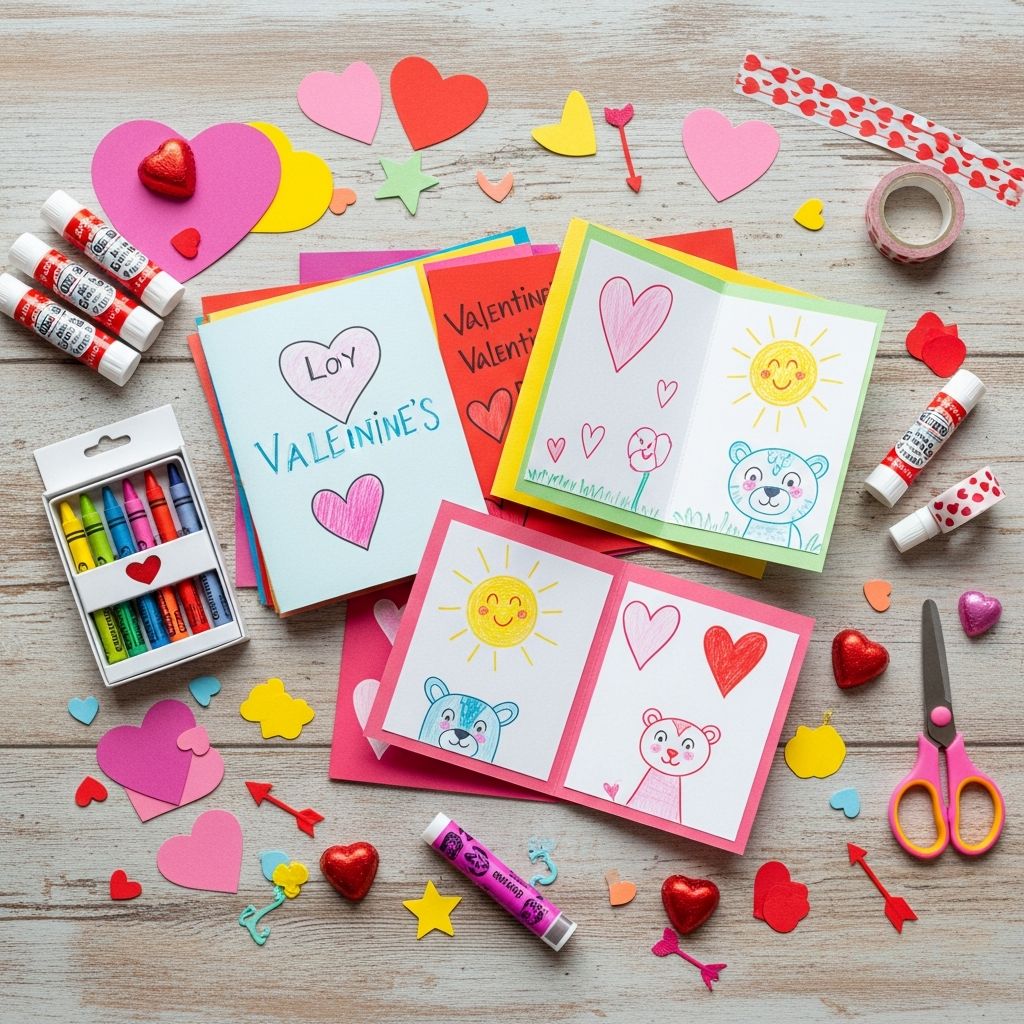
Folded Critter Cards
Turn your creations into cards for friends, neighbors, or family members.
- Fold a sheet of paper in half.
- On the front, build a bunny, chick, lamb, or duck using cut shapes.
- Inside, help young children dictate a message for you to write, or encourage older kids to write their own greeting.
Card-making supports early writing skills and the idea of giving handmade gifts, which can encourage empathy and social connection.
3D Easter Critters from Recycled Materials
Three-dimensional crafts give kids the fun of building characters they can handle, move around, and incorporate into imaginary play.
Cardboard Tube Bunnies and Chicks
Save empty cardboard tubes from paper towels or toilet paper and turn them into a miniature animal family.
- Paint or cover tubes with colored paper.
- Add ears, wings, or beaks cut from scrap paper.
- Draw or glue on eyes, noses, and whiskers.
- Stand them up to create a small Easter village on a windowsill or shelf.
| Critter | Key Features to Add | Age-Friendly Twist |
|---|---|---|
| Bunny | Long ears, cotton tail, drawn whiskers | Use stickers for faces with toddlers |
| Chick | Triangle beak, small wings, bright yellow body | Let kids sponge-paint the body for texture |
| Lamb | White fluffy body, short ears, simple face | Glue on cotton balls for a sensory experience |
Tiny Nesting Critters
Re-purpose small containers into Easter homes for miniature animals.
- Line clean yogurt cups, muffin liners, or small boxes with shredded paper or fabric strips.
- Place small paper chicks or pom-pom animals inside to create nests.
- Encourage children to move and rearrange the nests into different scenes.
This kind of small-world play helps kids experiment with storytelling, sequence, and emotional themes like caring and protection.
Soft and Fluffy Critters: Sensory-Friendly Ideas
Soft, textured materials appeal to children who enjoy sensory experiences. Always supervise closely and adapt for any sensory sensitivities.
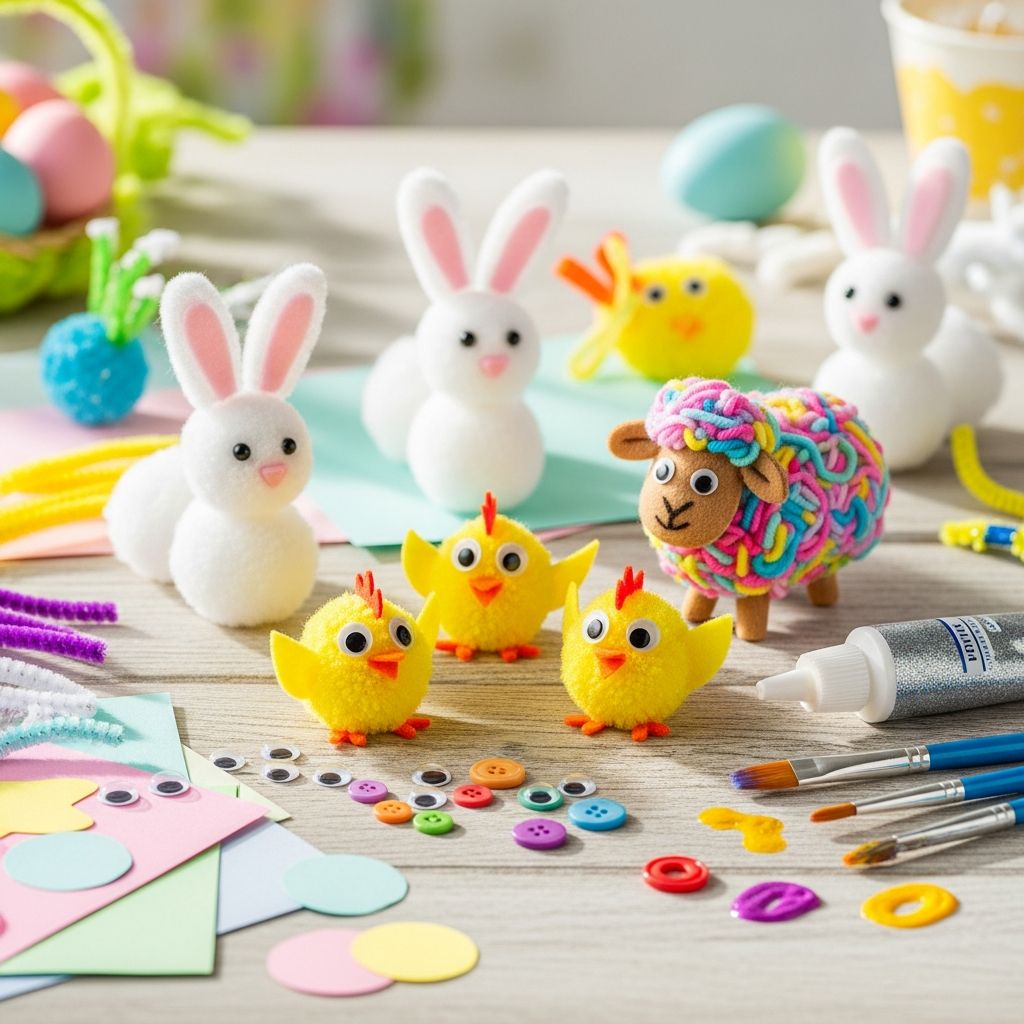
Pompom Critter Families
Pompoms can become almost any animal with a few simple additions.
- Glue two pompoms together for a head and body.
- Add felt or paper ears, wings, or feet.
- Use tiny beads or drawn dots for eyes if googly eyes are too large or distracting.
Mix sizes to represent parents and babies and talk about family structures, caring, and responsibility in age-appropriate ways.
Cotton Cloud Lambs
Create simple lambs that double as a calming activity.
- Draw a basic lamb outline on sturdy paper.
- Have children gently pull cotton balls apart and glue them inside the outline.
- Add a paper or drawn face and legs once the glue dries.
The repetitive motion of stretching and placing cotton can feel soothing for some children, and it strengthens finger muscles at the same time.
Turning Critters into Easter Games
Once your creatures are created, shift from crafting to playing. Games keep interest high and encourage kids to revisit their artwork.
Critter Hide-and-Seek
- Hide small paper or pompom animals around one room.
- Give children baskets or boxes to collect them.
- Offer clues based on position: “higher than your head,” “near something green,” “beside a book.”
This simple game can support language comprehension and spatial vocabulary.
Sorting and Matching Activities
- Sort critters by color, size, or type (all bunnies together, all chicks together).
- Create simple pattern lines: bunny–chick–lamb–bunny–chick–lamb and invite children to continue the sequence.
- Match baby critters to parent critters by size or color.
Sorting and patterning activities are foundational math skills in early childhood.
Display Ideas for Your Easter Critter Collection
Displaying children’s creations can boost their confidence and make your home feel festive.
- Windowsill mini-zoo: Arrange 3D critters in a line with a few flowers or leaves.
- String garland: Clip paper animals onto a piece of twine with clothespins.
- Framed favorites: Slip a few flat pieces into inexpensive frames for a seasonal gallery.
- Table centerpiece: Place nests and small critters on a tray with candles (out of children’s reach) or faux flowers.
Keeping Craft Time Manageable
To keep Easter crafting positive and low-stress, consider these simple guidelines:
- Plan shorter projects for very young children and build in natural breaks.
- Offer limited choices (three colors instead of the entire box) to avoid overwhelming decisions.
- Emphasize effort and experimentation rather than perfect outcomes.
- Clean as you go by pausing once or twice to gather scraps and wipe sticky fingers.
Frequently Asked Questions (FAQs)
What age are these Easter critter crafts best for?
Most of these ideas can be adapted for children from about age two through the early elementary years. For toddlers, simplify steps, avoid small parts, and focus on large shapes and textures. Older kids can take over cutting, designing details, and inventing their own variations.
How can I make these crafts more eco-friendly?
Use recycled paper and cardboard whenever possible, choose non-toxic, washable supplies, and skip plastic glitter in favor of paper confetti or simple drawing effects. Reusing containers for nests and critter bodies is another easy way to reduce waste.
What if my child is not interested in following instructions?
Treat the ideas in this guide as starting points, not rules. Offer materials and a loose theme like “spring animals,” then step back and let your child experiment. Open-ended creativity is highly valuable for cognitive and emotional development.
How long do these crafts take?
Quick projects, such as simple bunny portraits or cotton lambs, can take 10–20 minutes. More detailed 3D critters or sets of cards might take 30–45 minutes. You can also spread bigger projects over several short sessions to match your child’s attention span.
How can I store or preserve our Easter critters?
Flat paper pieces can be slipped into clear sheet protectors or a simple art folder. More fragile 3D critters can live in a labeled box or basket. Consider photographing especially special creations before they get bent or worn, then compiling the photos into a yearly memory book.
References
- Learning through play — UNICEF. 2018-09-14. https://www.unicef.org/parenting/child-care/learning-through-play
- Celebrating art and creativity: The benefits of arts for kids — National Association for the Education of Young Children (NAEYC). 2019-04-01. https://www.naeyc.org/resources/pubs/tyc/apr2019/celebrating-art-creativity
- The power of play: A pediatric role in enhancing development in young children — Yogman M, Garner A, Hutchinson J, et al.; American Academy of Pediatrics. Pediatrics, 2018-09-01. https://publications.aap.org/pediatrics/article/142/3/e20182058/38618/The-Power-of-Play-A-Pediatric-Role-in-Enhancing