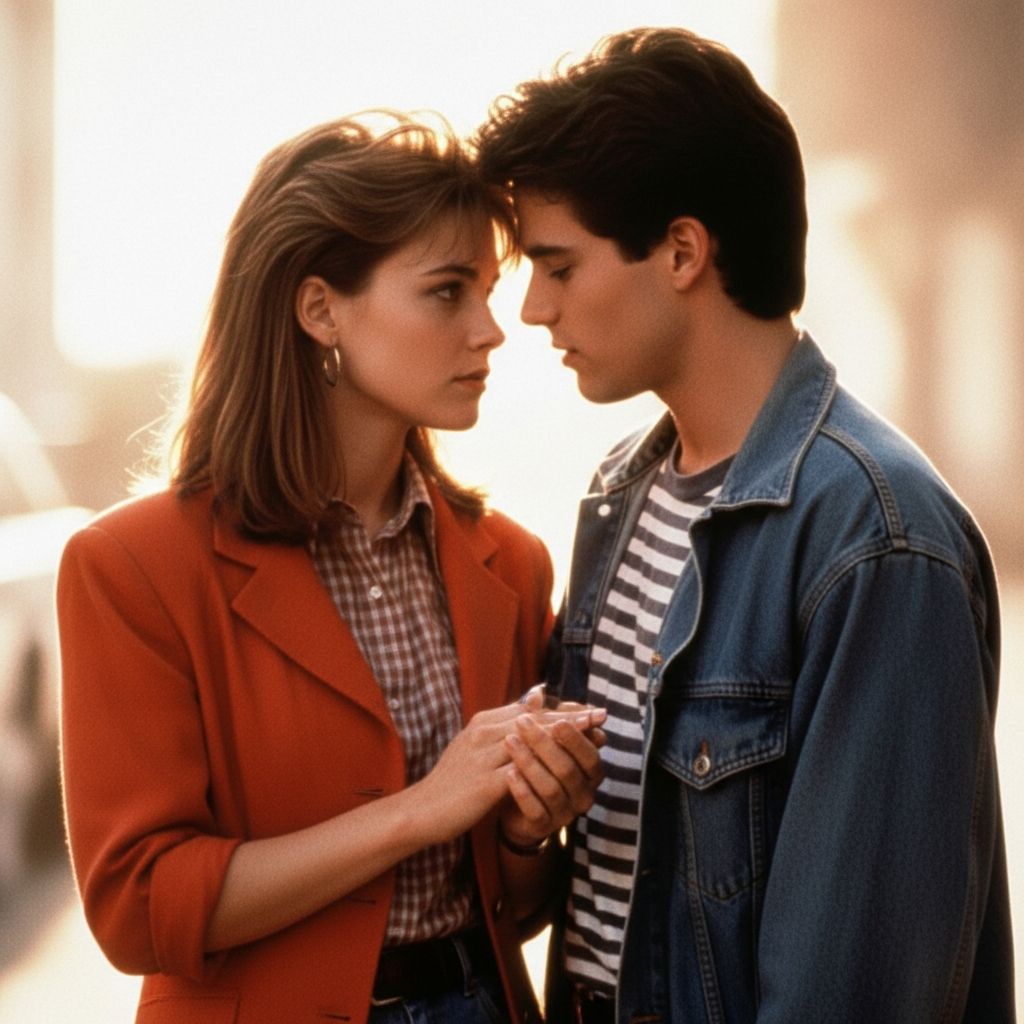
Few teen movie endings have stirred as much passionate debate as the final moments of Pretty in Pink, where Andie walks into the prom alone and walks out in the arms of Blane instead of her soulful best friend Duckie. Nearly forty years later, fans are still arguing over whether the film chose the right boy, the right message, or even the right fantasy to leave us with.
The Movie That Won’t Stop Being Argued About
On paper, Pretty in Pink is a simple high school romance: a working-class girl from the wrong side of town falls for a rich, sensitive boy and tries to make it work under the glare of class judgment and cruel peers. Around them orbits Duckie, the best friend whose feelings are obvious to everyone but the girl he adores, turning the story into a slow-motion collision between expectation and reality.
Over time, the film became less just a love story and more a kind of emotional Rorschach test: viewers saw in the ending what they personally believed about romance, loyalty, and who “deserves” the girl. The director and creative team have since clarified why the climactic choice unfolded the way it did, but the emotional arguments among fans have never really stopped.
Three People, One Prom, and a Lifetime of Feelings
Strip away the vintage soundtrack, thrift-store couture, and ’80s hair, and the story structure is surprisingly bare and sharp: it is a triangle built on class, history, and unspoken expectations. Each of the three central characters represents a different way of thinking about love in adolescence.
- Andie: The outsider who refuses to apologize for where she comes from, but who still aches for connection and acceptance.
- Blane: The affluent boy struggling to decide whether his desire for Andie is stronger than his fear of losing social standing.
- Duckie: The loyal clown and true believer in romantic destiny, convinced that persistence and devotion should eventually be rewarded.
By the time prom night arrives, the script has neatly stacked these emotional debts: Andie wants dignity, Blane needs courage, and Duckie craves validation that his love was not foolish. Whichever boy Andie walks toward, someone will be left behind—and the audience is forced to decide whose pain feels more acceptable.
Why Viewers Keep Rooting for Duckie
Duckie has become one of the most beloved “almost” love interests in teen movie history because he embodies an extremely familiar type: the funny, steadfast friend quietly waiting to be noticed. His wardrobe, his dancing, and his endless declarations of feeling make him look like the emotional opposite of the smooth, guarded rich boys around him.
For many viewers, Duckie is a stand-in for the underdog they once were or still feel they are; rooting for him is a way of rewriting old heartbreaks. That identification often leads to a powerful conviction that the narrative “owes” him Andie as a kind of moral payoff for all the moments he stayed when others walked away.
Blane, the “Wrong” Guy Who Isn’t Entirely Wrong
Blane, in contrast, carries the burden of being both the romantic lead and the symbol of privilege that has wounded Andie all her life. When he hesitates, backs away, or lies poorly to avoid conflict, it is easy to see him as an emblem of cowardice rather than a confused teenager in over his head.
And yet the story deliberately gives him a late chance to grow, reject the toxic approval of his friends, and make a vulnerable apology. His final gesture is not grand so much as awkward and exposed, suggesting that the film is less interested in perfect heroes and more in flawed kids trying not to repeat the cruelty of their world.
The Ending That Almost Happened
Behind the scenes, the film’s prom night was not always destined to end the way audiences now know it. Early versions of the story reportedly imagined Andie and Duckie as the final couple, delivering the underdog victory that many fans later wished for.
Test audiences, however, reacted strongly when the story denied the very chemistry it had been building between Andie and Blane across the film. That response pushed the creative team to rethink whether narrative justice should mean rewarding loyalty or honoring the central romantic arc they had actually placed on screen.
Why the Director Says Andie’s Choice Makes Sense
When the director has spoken about the film in later years, the logic behind the final cut often comes down to emotional honesty: Andie is in love with Blane, not Duckie, and forcing her to choose differently would have betrayed the character rather than exalted friendship.
That perspective reframes the ending from “rich boy wins again” to “the girl is allowed to follow her actual feelings, even if they disappoint the nicest guy in the room.” It suggests that realism lies not in distributing happiness fairly but in acknowledging that attraction, timing, and compatibility are not moral currencies.
Class, Desire, and the Fantasy of Crossing the Line
Beneath the prom decorations, Pretty in Pink is obsessed with class boundaries: lockers become fault lines, cars are shorthand for worth, and parties function like tests of who belongs in which world. Andie’s romance with Blane is framed as an attempt to cross that divide without erasing her identity.
Duckie may share her economic reality, but the story positions Blane as the person who can, symbolically, open doors that have always been slammed in her face. The final kiss in the parking lot is not just a romantic resolution; it is also a fantasy of being seen and chosen by someone from a world that has mostly mocked or ignored her.
Love vs. Loyalty: What Should Be Rewarded?
The angry arguments about the ending usually revolve around one central ethical question: should stories reward the person who loves the most or the relationship that feels most mutual and alive? Duckie clearly loves Andie fiercely, but much of that love is untested by whether she genuinely wants him back.
The film ultimately treats love as something that cannot be earned like a merit badge: years of loyalty and devotion do not entitle anyone to romance. Instead, the prom becomes a place where loyalty is acknowledged but not confused with chemistry, and where friendship is allowed to survive even when romantic hopes are quietly buried.
How the Ending Shapes Each Character’s Growth
| Character | What They Learn | How the Ending Reinforces It |
|---|---|---|
| Andie | Her value is not defined by wealth or pity. | She arrives alone, in her own handmade dress, and chooses a partner without apologizing for who she is. |
| Blane | Courage sometimes means disappointing your own crowd. | He publicly separates from his snobbish friends and risks rejection rather than hiding behind excuses. |
| Duckie | Love can be real even when it is not returned. | He lets Andie go, accepts that her happiness may not include him, and is quietly offered the possibility of a new connection. |
This structure gives each character a form of closure that is not perfectly neat but feels emotionally coherent: nobody gets everything they want, yet everyone moves a step closer to adulthood.
The Audience as the Fourth Character
One reason the debate refuses to die is that the film invites viewers to fill in the emotional gaps with their own history: if you once were the overlooked friend, Duckie’s loss stings like an old bruise. If you remember a relationship where social pressure nearly crushed something tender, Blane’s last-minute courage feels cathartic.
In that sense, the audience becomes a fourth, invisible character whose internal conflicts are resolved—or left unresolved—by whose hand Andie takes. The director’s explanation of the ending does not end the argument; it simply reveals how many people were quietly rewriting their own stories through these fictional kids.
What This Ending Says About Teen Movies in General
The controversy around Pretty in Pink exposed a larger tension in teen storytelling: are these films supposed to reflect how life actually works, or deliver the wish fulfillment that real life so often denies?
Choosing Blane suggests a commitment to emotional plausibility—the person you’ve pined for all movie long is usually the person you end up kissing in the last scene. Choosing Duckie would have tilted more toward moral reassurance, rewarding kindness and history even if the spark on screen pointed elsewhere.
Lessons the Film Offers Now
Viewed today, the ending still resonates because it refuses to pretend that doing the “right” thing will protect everyone from pain. Someone always leaves the gym alone, someone always walks away with the bittersweet knowledge that they loved bravely and still did not get the fairy tale.
The film gently reminds viewers that it is possible to lose the romantic prize and still win something else: a clearer sense of self, a new openness to other people, and the relief of not having to perform a relationship that never truly fit.
FAQs About the Pretty in Pink Ending
Did the filmmakers originally want Andie to end up with Duckie?
Early creative discussions did lean more toward a version where Andie and Duckie walked away together from the prom, offering a classic underdog victory. Audience feedback during test screenings, however, pushed the team to consider whether that outcome matched the emotional through-line they had developed between Andie and Blane.
Does choosing Blane mean the film endorses dating “up” in class?
The final pairing does not function as a blanket endorsement of wealth or status so much as an exploration of how desire, fear, and social pressure collide. The story uses Blane’s privilege as a source of conflict, but his willingness to step away from that comfort zone at the end is what earns him a place in Andie’s life.
Is Duckie “friendzoned” unfairly?
Some viewers read the ending as a harsh example of the so-called friend zone, where devotion appears to go unrewarded. The film, though, subtly resists that framing by showing Duckie receive respect, closure, and the hint of a new romantic possibility, suggesting that his worth is not limited to whether Andie chooses him.
Could Andie and Blane’s relationship realistically last after prom?
The movie ends at the first major breakthrough in their romance, not at a promise of forever, which mirrors how most teen relationships actually feel in the moment. Rather than guaranteeing longevity, the story offers a snapshot of two people choosing to try again with a bit more honesty and a bit less fear.
What makes this ending still relevant to modern teens?
Contemporary teenagers may not share the exact fashion or slang, but they recognize the same pressures: social hierarchies, online judgment, and the fear of choosing the wrong person under everyone’s gaze. The prom scene remains powerful because it captures the terrifying freedom of stepping into a room where your choices will be seen, remembered, and endlessly debated—by friends, by strangers, and by your future self.
Key Takeaways for Modern Viewers
- Romantic “deserving” is a myth; no one earns another person’s heart through effort alone.
- Class tension is not just background noise in teen stories—it shapes who feels entitled to love whom.
- Sometimes the bravest character is the one who lets go gracefully, not the one who wins the final kiss.
- Audience reactions can profoundly reshape how a story ends, but they cannot erase the emotional logic built along the way.