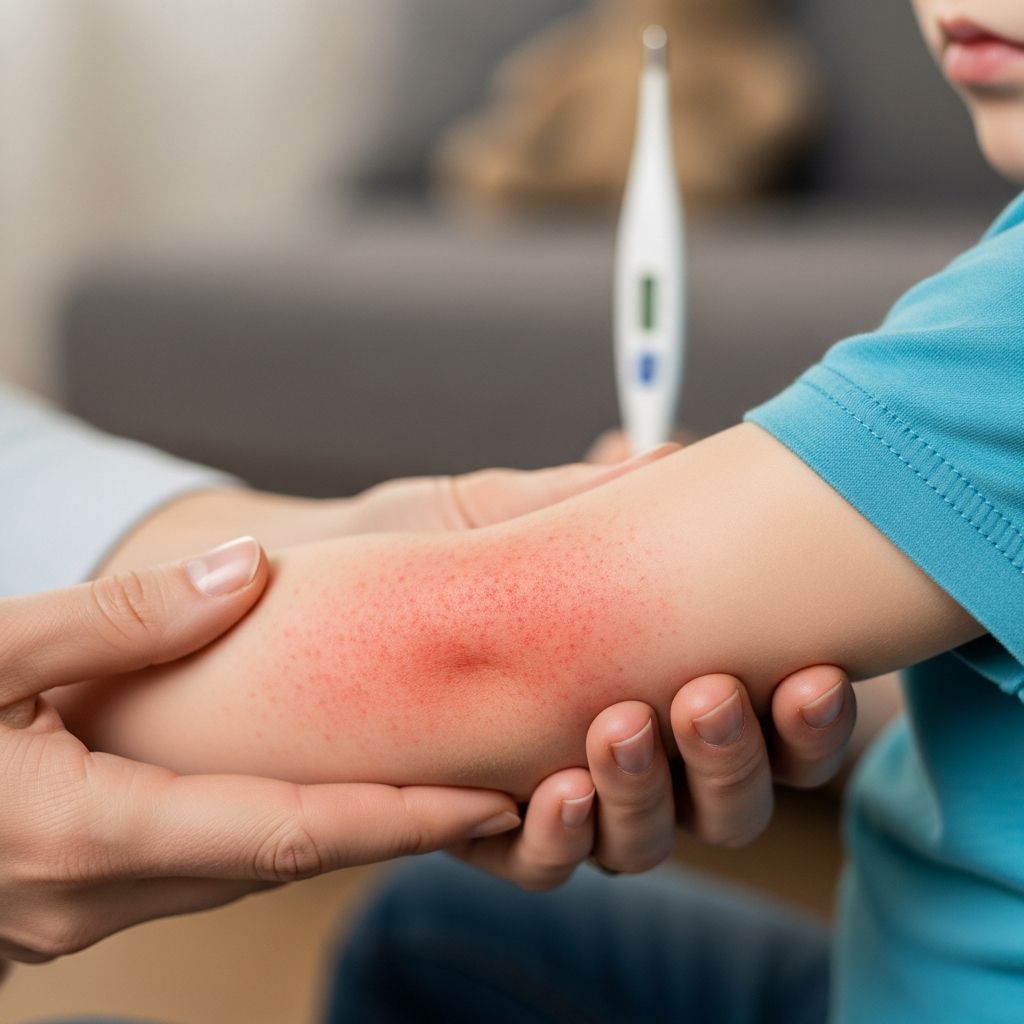
Scarlet fever is a childhood illness caused by group A streptococcal bacteria, the same germs that lead to strep throat. It typically produces a sore throat, high fever, and a distinctive red rash that feels like sandpaper. With prompt antibiotics, most children recover fully and complications are rare.
What Exactly Is Scarlet Fever?
Scarlet fever (sometimes called scarlatina) is a bacterial infection that usually starts in the throat and then produces a body-wide rash. The bacteria responsible are known as group A Streptococcus (group A strep).
- Type of infection: Bacterial throat infection often linked to strep throat.
- Main features: Sore throat, fever, and a widespread red rash with a rough, sandpaper-like feel.
- Typical age group: Most common in young and school-aged children.
- Treatment: Requires antibiotics, usually penicillin or amoxicillin.
Modern antibiotics have made scarlet fever far less dangerous than it was in the past, but it still needs medical attention to avoid complications such as rheumatic fever and kidney inflammation.
How Do Kids Catch Scarlet Fever?
Scarlet fever spreads in much the same way as other respiratory infections.
How the Bacteria Spread
- Respiratory droplets: When an infected person coughs or sneezes, tiny droplets containing group A strep can be inhaled by someone nearby.
- Contaminated hands and surfaces: Touching saliva or mucus from an infected person, then touching your mouth, nose, or eyes can spread the infection.
- Sharing personal items: Using the same cutlery, drinking bottles, or utensils as an infected person can transmit the bacteria.
- Skin contact: Children can also get infected by touching skin sores caused by group A strep (such as from impetigo).
The time between exposure and illness, called the incubation period, is usually about 2–4 days.
Who Is Most at Risk?
- Children in early and primary school, who often mix in close groups.
- Families or households where someone already has strep throat or scarlet fever.
- Settings like classrooms, day care centers, and dormitories, where germs spread easily.
Recognizing Symptoms of Scarlet Fever
Scarlet fever usually begins with the typical symptoms of strep throat and then develops its characteristic rash.
Early Signs (First 1–2 Days)
- Fever of 38 °C (100.4 °F) or higher, sometimes with chills.
- Very sore throat, often red and swollen, sometimes with white or yellow patches.
- Pain when swallowing and loss of appetite.
- Swollen, tender glands in the neck (enlarged lymph nodes).
- Headache, body aches, or general tiredness.
- Stomach pain, nausea, or vomiting, especially in younger children.
The Classic Scarlet Fever Rash
Within about 12–48 hours of the fever starting, many children develop a typical rash.
- Color: Red or pink, often brighter in body folds like the armpits, elbows, and groin.
- Texture: Feels rough and like sandpaper to the touch.
- Pattern: Usually begins on the chest or abdomen and then spreads to most of the body.
- Face: Cheeks may look flushed while the skin around the mouth appears pale.
After the rash fades, the skin may peel, especially on the fingers, toes, and groin, over several days.
Changes in the Tongue and Mouth
- At first, the tongue may have a white coating.
- Later, it can turn red with prominent bumps, often called a “strawberry tongue.”
How Doctors Diagnose Scarlet Fever
Because many viruses and bacteria can cause a sore throat and rash, it is important to confirm that group A strep is the cause before starting antibiotics.
What to Expect at the Appointment
- Medical history: The doctor will ask about your child’s symptoms, when they started, and whether anyone else around them is ill.
- Physical exam: They will examine your child’s throat, tongue, rash, and neck glands.
Tests for Group A Strep
| Test | What It Involves | Advantages | Limitations |
|---|---|---|---|
| Rapid antigen detection test (RADT) | Quick swab of the back of the throat to look for strep antigens. | Results in minutes; can confirm infection during the visit. | Negative results in children often need confirmation with a throat culture. |
| Throat culture | Swab from the throat sent to a lab where bacteria are grown and identified. | Highly accurate for detecting group A strep. | Takes 24–48 hours for results. |
Current guidance recommends confirming negative rapid tests with a throat culture in symptomatic children aged 3 years and older.
Treatment: Why Antibiotics Matter
Once testing shows that group A strep is present, doctors prescribe antibiotics to treat scarlet fever.
Common Antibiotic Choices
- Penicillin V or amoxicillin by mouth for about 10 days are standard first-line treatments.
- A single injection of penicillin G benzathine may be used if daily doses are hard to manage.
- For children allergic to penicillin, alternatives like macrolides or clindamycin can be prescribed, taking local resistance patterns into account.
Benefits of Antibiotic Treatment
- Shortens the illness: Symptoms usually improve much more quickly.
- Reduces spread: Children are typically far less contagious after 12–24 hours on effective antibiotics.
- Prevents complications: Proper treatment helps protect against rheumatic fever, certain kidney problems, ear infections, and pneumonia.
Completing the Full Course
Even if your child feels better after a few days, it is essential to finish the entire antibiotic course as prescribed.
- Stopping early may not completely clear the bacteria.
- Incomplete treatment increases the risk of complications and recurrence.
Home Care: Keeping Your Child Comfortable
Alongside antibiotics, home care can greatly ease discomfort while your child recovers.
Relieving Sore Throat and Fever
- Offer cool fluids frequently to soothe the throat and prevent dehydration.
- Choose soft foods such as yogurt, mashed potatoes, or soups if swallowing is painful.
- Use acetaminophen or ibuprofen for fever and pain, following your child’s clinician’s dosing recommendations.
- Do not give aspirin to children under 16 years due to the risk of Reye syndrome.
Soothing the Rash and Itching
- Dress your child in lightweight, breathable clothing to avoid overheating.
- Ask your child’s clinician about calamine lotion or an oral antihistamine if itching is significant.
- Keep nails trimmed short to reduce skin damage from scratching.
Rest and Recovery
- Encourage plenty of rest, especially during the first couple of days when fever is highest.
- Provide a calm environment with quiet activities such as reading, drawing, or puzzles.
- Follow your doctor’s advice about when your child can return to school—typically after at least 12–24 hours of antibiotics and when they are fever-free.
When to Call the Doctor or Seek Urgent Care
Contact your child’s health care provider promptly if you notice:
- High fever that lasts more than 48 hours or returns after going down.
- Difficulty swallowing, drooling, or trouble breathing.
- Signs of dehydration (dry mouth, fewer wet diapers, or little urine).
- Rash that worsens rapidly, becomes very painful, or looks bruised.
- New symptoms such as ear pain, chest pain, or swelling of joints.
- No improvement after 48–72 hours of antibiotics.
Seek emergency care immediately for breathing difficulty, confusion, or signs of severe illness.
Possible Complications of Scarlet Fever
With early treatment, serious complications are uncommon, but they are the main reason scarlet fever must not be ignored.
Local Complications
- Ear infections (otitis media)
- Sinus infections
- Pneumonia
- Abscesses around the tonsils (peritonsillar abscess)
Immune-Related Complications
- Acute rheumatic fever: An inflammatory disease that can affect the heart, joints, brain, and skin.
- Post-streptococcal glomerulonephritis: Kidney inflammation that may cause blood in the urine, swelling, and high blood pressure.
These complications can occur weeks after the throat infection, which is why following your clinician’s treatment plan is so important.
Preventing the Spread of Scarlet Fever
Simple hygiene measures can significantly reduce the chance of passing group A strep between family members and classmates.
- Teach children to wash hands frequently with soap and water, especially after coughing or sneezing and before eating.
- Encourage covering coughs and sneezes with a tissue or the elbow rather than hands.
- Avoid sharing cups, utensils, water bottles, or toothbrushes.
- Regularly clean commonly touched surfaces such as doorknobs, toys, and light switches.
- Keep children with scarlet fever home from school or daycare until they have taken antibiotics for at least 24 hours and are feeling better.
Frequently Asked Questions (FAQs)
Is scarlet fever contagious?
Yes. Scarlet fever spreads through respiratory droplets and close contact with an infected person or contaminated items. Children are most contagious before treatment and in the first 24 hours after starting antibiotics. After about a day of appropriate antibiotics, the risk of spreading the infection falls significantly.
How long does scarlet fever usually last?
With proper antibiotic treatment, fever and sore throat often start to improve within 24–48 hours. The rash typically lasts about a week, and peeling skin may continue for several days afterward. Fatigue can linger a bit longer as your child recovers.
Can adults get scarlet fever?
Yes. Although scarlet fever is more common in children, adults can also become infected, especially if they are in close contact with a child who has group A strep. The symptoms and treatment are similar, and adults should also see a clinician for testing and antibiotics if scarlet fever is suspected.
Is there a vaccine to prevent scarlet fever?
Currently, there is no licensed vaccine that specifically prevents scarlet fever or group A strep throat infections. Prevention relies on early recognition, prompt treatment of infections, and good hygiene practices to limit spread.
Q: When can my child return to school or daycare?
Most public health and clinical guidelines allow children to return to school after they have taken antibiotics for at least 12–24 hours, no longer have a fever, and feel well enough to participate in normal activities. Always follow the advice of your child’s health care provider and local school or childcare policies.
References
- Scarlet Fever — StatPearls/NCBI Bookshelf. 2023-08-28. https://www.ncbi.nlm.nih.gov/books/NBK507889/
- Scarlet fever – symptoms, causes and treatment — healthdirect Australia. 2023-02-01. https://www.healthdirect.gov.au/scarlet-fever
- SCARLET FEVER FACT SHEET — DC Health. 2014-03-01. https://dchealth.dc.gov/sites/default/files/dc/sites/doh/publication/attachments/Scarlet%20fever%20Fact%20Sheet.pdf
- Scarlet fever — NHS. 2023-06-22. https://www.nhs.uk/conditions/scarlet-fever/
- Scarlet fever – Diagnosis & treatment — Mayo Clinic. 2023-10-13. https://www.mayoclinic.org/diseases-conditions/scarlet-fever/diagnosis-treatment/drc-20377411
- Scarlet fever – Symptoms & causes — Mayo Clinic. 2023-10-13. https://www.mayoclinic.org/diseases-conditions/scarlet-fever/symptoms-causes/syc-20377406
- Clinical Guidance for Scarlet Fever — U.S. Centers for Disease Control and Prevention (CDC). 2023-05-09. https://www.cdc.gov/group-a-strep/hcp/clinical-guidance/scarlet-fever.html