Play stands as the cornerstone of early childhood, serving not merely as recreation but as a vital mechanism for holistic development. From infancy to the preschool years, engaging in diverse playful activities equips children with foundational skills across cognitive, physical, social, emotional, and creative domains. Research consistently demonstrates that unstructured and structured play enhances brain plasticity, supports emotional regulation, and promotes lifelong healthy habits.
Why Play Matters: Core Developmental Impacts
Play transcends simple enjoyment, acting as a primary driver of healthy growth in young children. It facilitates synapse connections in the brain, improving plasticity and overall functioning. For preschoolers and kindergarteners, playful experiences cultivate cognitive flexibility, problem-solving abilities, and social competence. Moreover, the joy derived from play contributes to subjective well-being, linking to outcomes like resilience, empathy, and academic success.
Active play boosts physical fitness, reduces obesity risks, and develops motor skills. Socially, it teaches cooperation, conflict resolution, and relationship-building. Emotionally, play provides an outlet for stress, fostering self-regulation and confidence. These multifaceted benefits underscore play’s role in preparing children for complex social and academic environments.
Types of Play and Their Unique Contributions
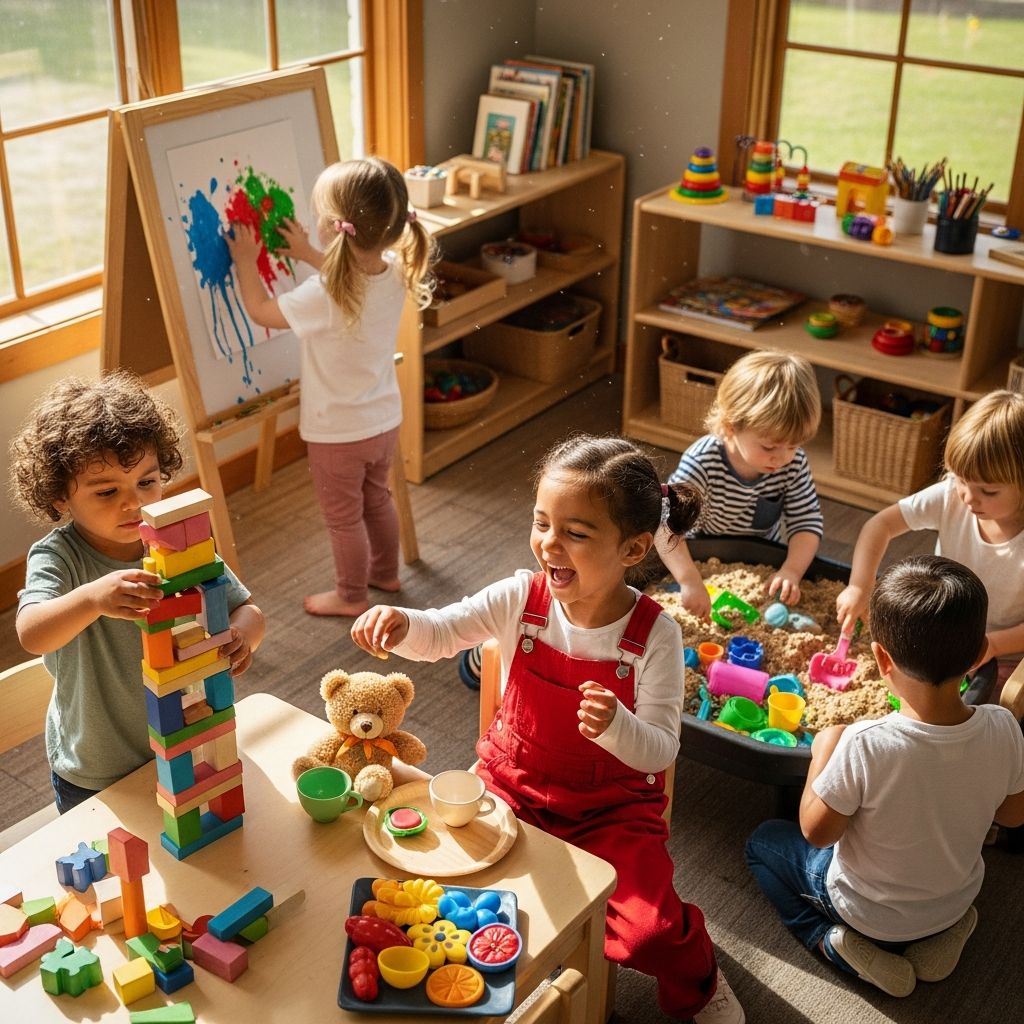
Children naturally gravitate toward various play forms, each offering distinct growth opportunities. Understanding these can help parents and caregivers intentionally nurture development.
- Physical Play: Involves running, climbing, and jumping to build gross motor skills, coordination, balance, and body awareness. Outdoor adventures like rolling down hills or wading in streams encourage risk-taking and physical confidence.
- Imaginative Play: Pretend scenarios, such as role-playing family roles or using sticks as tools, spark creativity, vocabulary expansion, emotion processing, and narrative skills.
- Constructive Play: Building with blocks or crafting art refines fine motor skills, spatial reasoning, and problem-solving through trial and error.
- Social Play: Group games promote collaboration, communication, turn-taking, and empathy, essential for peer relationships.
- Sensory Play: Exploring sand, water, or textures integrates senses, encouraging curiosity and exploration.
Combining these types maximizes benefits, as children adapt ideas, switch scenarios, and innovate during open-ended sessions.
Physical and Health Benefits of Active Play
Physical engagement through play is crucial for building strength and establishing healthy lifestyles. Activities targeting large muscle groups improve coordination and endurance, while fine motor tasks like grasping small objects prepare children for self-care and writing. Regular movement combats sedentary risks, promoting cardiovascular health and reducing obesity prevalence.
Outdoor play amplifies these effects by providing space for freer movement and nature interaction. Children who explore outdoors develop spatial awareness, sensory integration, and pro-environmental attitudes. Evidence shows physical play enhances brain function, fitness levels, and coordination, laying groundwork for sustained wellness.
| Play Type | Physical Benefits | Examples |
|---|---|---|
| Gross Motor | Strength, balance, endurance | Running, climbing boulders |
| Fine Motor | Hand-eye coordination, dexterity | Threading beads, drawing |
| Outdoor | Spatial awareness, sensory development | Collecting pebbles, nature walks |
Cognitive and Creative Sparks from Play
Playtime ignites cognitive growth by challenging young minds to classify, solve puzzles, and think innovatively. Unstructured scenarios demand flexibility, allowing children to experiment, adapt, and generate novel solutions. This mirrors real-world problem-solving, enhancing short-term memory, attention, and executive functions.
Creativity flourishes in pretend play, where imaginary worlds expand vocabulary and foster innovative thinking. Building structures or inventing games teaches persistence and spatial concepts. These experiences prime children for academic readiness, improving math, literacy, and logical reasoning skills.
Social and Emotional Foundations Built Through Interaction
Social play is instrumental in teaching negotiation, sharing, and empathy. Collaborative games help children read cues, resolve disputes, and form bonds, crucial for future relationships. Emotionally, play acts as a stress reliever, building resilience and self-regulation as kids process feelings through role-play.
Child-led interactions boost confidence and motivation, while adult involvement models positive behaviors. Studies link early playful social experiences to reduced parenting stress and improved child well-being, creating reciprocal benefits for families.
Practical Strategies for Parents to Foster Play
Parents play a pivotal role in facilitating enriching play without over-directing. Follow the child’s lead in imaginative sessions, providing props like scarves or blocks for open-ended exploration. Dedicate daily unstructured time, balancing with guided activities.
- Provide diverse materials: Blocks, art supplies, costumes for varied play.
- Prioritize outdoor time: Parks, backyards for nature-based adventures.
- Join in joyfully: Narrate actions to build language, but let kids direct.
- Limit screens: Encourage active, hands-on engagement.
- Observe cues: Extend play based on interests, avoiding interruptions.
Even brief, consistent sessions yield profound impacts, supporting emotional bonds and skill mastery.
Frequently Asked Questions (FAQs)
How much playtime does a young child need daily?
Experts recommend at least 60 minutes of unstructured physical activity daily for preschoolers, plus ample free play for cognitive and social growth.
Is structured play better than free play?
Both are valuable; free play builds creativity and independence, while structured play targets specific skills like motor development.
Can play help with emotional challenges?
Yes, play reduces anxiety, teaches coping, and enhances resilience by allowing safe emotional expression.
What if my child prefers solo play?
Solo play is healthy for imagination and self-regulation; gently introduce group opportunities to build social skills.
How does outdoor play differ from indoor?
Outdoor play offers riskier challenges, nature exploration, and freer movement, amplifying physical and cognitive benefits.
Long-Term Outcomes: Play’s Lasting Legacy
The investments in early play yield enduring rewards. Children with rich play histories exhibit superior school performance, social adeptness, and emotional stability. Play cultivates curious, adaptable individuals equipped for life’s complexities. By prioritizing play, families nurture not just surviving children, but thriving ones poised for success.
In essence, play is the child’s premier occupation, weaving joy with profound developmental strides. Embrace it daily to unlock your child’s full potential.
References
- Power of Play in Early Childhood — American Academy of Pediatrics (AAP). 2023-10-15. https://www.aap.org/en/patient-care/early-childhood/early-childhood-health-and-development/power-of-play/
- How Young Children’s Play Promotes Healthy Development — Child Mind Institute. 2024-05-20. https://childmind.org/article/how-young-childrens-play-promotes-healthy-development/
- It’s a Kid’s Job — National Institutes of Health (NIH) News in Health. 2018-07-01. https://newsinhealth.nih.gov/2018/07/it-s-kid-s-job
- The Benefits of Playing with your Child — Johns Hopkins Medicine. 2023-11-12. https://www.hopkinsmedicine.org/health/wellness-and-prevention/the-benefits-of-playing-with-your-child
- 10 Things Every Parent Should Know About Play — National Association for the Education of Young Children (NAEYC). 2022-08-10. https://www.naeyc.org/our-work/families/10-things-every-parent-play