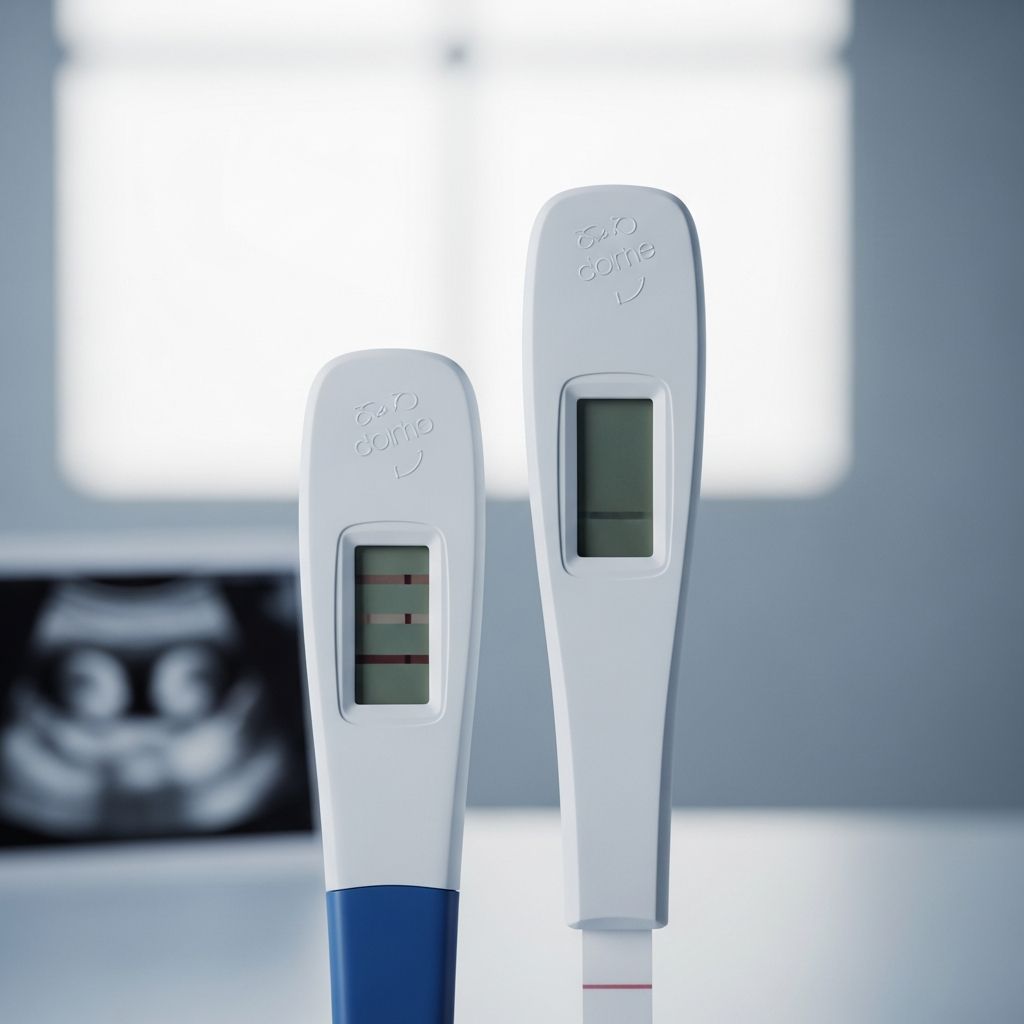
Many expectant parents wonder if carrying twins could trick a home pregnancy test into showing a false negative result. While twin pregnancies produce notably higher levels of the hormone human chorionic gonadotropin (hCG), which pregnancy tests detect, the notion that twins directly cause false negatives is largely a myth. In reality, false negatives stem more from timing, test quality, or urine concentration issues than from the number of fetuses. This comprehensive guide delves into the science behind pregnancy detection in multiple gestations, debunking misconceptions and providing actionable advice for accurate testing.
The Science of Pregnancy Detection in Singleton vs Twin Pregnancies
Pregnancy tests work by identifying hCG, a hormone secreted by the developing placenta shortly after implantation. In a typical singleton pregnancy, hCG levels double every 48-72 hours in the early weeks, reaching detectable thresholds of 25 mIU/mL or higher by the time of a missed period. Twin pregnancies, involving two embryos and often two placentas, generate elevated hCG concentrations—up to 30-50% higher than singletons during the first trimester. This surge should, theoretically, make detection easier and potentially yield positives sooner or with darker lines on tests.
However, the misconception arises because some people suspect twins after early faint positives or delayed strong lines, leading to stories of initial negatives followed by confirmations. Research and clinical data indicate no inherent mechanism where twins suppress hCG detection; instead, higher levels facilitate earlier positives in most cases. Ultrasound remains the gold standard for confirming multiples, typically visible between 6-9 weeks when hCG exceeds 1,500-2,000 mIU/mL.
Common Culprits Behind False Negative Results
False negatives occur when hCG is present but undetectable, affecting both singleton and twin pregnancies equally. Key factors include:
- Premature Testing: hCG may not yet be sufficient if tested before 10-14 days post-ovulation or prior to a missed period. Waiting increases accuracy to over 99%.
- Diluted Urine: Excessive fluid intake before testing lowers hCG concentration in urine, mimicking non-pregnancy.
- Test Limitations: Expired, low-sensitivity, or faulty kits fail to register even adequate hCG. Opt for reputable brands with 25 mIU/mL sensitivity.
- Hormonal Variations: Irregular ovulation, fertility medications, or recent miscarriage can skew results.
In twins, these issues persist unchanged, but the higher baseline hCG often compensates, reducing false negative likelihood.
The Rare Hook Effect: When High hCG Backfires
One exception where multiples play a role is the hook effect, a phenomenon occurring in 0.2-2% of antibody-based tests when hCG overwhelms the test’s antibodies, yielding a false negative despite sky-high levels. This is exceedingly rare in early twin pregnancies but more common in advanced multiples, molar pregnancies, or certain cancers. Symptoms like severe nausea from elevated hCG might prompt retesting with dilution or blood tests, which bypass the hook effect. Clinical labs measure serum hCG quantitatively, offering precise readings unaffected by urine variables.
Comparing hCG Dynamics: Singleton vs Twins
To illustrate differences, consider this table of average hCG ranges by gestational week (from ovulation day 0):
| Gestational Week | Singleton Average (mIU/mL) | Twins Average (mIU/mL) |
|---|---|---|
| 3 | 5-50 | 10-100 |
| 4 | 50-500 | 200-1,800 |
| 5 | 100-10,000 | 500-40,000 |
| 6 | 1,000-50,000 | 10,000-100,000+ |
Note: Wide individual variations exist; trends matter more than snapshots. Twins show faster rises, aiding detection.
Best Practices for Reliable Pregnancy Testing
Maximize accuracy with these evidence-based strategies:
- Test using first-morning urine for peak hCG concentration.
- Wait until the first day of missed period or later.
- Follow kit instructions meticulously, avoiding excess fluids beforehand.
- If negative but symptoms persist (nausea, fatigue, breast tenderness), retest in 2-3 days or seek blood hCG quantification.
- For suspected multiples post-positive, schedule early ultrasound around 6 weeks.
Consistent lab use for serial beta-hCG tracks progression reliably.
Debunking Persistent Myths About Twins and Testing
Several fallacies circulate online:
- Myth: Twins always test positive earlier. While possible due to higher hCG, timing aligns closely with singletons; test sensitivity dictates.
- Myth: Faint lines mean singletons; dark lines mean twins. Line intensity reflects hCG concentration and test brand, not fetus count.
- Myth: Severe symptoms guarantee twins. Intense nausea correlates with high hCG but occurs in singletons too.
Only imaging confirms multiples; hormone levels suggest but do not diagnose.
When to Consult a Healthcare Professional
Persistent negatives amid pregnancy symptoms warrant medical evaluation. Blood tests detect hCG from 6-8 days post-ovulation with 100% accuracy at low levels. If hCG rises abnormally or plateaus, it may signal ectopic pregnancy, miscarriage, or multiples requiring monitoring. Early prenatal care optimizes outcomes, especially for twins, which carry higher risks like preterm birth.
Fertility patients on hCG-triggering medications should note these can cause false positives, delaying natural detection.
Frequently Asked Questions (FAQs)
Do twin pregnancies produce more hCG than single ones?
Yes, twin pregnancies typically generate 30-50% higher hCG levels due to dual placental production, rising faster in early weeks.
Can testing too early cause a false negative with twins?
Absolutely—timing is the primary issue regardless of multiples. hCG must reach test thresholds; early testing misses this in any pregnancy.
What is the hook effect and does it affect twin tests?
The hook effect happens when excessively high hCG saturates test antibodies, rarely causing false negatives in advanced twins (0.2-2% incidence).
Will a twin pregnancy show a darker positive line?
Often yes, due to elevated hCG, but this varies by test sensitivity and individual factors—not a reliable twin indicator.
How soon can ultrasound confirm twins?
Around 6-9 weeks via transvaginal scan, when hCG surpasses 1,500-2,000 mIU/mL and fetal sacs are visible.
Navigating Early Pregnancy with Confidence
Understanding hCG dynamics empowers informed decisions. While twins enhance hCG output, false negatives rarely stem from multiples alone. Prioritize proper testing protocols and professional follow-up for clarity. Whether expecting one or two, early confirmation supports healthy journeys.
References
- Can Twins Cause a False Negative Pregnancy Test? — Mamata Fertility. 2023. https://mamatafertility.com/blog/can-twins-cause-a-false-negative-pregnancy-test/
- Can Twins Cause False Negative Pregnancy Test? Full Guide — Aspect Health. 2023. https://www.aspect-health.com/blog/can-twins-cause-false-negative-pregnancy-test-full-guide
- Can Twins Cause a False Negative Pregnancy Test? — Baptist Health. 2024. https://www.baptisthealth.com/blog/mother-and-baby-care/can-twins-cause-a-false-negative-pregnancy-test
- Do Twin Pregnancies Test Positive Earlier? Exploring the Facts — Mommed. 2023. https://mommed.com/blogs/breastfeeding-pregnancy/do-twin-pregnancies-test-positive-earlier-exploring-the-facts
- Twins and Beta hCG Levels: What to Expect in Early Pregnancy — MFC Family. 2023. https://mfcfamily.com/twins-and-beta-hcg-levels/
- hCG Levels with Twins – Signs of Twins — Huggies Australia. 2023. https://www.huggies.com.au/pregnancy/twins-triplets-multiples/hcg-levels-with-twins