The bathroom stands out as one of the most dangerous rooms in the home for young children due to water, electricity, chemicals, and hard surfaces. Implementing targeted safety measures can drastically reduce risks of drowning, burns, falls, and poisoning. This guide provides actionable steps for parents and caregivers.
Understanding Bathroom Risks
Young children face multiple threats in bathrooms. Drowning incidents often occur in bathtubs or toilets even with minimal water depth, as kids under 5 account for over half of bathtub-related injuries. Slippery floors lead to falls, while hot water causes scald burns. Electrical appliances and toxic substances like cleaners add further dangers. Prioritizing prevention starts with awareness.
Statistics highlight urgency: bathrooms see the highest home injury rates for toddlers, driven by curiosity and limited mobility. Supervision remains the cornerstone, but structural changes offer lasting protection.
Water Safety During Bath Time
Bath time requires constant vigilance. Never leave a child unattended, even briefly, as drowning can happen in under an inch of water. Gather supplies beforehand, fill the tub with just 2-4 inches of water, and test temperature using your elbow—aim for 95-100°F (35-37.8°C) since children’s skin is more sensitive.
- Position child away from faucets to avoid hot water grabs.
- Install anti-scald devices on taps.
- Use spout covers to cushion impacts.
- Drain tub immediately after use.
Non-skid mats or strips inside the tub prevent slips; place one outside too. Ensure toys are mold-free and clean them regularly.
Preventing Slips and Falls
Wet floors are a primary fall hazard. Wipe spills promptly and use nonslip rugs secured with pads. Inside tubs and showers, apply adhesive strips or mats.
| Hazard Area | Prevention Method | Product Recommendation |
|---|---|---|
| Tub/Shower Floor | Non-skid strips or mats | Suction-cup bath mats |
| Bathroom Floor | Nonslip rugs | Rugs with latex backing |
| Entry/Exit | Dry mats | Absorbent bath mats |
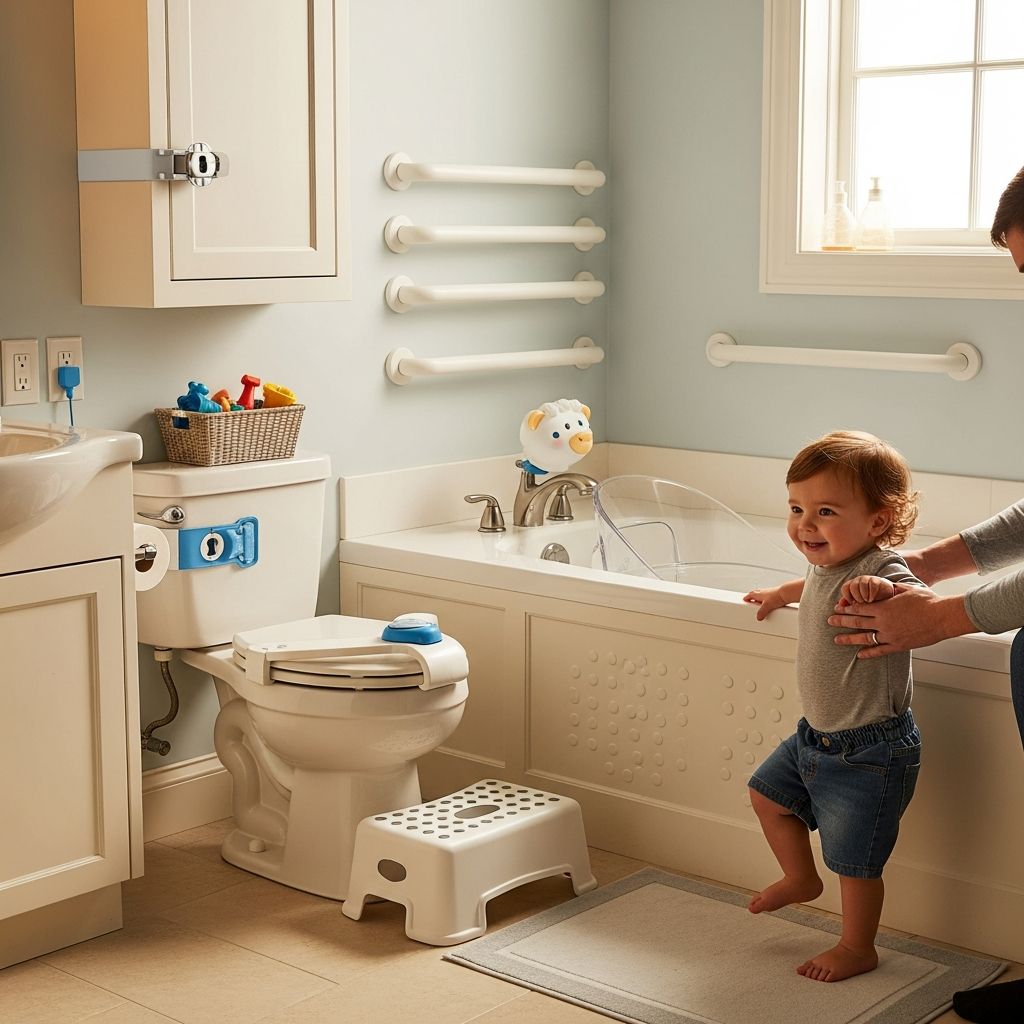
Grab bars near toilets and showers provide support, especially for growing kids learning independence. Night lights reduce nighttime stumble risks.
Securing Storage and Cabinets
Cabinets hide poisons: medicines, cleaners, cosmetics, razors, and scissors must be inaccessible. Install childproof locks on drawers and doors. Store grooming items like hairspray, nail polish, and perfumes in locked spots.
- Lock razors and sharp tools high or away.
- Keep shampoos and soaps out of reach post-use.
- Use high cabinets or wall-mounted shelves.
Adults often mimic play; secure items to curb imitation.
Toilet and Door Precautions
Infants can topple into open toilets—install lid locks and always close lids. Keep bathroom doors shut with childproof knobs or high locks to block unsupervised entry.
In emergencies, ensure doors open outward without child access. Avoid inward swings that trap little ones.
Electrical Appliance Management
Hair dryers, curling irons, and razors pose electrocution and burn risks. Unplug and store them after use, ideally in locked cabinets. Position outlets away from water sources.
- Never use near water.
- Use GFCI-protected outlets.
- Elevate cords out of reach.
Temperature Control to Avoid Burns
Set water heaters to 120°F max. Anti-scald valves add protection. Regularly check temperatures and teach kids safe handling.
Product Recommendations
Invest in reliable safety gear:
- Spout guards and temperature gauges.
- Toilet locks and cabinet latches.
- Non-skid mats and anti-scald devices.
Consult pediatric safety centers for demos.
Daily Safety Routine Checklist
Make safety habitual:
- Supervise all water activities.
- Wipe floors dry.
- Lock cabinets and toilet.
- Unplug appliances.
- Check water temperature.
Weekly: Inspect locks, mats, and devices for wear.
Frequently Asked Questions
What is the top bathroom rule for kids?
Never leave young children unattended near water, including baths or sinks.
How do I test bath water safely?
Use your elbow or wrist; it should feel comfortably warm, around 95-100°F.
Are bathroom rugs enough for slip prevention?
No—secure with nonslip pads and add tub strips for full coverage.
Can toddlers drown in toilets?
Yes—use lid locks as they are top-heavy and struggle to escape.
What temperature should water heaters be set to?
Below 120°F to prevent scalds.
Long-Term Adaptations for Growing Families
As kids age, adapt: install single-handle taps for ease, adjustable grab bars, and easy-clean surfaces. Designate storage for diapers and lotions in reachable adult zones.
Family bathrooms balance fun and function—consider splash-proof play areas with supervision.
Regular audits prevent complacency. Teach older siblings rules to reinforce habits.
References
- Bathroom safety tips for toddlers — Sanford Health News. 2023. https://news.sanfordhealth.org/parenting/bathroom-safety-tips-for-toddlers/
- 15 Bathroom Safety Tips For Young Children — Bathroom City. 2022. https://www.bathroomcity.co.uk/blog/15-bathroom-safety-tips-young-children
- Safety Checklist for Home — Seattle Children’s Hospital. 2024-01-17. https://www.seattlechildrens.org/health-safety/injury-prevention/home-checklist/
- The Ultimate Bath Time Water Safety Checklist — Big Sky Fitness. 2023. https://bigskyfitness.com/ultimate-bath-time-water-safety-checklist/
- Bathroom Water Safety — Children’s Minnesota. 2024. https://www.childrensmn.org/educationmaterials/parents/article/18526/bathroom-water-safety/
- Bathroom, Laundry, and Garage: Household Safety Checklist — KidsHealth. 2023. https://kidshealth.org/en/parents/household-checklist-bathroom.html