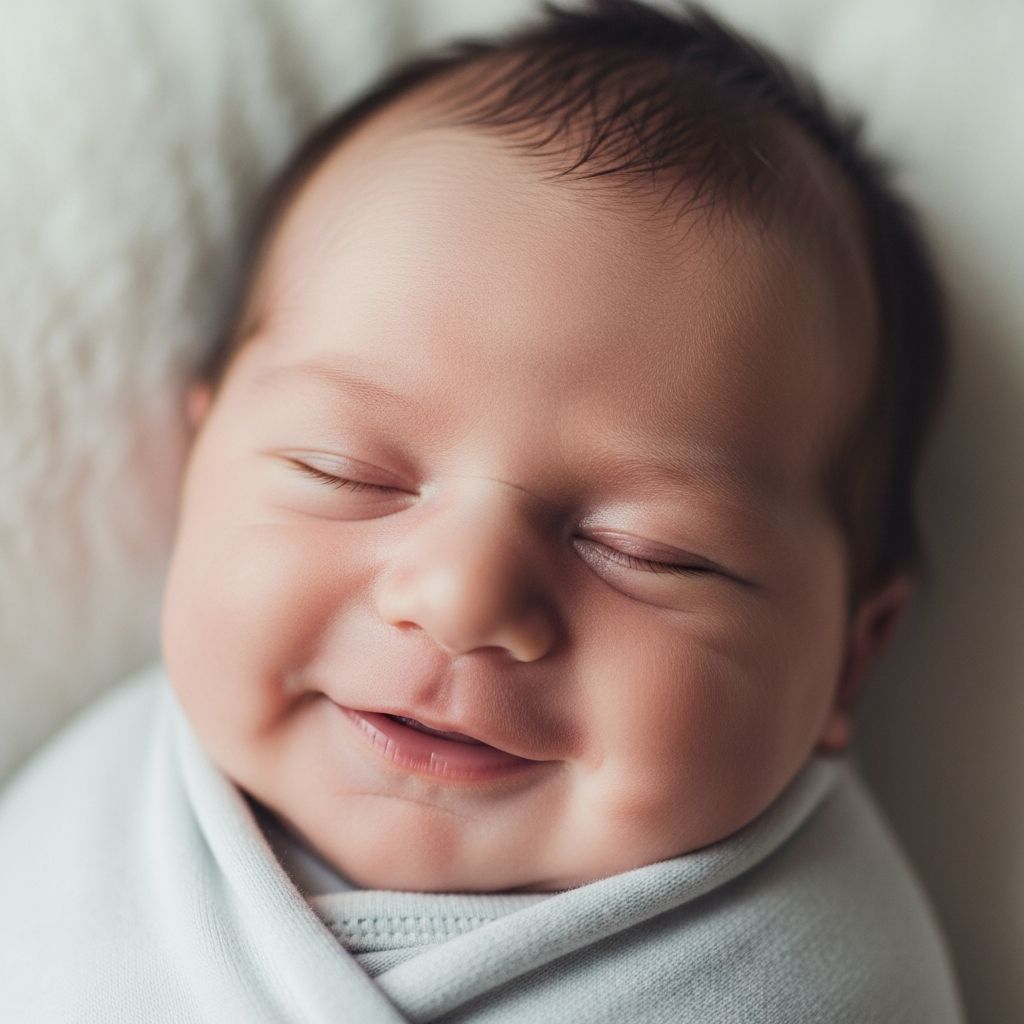
Newborns laughing while sleeping is one of those moments that makes parents melt, snap a dozen photos, and wonder what could possibly be so funny in their tiny world. This guide explains what those sleepy giggles typically mean, how they relate to normal brain and emotional development, and how to tell the difference between harmless reflex laughter and rare signs of a medical issue.
Is It Normal for Newborns to Laugh in Their Sleep?
In most cases, a newborn laughing while sleeping is completely normal and simply part of early brain and nervous system development. These brief giggles or smiles usually appear randomly, often during lighter stages of sleep, and are not something to be afraid of.
Parents often notice that these laughs occur more often in the first few months, alongside other involuntary movements like twitching, tiny startles, and facial expressions that come and go quickly. Rather than indicating that your baby is actually telling jokes in their dreams, these reactions typically reflect the maturing of the brain and body.
- Newborn sleep laughter is usually short, soft, and irregular.
- It often appears together with smiles, grimaces, or twitches.
- It tends to happen more during lighter, active sleep phases.
Understanding Newborn Sleep Cycles
To make sense of why newborns laugh while sleeping, it helps to understand that their sleep cycles look very different from those of older children and adults. Newborns spend a larger percentage of sleep time in what is called active sleep, a stage roughly comparable to adult REM (rapid eye movement) sleep.
During active sleep, the brain is busy, and the body is more likely to move. You may see your baby:
- Twitching or jerking arms and legs.
- Making sucking motions with the mouth.
- Smiling, frowning, or briefly laughing.
- Breathing a bit more irregularly for a short period.
Newborns cycle between quiet sleep and active sleep much more quickly than adults do, which means there are more opportunities for those tiny, involuntary giggles to show up in the middle of the night.
Common Reasons Babies Laugh in Their Sleep
There is no single explanation that covers every baby, but several common factors are thought to contribute to newborn laughter during sleep. These explanations are not mutually exclusive; more than one can be happening at the same time.
1. Reflexive Movements and Smiles
In the first weeks and months, many of your newborn’s actions are governed by reflexes rather than conscious control. Just as your baby may startle or grip your finger without planning to, early sleep smiles and laughs are often reflexive.
These reflexes help train the facial muscles and nervous system, giving your baby practice making the complex expressions that later become intentional smiles and laughter while awake.
- Reflex laughs tend to appear suddenly and vanish just as fast.
- They are not usually connected to what is happening in the room.
- They are common in newborns even before regular social smiles develop.
2. Active Sleep and Possible Dreaming
While experts still debate whether newborns truly dream the way older children and adults do, most agree that active sleep involves a high level of brain activity. This activity can produce facial changes that look very much like enjoyment, including smiling or quiet chuckling.
Some parents like to imagine that their babies are dreaming about familiar voices or soothing experiences from the day. Even if science has not fully proven newborn dreams, it is clear that this part of sleep is full of movement and expressions that can resemble laughter.
3. Processing Emotions and Experiences
Newborns experience a flood of new sensations each day: touch, light, sound, taste, smell, and early social contact. Sleep is a time when the brain organizes and processes these experiences, which may produce expressions that look like tiny laughs or smiles.
As your baby develops, you may notice that sleepy smiles become more frequent after particularly pleasant or stimulating days, such as when they spent extra time being held, talked to, or gently played with.
4. Physical Comfort and Release of Tension
Sometimes, a baby’s body relaxes after feeling physical relief—such as passing gas, being repositioned more comfortably, or finally settling into a soothing sleep environment. In these moments, you might see a relaxed smile or a brief laugh that coincides with that easing of tension.
Although popular wisdom sometimes claims that a baby who smiles is always passing gas, there is no strong scientific proof behind that idea. Still, for individual babies, a moment of relief from discomfort may occasionally look like a happy grin.
Developmental Milestones and Sleep Laughter
Newborn laughing while sleeping can be an early preview of the social smiles and conscious laughter that emerge in the first months of life. While timing varies from child to child, many babies show their first intentional, responsive smiles around the age of 6–8 weeks, often when a caregiver makes eye contact or speaks in a warm, sing-song voice.
Deliberate laughter while awake usually appears later, generally in the 3–6 month range, as babies begin to enjoy playful interactions such as peekaboo, gentle tickling, or funny faces. Before those milestones, sleep laughter often reflects the nervous system practicing patterns that will later support purposeful social engagement.
| Age Range | Common Smiles/Laughter Behaviors |
|---|---|
| 0–2 weeks | Reflex smiles and facial expressions during sleep; no clear social response yet. |
| 2–8 weeks | More frequent sleep smiles; early social smiles starting in response to voices or faces. |
| 2–4 months | Consistent social smiles when interacting with caregivers while awake. |
| 3–6 months | First real awake laughter during play; sleep giggles may still occur. |
When Baby’s Sleep Laughter Is Harmless
For the vast majority of newborns, laughing while sleeping falls squarely into the category of harmless quirks. If your baby is otherwise feeding well, gaining weight appropriately, meeting developmental milestones, and waking from sleep without distress, brief episodes of sleep laughter are usually nothing to worry about.
You can generally consider the behavior normal when:
- The laughter is short-lived, lasting just a few seconds.
- It does not wake your baby fully or leave them unusually upset.
- It occurs occasionally, not in long, repetitive bursts.
- There are no other concerning symptoms such as stiffening, unusual eye movements, or difficulty breathing.
Although sleep laughter is almost always benign, rare neurological conditions can cause unusual laughter episodes during drowsiness or sleep. These situations are uncommon, but parents should be aware of warning signs that justify a medical evaluation.
Contact your pediatrician promptly if you notice any of the following:
- Frequent, sudden laughing spells that always look the same and last 10–20 seconds at a time.
- Laughter that consistently wakes your baby or appears as they are just falling asleep.
- Episodes of laughter accompanied by rigid body posture, eye deviation, or rhythmic jerking movements.
- Laughing episodes that happen both when awake and asleep with a very similar pattern.
- Any regression in development, such as losing previously acquired skills, alongside unusual sleep behaviors.
Your baby’s doctor may ask you to describe the episodes in detail or even record a video at home. This kind of information can help determine whether what you are seeing fits within the range of normal sleep behavior or needs further testing.
How to Support Healthy Sleep and Development
While you cannot and do not need to stop your newborn from laughing in their sleep, you can create an environment that supports overall healthy sleep and brain development. A calm, consistent routine also makes it easier to notice if something a bit more unusual ever develops.
Establishing a Gentle Sleep Routine
- Keep bedtime and nap times roughly consistent from day to day.
- Create a simple, predictable wind-down sequence such as dimming lights, changing into sleepwear, and a brief cuddle or song.
- Limit very bright lights and loud noises in the hour before your baby’s longest sleep stretch.
Safe Sleep Practices
Even when your baby is laughing or smiling in their sleep, safety basics should always come first. A safe sleep setup reduces the risk of accidents and gives you peace of mind while you admire those adorable expressions.
- Place your baby on their back for every sleep, including naps.
- Use a firm, flat sleep surface with a fitted sheet and no loose blankets, pillows, or stuffed animals.
- Avoid overheating; dress your baby in light, breathable layers appropriate for the room temperature.
Encouraging Daytime Interaction
Positive, responsive interactions during the day may shape how your baby’s brain processes social and emotional input during sleep. Talking, singing, and making gentle, playful faces can support early emotional development and eventually lead to more conscious smiles and laughter.
- Make frequent eye contact during feeds and diaper changes.
- Respond to your baby’s coos and movements as if holding a conversation.
- Incorporate short bursts of play, such as soft tickles or a simple game of “hello” and “goodbye” with your hands.
Parents’ Emotions: Why Sleep Laughter Triggers Baby Fever
Watching a tiny newborn erupt into a sleepy giggle can be so heartwarming that it sparks intense feelings of affection, nostalgia, and even a strong desire for another baby—often referred to as “baby fever.” These emotional reactions are normal and can be part of the bonding process.
The combination of your baby’s vulnerability, cuteness, and apparent joy lights up reward centers in the adult brain. For many parents and caregivers, those quiet nighttime smiles are among the most cherished memories of early parenthood.
- Sleep laughter can reinforce emotional bonding between parent and baby.
- It may inspire more cuddling, talking, and affectionate interaction.
- These moments can also be comforting reminders that your baby is growing and changing every day.
Frequently Asked Questions (FAQs)
1. Is it okay to wake my baby when they laugh in their sleep?
In most situations, there is no need to wake a baby who is laughing while sleeping. Interrupting sleep frequently can make it harder for newborns to get the rest they need, and occasional giggles are usually just part of their normal sleep pattern.
2. Can newborns really find something funny in their dreams?
Experts are not sure whether newborns experience dreams in the same way older children do. The facial movements and laughter you see are more likely driven by reflexes and brain activity in active sleep than by a sense of humor in the usual adult sense.
3. My baby laughs in sleep but never smiles while awake. Should I worry?
During the first several weeks, it is common for most smiles to occur during sleep rather than while awake. If your baby is older than about two months and still shows no responsive smiling while awake, it is reasonable to bring this up with your pediatrician for guidance.
4. Can sleep laughter be a sign of a seizure?
Rarely, some types of seizures involve sudden, uncontrollable laughter that may recur in very similar episodes. If your baby’s laughter spells are frequent, stereotyped, associated with other unusual movements, or seem to cause distress or changes in awareness, seek medical evaluation.
5. What should I record or write down before calling the doctor?
When you contact your pediatrician, it can help to note when the episodes happen, how long they last, what your baby’s body and face do during the event, and how your baby behaves right afterward. A brief video clip taken in a well-lit, safe environment can also be useful for medical professionals.
Key Takeaways for New Parents
- Newborn laughing while sleeping is usually a normal part of early brain and emotional development.
- Most sleep giggles are linked to active sleep, reflexes, and the nervous system practicing facial expressions.
- Safety basics—like back-sleeping and a clear crib—remain important even when your baby looks blissfully happy.
- Contact a pediatrician if laughter episodes are frequent, identical, associated with other unusual movements, or accompanied by developmental concerns.
- Enjoy those sweet nighttime smiles; they are often among the most precious parts of life with a newborn.