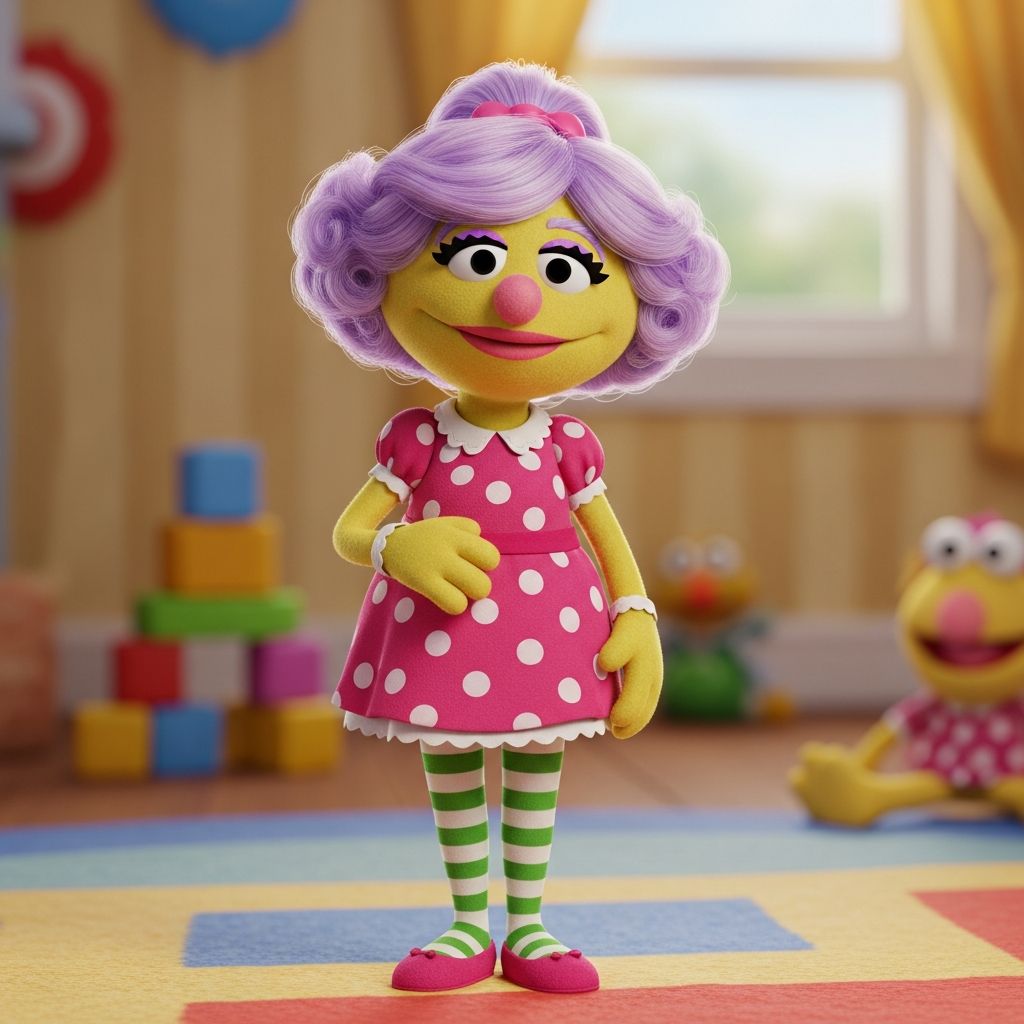
The CGI reboot of Muppet Babies could have coasted on nostalgia alone, but it did something smarter: it made the grown-up in the room, Miss Nanny, the emotional anchor of the entire series. Voiced by actor-comedian Jenny Slate, this new version of the classic caretaker is gentle, funny, musically gifted, and unexpectedly profound, especially when the show tackles big feelings, loss, and growing up.
From Green Stockings to Green Screens: A New Take on a Classic Caretaker
In the original 1980s Muppet Babies, Nanny was a pair of iconic green-and-white stockings and a voice that floated into frame whenever the babies needed guidance. You never saw her face, but you always felt her presence; she was calm, endlessly patient, and reliably kind. The reboot keeps that off-screen mystery but layers in more personality, backstory, and thematic depth.
The new Miss Nanny is canonically the daughter of the original Nanny, inheriting both the nursery and the responsibility of caring for Kermit, Piggy, Fozzie, Animal, Gonzo, and the newer addition, Summer Penguin. Where the earlier version drew on classic sitcom maternal warmth, the reboot casts a contemporary performer known for stand-up, indie film drama, and sharp comedy, then lets her channel those skills into a more nuanced, modern caregiver.
Why Casting Jenny Slate Matters
- Vocal range: Slate is a prolific voice actor, with roles in Zootopia, The Secret Life of Pets, and The LEGO Batman Movie, giving her deep experience balancing humor and heart in animated performances.
- Comedic timing: Her background in stand-up and sketch comedy lets Miss Nanny be lightly funny without overshadowing the kids.
- Emotional honesty: In projects like Obvious Child, Slate has shown a willingness to deal frankly with complicated feelings, a trait that translates into delicate handling of tough topics in a preschool show.
The Hidden Star of the Nursery: Miss Nanny as MVP
The babies drive the plots, but Miss Nanny quietly drives the emotional arcs. She is less a background adult and more a guiding star: the one who frames a conflict, offers context, and nudges the characters toward reflection instead of simple distraction or scolding.
| Classic Caretaker Trope | Miss Nanny in the Reboot |
|---|---|
| Appears only to fix problems | Appears to coach problem-solving and validate feelings |
| Delivers rules and consequences | Delivers context, empathy, and options |
| Detached authority figure | Warm collaborator in the kids’ imaginative play |
| One-note “nice mom” energy | Layered personality with hints of her own life and traditions |
This shift reflects broader research in child development: experts emphasize that when adults coach children through emotions instead of simply correcting behavior, kids develop better self-regulation and social skills. Miss Nanny consistently models that coaching style.
Music as Emotional Literacy: When Miss Nanny Sings
One of the reboot’s smartest choices is to lean into Miss Nanny’s musicality. When things get complicated, she often responds not with a lecture but with a song tailored to the babies’ specific struggle. These numbers are simple enough for preschoolers to follow, but they quietly map big feelings onto memorable melodies.
Helping Kids Make Peace with Growing Up
In episodes where Fozzie or another baby feels left behind because they are “too little” to do something, Miss Nanny doesn’t sugarcoat reality or magically make them older. Instead, she gently acknowledges their frustration and then reframes growth as a journey. Her songs emphasize ideas like:
- “You’re not there yet” is different from “You’ll never get there.”
- Skills and privileges arrive with time, practice, and patience.
- It’s okay to feel disappointed while still being excited for the future.
Psychologists note that helping children understand development as gradual, rather than all-or-nothing, can reduce anxiety and perfectionism. Miss Nanny’s songs do this in a form that three- and four-year-olds can actually remember and repeat.
Teaching Loss, Grief, and Letting Go
Perhaps the most striking example of Miss Nanny’s emotional range comes when she addresses the idea of death and impermanence using something as small and accessible as a houseplant. In a storyline where the babies grow attached to a plant that begins to wither, Miss Nanny resists the temptation to simply “fix” the problem with magic adult powers.
Instead, she explains in age-appropriate language that some plants only live for one season, and that when their life ends, they do not come back. She acknowledges the sadness this causes, and then uses music to shift the focus to gratitude:
- Every living thing has a beginning, middle, and end.
- The time we have with loved ones is precious because it is limited.
- We can honor what we’ve lost by remembering the joy they brought.
Grief experts emphasize that even young children benefit from honest, gentle explanations of death, paired with reassurance and opportunities to express feelings. Miss Nanny’s approach mirrors those best practices, turning a potentially frightening topic into a tender, contemplative moment where characters (and viewers) are allowed to cry, hug, and hold multiple emotions at once.
Big Feelings in a Small Playroom: Emotional Themes Miss Nanny Tackles
Over the course of the reboot, Miss Nanny becomes a kind of emotional curriculum designer. Through her reactions and guidance, the show repeatedly returns to several core themes that are central to social and emotional learning in early childhood.
1. Frustration and Patience
When the babies can’t do what they want—whether it’s a magic trick, a performance, or a big-kid activity—Miss Nanny never tells them to “just calm down.” Instead, she:
- Names the feeling: “It looks like you’re really frustrated.”
- Validates it: “It’s hard when you have to wait or practice.”
- Offers a path forward: breaking down big goals into smaller, achievable steps.
This parallels recommended strategies from pediatric and psychological organizations, which stress the importance of helping children label and accept emotions as a first step to managing them.
2. Empathy and Community
Miss Nanny also serves as the show’s conscience when it comes to kindness. Whether the babies are planning a surprise for her or trying to cheer up a friend, she highlights how their actions affect others. In episodes centered on celebrations, she often draws attention to:
- The joy of doing something for someone else instead of just receiving.
- The idea that helping friends complete their tasks is itself an act of care.
- How small, thoughtful gestures can uplift someone who is homesick or lonely.
Educational media research has found that shows explicitly modeling prosocial behavior—sharing, helping, cooperating—can increase those behaviors in preschool viewers. Miss Nanny’s calm, appreciative responses reinforce that prosocial acts are noticed and valued.
3. Identity, Heritage, and Belonging
In one notable holiday episode, Miss Nanny’s background comes into clearer focus when she introduces the babies to Hanukkah and Jewish traditions. She sets up a menorah (chanukiah) and explains that there are many ways to celebrate, from lighting candles to doing mitzvot—good deeds that help others.
Her openness about her own identity accomplishes several things at once:
- Normalizes religious and cultural diversity in a gentle, concrete way for young viewers.
- Shows that caregivers bring their own histories and customs into the classroom or home.
- Connects celebration with community, gratitude, and generosity rather than just gifts.
For children watching at home, seeing a beloved character share details of a minority tradition can reinforce pride and representation while also inviting curiosity and respect from peers who are not part of that tradition.
Balancing Nostalgia with New Voices
Any reboot of a beloved kids’ show walks a tightrope: lean too heavily on nostalgia, and it feels stale; reinvent too much, and longtime fans feel alienated. Miss Nanny’s design cleverly navigates this tension.
- Visual echo: The familiar “torso-only” framing and colorful stockings hark back to the original series, rewarding older viewers with recognition.
- New visual storytelling: The reboot adds a subtle but charming twist: Miss Nanny’s tights often change patterns to mirror the theme of the story, turning her costume into a visual cue for kids.
- Updated voice and sensibility: Slate’s delivery is distinctly contemporary—lighter, more conversational, and often more overtly emotional than the original Nanny’s, without losing warmth.
Why Parents Appreciate Miss Nanny
Parents watching along may notice that Miss Nanny often models the kind of idealized parenting or teaching many adults aspire to: endlessly patient, consistently calm, and always ready with just the right metaphor. While no real human is that perfect, seeing those interactions can be instructive and reassuring.
Subtle Lessons for Adults
- Use of language: Miss Nanny avoids shaming and instead uses descriptive language about behavior: “It looks like everyone wants to talk at once,” instead of “You’re being too loud.”
- Rituals and routines: She relies on predictable structures—songs, phrases, gentle transitions—that help kids know what’s coming, a technique strongly recommended in early-childhood education.
- Accepting imperfection: When plans go sideways, she treats mistakes as opportunities to learn, mirroring a growth mindset approach.
These strategies echo guidance from pediatric and educational organizations on supporting emotional development and resilience in young children.
Representation, Religion, and Modern Kids’ TV
Miss Nanny’s on-screen Judaism, highlighted in the Hanukkah-focused episode, is noteworthy in the broader context of children’s media, which has historically underrepresented Jewish life outside of a handful of holiday specials. By integrating her identity naturally into an ongoing series rather than as a one-off gimmick, Muppet Babies offers a template for inclusive storytelling.
This has several implications:
- Normalizing difference: Children see that a trusted, beloved grown-up can practice a specific faith while fully belonging to a diverse, mixed group.
- Linking values to action: The idea of doing mitzvot fits neatly with the show’s repeated emphasis on kindness, service, and helping friends.
- Combating stereotypes: Warm, everyday depictions of Jewish life in mainstream kids’ TV can counteract flattening or negative portrayals elsewhere.
Critiques of the Reboot – And Why Miss Nanny Still Shines
Not every element of the new Muppet Babies has been universally praised. Some viewers and critics have noted that later seasons introduce new characters and plot devices that feel more like merchandising opportunities than creative necessity. There are moments when the show leans heavily on cuteness or repetition.
Yet even in episodes that feel more formulaic, Miss Nanny remains a point of consistency. Her reactions rarely feel phoned in; Slate’s vocal performance stays grounded and warm, making even the most commercial-feeling stories land with sincerity.
What Makes Miss Nanny Truly Special
Taken together, Jenny Slate’s Miss Nanny is more than a nostalgic Easter egg for parents who grew up on the original series. She is a carefully crafted, emotionally intelligent character who:
- Respects children’s inner lives, never talking down to them.
- Uses music and metaphor to make complex ideas digestible.
- Embodies a modern, inclusive approach to caregiving and teaching.
- Connects generations of viewers through familiar visuals and updated storytelling.
In a media landscape crowded with loud, frenetic kids’ content, Miss Nanny stands out by being quietly powerful. She does not need to be the funniest or flashiest character in the room to be its heart. That subtlety is exactly what makes her the reboot’s most valuable player.
Frequently Asked Questions (FAQs)
Who voices Miss Nanny in the new CGI ‘Muppet Babies’?
Miss Nanny is voiced by actor and comedian Jenny Slate, a prolific voice performer known for roles in Zootopia and The Secret Life of Pets as well as her indie film and comedy work.
Is Miss Nanny the same character as the original 1980s Nanny?
In the reboot’s story world, Miss Nanny is portrayed as the daughter of the original Nanny from the 1980s series, carrying on her legacy of caring for the Muppet Babies while adding new personality and backstory.
Why don’t we see Miss Nanny’s face?
Both the original and the reboot keep Nanny framed from the torso down, turning her colorful stockings into a visual trademark and keeping the focus on the babies’ point of view and imagination.
How does Miss Nanny help kids understand difficult topics like death?
Miss Nanny uses simple explanations, empathy, and songs to talk about loss and change, aligning with expert guidance that recommends honest, age-appropriate discussions of death paired with emotional support for young children.
Is Miss Nanny Jewish in the reboot?
Yes. In a Hanukkah-themed episode, Miss Nanny introduces the Muppet Babies to her Jewish traditions, explaining the holiday, lighting a menorah, and connecting the celebration with doing mitzvot—good deeds that help others.
References
- Jenny Slate Pulls Up Her Stockings to Voice ‘Muppet Babies’ Nanny — Animation Magazine. 2018-02-20. https://www.animationmagazine.net/2018/02/jenny-slate-pulls-up-her-stockings-to-voice-muppet-babies-nanny/
- Miss Nanny — Muppet Wiki (Fandom). Accessed 2025. https://muppet.fandom.com/wiki/Miss_Nanny
- Helping Children Deal With Anger — American Academy of Pediatrics (HealthyChildren.org). 2015-11-21. https://www.healthychildren.org/English/healthy-living/emotional-wellness/Pages/Helping-Children-Deal-With-Anger.aspx
- How to Talk With Children About Death — American Academy of Pediatrics (HealthyChildren.org). 2022-03-17. https://www.healthychildren.org/English/healthy-living/emotional-wellness/Building-Resilience/Pages/Helping-Children-Cope-With-Death.aspx
- Educational Television and Preschool Children’s Learning: A Meta-Analysis — Mares, M.-L. & Pan, Z., Media Psychology. 2013-01-01. https://doi.org/10.1080/15213269.2012.712675