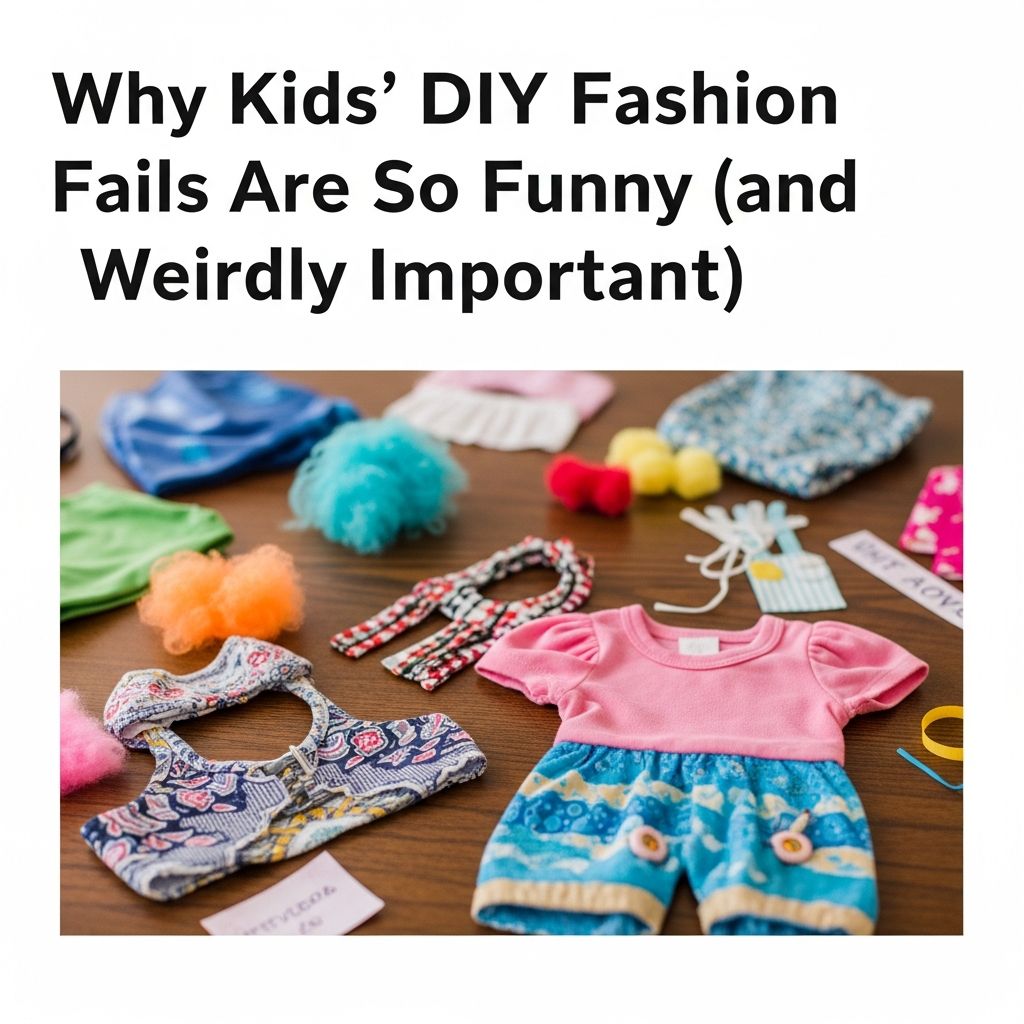
Children have a remarkable talent for turning totally normal clothing into the strangest, funniest outfits imaginable. What looks like a wardrobe disaster to adults is often a creative triumph to them.
Kids and Their Wild Fashion Experiments
At some point, most kids decide that the tags inside their shirts contain mere suggestions, not instructions. Shirts become skirts, leggings become sleeves, and longline tops get pulled so low that they become accidental \”crotch tops.\” Adults see chaos; kids see style.
- Young children test limits by experimenting with how clothes fit and move.
- They often imitate what they see older siblings, teens, or influencers wearing.
- They rarely understand why some cuts or lengths feel inappropriate to adults.
When a child proudly walks into the living room wearing a shirt yanked down in a bizarre way, they are not trying to be scandalous. They are simply exploring cause and effect: \”If I pull this here, it looks different. Different is fun.\”
Why These Outfits Make Adults Laugh So Hard
Parents often burst out laughing when they see a tiny child sporting an outfit that would be controversial on an adult. The mismatch between the child’s innocence and the grown-up style creates instant comedy gold.
- The child’s total seriousness about the look contrasts with how absurd it appears.
- Parents recognize echoes of real fashion trends exaggerated by a kid’s clumsy execution.
- There is relief in realizing the moment is silly, not dangerous.
Kids may not fully understand why everyone is laughing, but they do notice the reaction. This is one reason it matters how adults respond; repeated teasing can turn a funny moment into a source of shame.
Comfort, Modesty, and Safety: What Actually Matters
While a crooked mini-top on a preschooler is usually harmless at home, parents still need simple rules for comfort, modesty, and basic safety. The goal is not to crush creativity but to keep kids protected and appropriate for the setting.
| Area | Simple Rule | Kid-Friendly Explanation |
|---|---|---|
| Comfort | No pinching, scratching, or tripping clothes. | \”If it hurts or keeps falling, we change it.\” |
| Modesty | Underwear and private parts stay covered in public. | \”Swimsuit areas are private; we keep them hidden.\” |
| Safety | Avoid outfits that catch, choke, or block vision. | \”If you can’t run, climb, and see, it’s not safe.\” |
| Occasion | Dress a little nicer or more covered for school or events. | \”Some places have special clothing rules we follow.\” |
Once these basics are clear, there is room for all the silly layers, mismatched socks, and inside-out shirts a child’s heart desires.
How to React When Your Child Wears a \”Crotch Top\”
Imagine your child has pulled an oversized shirt all the way down so it hugs their hips in an unintentionally suggestive way. They march out beaming. You choke back a laugh, then wonder how to respond without making them feel bad.
Step-by-Step Response
- Pause before reacting. Take a breath so your first response is intentional, not just laughter or panic.
- Notice their emotion. Are they proud, silly, or just curious? Start by reflecting that back.
- Validate the creativity. Acknowledge the effort before you suggest changes.
- Introduce a simple rule. Explain why the outfit doesn’t work for the current situation.
- Offer choices. Give them two or three acceptable alternatives so they still feel in control.
This approach keeps the moment light while teaching long-term lessons about body boundaries and social norms.
Turning Fashion Fails Into Learning Moments
Every strange outfit is a small chance to talk about bodies, privacy, and confidence in age-appropriate ways. Instead of lecturing, short, repeated conversations work best with young children.
- Use neutral language like \”covered\” and \”private\” instead of shaming words.
- Link clothing rules to safety and comfort, not to fear of other people’s opinions.
- Reassure kids that their bodies are good and that clothing is just a tool.
Over time, these tiny talks lay the groundwork for healthier attitudes about body image and consent in later years.
Balancing Style Freedom and Parental Boundaries
Many parents struggle with where to draw the line. Total control over every outfit can create power struggles, but zero limits can feel uncomfortable or unsafe. Striking a balance is the key.
What Kids Can Control
- Color combinations and patterns, even if they clash.
- Accessory choices like hats, hairbands, and non-dangerous jewelry.
- Which of a few parent-approved outfits to wear on a given day.
What Parents Should Control
- Minimum coverage for school, public outings, and special events.
- Weather-appropriate layers and shoes.
- Safety issues such as loose strings, long scarves, or slippery footwear.
When kids know exactly which parts they get to decide and which parts are non-negotiable, there is far less conflict and far more room for playful self-expression.
Why Parents Share These Moments Online
In the age of social media, many adults snap a picture of their child’s hilarious fashion misfire and share it with friends or followers. The humor is universal; nearly every parent knows that \”you won’t believe what my kid wore\” feeling.
- Posting can be a way to find solidarity and laugh at the chaos of family life.
- However, children deserve some privacy and dignity even when the moment is funny.
- Blurring faces, using private accounts, or asking older kids before posting are all respectful habits.
The main question to ask is simple: \”Will this image embarrass them in a year or ten?\” If the answer is yes, consider keeping the laugh within the family group chat.
Age-Appropriate Guidelines for Clothing Experiments
Expect clothing battles and fashion experiments to change as children grow. A preschooler’s unintentional mini-top is very different from a tween intentionally pushing dress-code limits.
| Age Range | Common Experiments | Helpful Parent Response |
|---|---|---|
| Toddlers (2–4) | Backwards shirts, no pants, strange layering. | Focus on comfort, warmth, and simple coverage rules. |
| Early school age (5–8) | Mismatched outfits, odd hemlines, pulling tops into skirts. | Let them experiment at home; set clear rules for school. |
| Tweens (9–12) | Cropped looks, tight clothes, copying teen trends. | Explain media influence, body respect, and dress codes. |
| Teens (13+) | Intentional style statements, brand focus, peer-driven trends. | Negotiate boundaries, emphasize self-respect and comfort. |
Understanding what is typical for each stage can lower anxiety and help parents respond with perspective instead of panic.
Practical Tips for Managing Outfit Disasters
When a child’s outfit crosses your line for appropriateness or practicality, a calm plan works better than last-minute arguments at the door. A few simple systems can dramatically reduce daily drama.
- Prepare tomorrow’s outfit together the night before, with built-in choices.
- Keep a designated \”home fashion\” drawer for wild, anything-goes looks.
- Use checklists: covered, comfortable, weather-ready, and safe.
- Reserve veto power for genuine safety or major rule violations only.
These strategies help kids feel empowered while still making mornings run more smoothly for everyone in the household.
FAQs About Kids’ Funny Clothing Choices
Is it wrong to laugh at my child’s ridiculous outfit?
It is natural to laugh, especially when the outfit genuinely looks absurd. The key is to avoid laughing at the child in a way that makes them feel foolish. Try laughing \”with\” them, or smiling first and then gently explaining why an outfit might not work outside the house.
How do I explain modesty without shaming their body?
Use simple, neutral language focused on privacy and context. For example, you might say, \”We keep swimsuit parts covered at school\” rather than commenting on whether the child looks \”too grown-up\” or \”inappropriate.\” Reinforce that their body is good, and clothing rules are about respect and safety.
What if my co-parent has totally different clothing rules?
Kids adapt best when the core rules are consistent across caregivers. Even if you disagree on details, try to agree on a short list of non-negotiables, such as keeping underwear covered in public and wearing weather-appropriate clothing.
Should I ever let my child leave the house in a truly weird outfit?
In low-stakes situations, saying yes can build independence and confidence. If the outfit is safe and modest enough, it is often fine to let natural consequences (like friendly comments or a chilly walk) teach more than a parental lecture would.
How do I know if my child’s clothing choices are a problem?
Occasional battles or wild outfits are a normal part of development. Concern is more appropriate if clothing themes obsessively focus on sexualized looks at a very young age, if there is extreme distress whenever limits are set, or if outfits seem tied to deeper emotional struggles. In those cases, a gentle talk with a pediatrician or child therapist can help.
Embracing the Humor Without Losing the Message
Parents do not need to choose between laughing at their child’s fashion disasters and teaching important lessons. Both can coexist. Sharing a giggle over a makeshift \”crotch top\” and then calmly guiding your child toward a more practical outfit can become a bonding moment instead of a power struggle.
In the end, children will outgrow the strangest outfits, but they will remember whether their parents made them feel ridiculous or respected while they experimented. When in doubt, add kindness, a clear boundary, and just enough humor to keep everyone sane.