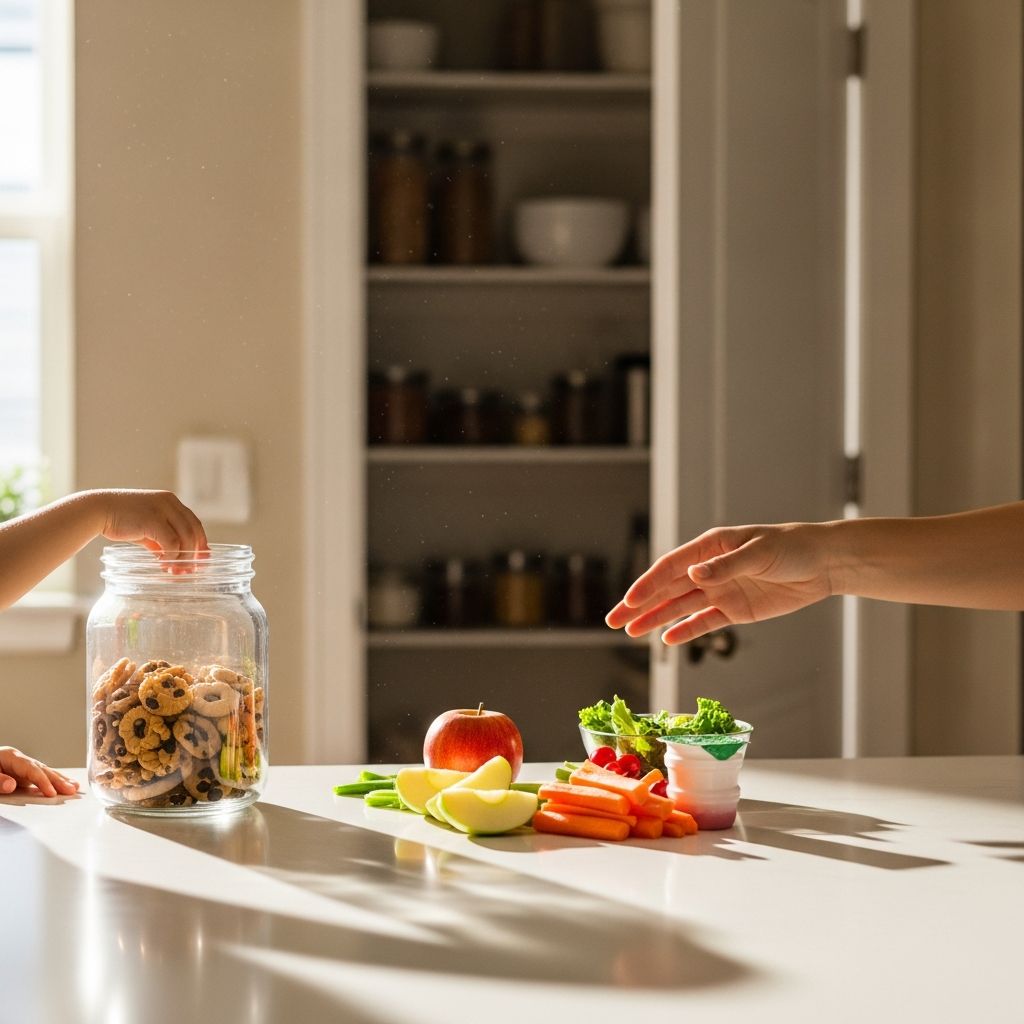
Discovering empty wrappers hidden in a child’s room or pantry raids when you’re not looking can unsettle any parent. Secret snacking among children is a common issue rooted in emotions, habits, or family dynamics around food. This guide explores the underlying causes, offers practical steps to address it compassionately, and provides tools to nurture a healthy, guilt-free relationship with eating. By focusing on understanding rather than punishment, parents can transform these moments into opportunities for building trust and better nutrition practices.
Understanding the Roots of Secret Snacking
Children don’t sneak food to be defiant; often, it’s a signal of deeper needs. A sense of scarcity, whether real or perceived, drives many kids to hoard snacks. This can stem from irregular meal times, overly strict rules on treats, or even past experiences with limited access to preferred foods. Research links high parental control over feeding—such as pressuring kids to finish plates or restricting sweets—to increased instances of hiding or sneaking food, even when not hungry.
Emotional factors play a role too. Boredom, stress, or a desire for independence might prompt a quick cookie grab. For some, labeling foods as ‘good’ or ‘bad’ heightens desire, turning treats into forbidden treasures that must be hidden. Recognizing these triggers helps parents shift from reaction to proactive support.
- Perceived restrictions: Kids feel certain items are off-limits, leading to secretive grabs.
- Hunger gaps: Inconsistent schedules leave tummies rumbling between meals.
- Emotional cues: Food becomes a comfort or rebellion outlet.
- Environmental temptations: Visible snacks on counters invite impulsive actions.
Responding in the Moment: Stay Calm and Curious
Your first instinct might be frustration, but reacting with anger reinforces shame, worsening the cycle. Instead, approach discoveries with empathy. If you find stashed wrappers, wait for a neutral time when everyone is relaxed. Gently say, ‘I saw some snack wrappers in your room. You’re not in trouble—we can chat about it.’ This opens dialogue without threat.
Lead with questions: ‘Were you still hungry?’ or ‘Do you worry snacks won’t be available later?’ Listen actively, validating feelings like ‘It makes sense you’d want that if your tummy felt empty.’ Avoid assumptions or lectures; curiosity builds safety for honesty.
| Situation | Reactive Response (Avoid) | Empathetic Response (Use) |
|---|---|---|
| Finding hidden candy | ‘Why are you sneaking? That’s bad!’ | ‘I noticed these. What’s going on? I’m here to help.’ |
| Catching mid-snack | ‘Stop that right now!’ | ‘Hey, let’s grab a bowl and enjoy together—no need to hide.’ |
| Repeated hoarding | ‘No more treats ever!’ | ‘Tell me more about why this happens. How can we fix it?’ |
Building a Balanced Family Feeding Routine
Consistent structures reduce the urge to sneak. Establish predictable meal and snack times, aiming for three meals and two snacks daily. Include protein, fiber, and fats at each to promote fullness—think yogurt with fruit, cheese and crackers, or nuts with apple slices. This prevents hanger-driven raids.
Parents control what and when food is offered; kids decide how much. This ‘division of responsibility’ empowers children to trust their bodies’ signals, minimizing secretive eating. Stock visible, easy-access options like a ‘snack drawer’ with non-perishables, fostering security without chaos.
Sample Daily Eating Schedule
| Time | Meal/Snack | Balanced Components |
|---|---|---|
| 7 AM | Breakfast | Oatmeal, eggs, berries (grains, protein, fruit) |
| 10 AM | Snack | Cheese stick, whole-grain crackers (protein, grains) |
| 12:30 PM | Lunch | Turkey wrap, veggies, hummus (protein, veggies, fat) |
| 3 PM | Snack | Apple, peanut butter (fruit, fat/protein) |
| 6 PM | Dinner | Chicken, rice, salad (protein, grains, veggies) |
Embracing All Foods Without Labels
Ditch ‘junk food’ talk—it amplifies allure. Adopt ‘all foods fit’: treats alongside nutritious choices normalize enjoyment. Serve dessert with dinner sometimes, or add a small sweet to lunches. This demystifies snacks, reducing hoarding as kids learn availability isn’t scarce.
Involve kids in planning: ‘Pizza night—want broccoli or carrots on the side?’ Let them spit out disliked bites into a napkin, easing trials for picky or insecure eaters. Over time, this cultivates intuitive eating, where food is neutral, not a battleground.
- Offer treats regularly but in portions.
- Use neutral language: ‘Let’s have chips’ not ‘Don’t spoil dinner.’
- Model balanced eating yourself.
Addressing Deeper Issues: When to Dig Further
If sneaking persists, reflect on dynamics. Are treats too limited? Is the kitchen stocked temptingly? Adjust by increasing fun food exposure mindfully. For history of insecurity, provide reassurance like a personal snack pack.
Persistent patterns might signal anxiety or sensory needs—consult a pediatrician or dietitian. Track patterns: Does it spike pre-bedtime? Tweak timing accordingly.
Long-Term Strategies for Positive Food Relationships
Prevent recurrence by cooking together, discussing hunger cues, and praising efforts like ‘You listened to your body well!’ Celebrate openness over perfection. Families report fewer issues when kids feel food autonomy within structure.
Monitor progress weekly: Fewer hidden stashes? More table requests? Adjust as needed. This builds lifelong skills: mindful eating, emotional regulation, family trust.
Frequently Asked Questions
Is sneaking food normal for kids?
Yes, occasional grabs are typical, especially with tempting visibles. Concern arises if habitual, signaling unmet needs.
How do I stop repeated secret eating?
Understand why via calm talks, routine-ize meals, normalize all foods. Avoid shame; collaborate on solutions.
What if my child has food insecurity history?
Offer secure access like snack backpacks, involve in choices, allow spitting out new foods.
Should I restrict treats entirely?
No—restrictions fuel sneaking. Balance with regular inclusion reduces obsession.
When to seek professional help?
If tied to distress, weight issues, or persists post-changes, see a specialist.
References
- When Your Child is Sneaking Food — Sarah Remmer. 2023. https://sarahremmer.com/when-your-child-is-sneaking-food/
- 5 Tips to Stop Your Kids’ Secret Eating — Laura Cipullo. 2023. https://lauracipullo.com/blog/5-tips-to-stop-your-kids-secret-eating/
- What If I Notice My Child Sneaking Candy — Learning Tree Childcare. 2023. https://learningtreechildcare.com/what-if-i-notice-my-child-sneaking-candy-and-other-food/
- Healing from Food Insecurity: Beyond the Stash — Families Rising. 2023. https://wearefamiliesrising.org/resource/healing-from-food-insecurity/
- Associations of Parental Control of Feeding with Eating in the Family Context — PMC / NIH. 2013-07-29. https://pmc.ncbi.nlm.nih.gov/articles/PMC3728724/
- Stealing — Positive Discipline Association. 2023. https://positivediscipline.org/page-273669