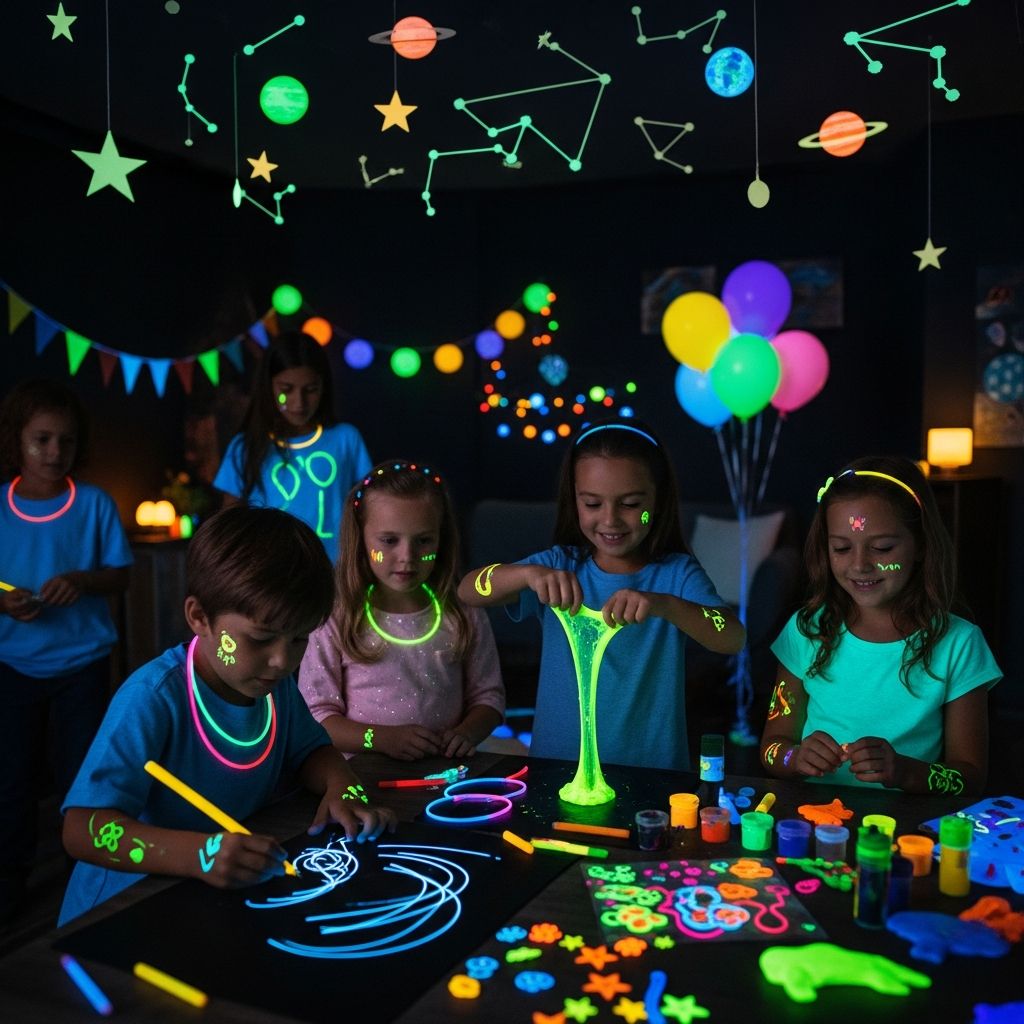
Glow-in-the-dark activities can turn an ordinary evening into a magical experience for kids, and they do not have to be complicated, expensive, or messy. Parents can combine simple materials, basic safety guidelines, and a bit of creativity to build sensory play, STEM learning, and unforgettable party moments at home.
Why Kids Love Glow-in-the-Dark Play
Children are naturally drawn to glowing colors and lights because they look different from everyday toys and create a sense of mystery and discovery. When the lights go off and bright neon colors appear, kids feel like the living room or backyard has been transformed into a new world just for them.
- Glow play introduces novelty without needing expensive technology or screens.
- It encourages exploration, storytelling, and imaginative games with siblings and friends.
- Parents can use the special atmosphere as a springboard for learning about science, colors, and even emotions.
Essential Safety and Setup Tips
Before planning any glow-in-the-dark activity, parents should choose safe materials and create an environment where kids can move without getting hurt. Safety is especially important in low light, when tripping hazards and sharp edges are harder to see.
- Use child-safe, non-toxic paints, glues, and glow sticks from reputable brands.
- Clear floors of clutter and cover tables with washable cloths or disposable paper to manage mess.
- For very young children, avoid small pieces that could be choking hazards and always supervise closely.
Basic Glow Gear and Materials
Many glow activities rely on a few simple supplies that families can keep in a small bin for repeated use. Building a basic kit allows parents to set up last-minute glow play on rainy days, sleepovers, or family nights.
- Glow sticks, glow bracelets, and glow necklaces in assorted colors.
- Black light bulbs or a small plug-in black light bar for one room.
- Neon or fluorescent poster paint, highlighters, and white paper or cardstock.
- Plastic tubs, zip-top bags, clear bottles, and basic craft tools like tape and scissors.
| Item | Typical Use | Age Guidance* |
|---|---|---|
| Glow sticks | Necklaces, ring toss, hide-and-seek | 3+ with supervision |
| Black light | Room-wide glowing effect for crafts and games | All ages with adult control |
| Neon paint | Posters, face paint (when labeled skin-safe) | 4+ with supervision |
| Clear bottles | Sensory bottles, calm-down jars | 3+ (hot glue lids for toddlers) |
| Plastic tubs | Sensory bins, glow water play | All ages with close supervision |
*Always adjust age suggestions based on your child’s developmental stage and your comfort level.
Glow-in-the-Dark Crafts for Creative Kids
Craft-based glow projects are perfect for quiet afternoons or early-evening family time. Kids get to design something with their hands and then experience the surprise of watching it light up under black light or in the dark.
Glow Posters and Wall Art
Glow posters give children a canvas to express themselves with bright, bold designs that come alive when the lights go off. Parents can hang finished pieces in playrooms or bedrooms to create a permanent glow corner.
- Provide black or dark-colored poster board, neon markers, and highlighters.
- Encourage kids to draw galaxies, animals, favorite characters, or abstract patterns.
- Hang posters near a black light so they shine during story time or calm-down routines.
DIY Glow Lanterns and Jars
Homemade glow lanterns look magical on a shelf, windowsill, or nightstand and are easy for kids to customize. Parents can decide whether to use glow sticks for temporary light or glow-in-the-dark paint for a reusable decoration.
- Use clean plastic jars or bottles for safety and paint the inside or outside with neon or glow paint.
- Drop in a snapped glow stick or small battery tea light for special occasions.
- Invite children to add glitter, stickers, or tissue paper shapes for extra texture and color.
Glow Bracelets, Crowns, and Accessories
Wearable glow crafts are perfect for parties, sleepovers, or family movie nights. Kids enjoy designing their own accessories and then wearing them as they play or dance.
- Connect glow sticks with the included plastic connectors to form bracelets, necklaces, and belts.
- Use paper strips, tape, and neon markers to create crowns or headbands that shine under black light.
- Set up a small “glow station” with mirrors so kids can admire their creations.
Simple STEM and Learning Activities with Glow
Glow-in-the-dark fun can double as a learning tool that makes science, math, and reading more engaging. When children handle glowing objects, they pay closer attention, which creates a natural opening for discussion and explanation.
Counting, Sorting, and Patterns
Basic math skills become more interesting when children use bright glow sticks or neon shapes. Parents can gently introduce new vocabulary while kids play and experiment with simple rules.
- Ask children to sort glow sticks by color and count how many are in each group.
- Lay out repeating color patterns and let kids continue the sequence.
- Turn off the lights and challenge kids to find a specific number of items in a scavenger-style game.
Letter and Word Games
Adding glow to literacy practice can decrease resistance and increase excitement, especially for reluctant readers. Families can adapt the level of difficulty to suit toddlers, early readers, or older kids.
- Write letters or simple sight words on neon index cards and hide them around a darkened room.
- Give kids flashlights or black-light flashlights and ask them to find specific letters to spell their name.
- Use glow tape to form giant letters on the floor and play jumping games that match sounds to symbols.
Introductory Science Explorations
Glow activities can introduce children to basic scientific ideas like energy, reflection, and chemical reactions. Parents do not need advanced knowledge; simple questions and observations are enough to spark curiosity.
- Discuss why some objects glow under black light and others do not, noticing colors that react strongly.
- Experiment with shining flashlights through translucent objects to see how light travels.
- Encourage kids to make predictions before turning off the lights, then compare what really happens.
Glow-in-the-Dark Sensory Play
Sensory activities give children a chance to explore different textures, temperatures, and sounds while staying focused and calm. When combined with glow elements, sensory play feels more exciting without losing its soothing qualities.
Glow Sensory Bins
Sensory bins can be tailored to nearly any age group and theme, from outer space to ocean adventures. Parents can reuse the same bin for multiple evenings by refreshing or rotating the materials.
- Fill a large plastic tub with dry materials such as rice, pasta, or water beads that react under black light when dyed with safe neon colorants.
- Add scoops, cups, small plastic toys, and a few glow sticks or glowing shapes.
- Set clear rules, such as keeping materials in the bin and washing hands afterward.
Glow Bottles and Calm-Down Jars
Glow bottles serve as both a toy and a self-regulation tool. Watching slow-moving glitter or small items float and settle can help children relax before bed or after a busy day.
- Fill clear plastic bottles with water, a small amount of clear glue or glycerin, glitter, and a few glowing items.
- Seal the caps with strong glue or tape to prevent leaks and keep contents secure.
- Use the bottles during quiet time, inviting kids to shake, watch, and breathe deeply as the contents settle.
Glow Party and Group Game Ideas
Glow-in-the-dark games are ideal for birthdays, sleepovers, and school events. They encourage teamwork, physical activity, and lots of laughter without requiring complicated rules or equipment.
Indoor Glow Games
Indoor spaces like living rooms, basements, or school gyms can easily become glowing playgrounds. Keeping rules simple ensures that children of different ages can join in together.
- Glow Ring Toss: Use glow-stick rings and set up targets with water bottles or cones wrapped in neon tape.
- Glow Balloon Volleyball: Inflate balloons and tape a neon “net” across the room, then encourage gentle, cooperative play.
- Glow Freeze Dance: Turn off the lights, play music, and have kids freeze when the music stops or when a flashlight beam hits them.
Outdoor Glow Adventures
Outdoor glow play works best at dusk or after dark in a safe, enclosed area like a backyard. Parents should mark boundaries clearly and remind kids to stay within view.
- Glow Stick Tag: Give one player a different-colored glow stick to show that they are “it” and switch when tags happen.
- Backyard Glow Hunt: Hide glowing items or reflective stickers around the yard and let kids search with flashlights.
- Trail of Lights: Line a short path with glow sticks for a mini evening walk or storytelling trail.
Cleaning Up After Glow Play
Glow activities can be low-mess when parents plan ahead and set expectations. Simple routines reduce stress and help children learn responsibility and respect for shared spaces.
- Place a laundry basket or bin near the play area for quick collection of toys and props.
- Ask children to sort reusable glow items into a labeled container for future activities.
- Wipe down surfaces and check floors with the lights on to find any small pieces or spills.
Frequently Asked Questions About Glow-in-the-Dark Activities
Are glow sticks safe for young children?
Most commercially sold glow sticks are labeled non-toxic, but the liquid inside should never be opened or ingested. Parents should supervise closely, discourage chewing, and dispose of any damaged glow sticks immediately.
Do I need a black light for glow activities?
A black light is helpful for making neon colors really pop, but it is not required for all activities. Many glow sticks and some paints produce visible glow in complete darkness without additional equipment.
How can I keep glow play calm instead of chaotic?
Setting clear boundaries, such as limiting running to certain games and using calm music, keeps energy at a manageable level. Dividing activities into stations or time blocks helps children know what to expect and when each game or craft will end.
What is the best age for glow-in-the-dark activities?
Glow play can be adapted for toddlers through tweens, as long as materials and rules match each child’s abilities. Very young children benefit from simple, sensory-based activities, while older kids enjoy more complex games and themed parties.
How often can we reuse glow materials?
Reusable items like black lights, plastic jars, sensory bins, and many neon art supplies can be stored and used again for months or years. Disposable products like glow sticks are generally single use, so it helps to buy them in bulk only when planning multiple events.
With thoughtful preparation and a focus on safety, glow-in-the-dark activities can become a favorite family tradition that supports creativity, learning, and connection. Parents do not need elaborate setups or expensive gear—just a few simple supplies, a darkened room, and a willingness to play alongside their children.