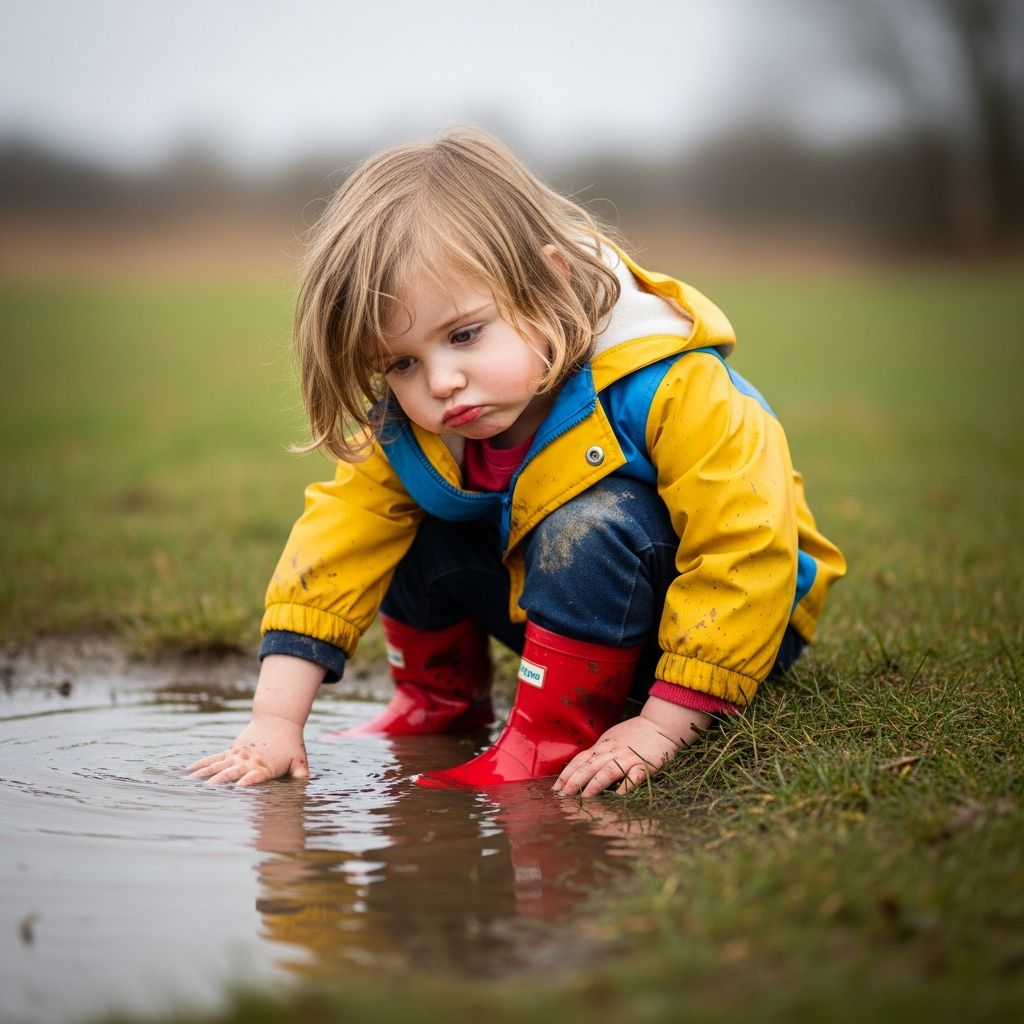
Muddy puddles look magical on TV shows and in children’s books, but real-life puddles can feel cold, squishy, and surprisingly underwhelming to a young child. This mismatch between fantasy and reality is more than a funny moment; it is a powerful chance for emotional learning and connection.
Why Muddy Puddles Look So Fun in Theory
In many kids’ shows and picture books, jumping in puddles is shown as pure joy: big splashes, bright colors, and contagious giggles. What children rarely see is the chill of wet socks, the weight of muddy clothes, or the way mud clings to skin and shoes afterward. Over time, children build a mental picture of puddle-jumping as a perfect, clean, and endlessly fun activity.
When little ones finally get permission to stomp in a real puddle, they carry those high expectations with them. The moment their feet hit cold, gritty water, they may feel startled, confused, or downright betrayed by the experience they imagined would be amazing.
The Reality Check: Sensory Overload and Surprise
For toddlers and preschoolers, the first encounter with mud and puddles can be intense. The texture is slimy or sticky, the temperature is often chilly, and the sound of splashing can be louder than they expect. Children who are sensitive to touch or temperature may react with immediate discomfort, pulling away or even crying.
This reaction is not a sign that something is wrong with the child. Instead, it shows how new and overwhelming sensory input can challenge a young nervous system. What adults see as a harmless mess may feel, in that moment, like a full-body surprise that is hard to process.
Emotional Expectations vs. Real-Life Feelings
Many children expect to feel happy and excited during new experiences they have seen modeled as fun. When happiness does not appear on schedule, they may feel disappointed, embarrassed, or angry with themselves. A child might suddenly worry that they are “doing it wrong” or that something is wrong with the activity.
Parents sometimes feel caught off guard, especially if they worked hard to set up a special moment. The good news is that these mismatched expectations create an ideal context for teaching children that all feelings are allowed, even in situations that were supposed to be joyful.
Common Reasons Kids Feel Let Down by Messy Play
Although every child is unique, certain patterns often explain why a highly anticipated messy activity turns into a meltdown or a quiet refusal. Understanding these reasons helps parents respond with empathy instead of frustration.
- Unexpected textures: Mud can feel slimy, grainy, or sticky, which may be unpleasant for kids sensitive to touch.
- Temperature shock: Cold water or chilly air can make a puddle feel uncomfortable very quickly.
- Fear of mess: Some children have heard “don’t get dirty” so often that mess itself feels like breaking a rule.
- Performance pressure: When phones come out to record the moment, kids can become self-conscious and less playful.
- Mismatch with media: Real splashes rarely look as big, colorful, or dramatic as animated ones, which can leave kids underwhelmed.
How to Respond When Your Child Is Disappointed
Parents cannot always control a child’s reaction to a new experience, but they can create a safe emotional space around it. The way an adult responds in those few minutes can either deepen the disappointment or transform it into a moment of connection.
- Stay calm and neutral: Instead of laughing at the reaction or rushing to fix it, simply acknowledge what happened.
- Validate the feeling: Let your child know that it makes sense to feel surprised, scared, or upset.
- Offer options: Give your child a choice: step away from the puddle, observe from a distance, or try again more gently.
- Pause the audience: If you are filming, consider putting the phone away so the child feels less “on stage.”
- Keep the tone light: Use a gentle voice and relaxed body language to signal that nothing is wrong or dangerous.
Teaching Emotional Skills Through Messy Moments
Beyond the surface-level silliness of a muddy puddle, these moments offer powerful teaching opportunities. Children can learn that it is okay to change their mind, that they can survive big emotions, and that adults will remain supportive even when things do not go as planned.
Over time, repeated experiences like this support emotional resilience. Kids begin to understand that fun and discomfort sometimes coexist, and that disappointment is just another feeling they can move through rather than something to avoid at all costs.
Benefits of Messy Play (Even When It Goes Wrong)
Messy play offers benefits that go far beyond entertainment. It supports brain development, fine and gross motor skills, and curiosity about the natural world. Even when a specific activity feels like a failure, the exposure to new textures and sensations contributes to a richer sensory map of the world.
From a social-emotional standpoint, messy experiences help children practice problem-solving, communication, and flexibility. Learning to say “I don’t like this; I want to stop” is a healthy form of self-advocacy that parents can gently encourage.
Practical Tips for First-Time Muddy Puddle Adventures
A little preparation can turn a potentially overwhelming experience into a manageable and even enjoyable one. Instead of surprising your child with a sudden plunge into mud, ease into the sensory experience with gradual steps.
- Dress your child in clothes and shoes that can get dirty without worry.
- Start with small splashes at the edge of the puddle rather than full jumps into the deepest part.
- Talk beforehand about how the mud might feel: squishy, cold, or sticky.
- Bring a towel, wipes, and a change of clothes so cleanup feels easy and low-stress.
- Let your child watch you test the puddle first; modeling curiosity can reduce anxiety.
Balancing Safety, Cleanliness, and Freedom
Many adults grew up hearing messages that dirt is bad, clothing must stay spotless, and water play is risky. Modern parenting often asks caregivers to balance those inherited ideas with newer understandings of sensory learning and free play. It is normal to feel torn between wanting to protect your child and wanting them to explore.
Creating a family “mess policy” can help. Decide ahead of time where and when messy play is welcome, what boundaries exist (such as no splashing near roads), and how cleanup will happen. Clear guidelines let children relax and engage more fully in the experience.
Example Guidelines for Muddy Play
The following simple table offers an example of how a family might frame rules and expectations around puddle-jumping and other messy activities. You can adapt these ideas to your child’s age, temperament, and environment.
| Area | Guideline | Why It Helps |
|---|---|---|
| Clothing | Wear designated “mud clothes” and boots for messy play days. | Reduces stress about stains and lets kids move freely. |
| Location | Only jump in puddles that are away from streets and deep ditches. | Keeps the activity safe while still allowing freedom. |
| Time limit | Set a loose time frame (for example, 15–30 minutes) before cleanup. | Helps kids transition without sudden surprises. |
| Cleanup | Have a consistent routine: rinse, towel dry, change clothes. | Predictability makes returning indoors smoother and calmer. |
| Emotions | Talk about feelings before and after: excited, scared, cold, silly. | Normalizes big feelings and builds emotional vocabulary. |
Supporting Different Temperaments
Not every child will love mud, and that is okay. Some kids gravitate toward sensory-rich, high-energy play, while others prefer calmer, more controlled activities. Respecting temperament does not mean avoiding all challenges; it simply means adjusting the pace and intensity of new experiences.
For a child who is more cautious, offer alternatives: gently touching mud with a stick, filling a small container with muddy water, or just watching siblings play. Over time, they may choose to participate more actively—but they should never feel forced or shamed into it.
Turning a Viral-Style Moment into a Private Memory
Many caregivers think about sharing special milestones online, including first puddle jumps. While it can be fun to post a cute clip, consider your child’s emotional experience first. A moment that feels deeply uncomfortable may not be something they want to be replayed or commented on later.
Some families choose to capture a few seconds of video and then put devices away, focusing on eye contact, laughter, and verbal encouragement. This approach shifts the priority from online reactions to the child’s live, in-person experience.
How to Talk About Disappointment Afterward
Once everyone is warm, dry, and calm, talking about what happened helps your child make sense of their feelings. Keep the conversation short and simple, using age-appropriate language. The goal is not to convince them that mud is fun, but to help them feel understood and supported.
- Ask gentle questions like, “How did the puddle feel on your feet?”
- Reflect their words back: “You didn’t like the cold water; that makes sense.”
- Share that grown-ups also sometimes imagine things will be fun and then change their minds.
- Reassure them that they can always say “no” to an activity that feels wrong in their body.
Frequently Asked Questions (FAQs)
Is it okay if my child hates getting dirty?
Yes. Disliking mess is simply a preference, not a flaw. You can gently offer new sensory experiences without forcing participation, allowing your child to explore at their own pace and in their own way.
How can I tell if my child is just surprised versus truly distressed?
A surprised child may startle or cry briefly, then quickly calm once you offer comfort and options. A truly distressed child may cling tightly, refuse to go near the puddle again, or show signs of ongoing anxiety. In either case, staying calm and responsive helps them feel safe.
Should I keep trying puddle play if the first time goes badly?
There is no rule that every child must enjoy mud. If your child seemed overwhelmed, wait a while before trying again, and start smaller next time. You can also offer different forms of water or sensory play, such as warm baths with toys or washable finger paint.
What if family members or friends tease my child for being scared?
It is important to protect your child from shaming comments. You can redirect the conversation, explain that everyone has different comfort levels, and emphasize that your family values emotional safety over performance or toughness.
How can I make cleanup less stressful for both of us?
Planning ahead is the key. Keep towels, wipes, and a plastic bag for wet clothes in your car or near the door. Turn cleanup into a mini-ritual with a song, a warm drink, or a cozy story afterward so that the transition feels predictable and even enjoyable.
Using Everyday Messes as Growth Opportunities
From spilled paint to lopsided sandcastles, early childhood is full of small disappointments that come bundled with big feelings. Each of these moments offers a chance to practice empathy, flexibility, and self-awareness. When caregivers respond with patience and curiosity, they show children that their emotions matter more than picture-perfect outcomes.
Muddy puddles may not always live up to the hype, but they reveal something far more valuable: the way kids learn to navigate reality, adjust expectations, and trust the adults who stand beside them, ready to offer a warm towel and a listening ear when fun does not go as planned.