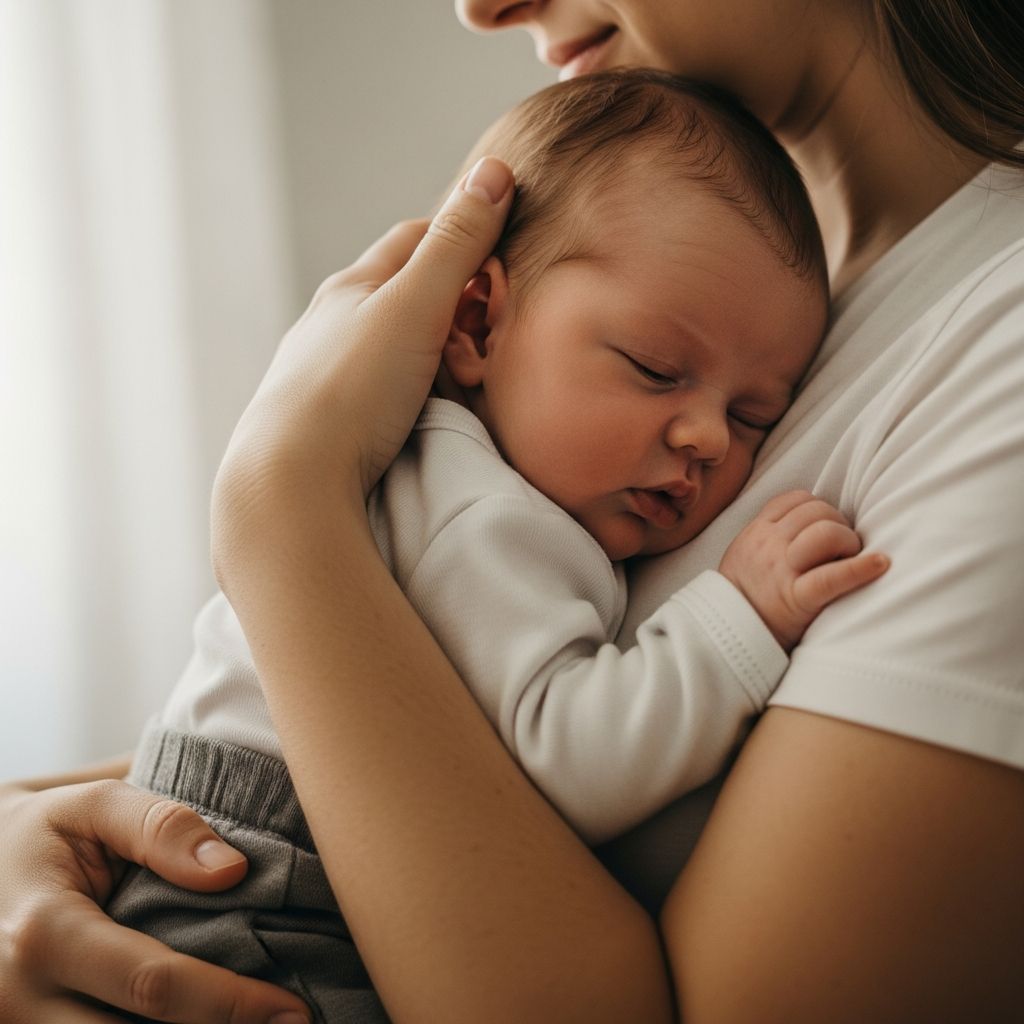
Physical closeness between parents and babies forms the cornerstone of early human development. Far from spoiling an infant, frequent holding delivers essential physiological and psychological benefits that shape lifelong health outcomes. Research consistently shows that babies crave and thrive on touch, with no upper limit to its positive effects.
The Evolutionary Roots of Baby Carrying
Humans evolved as a species reliant on constant physical proximity. Unlike many animals that quickly become independent, human infants remain helpless for months, necessitating prolonged carrying by caregivers. This ‘fourth trimester’ concept posits that the initial three months postpartum mimic the womb’s secure environment through holding and rocking.
Anthropological evidence indicates that in hunter-gatherer societies, babies are held or carried up to 90% of the time, correlating with optimal growth metrics. Modern detachment from this norm can disrupt natural regulatory systems, leading to heightened stress responses in infants.
Physiological Marvels of Skin-to-Skin Contact
Skin-to-skin holding, often termed kangaroo care, triggers a cascade of biological responses in both baby and parent. When a diaper-clad infant rests chest-to-chest with a caregiver, heart rates synchronize, breathing stabilizes, and body temperature regulates effectively.
- Infants exhibit improved oxygenation and stable vital signs, particularly vital for preterm babies in neonatal intensive care units (NICUs).
- Oxytocin release surges, fostering nurturing behaviors and reducing parental anxiety.
- Cortisol levels drop, mitigating the stress that can impede weight gain and immune function.
Studies confirm these effects extend beyond the NICU. Full-term newborns held skin-to-skin immediately post-birth demonstrate better breastfeeding initiation and sustained latch success.
Neurodevelopmental Advantages for Growing Brains
Touch serves as a primary language for infants, stimulating neural pathways critical for cognitive and emotional growth. Frequent holding enhances brain maturation by activating sensory nerve fibers that promote oxytocin and endorphin production.
A landmark Stanford Medicine study of very premature infants (born at least eight weeks early) found that those receiving extended kangaroo care showed significantly reduced developmental delays at one year. More holding time directly correlated with better cognitive scores, independent of socioeconomic status or illness severity.
Preterm babies in UC medical centers who experience regular touch display improved neurodevelopmental outcomes, including enhanced motor skills and sensory processing. This underscores touch’s role in bridging developmental gaps for vulnerable newborns.
| Benefit | Evidence from Preemies | Mechanism |
|---|---|---|
| Cognitive Gains | Lower delay risk at 1 year | Synchronized vitals, oxytocin boost |
| Growth Acceleration | Faster weight gain | Temperature stability, stress reduction |
| Sleep Regulation | Deeper, longer sleep cycles | Heart rate entrainment |
Building Secure Emotional Foundations
Attachment theory, pioneered by John Bowlby, emphasizes physical contact’s role in forming secure bonds. Infants instinctively seek proximity, snuggling into caregivers to associate touch with safety, voice, and scent.
Peer-reviewed analysis reveals that close body contact accelerates emotional responsiveness. In cross-cultural studies, Ghanaian infants with high skin-to-skin exposure at one month outperformed peers in the Still Face Task at six weeks, demonstrating advanced maternal engagement expectations.
Babywearing—using carriers for upright holding—amplifies these effects. At-risk adolescent mothers using carriers saw their infants develop secure attachments at seven months, reducing disorganized patterns linked to later behavioral issues.
Parental Gains from Holding Practices
Holding benefits extend bidirectionally. Caregivers experience oxytocin-mediated mood elevation, sharper cue recognition, and diminished postpartum stress. In NICU settings, skin-to-skin buffers parental PTSD risks amid high-stress environments.
Cleveland Clinic research highlights how early skin-to-skin facilitates breastfeeding cues, helping sleepy newborns feed more effectively. Parents report heightened confidence in responding to subtle signals like rooting or fussing.
Practical Strategies for Daily Integration
Incorporate holding seamlessly into routines without lifestyle overhaul. Start with immediate post-birth skin-to-skin, recommended by the American Academy of Pediatrics for all newborns.
- NICU Parents: Request nurse assistance for safe positioning amid tubes; aim for cumulative hours weekly.
- Home Care: Use soft carriers for hands-free tasks; alternate holding positions to prevent fatigue.
- Extended Family: Delegate safe cuddling to trained relatives or volunteers when parents rest.
- Nighttime: Co-sleep safely or use bedside bassinets for frequent pickups.
Track progress via apps logging hold times, correlating with baby’s sleep and feeding improvements.
Addressing Common Myths and Concerns
Myth: Holding creates dependency. Reality: Responsive touch builds independence by modeling secure base theory—babies explore confidently from a trusted anchor.
Myth: Babies must learn self-soothing early. Reality: Self-regulation emerges naturally from co-regulated experiences; premature isolation heightens distress.
For colicky infants, prolonged upright holding reduces crying episodes by 50% in some studies, offering relief without medication.
Global Perspectives and Lifesaving Applications
Kangaroo care originated in resource-limited settings, where incubators were scarce. Colombian clinicians in the 1970s observed preterm survival rates rivaling high-tech units through constant maternal holding, inspiring worldwide adoption.
In low-income regions, it prevents hypothermia and infections; in affluent hospitals, it complements technology for holistic care. Carrying Matters emphasizes its evolutionary necessity across cultures for psychological resilience.
Long-Term Outcomes of Affectionate Parenting
Longitudinal data links early touch to adolescent mental health. Securely attached children exhibit lower anxiety, better peer relations, and academic resilience. Oxytocin pathways strengthened in infancy buffer against adversity, promoting lifelong emotional intelligence.
Even beyond infancy, responsive holding reinforces neural circuitry for stress modulation, countering modern adversities like family separations.
Frequently Asked Questions
How much holding is ideal for a newborn?
There is no maximum; aim for as much as feels natural, ideally skin-to-skin for the first weeks to optimize bonding and regulation.
Is kangaroo care safe for preterm babies on monitors?
Yes, with medical team guidance; benefits outweigh risks, improving vitals and development.
Does babywearing spoil my baby?
No, it enhances secure attachment and responsiveness, fostering independence.
Can fathers benefit from skin-to-skin too?
Absolutely; it equalizes bonding hormones and supports paternal involvement.
What if my baby fusses during holding?
Persist gently; fussing often signals adjustment needs like burping or position change—touch ultimately calms.
References
- Cuddling is good for babies — and you, too — University of California. 2023-10-12. https://www.universityofcalifornia.edu/news/cuddling-good-babies-and-you-too
- To have and to hold: Effects of physical contact on infants and their caregivers — PMC (National Library of Medicine). 2020-09-15. https://pmc.ncbi.nlm.nih.gov/articles/PMC7502223/
- Skin-to-skin ‘kangaroo care’ found to boost neurodevelopment in premature babies — Stanford Medicine. 2024-08-20. https://med.stanford.edu/news/all-news/2024/08/kangaroo-preemies.html
- Carrying children matters – it is essential for normal development — Carrying Matters. 2023-05-01. https://www.carryingmatters.co.uk/why-carrying-children-matters/
- Kangaroo Care (Skin to Skin Contact) Benefits — Cleveland Clinic. 2024-02-14. https://my.clevelandclinic.org/health/treatments/12578-kangaroo-care