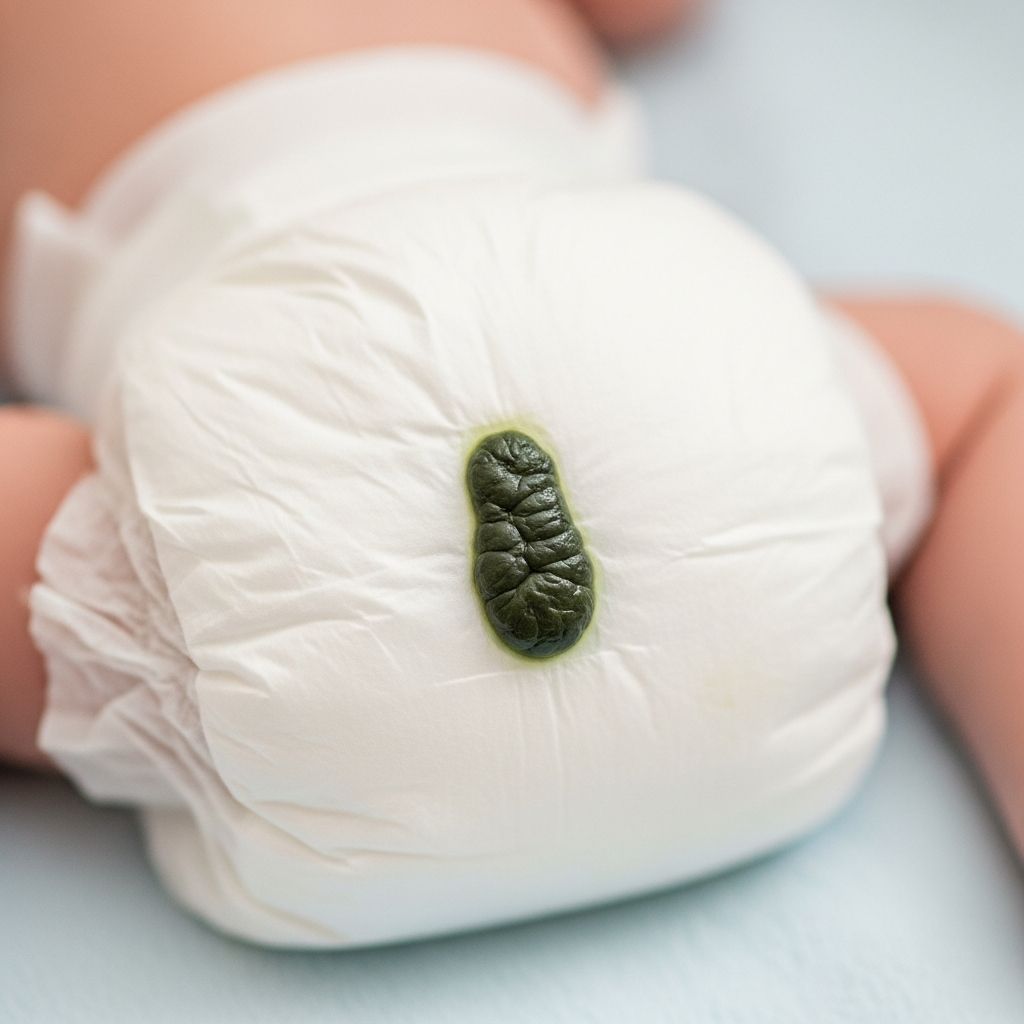
Those first days with a newborn are full of questions, and one of the earliest is often about your baby’s first bowel movements. Meconium, the name for that first poop, can look surprising but is usually a sign that things are working just as they should. Understanding what to expect can help you feel calmer and more prepared.
What Exactly Is Meconium?
Meconium is the very first stool that builds up in a baby’s intestines during pregnancy and is passed in the first days after birth. It develops gradually as your baby swallows amniotic fluid and sheds cells and other tiny particles inside the womb. Because it forms before your baby ever eats milk or formula, it looks and behaves differently from later poops.
Unlike regular stool, meconium does not contain the usual mix of bacteria from the outside world. It is typically thick and sticky, and many parents compare its texture to tar or very soft modeling clay. While its appearance may be startling, it is a normal and expected part of newborn life.
What Is Meconium Made Of?
Meconium is made up of substances your baby encounters and processes in the womb. Over time, these materials collect in the large intestine and form this distinctive first stool.
Typical components of meconium include:
- Water, which makes up a large portion of the stool.
- Cells that have been shed from your baby’s skin and digestive tract lining.
- Tiny hairs (lanugo) that once covered the baby’s body.
- Mucus and digestive secretions produced by the fetal gut.
- Traces of substances from swallowed amniotic fluid.
This mix gives meconium its signature dark color and sticky, dense feel. Because it is so thick, it can be a bit more challenging to clean off your baby’s skin than later stools.
Color, Texture, and Smell: What’s Normal?
New parents often worry about whether their baby’s diaper looks “normal.” When it comes to meconium, there is a wide range of normal appearances, but some features are especially common.
Typical appearance
- Color: Usually very dark green, blackish, or deep olive.
- Texture: Thick, pasty, and sticky, often leaving a coating on the skin.
- Clinging quality: Tends to adhere to the diaper and your baby’s bottom rather than wiping away easily.
What about the smell?
Because meconium forms before your baby starts eating breastmilk or formula, it has little to no odor compared with later dirty diapers. Many parents notice only a slight earthy or medicinal scent at most. Strong, foul-smelling stools are more likely to appear once feeding is well established.
When Should Meconium Appear and Disappear?
Most full-term babies pass their first meconium stool within the first day or two after birth. In many cases, the first diaper with meconium appears within 24 hours. This early bowel movement reassures your baby’s care team that the lower digestive tract is open and functioning.
Over the next couple of days, your baby will pass several more meconium stools. As feeding increases and milk or formula begins to move through the intestines, the diaper contents gradually change. The color usually shifts from dark green or black to a lighter green and then to yellow or tan, and the texture becomes looser and less sticky.
How Meconium Changes as Your Baby Feeds
Once your baby starts nursing or taking a bottle regularly, the bowels begin to clear out the remaining meconium. At the same time, new stool formed from digested milk or formula starts to appear. This transition offers useful clues about how well your baby is feeding.
| Baby’s age (approx.) | Common stool color | Typical texture |
|---|---|---|
| Birth–24 hours | Dark green to black | Thick, tar-like, very sticky (meconium) |
| Day 2–3 | Greenish brown or yellow-green | Softer, less dense (transitional stool) |
| After day 3–5 | Mustard yellow, yellow-brown, or golden | Looser, grainy or seedy, less sticky (milk stool) |
Breastfed and formula-fed babies often have slightly different stool patterns and colors once the meconium phase is over. However, both typically pass through the same general sequence from dark, sticky meconium to lighter, softer milk stools.
How to Make Meconium Diaper Changes Easier
Meconium’s stickiness can catch new parents off guard. A few simple techniques can make those first diaper changes more manageable for both you and your baby.
Practical cleaning tips
- Use soft, damp cotton pads or fragrance-free wipes rather than dry tissues.
- Pat and gently wipe instead of scrubbing to protect delicate newborn skin.
- Consider using a thin layer of barrier cream or petroleum jelly on clean skin to make the next cleanup easier.
- Allow your baby’s bottom to air-dry briefly before putting on a fresh diaper if the room is warm enough.
Protecting your baby’s skin
Even in the first days, frequent moisture against the skin can lead to irritation. Change soiled diapers promptly and keep the area clean and dry. If you notice redness or broken skin, mention it to your baby’s healthcare provider, especially if it seems to be getting worse rather than better.
When Meconium Appears Before Birth
Sometimes babies release meconium into the amniotic fluid before they are born. This can tint the fluid green or brown when a parent’s water breaks or when the healthcare team ruptures the membranes.
Meconium in the fluid can occur during a long or stressful labor, in pregnancies past the due date, or for other reasons related to how the baby is tolerating the birth process. When this happens, the delivery team will pay close attention to the baby’s breathing and overall condition after birth.
What Is Meconium Aspiration?
If a baby gasps or takes deep breaths in the womb or during delivery, there is a chance that some of the meconium-stained fluid can enter the lungs. This situation is called meconium aspiration. It can irritate the airways and make breathing harder for the newborn.
Not every baby exposed to meconium in the amniotic fluid will develop breathing problems. Many babies show no signs of distress and require only routine care. However, when symptoms do appear, early recognition and treatment are important for preventing complications.
Possible Signs of Meconium Aspiration
Shortly after birth, the care team will evaluate your baby’s breathing, heart rate, and color. When meconium was present in the fluid, they are especially careful to look for any distress. Parents may also notice some signs themselves while bonding with the baby.
- Fast or labored breathing, including flaring of the nostrils or pulling in of the skin between the ribs.
- Grunting noises with each breath.
- Bluish tinge to the lips, tongue, or skin, suggesting limited oxygen.
- Weak muscle tone or poor responsiveness.
- Persistent low oxygen levels on monitors, if your baby is being observed in the hospital.
If meconium aspiration is suspected, the medical team may use supplemental oxygen, breathing support, or other treatments depending on how severe the breathing difficulties are.
When a Delay in Passing Meconium May Be a Concern
For most term babies, passing meconium within the first 24 to 48 hours is an important sign that the lower digestive tract is open and working. A significant delay can sometimes indicate a blockage or another issue that interferes with stool moving through the intestines.
Certain conditions can affect how the bowel is formed or how it moves stool along. In some cases, a tight or closed opening at the anus may prevent passage. Only a healthcare professional can evaluate the cause, so it is always important to mention concerns about absent stools promptly.
Warning Signs: When to Call the Doctor
Trusting your instincts as a parent is important. Reach out to your baby’s healthcare provider or seek urgent care if you notice any of the following related to meconium or early stools.
- Your baby has not passed any stool within the first 24–48 hours after birth, especially if they are full-term.
- There is obvious swelling or firm distension of the abdomen.
- Your baby seems very uncomfortable, cries inconsolably, or draws their legs up as if in pain.
- There is forceful vomiting, particularly if the vomit is green or yellow.
- You notice blood in the stool or in the diaper.
- Stools suddenly stop after a period of regular bowel movements, and other concerning signs appear at the same time.
These symptoms do not always mean something serious is wrong, but they deserve prompt medical attention. Early evaluation allows appropriate tests and treatment if needed.
Supporting Your Newborn’s Digestive Health
While parents cannot directly control when meconium appears, supporting good feeding in the early days helps the digestive system move from meconium to regular milk stools smoothly. Frequent feeding encourages more swallowing and gut activity.
- Offer the breast or bottle on demand, typically every 2–3 hours in the newborn period.
- Track wet and dirty diapers so you can share patterns with your baby’s healthcare provider.
- Ask for help with latch or formula preparation if you have concerns about feeding effectiveness.
- Keep follow-up appointments, where growth, hydration, and stool patterns can be reviewed.
Healthy weight gain, adequate wet diapers, and a gradual transition from meconium to softer yellow or tan stools are reassuring signs that your baby’s digestive system is doing its job.
Frequently Asked Questions About Meconium
How many meconium diapers should I expect?
Most newborns pass several meconium stools in the first couple of days after birth. The number varies from baby to baby, but you should see at least a few dirty diapers during this period before the stool starts changing color and texture.
Is it normal if my baby’s first stool is not very dark?
While classic meconium is dark green or almost black, some babies have stools that are slightly lighter as they transition more quickly to milk-based stools. If your baby seems well, is feeding, and continues to produce stools and wet diapers, this can still be normal. However, always check with your baby’s healthcare provider if you are uncertain.
Can I do anything to prevent meconium aspiration?
Meconium aspiration is related to events during pregnancy and labor and is not something parents can control directly. Attending regular prenatal visits, following medical advice during pregnancy, and delivering in a setting where trained professionals can respond quickly are the best general steps to protect both you and your baby.
Will my baby’s future digestion be affected by meconium issues?
Many babies who are slow to pass meconium or who experience meconium aspiration recover fully and go on to have normal digestion and growth. In cases where an underlying condition is discovered, your baby’s care team will explain what to expect over time and how to monitor for any ongoing issues.
Why is meconium so hard to clean off?
Meconium is very sticky because of its dense, tar-like consistency and the absence of typical stool bacteria and water content seen later on. Using gentle, lubricating products and taking your time during those first diaper changes can help protect your baby’s skin and make cleanup easier.
Key Takeaways for New Parents
- Meconium is a normal, early stool that shows your baby’s digestive system is beginning to work.
- Expect dark, sticky, low-odor diapers in the first days, followed by a shift to lighter, softer stools as feeding increases.
- Meconium in the amniotic fluid or delays in passing stool can sometimes signal a problem, so ongoing communication with your baby’s healthcare provider is essential.
- Monitoring diaper output and your baby’s overall behavior offers valuable clues about hydration, nutrition, and digestive health.
With a bit of information and support, those first remarkable diapers become less worrying and more of a reassuring sign that your newborn is adjusting to life outside the womb.