Creating a baby registry can feel like a crash course in parenting before your baby even arrives. The goal is not to own everything on the market, but to gather what will genuinely support your baby’s safety, your recovery, and your family’s daily routines.
This guide walks through each major area of life with a newborn and helps you prioritize what to register for, what to wait on, and what you can likely skip.
Start With Your Lifestyle and Space
Before adding items to any registry, take a moment to think about how you live now and what will realistically change. A family in a small apartment who walks everywhere will need different gear than a family in a suburban home with two cars.
- Space: Measure your bedroom, nursery, and car trunk before choosing large pieces like the crib and stroller.
- Climate: Your local weather will affect clothing weights, outerwear, and even how often you’ll be out with the stroller.
- Support system: If you expect lots of hand-me-downs, you may be able to focus your registry on higher-ticket items or gaps.
Registry Priority Levels
To keep from feeling overwhelmed, think of your registry in three levels of priority. Not everything needs to be purchased before your baby arrives, but certain categories absolutely do.
- Must-Haves: Safety and health items, sleep basics, car seat, feeding tools.
- Helpful Extras: Gear that can make day-to-day life easier, like a baby carrier or a baby monitor.
- Nice-to-Haves: Items that are fun, decorative, or highly specialized and can be added later if desired.
Newborn Sleep Setup
Your sleep space is the core of your baby’s environment for the first year. Focus on safety, simplicity, and ease of cleaning. A small number of well-chosen items can carry you through many months of growth.
- A safe sleep surface (bassinet or crib) with a firm mattress.
- Snug, fitted sheets designed for your specific mattress size.
- Wearable blankets or sleep sacks instead of loose blankets.
- Optional white-noise machine and dimmable night light for soothing routines.
| Category | Essential | Optional |
|---|---|---|
| Sleep Space | Bassinet or crib; firm mattress | Changing table attached to crib |
| Linens | 2–3 fitted sheets; 1–2 mattress protectors | Matching crib skirts or decorative quilts |
| Comfort | 2–4 sleep sacks in appropriate sizes | White-noise machine; blackout curtains |
| Monitoring | None strictly required if baby sleeps in your room | Video or audio monitor with extra features |
Feeding: Breast, Bottle, or Both
Every feeding journey is different, and it is fine if your plans change after your baby arrives. Build a flexible feeding section on your registry that supports whichever approach ends up working best.
Breastfeeding Support Items
If you plan to breastfeed, focus on comfort for you and tools that make pumping or night feeds easier. You may not need every gadget marketed for lactation, but a small set of basics can reduce stress dramatically.
- Comfortable nursing bras and a few nursing-friendly tops.
- Nursing pillow or firm regular pillow that supports your arms and baby.
- Breast pump (manual or electric) if you plan to express milk.
- Milk storage bags or containers and a small cooler bag if you’ll transport milk.
Bottle-Feeding Essentials
For bottle-feeding (whether formula or pumped milk), start simple. You can always buy more of what your baby likes once you know what works for them. Avoid stocking up on huge quantities of one nipple style before trying them.
- Several small newborn-size bottles with slow-flow nipples.
- Bottle brush and drying rack or clean towel space.
- Formula of your choice (or space on your registry for gift cards).
- Optional bottle warmer and sterilizing system if you prefer that added convenience.
Diapering and Changing Gear
Diapering is one of the most frequent tasks in early parenthood, so organizing this area well pays off quickly. You do not need a fully decorated changing nook, but you do need reliable supplies within arm’s reach.
- Newborn and size 1 diapers (or cloth diaper system with inserts and covers).
- Unscented wipes and a gentle diaper cream.
- Changing pad (for a dresser top or portable changing mat).
- Small bin or diaper pail, especially if your home is large or multi-level.
Baby Clothing: Build a Practical Capsule Wardrobe
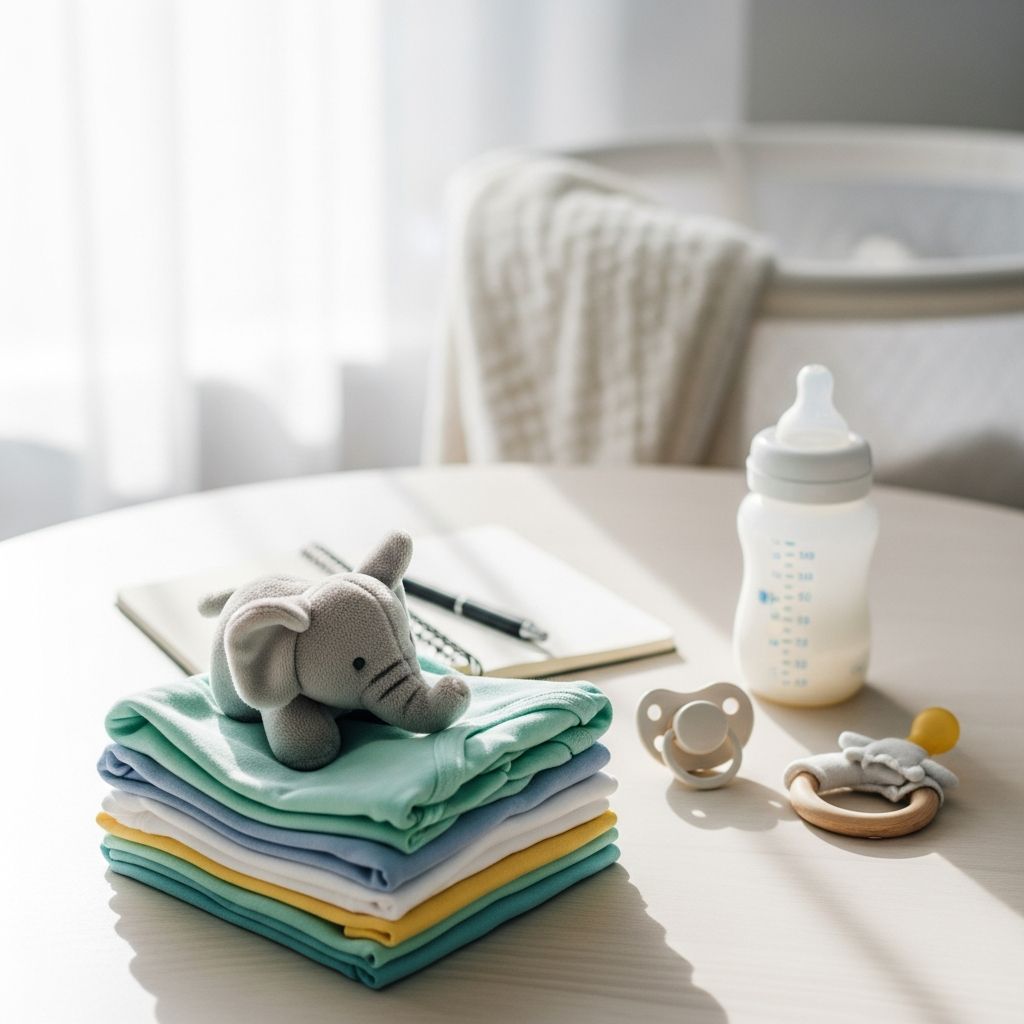
Baby outfits are adorable, but comfort and convenience matter more than photo-ready looks. Register for soft, easy-to-put-on basics and expect to do laundry frequently in the early months.
- Simple one-piece outfits with front or two-way zippers.
- Layering pieces like kimono-style tops and stretchy pants.
- Seasonally appropriate hats, socks, and perhaps a light jacket or bunting suit.
- A few special outfits for photos or occasions if you enjoy dressing up baby.
Bath Time and Baby Care
Bath time does not require a mountain of products, but a dedicated setup helps you feel confident handling a slippery newborn. Prioritize safety, gentle formulas, and tools that make holding your baby easier.
- Infant tub or sink insert that fits your space.
- 2–3 hooded towels and several soft washcloths.
- Mild, fragrance-free baby wash or combined shampoo and body wash.
- Soft hairbrush or comb and gentle baby lotion if needed.
Health, Safety, and First-Aid Basics
A small health kit helps you handle common newborn needs like temperature checks, nail trimming, and stuffy noses. These items often get overlooked on registries but are very useful to have before a late-night issue arises.
- Digital thermometer appropriate for infants.
- Nail clippers or baby nail file.
- Nasal aspirator and saline drops or spray.
- Basic first-aid kit including bandages and gauze.
On-the-Go: Car Seats, Strollers, and Carriers
Travel gear is one of the most important parts of your registry because it affects safety and how easily you can leave the house. Focus first on a properly fitted car seat, then choose a stroller and carrier that match your typical outings.
- Rear-facing car seat that fits your vehicle and meets current safety standards.
- Stroller suitable for your terrain (city sidewalks, trails, or shopping malls).
- Soft structured carrier or wrap for hands-free carrying at home and outside.
- Diaper bag or backpack with compartments and a portable changing mat.
| Item | Questions to Ask |
|---|---|
| Car seat | Does it fit your car and lifestyle (rideshare, multiple vehicles, small backseat)? |
| Stroller | Is it easy to fold, lift, and maneuver through your usual spaces? |
| Carrier | Does it feel supportive on your shoulders and hips, and is it easy to adjust? |
| Diaper bag | Can you access essentials with one hand while holding the baby? |
Play, Soothing, and Early Development
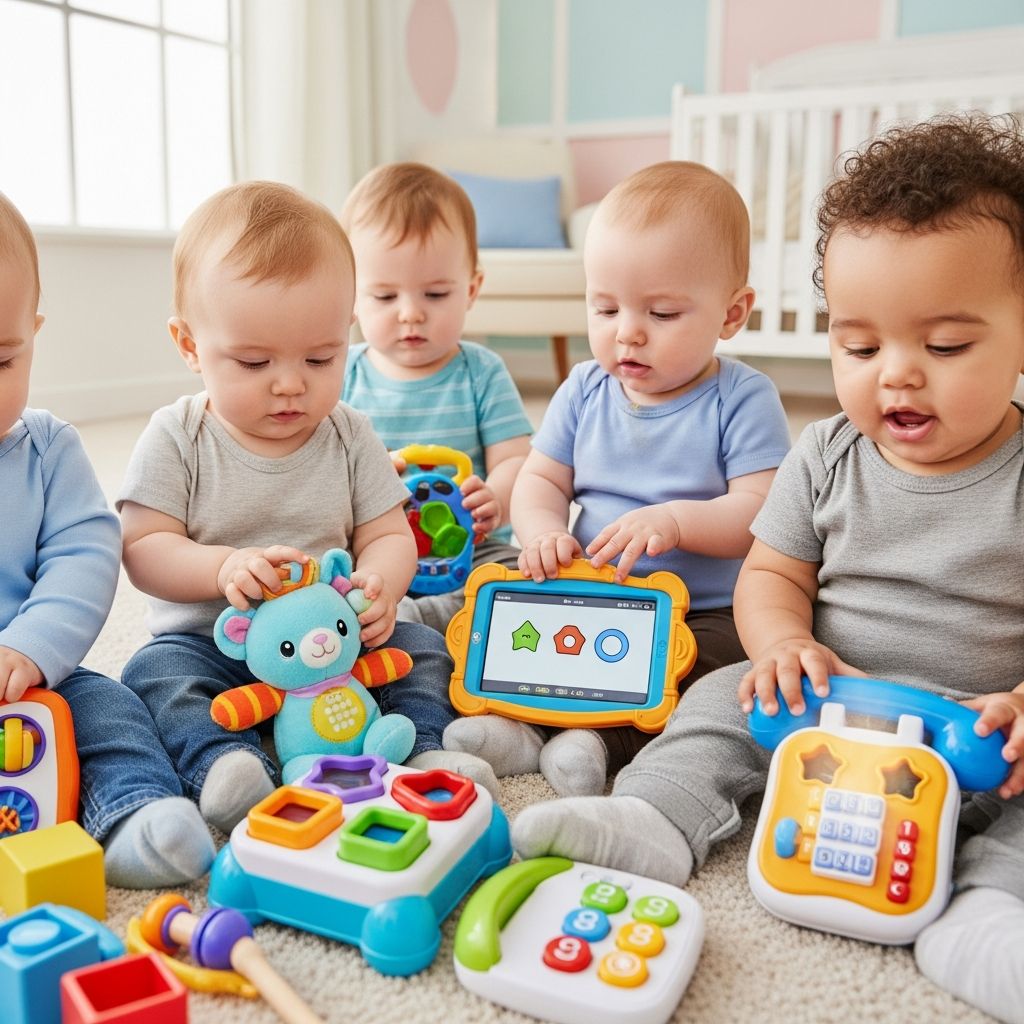
Newborns do not require many toys, but a few carefully chosen items can support bonding and sensory development. Many parents find that they use a small rotation of favorites rather than a huge collection.
- Soft, high-contrast toys or books for visual stimulation.
- Play mat or blanket suitable for tummy time.
- Optional bouncer, swing, or rocker for short supervised breaks.
- Paced introduction of rattles, teethers, and simple board books.
Planning for Parents’ Comfort and Recovery
A thoughtful registry includes support for the birthing parent and partner, not just the baby. Recovery, mental health, and everyday comfort significantly affect how the early weeks feel.
- Postpartum care items such as perineal care products or belly support bands.
- Comfortable loungewear, nursing-friendly pajamas, and slippers.
- Water bottle and easy snacks you can eat one-handed.
- Gift cards for meal delivery, house cleaning, or laundry services.
Budget-Friendly Registry Strategies
It is possible to build a baby registry that respects your budget while still covering real needs. Being strategic with big-ticket items and open to secondhand gear for non-safety categories can free up resources for essentials.
- Prioritize new purchases for car seats, crib mattresses, and safety gear.
- Consider secondhand options for clothing, basic furniture, and some toys.
- Use completion discounts to buy remaining essentials after your baby shower.
- Include various price points so friends and family can choose appropriately.
FAQs About Building a Baby Registry
How early should I start my baby registry?
Many parents begin a registry around the end of the first trimester and continue refining it throughout the second trimester. Starting early allows you to research and compare items comfortably instead of rushing close to your due date.
Do I need more than one registry?
Some families find it helpful to create a single universal registry that pulls items from multiple stores. Others prefer separate registries at one or two major retailers for simplicity and ease of returns.
How many items should I include?
There is no perfect number, but most registries benefit from a balanced mix of big-ticket items, mid-range essentials, and small add-ons. Think in categories rather than counting items; ensure you have basics for sleep, feeding, diapering, travel, and health.
What if I am not sure about my feeding plan?
It is completely normal for feeding plans to evolve. Register for a small selection of both breastfeeding and bottle-feeding supplies, then add or adjust items after your baby arrives based on what works best for your family.
Is it rude to include higher-priced items?
Higher-priced items can be useful for group gifts, especially if your registry also includes many affordable options. As long as people have choices across a wide range of budgets, including a few big items is generally considered acceptable.
Should I add diapers in multiple sizes?
Including a limited number of newborn diapers and more of the next size up is a practical approach. Babies usually grow out of the smallest sizes quickly, and gift receipts give you flexibility if you need to exchange.
Bringing It All Together
A well-planned baby registry supports the life you are building as a family, not just the image of what parenting “should” look like. Start with safety and everyday routines, then sprinkle in extras that genuinely match your personality and home.
Use this guide as a flexible framework, adapt it to your unique situation, and give yourself permission to keep things as simple or detailed as you like.