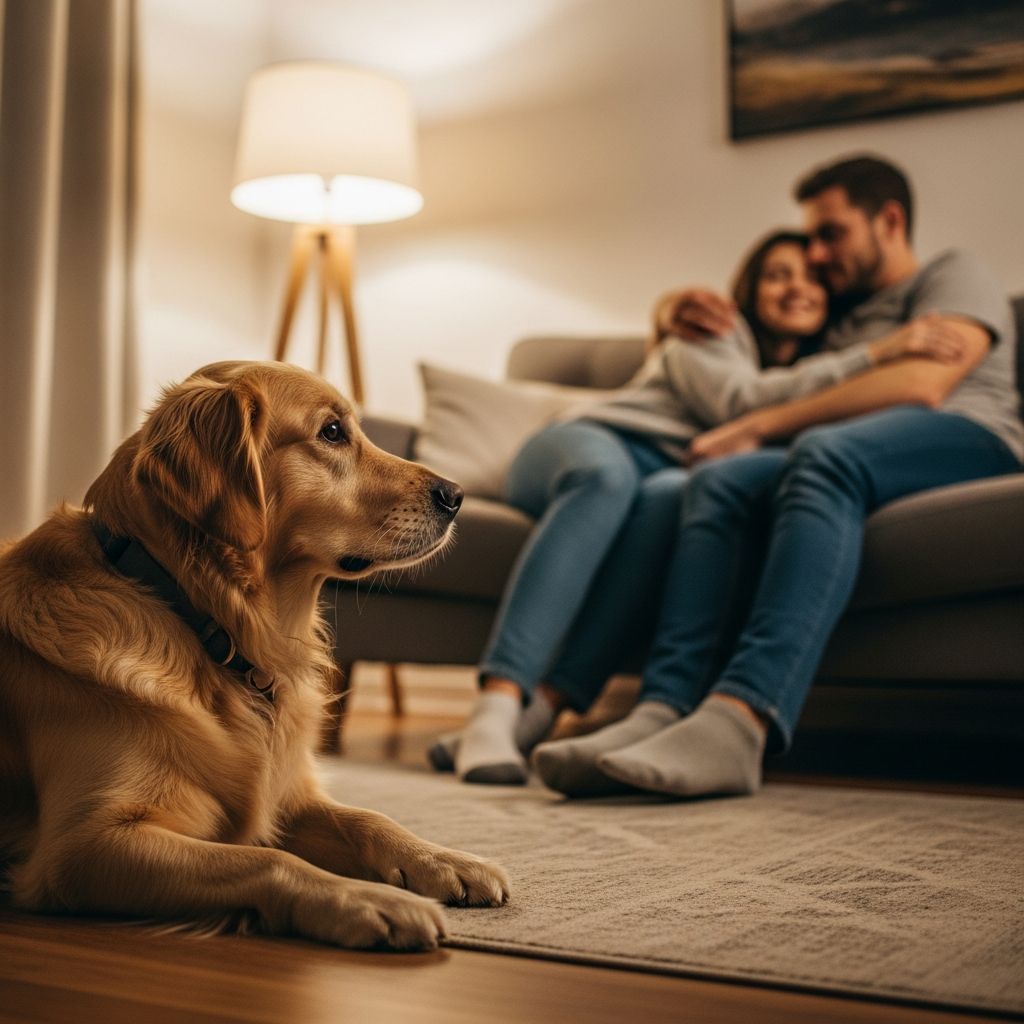
Dogs frequently display curiosity toward human physical interactions, including intimate moments between partners. This behavior stems from their heightened sensitivity to changes in routine, emotions, and body language rather than any comprehension of human sexuality.
Understanding Canine Sensory Perception
Dogs possess acute senses that allow them to detect subtle shifts in their environment. During periods of human closeness, they notice elevated heart rates, altered breathing patterns, and unusual vocalizations. Veterinary behaviorist Katherine Houpt from Cornell University notes that dogs respond to this ‘unusual activity’ by directing attention toward it, often barking or attempting to insert themselves into the interaction.
This perception is not limited to intimacy; dogs similarly react to hugging or wrestling. Their ability to read human cues makes them attuned companions, but it can lead to awkward intrusions during private times.
The Role of Pack Dynamics in Dog Behavior
As pack animals, dogs view their human families as extensions of their social group. When owners engage in close physical contact, dogs may interpret it as a redistribution of affection, prompting feelings of exclusion. Houpt explains that dogs recognize when attention shifts from them to another, evoking a response akin to jealousy over intimacy rather than the act itself.
- Dogs monitor social hierarchies closely, ensuring their position in the ‘pack’ remains secure.
- Physical closeness between humans signals bonding, which dogs seek to participate in.
- This dynamic strengthens the human-dog bond through shared oxytocin release during mutual gazing.
Research from the American Kennel Club highlights how dogs stare to gather information about upcoming events or emotional states, reinforcing their role as intuitive observers.
Territorial Instincts and Resource Guarding
Bedrooms and beds represent prime real estate for many dogs, especially those permitted to sleep nearby. Intrusions during intimacy often relate to guarding these spaces. Houpt suggests this is resource-guarding behavior, where dogs aim to maintain control over comfortable areas rather than targeting the sexual activity.
Cats exhibit similar traits, though less pronounced. They may depart the room or display indifference if not strongly bonded, per animal behavior consultants.
| Behavior | Dog Response | Cat Response |
|---|---|---|
| Staring | Common, seeks inclusion | Rare, observes briefly |
| Interruption | Barking, jumping on bed | Leaving area |
| Guarding | Positioning on bed | Minimal territorial claim |
Emotional Bonding and Oxytocin Influence
The human-dog relationship is underpinned by oxytocin, the ‘love hormone.’ Studies show that prolonged eye contact between dogs and owners elevates oxytocin levels, fostering trust and affection. During intimate human moments, a dog’s gaze may inadvertently trigger this response, deepening the bond even in unexpected contexts.
Patricia McConnell’s observations indicate that dogs initiating gaze exchanges with satisfied owners experience heightened oxytocin, explaining persistent staring as an affection bid.
Individual Personality Factors
Not all dogs react identically; personality plays a key role. ‘Velcro dogs’—those inseparable from owners—show stronger responses, per Dr. Stephanie Liff. Independent pets may ignore the activity entirely.
- Anxious dogs: Heightened stress, pacing, or vocalizing.
- Confident dogs: Casual observation or disinterest.
- Breeds with high attachment: More prone to involvement, regardless of size.
No specific breeds are predisposed, but bedtime privileges correlate with higher observation rates.
Potential Stress Signals to Watch For
While generally harmless, certain reactions signal discomfort. Veterinary experts recommend monitoring for:
- Excessive panting or pacing.
- Growling or aggression.
- Avoidance post-interaction.
These indicate overstimulation. Dr. Nathaniel Rakestraw advises providing a separate quiet space to prevent chronic stress, ensuring no long-term psychological impact occurs.
Practical Strategies for Managing Pet Presence
Pet owners can harmonize privacy with pet well-being through simple adjustments:
- Designate a safe space: Train dogs to retreat to a crate or another room with treats and toys.
- Preemptive exercise: Tire them out beforehand to promote restful behavior.
- Consistent boundaries: Reinforce ‘stay’ commands during affectionate moments.
- Gradual desensitization: Expose to simulated scenarios with positive reinforcement.
Such measures maintain the strong bond without compromising human privacy.
Frequently Asked Questions
Do dogs understand human sex?
No, dogs lack the cognitive framework to comprehend human sexuality. They respond to physical and emotional cues like movement and attention shifts.
Is it harmful for dogs to watch?
Typically not, absent distress signs. Brief exposure causes no trauma, but repeated stress warrants intervention.
Why do some dogs bring toys during intimacy?
This mimics play invitation, as dogs associate human activity with interactive fun.
Can this behavior indicate health issues?
Rarely; sudden changes may signal anxiety or medical concerns. Consult a vet if persistent.
How to discourage bedroom intrusions?
Use positive training, barriers, and alternative comforts to redirect focus.
Building a Balanced Human-Pet Relationship
Recognizing these behaviors enhances mutual understanding. Dogs’ observations reflect deep loyalty and pack integration, not judgment. By addressing root causes—jealousy, territory, curiosity—owners foster environments where intimacy and companionship coexist seamlessly.
Experts emphasize education over punishment. Understanding canine psychology demystifies actions, turning potential embarrassments into bonding opportunities. Regular training sessions reinforce respect for personal space, benefiting all household members.
In multi-pet homes, dynamics intensify. Dogs may compete for attention, amplifying reactions. Prioritizing individual needs prevents conflicts, promoting harmony.
Long-term, consistent management shapes well-adjusted pets. Owners report reduced intrusions after implementing routines, affirming behavioral science’s efficacy.
References
- Why Your Dog Is Watching You Have Sex — Fatherly. 2023. https://www.fatherly.com/health/why-dogs-watch-people-have-sex
- Why Does My Dog Stare At Me? — American Kennel Club. 2024-01-15. https://www.akc.org/expert-advice/advice/why-does-my-dog-stare-at-me/
- Does Your Dog Really Care If You Have Sex In Front Of It? — Scary Mommy. 2023-05-20. https://www.scarymommy.com/lifestyle/does-your-dog-care-if-you-have-sex-in-front-of-it
- Oxytocin Increases When Your Dog Looks at You — Patricia McConnell, Animal Behaviorist. 2015-04-16. https://www.patriciamcconnell.com/theotherendoftheleash/oxytocin-increases-when-your-dog-looks-at-you/
- Dog Clingy Evening Behavior — Dial A Vet. 2024. https://www.dialavet.com/ask-a-vet/dog-clingy-evening-behavior-5721