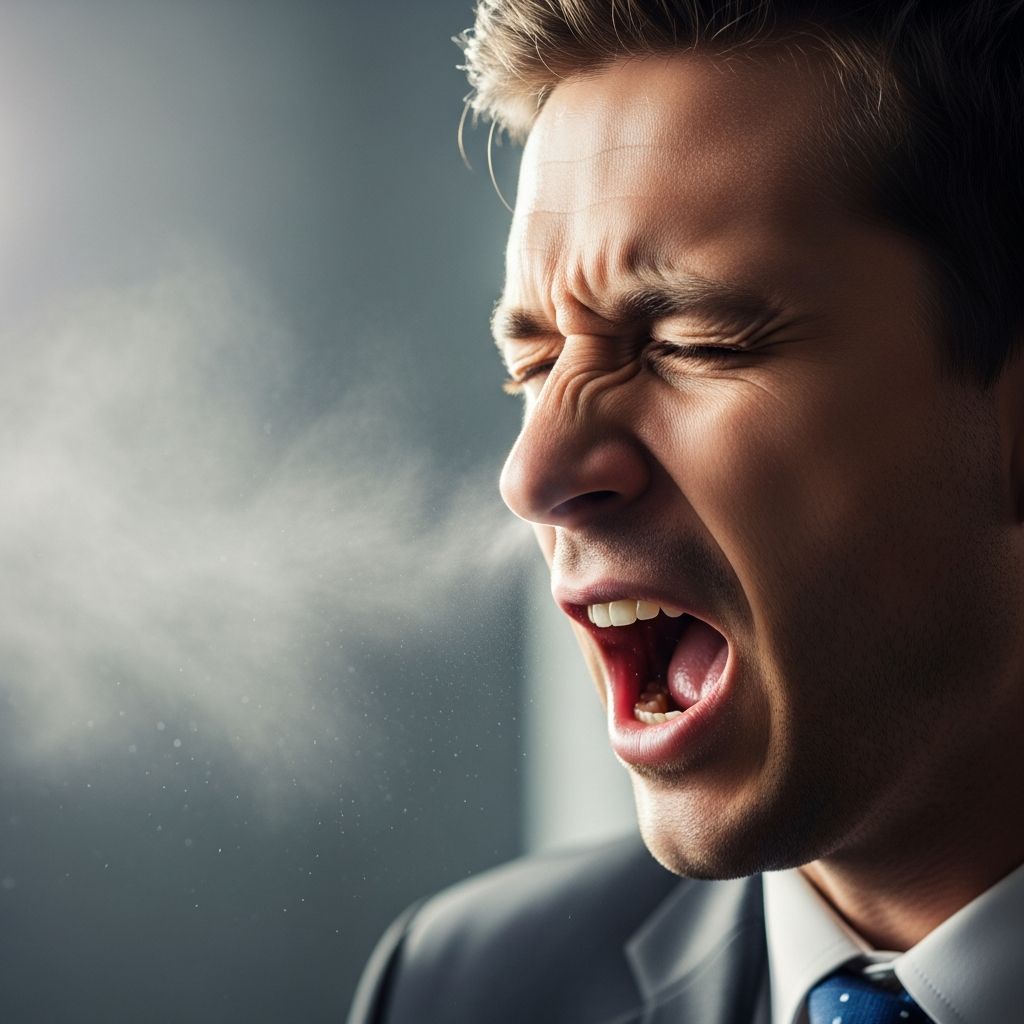
If you have ever jumped out of your skin because a man across the room unleashed a sneeze that sounded like a small explosion, you are not alone. Loud sneezers are a familiar part of daily life, and they raise a surprisingly rich question: why do some people — especially men — sneeze so loudly?
Understanding this means looking at several layers at once: how a sneeze works in the body, how anatomy and physiology affect volume, how personality and social rules shape the way we let it out, and why trying to silence a sneeze can be dangerous.
How a Sneeze Works Inside the Body
Every sneeze starts as a reflex designed to protect your airways. When something irritates the lining of your nose or upper airway, sensitive nerve endings send a message to the brainstem — the primitive control center for many automatic functions.According to respiratory researchers, irritants like dust, pollen, or infections trigger sensory nerves, which then activate a coordinated response involving deep inhalation, closure of the vocal cords, and a high-speed blast of air through the nose and mouth.
- Irritation: Particles or chemical irritants stimulate receptors in the nasal mucosa.
- Signal to brainstem: Nerves carry this signal to a region that organizes the sneeze reflex.
- Deep breath: The lungs fill with air, building pressure.
- Compression: The muscles of the chest wall and abdomen contract; the vocal cords close briefly.
- Release: The vocal cords open and air is expelled rapidly through nose and/or mouth — the audible sneeze.
This entire sequence is involuntary: once the reflex initiates, you cannot simply decide not to sneeze. However, you can influence how you perform the outward part — especially how much sound you add and which route the air takes.
The Anatomy of a Loud Sneeze
The mechanics of the sneeze reflex are the same for everyone, but the final sound varies a lot from person to person. Scientists point to a mix of anatomical differences and voluntary control to explain why some sneezes are whisper-soft while others are ear-splitting.
Lung size, air volume, and pressure
One obvious factor is the amount of air involved. A bigger inhale means more air under pressure, which tends to produce a more forceful and louder sneeze.
- People with larger lungs can take deeper pre-sneeze breaths, creating more powerful blasts of air.
- The longer you unconsciously “wind up” — holding that inhale before the release — the more dramatic the sneeze becomes.
- Stronger chest and abdominal muscles can contribute to a more forceful compression of air.
None of this guarantees a loud sneeze, but it explains why someone with a large chest and powerful respiratory muscles can produce impressive volume if they do not hold back.
Where the air goes: nose vs. mouth
The path the air takes matters for both sound and mess:
- Primarily mouth: Air rushing through an open mouth creates more noise, especially if the person vocalizes while sneezing.
- Primarily nose: More air through the nasal passages can make the sneeze feel wetter and messier, but often less explosively loud to bystanders.
Specialists in nasal and sinus surgery note that people who let the sneeze explode through the mouth tend to be the ones others notice across the room, while quiet sneezers often channel more air through the nose or suppress vocalization.
Upper airway structure and resonance
Anatomical differences in the nose, sinuses, and throat also shape sound. Just as they influence the tone of your speaking voice, these cavities can act as resonating chambers during a sneeze.
Features that can affect the final sound include:
- Size and shape of the nasal passages
- Sinus cavity volume and how well they are ventilated
- Shape of the mouth, tongue position, and jaw opening
- Presence of congestion or swelling from allergies or infections
Someone with naturally resonant vocal qualities may also produce an especially resonant sneeze, even if they are not consciously trying to be dramatic.
Personality: Why a Sneeze Sounds Like Its Owner
Physiology is only part of the story. Neurologists who study smell and taste note that sneezes resemble laughter in one important way: people tend to sneeze in a style that matches their overall temperament.
In an interview with NBC News, neurologist Alan Hirsch explained that just as some people have booming laughs and others chuckle quietly, sneezing often follows a stable personal pattern from youth into adulthood. That pattern reflects not just anatomy but what feels natural and acceptable to the individual.
Habit and unconscious performance
Over time, most people “learn” how they sneeze, even if they are unaware of doing so. They repeat the same basic pattern every time:
- Some add a vocalized “ah-CHOO!” that amplifies the sound.
- Some clamp the lips and lower the volume to a puff.
- Others develop a high-pitched or staccato style.
Since sneezing is involuntary, these habits operate just below conscious control — you do not plan them in the moment, but you have shaped them over years of feedback from your body and your social environment.
Public vs. private sneezes
Survey research suggests that many people adjust the way they sneeze depending on where they are. A large survey cited by Live Science reported that about 45% of participants said their public sneezes differed from their private sneezes, indicating deliberate modulation in social settings.
This supports the idea that the sneeze you hear in a conference room or on public transport is not just a random reflex — it is the result of a personal style adapted to what the person thinks is acceptable or even amusing.
Gender, Social Norms, and “Why Men?”
Many people notice that men are more often the “sonic boom” sneezers. Studies looking at self-reported sneeze behavior have found that men are more likely to describe themselves as “big sneezers,” while a significant portion of women report trying to tone down or hold back sneezes when they can.
Social pressure and learned restraint
Researchers and health writers point to social expectations to explain part of this pattern:
- Women often face stronger pressure to be quiet, neat, and “ladylike,” which can encourage more restrained sneezing.
- Men typically experience less social penalty for loud bodily noises, especially in informal settings.
- In some peer groups, a loud sneeze (like a loud laugh) may be seen as humorous or even mildly impressive.
These norms do not apply to everyone, but over years they can shape how individuals instinctively respond to the sneeze reflex, especially in public.
Masculinity, body expression, and volume
Cultural ideas about masculinity sometimes link “bigger” and “louder” behaviors with confidence or dominance. Loud music, loud voices, and physical displays can all be part of this pattern. A loud sneeze can fit into that same expressive toolkit, even if the person would never describe it that way.
This does not mean men are choosing to weaponize their sneezes. Rather, from an early age they may get subtle positive or at least neutral feedback when they sneeze freely and loudly, while girls and women may be nudged to keep things contained. The result is a gendered pattern that looks biological from the outside but is strongly reinforced by culture.
Is a Loud Sneeze Ever Dangerous?
The sneeze reflex itself is a healthy, protective mechanism. The real danger appears when people try to prevent a sneeze from happening or forcefully stifle it. Physicians warn that blocking a sneeze can create sudden spikes of pressure in the head and chest.
Case reports and clinical reviews have documented rare but serious complications from trying to hold in sneezes, including injuries to blood vessels, ear damage, and other barotrauma. While these events are uncommon, they illustrate how powerful the sneeze mechanism can be.
| Behavior | Possible Effect | Relative Risk |
|---|---|---|
| Letting a sneeze out naturally (into tissue/elbow) | Clears irritants; brief high-velocity airflow | Low, normal physiological event |
| Mildly dampening the sound (not fully closing nose/mouth) | Lower volume, still allows airflow | Generally low, if not painful or forced |
| Forcefully blocking nose and mouth to stop a sneeze | Sudden pressure spikes; potential tissue or vessel injury | Higher; documented in medical case reports |
From a safety perspective, experts advise allowing the sneeze to occur, but directing it into a tissue or your elbow and away from others, especially to reduce spread of infections.
Sneeze Types: From Whisper to Thunderclap
Because sneeze style combines anatomy, habit, and context, you can think of sneezers falling along a spectrum rather than into strict categories. Still, it helps to label a few common patterns people observe in everyday life:
- The Minimizer: Lips pressed together, very little vocalization, often just a puff of air and a small head motion. Common in quiet public spaces.
- The Vocalist: Adds a pronounced “ah-CHOO!” that carries across a room; often breathes deeply beforehand.
- The Serial Sneezer: Multiple sneezes in quick succession (known medically as paroxysmal sneezing), sometimes linked to allergies or persistent irritants.
- The Mouth-Blast Sneezer: Mouth wide open, powerful chest and abdominal effort, often the loudest type.
- The Nose-Dominant Sneezer: More airflow through the nose, wetter but sometimes less acoustically dramatic.
Any of these can be loud or quiet depending on lung volume, airway structure, and the surrounding social situation.
Sex, Nerves, and the Stranger Sides of Sneezing
Medical literature has long noted an intriguing overlap between nasal reflexes and sexual arousal. A 2009 review in the journal Therapeutic Advances in Respiratory Disease discussed reports of people experiencing sneezing associated with sexual thoughts or activity, and proposed that shared neural pathways and similar erectile tissues in the nasal mucosa and genital areas might help explain this “nasal reflex neurosis.”
Although this phenomenon appears to be rare, and not limited to men, it highlights how complex and interconnected our autonomic reflexes can be. It also helps explain why some clinicians and commentators describe sneezing as having an almost “orgasmic” character — a brief, involuntary release of built-up tension that can feel oddly satisfying.
Can You Train Yourself to Sneeze More Quietly?
Because the core sneeze reflex is automatic, you cannot fully choose when it happens. You can, however, practice small adjustments that change the experience for you and for people around you — without resorting to risky techniques like completely blocking the airway.
Practical ways to modulate your sneeze
- Use tissues or elbow properly: Covering your mouth and nose does not just trap droplets; it also slightly muffles sound without creating dangerous back-pressure.
- Avoid theatrical vocalization: Reducing the deliberate “shout” element of a sneeze can significantly lower perceived volume.
- Do not delay excessively: Trying to hold off a sneeze for a long time can increase the ultimate force of the blast.
- Manage triggers: Treating allergies, reducing dust, and maintaining good indoor air quality can reduce how often you sneeze in the first place.
If you experience unusually painful, prolonged, or debilitating sneezing fits, especially if they interfere with daily life, it is worth discussing them with a healthcare professional. Persistent sneezing can be associated with allergies, infections, or, in rare cases, neurological conditions.
Frequently Asked Questions (FAQs)
Q1: Are loud sneezes a sign of better or worse health?
Not usually. Loudness mostly reflects air volume, anatomy, and personal style rather than health status. However, extremely frequent or severe sneezing may indicate allergies or other medical issues and should be evaluated if persistent.
Q2: Why do some people sneeze many times in a row?
Multiple or “paroxysmal” sneezing can be a response to stubborn irritants or allergic inflammation, where one sneeze does not fully clear the trigger. For most people it is benign, but ongoing episodes can warrant assessment, especially if accompanied by other symptoms.
Q3: Can I hurt myself by holding in a sneeze?
Forcefully blocking a sneeze can create intense pressure in the head and chest. Physicians have documented rare cases of injury to blood vessels and ear structures from this behavior, so experts advise allowing the sneeze to occur while covering appropriately rather than completely stifling it.
Q4: Do men always sneeze louder than women?
No. There are quiet-sneezing men and thunderously loud women. That said, survey data and social observations suggest men are more likely to let sneezes out at full volume, partly because they face fewer social pressures to restrain bodily noises.
Q5: Can allergies make my sneeze louder?
Allergies do not inherently increase volume, but they can cause more congestion and more frequent sneezes. Swollen nasal passages and repeated irritation may change how a sneeze sounds, and ongoing symptoms often justify medical evaluation and treatment.
References
- Sneeze reflex: facts and fiction — Murat Songu, Cemal Cingi. Therapeutic Advances in Respiratory Disease. 2013-02-01. https://doi.org/10.1177/1753465812471205
- Why Do Some People Sneeze So Darn Loudly? — Mental Floss Editors. 2020-01-08. https://www.mentalfloss.com/science/body/why-do-i-sneeze-so-loud
- Why Do Some People Sneeze So Loudly? — Stephanie Pappas, Live Science. 2012-10-02. https://www.livescience.com/32707-why-do-some-people-sneeze-so-loud.html
- Allergic Rhinitis (Nasal Allergies) — American Academy of Otolaryngology–Head and Neck Surgery. 2023-03-01. https://www.enthealth.org/conditions/allergic-rhinitis-nasal-allergies/
- Common Cold — National Institutes of Health, MedlinePlus. 2023-10-02. https://medlineplus.gov/commoncold.html