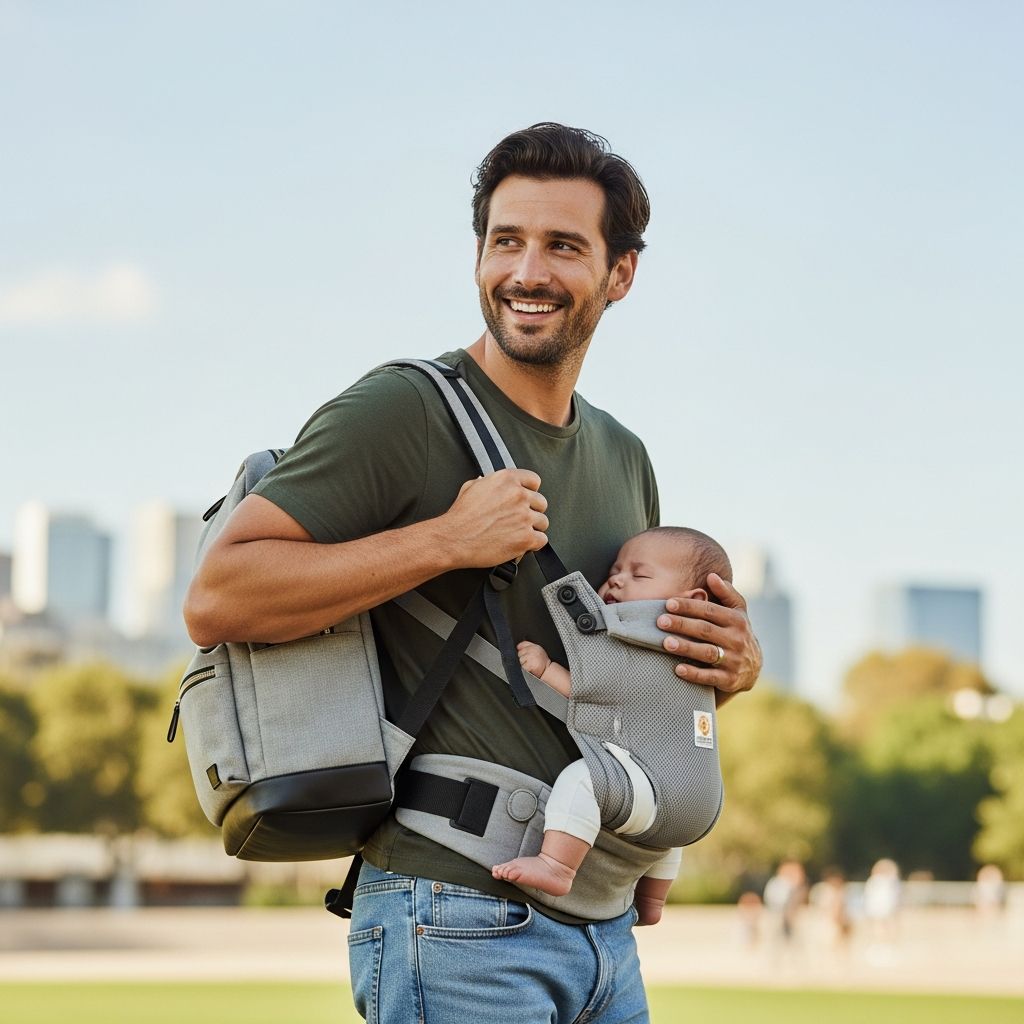
Modern fatherhood is active, hands-on, and fast-paced, and the gear dads carry needs to keep up. A growing number of fathers are abandoning the traditional diaper bag in favor of a well-organized backpack that feels practical, masculine, and built for real life with kids. Instead of juggling a floppy shoulder bag while wrestling a stroller and a squirmy baby, dads are discovering that a backpack offers comfort, freedom of movement, and surprisingly smart organization for every outing.
The Problem With Traditional Diaper Bags
Conventional diaper bags were largely designed with style and assumptions about motherhood in mind, not with the day-to-day movements and preferences of many dads. The result is a bag that often looks great in photos but feels awkward, overloaded, or inefficient when it is actually in use. For a parent who is bending, lifting, chasing a toddler, or baby-wearing, a single-strap bag can become a constant hassle instead of a helpful tool.
- Single shoulder straps dig into one side and slip off when you bend down or pick up your child.
- Overstuffed main compartments become a bottomless pit for pacifiers, snacks, and wipes.
- Highly stylized designs may feel mismatched with a dad’s usual wardrobe or personal style.
These design issues may sound minor at first, but multiplied over hundreds of daily micro-moments, they create unnecessary frustration. When a bag slows a parent down, they compensate with hacks and workarounds, rather than enjoying the outing itself. That is exactly where a backpack can transform the experience.
Why Backpacks Fit Dad Life Better
A backpack distributes weight evenly across both shoulders and the back, which is essential for parents who are already carrying car seats, holding little hands, or pushing strollers. Instead of constantly adjusting a slipping strap, a backpack stays put and keeps the wearer’s hands completely free for what matters most: the child. This small ergonomic difference translates into more comfort on long walks, park trips, and travel days.
Beyond comfort, a backpack often feels more intuitive for dads who already use similar bags for work, gym, or travel. It slips naturally into their existing routine, which makes them more likely to pack it thoughtfully, grab it confidently, and carry it proudly, rather than regarding it as a chore or an accessory that belongs to someone else.
Key Advantages Of A Backpack Over A Diaper Bag
While every family has unique needs, certain backpack advantages appear again and again in real dad experiences. Shifting from a traditional diaper bag to a backpack can make the difference between fumbling and flowing through daily routines.
- Hands-free movement: Backpacks free both hands for holding babies, grabbing groceries, or folding strollers.
- Even weight distribution: Two straps and a centered load reduce shoulder and neck strain compared to single-strap bags.
- Team-friendly access: Zippers and pockets on a backpack can be opened by a partner while it is still on the wearer’s back.
- Everyday versatility: Many backpacks seamlessly transition from baby duty to work, gym, or travel use.
- More neutral style: Clean lines and simple designs feel comfortable for any parent to carry.
Side-by-side look: backpack vs diaper bag
| Feature | Traditional Diaper Bag | Backpack Used As Diaper Bag |
|---|---|---|
| Weight distribution | Mostly on one shoulder; can cause strain over time. | Even across both shoulders; easier for long outings. |
| Hands-free capability | Strap can slide off when bending or lifting. | Stays put while picking up kids or pushing strollers. |
| Access while wearing | Often needs to be set down to dig around. | Partner can unzip and grab items while it is still worn. |
| Style fit for dads | Frequently more decorative, purse-like designs. | Looks like everyday gear; blends with casual or work clothes. |
| Long-term usefulness | Less likely to be used after the diaper phase. | Can remain a go-to bag for travel, outings, or work. |
How A Backpack Improves Daily Parenting Moments
The real value of switching to a backpack is felt in ordinary, unglamorous moments. At the playground, a parent can squat to tie a child’s shoe or lift them onto a swing without the bag sliding off or bumping the child in the face. On the sidewalk, a backpack-wearing dad can push a stroller, answer a phone call, and keep track of an older sibling all at once without worrying about a shoulder bag drifting toward the ground.
At home, a dedicated backpack also brings mental clarity. Instead of tossing baby items into multiple totes and drawers, everything for leaving the house lives in one place, ready to grab. This shift creates a subtle but powerful sense of preparedness, which is especially valuable for first-time fathers still finding their rhythm.
Choosing The Right Backpack For Dad Duty
Not every backpack makes an ideal parenting bag. The best options strike a balance between storage, organization, comfort, and durability. A good rule of thumb is to think of the bag as a mobile command center rather than a simple sack; it should make it easier to find, use, and restock essentials without feeling bulky or over-engineered.
- Size: Look for a medium-sized pack that fits daily essentials without encouraging overpacking.
- Structure: Semi-rigid panels or padding help the bag stand upright and keep contents organized.
- Pockets: A mix of small and large compartments prevents both clutter and wasted space.
- Comfort: Padded shoulder straps and a breathable back panel reduce fatigue.
- Material: Water-resistant fabrics and easy-to-clean interiors handle spills and weather.
Smart Organization: Turning Any Backpack Into A Dad Bag
The secret to a great dad backpack is not the logo on the outside but the system inside. With a little planning, a standard backpack can become more efficient than many specialty diaper bags. Think in zones: feeding items, changing gear, comfort objects, and parent essentials each get a defined space so that nothing has to be hunted down in a hurry.
- Use small zip pouches for categories like feeding, first aid, or snacks.
- Dedicate one easy-access pocket for items needed most often, such as wipes and a pacifier.
- Keep a small changing kit that can be lifted out quickly for restroom runs.
- Reserve one pocket for parent items only, such as keys, wallet, and phone.
Example packing layout for a dad backpack
| Backpack Area | Suggested Contents | Purpose |
|---|---|---|
| Top front pocket | Travel wipes, pacifier, hand sanitizer | Rapid access during emergencies and quick cleanups. |
| Main compartment | Diapers, changing pad, spare clothes, light blanket | Core gear for changes, temperature shifts, and spills. |
| Inner mesh pocket | Small first-aid kit, thermometer, mini medicines (as appropriate) | Health and safety items kept visible but contained. |
| Side pockets | Baby bottle, sippy cup, water bottle for parent | Hydration within arm’s reach. |
| Hidden back pocket | Wallet, spare keys, important cards | Secure storage away from curious toddler hands. |
Building A Minimal Yet Complete Dad Backpack
A common trap with baby gear is assuming more is always better. In reality, an overloaded bag slows a parent down and makes everything harder to find. A minimalist mindset ensures that the backpack remains comfortable to carry while still covering the full range of likely situations away from home.
Instead of packing for every imaginable scenario, focus on the highest-probability needs in a typical outing lasting two to four hours. That usually means changes, feeding, temperature comfort, and a little entertainment. Anything beyond that can either stay in the car or be added for special trips.
Essential items to pack
- 4–6 diapers (adjust based on age and outing length).
- Compact wipes pack plus a few diaper disposal bags.
- Portable changing pad.
- One full change of clothes, including socks.
- Lightweight blanket or large muslin for warmth or shade.
- Bottle, formula or milk storage as needed, and a small snack for older infants.
- Favorite comfort item such as a small stuffed toy or teether.
- Mini first-aid kit with bandages and basic supplies.
- Parent essentials: phone, wallet, keys, and any medications.
Items you can skip for short outings
- Multiple toys; one or two favorites are usually enough.
- Full-size blankets when a compact one will do.
- Duplicate outfits unless you anticipate specific mess risks.
- Bulky containers that can be portioned into smaller travel-sized options.
Shared Parenting And The Power Of A Neutral Bag
One underestimated benefit of a backpack is how naturally shareable it is. A simple, streamlined pack does not belong to “mom” or “dad”; it belongs to the parenting team. Anyone can throw it on quickly, whether heading out for a walk, taking over at the park, or handling pickup from daycare. This removes awkward handoffs and makes it less likely that critical items will be forgotten during busy transitions.
When both parents are familiar with the layout of the backpack, it becomes a shared system rather than one person’s mental load. One adult can restock diapers while the other handles bottles, yet both know exactly where everything is. This collaborative structure makes it easier to divide responsibilities and helps prevent last-minute accusations about who forgot the wipes.
Backpack Features Worth The Investment
While almost any decent backpack can be adapted for parenting, a few features can dramatically improve the experience. These traits are particularly valuable for dads who spend long days out with their children, travel frequently, or juggle multiple roles between home and work.
- Chest or waist strap: Stabilizes the load during active play or long walks.
- Wide opening main compartment: Makes it simple to see contents at a glance.
- Insulated pocket: Keeps bottles or snacks cool for longer outings.
- External attachment points: Bungees or loops are handy for clipping shoes, blankets, or toys.
- Laptop or tablet sleeve: Useful for combining work and parenting gear in one bag.
Transitioning From Diaper Phase To Big Kid And Beyond
Unlike specialized diaper bags that often become clutter catchers once a child is potty trained, a backpack naturally adapts as kids grow. Diapers are gradually replaced by spare underwear, a small sweatshirt, sunscreen, and snacks. The medical pouch shifts from infant gas drops to bandages and kid-safe ointments. The bag evolves, rather than becoming obsolete.
Eventually, the backpack may be used more for travel, day hikes, or commuting than for parenting errands. At that stage, the early investment in a quality bag truly pays off. Instead of a relic of the baby era, the backpack remains a trusted companion that quietly holds the history of countless playground adventures, park picnics, and first trips away from home.
Frequently Asked Questions
Is a regular backpack really as good as a purpose-built diaper bag?
A well-designed regular backpack can match or surpass many diaper bags if it is organized intelligently. The key is using internal pouches and a clear system so items do not vanish into the main compartment. Parents who prefer simplicity and versatility often find that a straightforward backpack meets their needs without extra specialized features they rarely use.
How do I keep the backpack from becoming a mess?
Establish a simple reset routine at home: empty food containers, toss trash, and restock diapers and wipes as soon as you unpack from an outing. Assign every category of item a specific pocket or pouch and stick to that system. Over time, the habit becomes automatic, and the backpack stays ready instead of turning into a mysterious pile of crushed crackers and mismatched socks.
What if my partner prefers a traditional diaper bag?
Many families successfully use both: a traditional diaper bag that lives near the door or stroller, and a dedicated backpack that one parent prefers for solo outings. The important part is agreeing on what stays in each and maintaining a joint checklist so neither bag is missing essentials. A neutral color palette and simple design also make it easier for everyone to feel comfortable carrying the backpack when needed.
Can I use a backpack diaper bag for work too?
Yes, many modern backpacks are designed to look professional enough for the office while still handling parenting duty. Look for a bag with a laptop sleeve and understated styling; then separate baby items into removable pouches. When it is time for a work meeting, the pouches can be left at home or in the car, instantly transforming the bag into a clean, streamlined work companion.
What is the single biggest benefit of switching to a backpack?
For most dads, the biggest benefit is feeling free and unencumbered while still being fully prepared for their child’s needs. The comfort of balanced weight, the ease of hands-free movement, and the confidence of a consistent packing system combine to make daily outings smoother and less stressful. Over time, that creates more space for real connection and enjoyment, which is what parenting gear is supposed to support in the first place.