Why Consider Cloth Diapers?
Many parents today are reevaluating their diapering choices, seeking options that are both sustainable and gentle on their baby’s skin. Cloth diapers have emerged as a popular alternative to disposables, offering a blend of environmental responsibility, cost savings, and health benefits. While the decision isn’t always straightforward, understanding the full picture can help families make informed choices that align with their values and lifestyle .
Environmental Impact of Cloth Diapers
Cloth diapers significantly reduce the amount of waste that ends up in landfills. Disposable diapers can take hundreds of years to decompose, contributing to environmental pollution and resource depletion. In contrast, cloth diapers are reusable and can be washed and used for multiple children, drastically lowering their carbon footprint over time .
- Reduces landfill waste by up to 90% compared to disposables .
- Uses fewer raw materials and less energy in manufacturing .
- Can be composted or recycled at the end of their life cycle, depending on the materials used .
Financial Considerations
While cloth diapers require an upfront investment, they can save families thousands of dollars over the course of a child’s diapering years. The initial cost includes purchasing the diapers and accessories, but ongoing expenses are limited to water, detergent, and occasional replacements .
- Upfront cost: $300–$1,000 for a full set, depending on brand and style .
- Long-term savings: Families can save $1,000–$3,000 per child compared to disposables .
- Reusable for multiple children, further increasing savings .
Health and Comfort Benefits
Cloth diapers are often made from natural fibers like cotton, bamboo, or hemp, which are gentler on a baby’s sensitive skin. They are free from the chemicals, fragrances, and dyes found in many disposable diapers, reducing the risk of irritation and allergic reactions .
- Lower risk of diaper rash due to frequent changes and natural materials .
- Encourages more frequent diaper changes, which helps prevent prolonged exposure to moisture .
- Customizable fit for different body shapes and sizes, improving comfort .
Practical Challenges and Maintenance
Despite their benefits, cloth diapers do come with some challenges. They require regular washing, which can be time-consuming and may add to household water and energy usage. Proper storage and cleaning of soiled diapers are also important to maintain hygiene and prevent odors .
- Expect 2–3 extra laundry loads per week .
- Soiled diapers must be rinsed or sprayed before washing to remove waste .
- Storage of dirty diapers requires a dedicated wet bag or container .
- Some daycare centers may not accept cloth diapers, so check policies in advance .
Types of Cloth Diapers
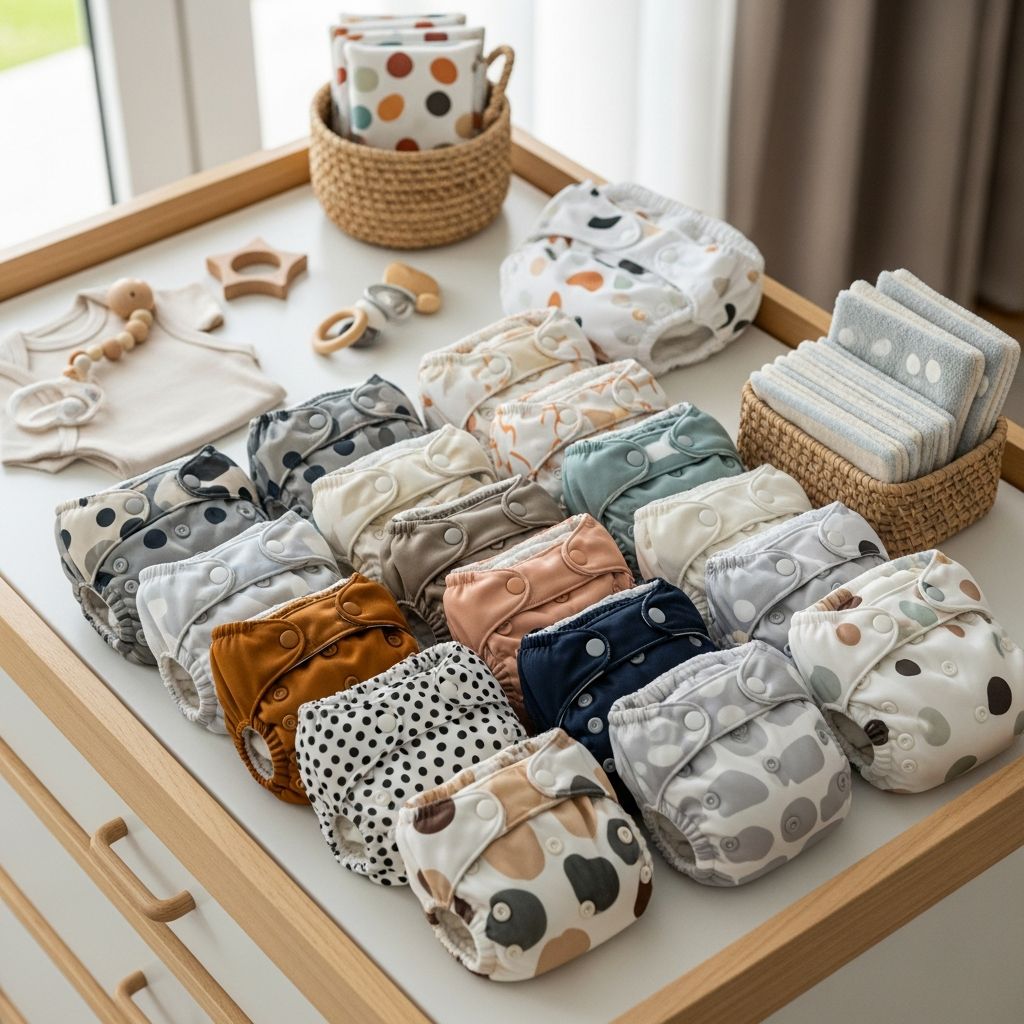
There are several styles of cloth diapers, each with its own advantages and learning curve. Choosing the right type depends on your baby’s needs, your lifestyle, and your comfort level with diapering routines.
| Type | Description | Best For |
|---|---|---|
| All-in-One (AIO) | Integrated absorbent layer and waterproof cover; easy to use | Busy parents, daycare |
| Pocket Diapers | Outer shell with a pocket for absorbent inserts; customizable absorbency | Custom fit, travel |
| Prefolds/Flats | Simple rectangular cloths; require folding and fastening | Cost-conscious, eco-focused |
| Hybrids | Combine reusable covers with disposable or reusable inserts | Flexibility, convenience |
Travel and Daycare Considerations
Cloth diapers can be less convenient for travel and daycare settings. They require more preparation, such as packing extra covers and liners, and may not be accepted by all daycare providers. However, some modern systems are designed for portability and ease of use, making them a viable option for families on the go .
- Bring a wet bag for storing soiled diapers while traveling .
- Check daycare policies before committing to cloth diapers .
- Consider hybrid systems for added convenience .
Frequently Asked Questions
Are cloth diapers safe for newborns?
Yes, cloth diapers are safe for newborns. Many brands offer newborn-specific sizes and styles designed for a snug fit and gentle protection .
Do cloth diapers save money?
Yes, cloth diapers can save families hundreds or even thousands of dollars over the diapering years, especially if reused for multiple children .
Do cloth diapers cause more diaper rash?
No, studies show that diaper rash rates are similar between cloth and disposable diapers. Frequent changes and proper cleaning help prevent rashes with either type .
How often should I wash cloth diapers?
Most experts recommend washing cloth diapers every 2–3 days to maintain hygiene and prevent odors .
Can I use cloth diapers for twins or multiple children?
Yes, cloth diapers are ideal for families with multiple children. They can be reused and passed down, maximizing cost savings and reducing waste .
Final Thoughts
Cloth diapers offer a sustainable, cost-effective, and health-conscious alternative to disposables. While they require more effort and planning, the long-term benefits for both families and the environment make them a compelling choice for many modern parents. By understanding the pros, cons, and practical considerations, you can make a decision that works best for your baby and your lifestyle .